Listen through the publisher, then discuss the episode here or arrange an in-person Roundtable. Your city determines where to meet.
Roundtables are designed for groups of four, with a shared subject and room for everyone to speak. Come for discussion, with no dating expectation.
Is exposure therapy traumatizing? It's a question we hear often, and one that makes some therapists hesitate to use exposure at all. This week we take it on directly, with the caveat that this is our clinical opinion and not a substitute for care tailored to you. We talk about the difference between a crisis, where your ability to cope is temporarily overwhelmed, and trauma, and why intense fear or discomfort doesn't automatically mean someone has been traumatized. We also explain when a history of genuinely dangerous events changes the approach, why trauma-informed work may need to come first for some people, and why a good clinician formulates the problem and builds a graduated hierarchy before anyone is sent into the hardest situation. We also get into how the words we choose shape the story we tell ourselves. Plus did it anyway wins, including a first day back at work with agoraphobia, a trip away from a safe person, and a Halloween gig. ---- We're hanging out in the Disordered Community Space ---- The Disordered Guide to Health Anxiety is available now: --- ----- Got questions or did it anyways to share? Send us an email or voicemail on our website. https://disordered.fm (https://disordered.fm/) --- Information here is provided for psychoeducational purposes.
Episode information is provided by the publisher. Listening takes place on the publisher’s service.
Trauma and PTSD Expert Arielle Schwartz discusses how journaling and writing practices can help individuals work through trauma and facilitate healing, even without a therapist. She shares practical tips, mental models, and personal insights on trauma, shame, and post-traumatic growth. Sign up for my free Panic Attacks course https://courses.therapyinanutshell.com/ending-panic-attacks-and-anxiety-attacks Can trauma journaling help with healing trauma? In this conversation, Dr. Arielle Schwartz joins me to explore how writing and narrative therapy can support processing and integrating trauma, building self-compassion, and finding greater connection with yourself and others. Whether you’re navigating PTSD, complex PTSD, or painful experiences from your past, approaching your story can feel overwhelming. We discuss how to begin gently, build a foundation of safety, and recognize when it’s time to pause and reach for support. https://drarielleschwartz.com (https://drarielleschwartz.com/)
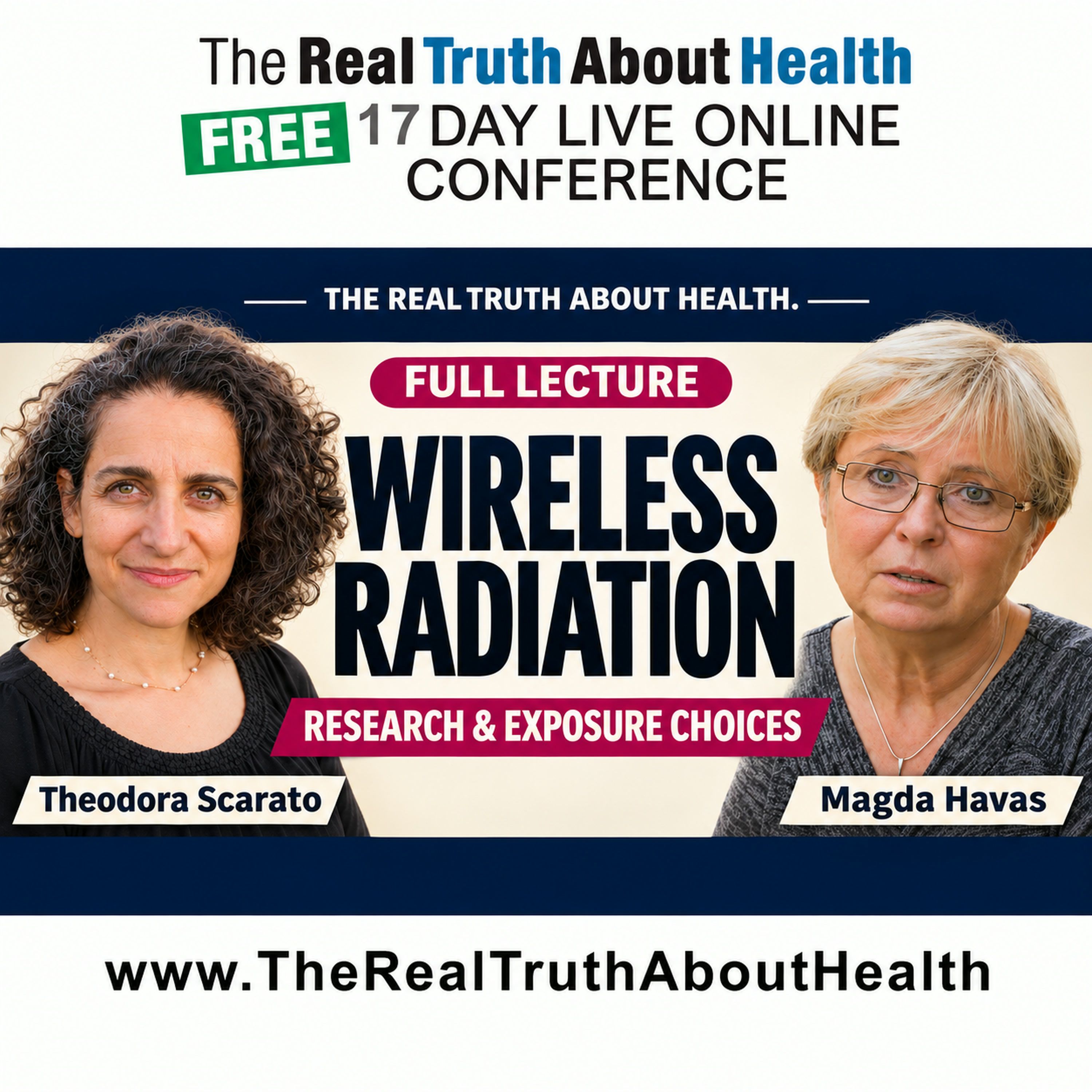
Wireless Radiation: What the Research Says—and How to Reduce Exposure if You Choose Theodora Scarato, MSW, and Magda Havas, PhD, examine what research says about wireless radiation and potential health effects. Learn about everyday exposure sources, scientific concerns, and practical steps people can choose to reduce EMF exposure at home, work, and school. #WirelessRadiation #EMF #PublicHealth
Fear has a way of quietly taking control of your life. It convinces you to stay where you are, avoid difficult conversations, delay decisions, tolerate situations you know aren’t good for you, and settle for a life that is far smaller than the one you are capable of living. In this episode of The Strong Life Project, we explore how fear impacts your thinking, your relationships, your career, your leadership, and ultimately your ability to live a meaningful life. Fear doesn’t always look like panic. Sometimes it looks like procrastination, overthinking, making excuses, people pleasing, avoiding conflict, or constantly waiting for the perfect moment. The problem is that every time you allow fear to make a decision for you, you reinforce the belief that you are incapable of handling what comes next. Over time, this creates a pattern of avoidance that undermines confidence, resilience, emotional strength, and personal growth. Learning to manage fear doesn’t mean becoming fearless. It means
For research and entertainment purposes only. ALL MY LINKS IN ONE PLACE Every week about 25,000 questions come through my AI chat app. It strips out anything personal and groups what people keep asking. This Q&A covers 27 of the most common ones from the last seven days. Mitochondria led the pack this week with over 3,000 asks. We get into running SS-31 before MOTS-c, mixing them in one syringe, fasting, and whether NAD+ injections still add anything on top of 5-Amino-1MQ and NMN. Then growth hormone. How milligrams convert to IUs. HGH versus tesamorelin versus CJC-1295 and ipamorelin. Why a good IGF-1 number on tesamorelin doesn’t tell the whole story. Binding proteins hold onto IGF-1, so less of it reaches your tissues. Plus the cancer question that comes up constantly. I also cover storage, which a lot of people won’t ask about publicly. How long mixed peptides last, fridge versus freezer, and whether bac water really goes bad at 30 days. We finish with healing peptides and GLP-1s.
On our way back from our latest trip to Tucson, Arizona, I put a question box on my Instagram Story, and you all sent in so many great questions that this week I'm doing an Ask Me Anything episode! I'm sharing more about our trip, including The Chosen's Come and See event, my reaction to an early screening of the crucifixion movie, and how I almost missed getting a picture with Jonathan Roumie, who plays Jesus on the show. Your questions covered all the bases, from how Zane and I met and whether I've always lived in Alabama to why Zane points his finger in every single photo. I'm also answering where I am with the Catholic Church right now, my best advice for mothers of the groom, the local estrogen I'll never be without for UTIs, the fiber supplements I recommend, and why I think brown is the new black. I love doing these, and I so appreciate every one of you who sent in a question! If you've ever wanted to get to know Zane and me a little better, this Ask Me Anything is for you. WHAT
Today, Mel is doing something she's never done before on The Mel Robbins Podcast. She's bringing members of her team into the studio for live coaching with world-renowned communications expert Vinh Giang. Vinh is known for teaching millions of people online how to stop sounding insecure, speak more clearly, and get people to listen when you talk. And when you hear him coaching today, it will be like he’s coaching you. One person freezes when they're put on the spot. Another can't stop interrupting people. Someone else has great ideas but stays quiet because they're afraid of being judged. Does any of that sound familiar? And Vinh isn't just giving advice. He's coaching real people through practical exercises, right there in the studio, so you can hear the difference and start making those same changes in your own life. As Mel says, put yourself in their shoes. As Vinh works with each person, you'll recognize things you struggle with, too. You'll learn: -What to do when your mind goes b
"I know I have OCD, but what if it's OCD and the bad thing is actually happening?" This week we act out the "yeah, but" conversation that OCD and anxiety love to have, with health, relationship, exposure and "am I going crazy" versions, and talk about why you can't be certain and don't need to be, including Dr. Sally Winston's idea of being "sure enough." We get into why obsessional doubt carries a burning sense of urgency that ordinary doubt doesn't, why OCD will argue that it isn't OCD, and how a worried voice and false comfort keep rumination going. We also look at why every theme runs on the same mechanism, how compulsions feed it, and why a ritual has no actual connection to the bad thing it's supposed to prevent. At the heart of this episode is the fact that much of human life is uncertain. This is a fact that OCD and anxiety disorders simply refuse to leave alone or accept! Plus Did It Anyway wins: going under general anesthetic after a panic attack, a long weekend in Paris with
"It's not working. I'm doing something wrong. What else can I do?" This week we talk about urgency and impatience in anxiety recovery, and why pushing harder so often backfires. We get into why urgency is part of the threat response itself, so behaving urgently tells your brain the alarm was right. We also talk about why "how long will this take?" has no answer we can give you, why a deadline like a wedding or a move can add pressure to the very process you're trying to ease, and what happens when a lifelong problem solver or high achiever tries to fix anxiety the way they fix everything else. We also look at self-compassion as a practical tool, and at why a good therapist never makes you feel behind. Our view here is clinical opinion, and it doesn't apply when there's a real danger. Plus Did It Anyway wins, including a first family reunion in over thirty years and a delayed breakfast after a blood draw. Drew's book Seven Percent Slower is mentioned in this episode. Find it here: ----
Businesses that attract visitors should help reduce the disruption experienced by neighbors.
Share your view, then see how readers voted. No sign-in required. This poll is shared across stories.
Do you agree or disagree?
Common Quandary
A Common Quandary to discuss
Another conversation to explore, separate from this news story.
Someone reserves the best gym machine with a towel. When may you move it?
At a crowded gym, a towel has occupied the most popular machine for fifteen minutes while its owner chats across the room. Gym rules prohibit reserving equipment, but everyone occasionally steps away between sets.
How long may convenience masquerade as continued use?