Listen through the publisher, then discuss the episode here or arrange an in-person Roundtable. Your city determines where to meet.
Roundtables are designed for groups of four, with a shared subject and room for everyone to speak. Come for discussion, with no dating expectation.
November 9, 2026 — Nvidia sells chips. But how much of its long-term value depends on the person running it? Zach and Chase discuss the investigation involving Jensen Huang and the investment question behind the headlines: how differently should investors value a company when its founder’s future becomes uncertain? Then, a sharp market rebound raises another question: did the outlook improve, or did investors simply unwind their hedges? In this episode: • Nvidia, founder dependence, and the difference between near-term earnings and long-term value • Why forced selling can give way to equally aggressive buying • Data-center development, political resistance, and uncertainty around future AI earnings • Whether lower prices already account for a slower buildout • Oil’s response to reported Iran negotiations—and the risks if expectations for a resolution fall apart A rising market can change positioning faster than it changes the underlying business outlook. The challenge is figuring out which one is driving the move.
Episode information is provided by the publisher. Listening takes place on the publisher’s service.
My guest today is Hayden Field, The Verge’s senior AI reporter, and we’re discussing the Anthropic IPO for our third and final episode in our series about AI in real life. The numbers are gigantic, but not really that important. The real story is what happens now — and whether Anthropic can continue to thread the needle of caring about and investing in AI safety while also being a public company beholden to shareholders. So you’ll hear Hayden and I dive into this tension, and what to make of Anthropic’s unique corporate governance structure in the wake of the Jensen Huang saga. Read the full interview transcript on The Verge. (https://www.theverge.com/e/1038701) Links: With biggest IPO of all time, Anthropic’s ‘good guy’ reputation is on the line | The Verge (https://www.theverge.com/ai-artificial-intelligence/1037459/anthropic-ipo-safe-ai-reputation-power-structure) Anthropic starts trading on Wall Street | The Verge (https://www.theverge.com/ai-artificial-intelligence/1035384/anthrop
Commodities, precious metals, and broader equity markets are caught in a sharp sell-off fueled by a surging U.S. dollar, aggressive Federal Reserve rhetoric, and year-end tax-loss selling. In this Weekend Edition of The KE Report, hosts Cory and Shad speak with Mike Larson (Editor-in-Chief at MoneyShow) and Brien Lundin (Editor of The Gold Newsletter) to separate short-term market panic from long-term fundamentals. Both guests share how they are navigating extreme sentiment swings, fading crowded trades, and identifying overlooked bargains across the resource sector. Segment 1 & 2 - Mike Larson, MoneyShow Editor-in-Chief, kicks off the show to unpack the sharp pullbacks across precious metals, copper, critical minerals, energy, and AI-driven tech stocks, exploring how a surging U.S. dollar and shifting Federal Reserve expectations are driving recent market volatility. Tune in as we discuss whether the recent downturn signals lasting chart damage or a contrarian opportunity to lean agai
Is the property downturn shifting from city to city, or are national headlines hiding what is happening on the ground? On this week's Australian Property Podcast, Pete Wargent and Chris Bates look at changing listings, buyer demand and price movements across Australia's housing markets. If you're considering a first home, an upgrade or an investment property, this episode offers questions to ask before acting. Check current lending and tax rules, and seek qualified personal advice rather than treating a podcast discussion as a recommendation. Episode resources Show partner resources Rask resources – Pete's Buyers Agency (https://www.allenwargent.com.au/) – All services (https://bit.ly/R-services) – Financial Planning (https://bit.ly/R-plan) – Invest with us (https://bit.ly/R-invest) – Access Show Notes (https://bit.ly/R-notes) – Ask a question (https://bit.ly/R-quest) – We love feedback! (https://raskau.typeform.com/to/ZbfHy6IP) – Instagram: @rask.invest (https://www.instagram.com/rask
WORRIED ABOUT THE MARKET? SCHEDULE YOUR FREE PORTFOLIO REVIEW with Thoughtful Money's endorsed financial advisors at https://www.thoughtfulmoney.comWell, last week's ugly action got a lot uglier this week.Tech stocks continued to drag the S&P and the NASDAQ downwards, wiping out much of their returns for 2026.Is this the big correction the bears have been warning about? Has the AI bubble popped?Or are things so oversold in the near term that a sharp recovery rally is due?Lance and I discuss the odds in this week's Market Recap.For everything that mattered to markets this week, watch this video.#aistocks #marketcorrection #technicalanalysis _____________________________________________ Thoughtful Money LLC is a Registered Investment Advisor Promoter.We produce educational content geared for the individual investor. It’s important to note that this content is NOT investment advice, individual or otherwise, nor should be construed as such.We recommend that most investors, especially if in
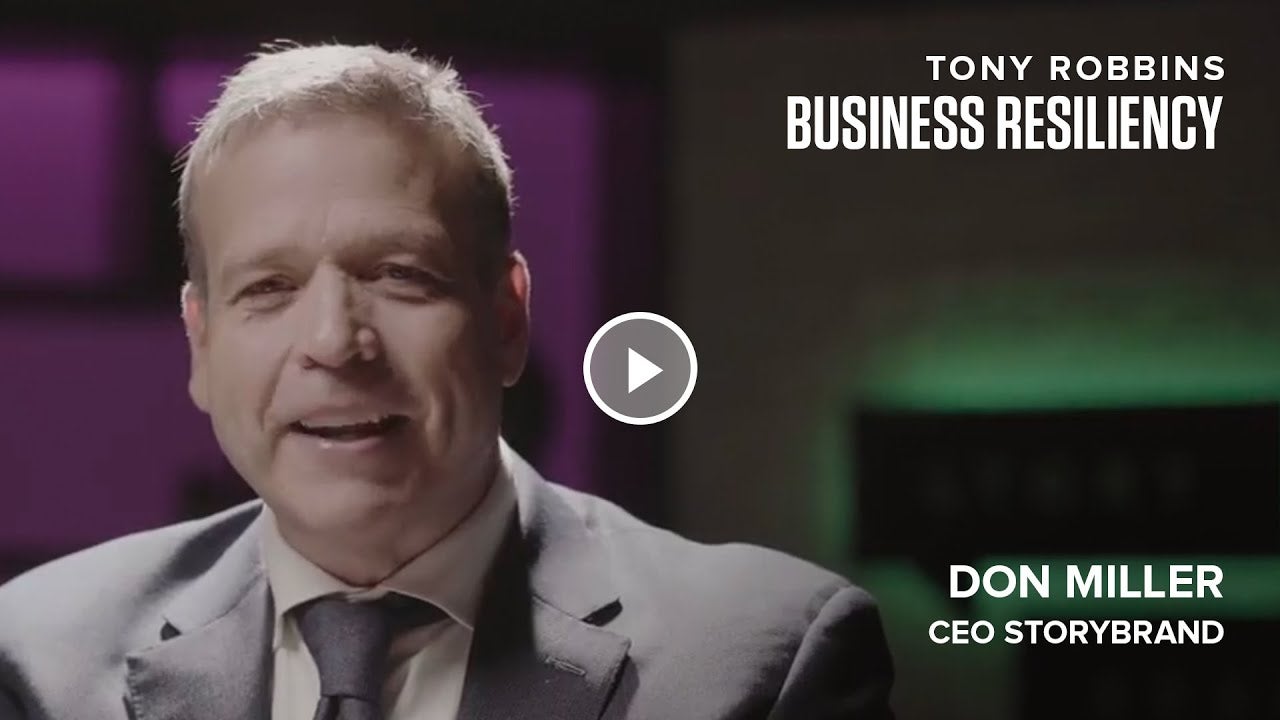
Donald Miller is a storytelling expert, founder of StoryBrand, CEO of Business Made Simple, author and speaker – and he’ll share with you the two most essential aspects of communication in times of crisis. Uploaded 22-04-20 Communication is a trait of great leaders, and in times of uncertainty, it becomes more important than ever. From Nelson Mandela inspiring a revolution during dark times to Indra Nooyi’s famously “straight-shooting” style when she took over Pepsi Co. with uncertain prospects, effective crisis leadership depends on the ability to communicate. Learn more about how you can develop your crisis leadership skills at https://www.tonyrobbins.com/career-business/crisis-leadership-skills. Communication in times of crisis is more than talking. Anyone can talk – leaders know that communication isn’t about talking, but about reassurance, demonstrating confidence and articulating a plan of action. There’s a reason that during times of stress, the president holds a press conferenc
Hey everybody, Tom Bilyeu here. On today’s episode of Impact Theory, we’re taking on a topic that’s got the whole world holding its breath: the escalating crisis between the United States and Iran. As tensions ratchet up, we’re asking the tough questions—how did we get stuck in this “escalation trap,” and what does it mean for America’s global leverage, our economy, and our very sense of security? The conversation focused on why the traditional idea of “strategy” might be failing policymakers, using powerful analogies—like chess versus roulette—to show how doubling down in conflict can spiral out of control. We’ll break down the risks of tactical “wins” that create even bigger crises, the real leverage Iran holds with control of the Strait of Hormuz, and the mounting pressure on President Trump as political support erodes and legacy hangs in the balance. A key theme that emerged is what happens when military might runs into decentralized opposition, and why high-stakes gambles—like the
November 19, 2026 — A major AI IPO should be a reason for the sector to celebrate. But what happens when investors fund the new opportunity by selling what they already own? Zach and Chase examine whether Anthropic’s debut added pressure to an AI trade already struggling with liquidity. They discuss the reversal in chip stocks, the broader market’s new lows, and a surprising sign of relative strength beneath the selloff. The conversation also covers their tactical SpaceX position, the distinction between improving fundamentals and an attractive stock price, and what could help a more durable market bottom form. Then, Straits of Our Lives turns to reports of Iran’s proposed tanker move and the possible consequences for oil and markets. Plus: why risk models can fail when they’re needed most, taking profits on hedges, and what options expiration could change.
November 18, 2026 — Falling prices can signal trouble ahead. But when does preparing for risk become pricing in a crisis that hasn’t arrived? Zach and Chase examine the disconnect between market sentiment, current economic conditions, and a selloff spreading beyond AI stocks. They discuss why comparisons with 2008 may miss important differences—and why liquidity pressure could still create another sharp move lower. The conversation covers Nvidia, international stocks, commodities, and the bond-volatility signals they’re watching. Could easing geopolitical tensions change the outlook for oil, inflation, and interest rates? What would distinguish a temporary rebound from a more durable turn? Plus: Straits of Our Lives, investor expectations after years of strong markets, and why buying a recovery is different from owning a long-term growth story.
November 17, 2026 — Jensen Huang, China’s access to advanced chips, and a string of technology outages: unrelated developments, or pieces of a bigger story? Zach and Chase put on their “moderate tinfoil hats” to examine a theory connecting the Nvidia controversy, U.S.–China negotiations, and competing priorities inside Washington. They debate how those connections might fit—and where the explanation still depends on speculation rather than established evidence. The discussion also turns to the practical questions for investors: Nvidia’s financing role in the AI buildout, the limits of chip-export restrictions, and whether the biggest long-term opportunities will belong to the companies building AI infrastructure or the businesses using it. Plus, an initial reaction to Nvidia’s earnings at the end of the recording.
Cultural events should adapt to welcome new audiences, even when some traditions change.
Share your view, then see how readers voted. No sign-in required. This poll is shared across stories.
Do you agree or disagree?
Common Quandary
A Common Quandary to discuss
Another conversation to explore, separate from this news story.
You are not sick—you just cannot face work today. Do you call in sick?
Your employer offers sick leave but no personal days. You are not physically ill, yet you feel exhausted and know a day away would help. Saying you are sick is the only way to take paid time off without explanation.
Do unjust workplace rules change the duty to be truthful?