JL and Jessica Collins: She Followed Her Dad’s Investing Advice. Then Quit the Job She Hated
49 min
Listen through the publisher, then discuss the episode here or arrange an in-person Roundtable. Your city determines where to meet.
Roundtables are designed for groups of four, with a shared subject and room for everyone to speak. Come for discussion, with no dating expectation.
Our guests on the podcast today are JL and Jessica Collins (https://jlcollinsnh.com/about/). JL is the author of the bestselling personal finance book, The Simple Path to Wealth (https://jlcollinsnh.com/books/), and is often called the godfather of the Financial Independence, Retire Early movement. Jessica is the author of The Simple Path to Wealth Workbook (https://jlcollinsnh.com/2026/11/16/how-jessica-took-the-simple-path-to-financial-independence-at-32/), which is a companion to the book. One thing that jumped out to us from this conversation is that JL seems to be mellowing a little bit on whether it makes sense to invest overseas. We’ve asked him about this every time we’ve talked, and we get the sense that he’s coming around a little bit on international investing. We also liked the point they both made about how a lack of interest in investing and financial matters can actually be a superpower: It can help you avoid the temptation to tinker with your portfolio or chase the latest shiny new fund, which can ultimately be counterproductive. Episode Highlights 00:00:00 Introduction 00:01:33 How Money Lessons Led to Financial Independence 00:07:54 Rethinking the FIRE Finish Line 00:18:24 Investing Simply and Spending Intentionally 00:25:38 Should Investors Expect Lower Returns? 00:28:57 Global Diversification, Inflation, and the 4% Rule 00:35:52 Is College Debt Worth the Cost? 00:38:31 Why a Home Is Not an Investment 00:41:47 Planning Your Portfolio Without Social Security More from The Long View Andy Clarke and Nelson Wicas: Index Funds Aren’t Really Passive, and Other Lessons for Building a Better Portfolio (https://www.morningstar.com/podcasts/the-long-view/andy-clarke-nelson-wicas-index-funds-arent-really-passive-other-lessons-building-better-portfolio) Adam Grossman: Asset Allocation Is an Investor’s Best Defense (https://www.morningstar.com/podcasts/the-long-view/adam-grossman-asset-allocation-is-an-investors-best-defense) Ryan Frederick: Why Your Home May Matter More Than Your Portfolio Later in Life (https://www.morningstar.com/podcasts/the-long-view/ryan-frederick-why-your-home-may-matter-more-than-your-portfolio-later-life) Hosted by Simplecast, an AdsWizz company.
Episode information is provided by the publisher. Listening takes place on the publisher’s service.
After years of looking foolish, value investing has suddenly reminded everyone why patient diversification matters. Don and Tom revisit the century-long value premium, the painful stretch when growth dominated, and the sharp 2026 reversal that rewarded investors who stayed disciplined. They compare how broad global funds such as AVGE, DFAW, and VT expose investors to value, size, and profitability. Then a 32-year-old listener with a high tolerance for volatility asks how far he can push risk without simply making a concentrated bet. The final questions cover Roth conversions, Medicare IRMAA surcharges, and a short shelf of investing books that are actually worth reading. 00:49 Value returns after a long drought 08:55 How global funds tilt toward value 13:19 How much risk is too much at 32? 20:16 Roth conversions and IRMAA surcharges 27:57 Investing books worth reading Questions? Comments? Click! (https://www.buzzsprout.com/2607021/fan_mail/new)
Simon McLoughlin is the CEO of Uphold. In this conversation, we break down why the crypto thesis isn't broken despite the drawdown, how AI agents and tokenization could reshape wealth management, and why DeFi may have an edge over traditional banks. We also discuss Uphold's Autopilot strategy, where the risk is in today's market, and the outlook for bitcoin. ======================= ======================= This episode is sponsored by GraniteShares. GraniteShares is launching AIL and ANS, two ETFs built to trade Anthropic's daily move. AIL seeks two times Anthropic's daily performance and ANS seeks two times the opposite, with no margin or borrowing needed. Both reset daily, are built for short-term traders, and carry significant risk. Learn more at https://www.graniteshares.com/anthropic-leveraged-etfs This video includes a paid sponsorship with GraniteShares. AIL and ANS are proposed funds and are not yet available for trading; their launch depends on Anthropic becoming publicly trade
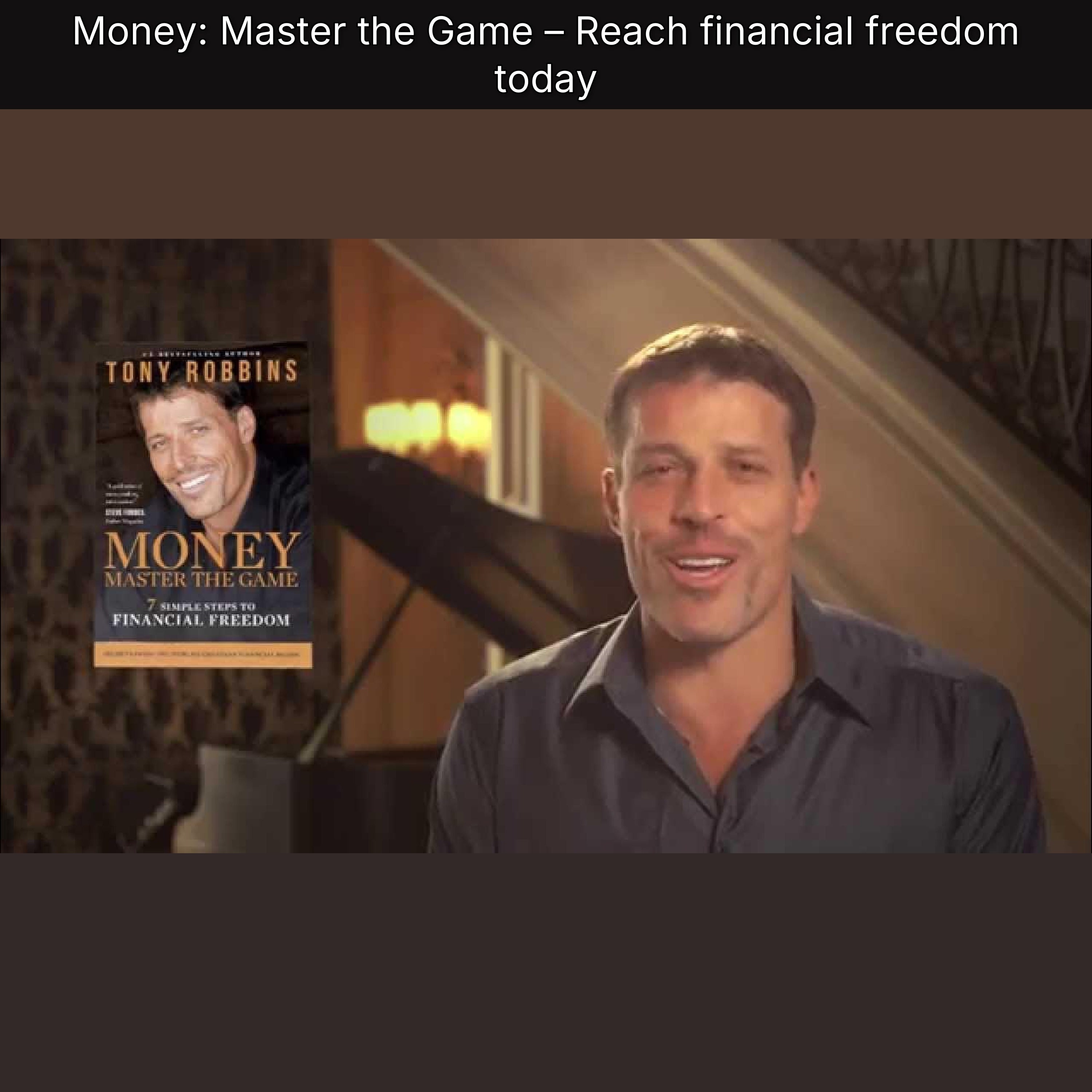
Do you want to achieve financial freedom? Financial freedom is the ultimate dream. It’s the ability, as Tony Robbins says, “to do what you want, when you want, with whom you want, as much as you want.” It’s living the fulfilling life you deserve. It’s a big promise, but this book delivers. When it was first written, Money: Master the Game was Tony’s first book in two decades. It was a passion project, because Tony knew that it could truly transform lives. He spent more than four years interviewing 50 of the most brilliant minds in the financial world, and their advice is all here, including: Carl Icahn, a legend of investing who has delivered his clients 1600% return over 14 years. Jack Bogle, the founder of Vanguard, with 64 years in the financial business. Ray Dalio, the da Vinci of investing, who before retirement required $5 billion to even start investing with him. Tony has taken all of their advice and distilled it into a step-by-step plan anyone can use to achieve financial free
Now Mark wants to help you become financially free as well. Follow the podcast and turn on notifications! This Podcast is fan-made. No copyright infringement intended. ------------------------------ -------- Keywords: money tips, get rich, financial scams, financial education, buying vs renting, wealth creation, financial freedom, atm fraud
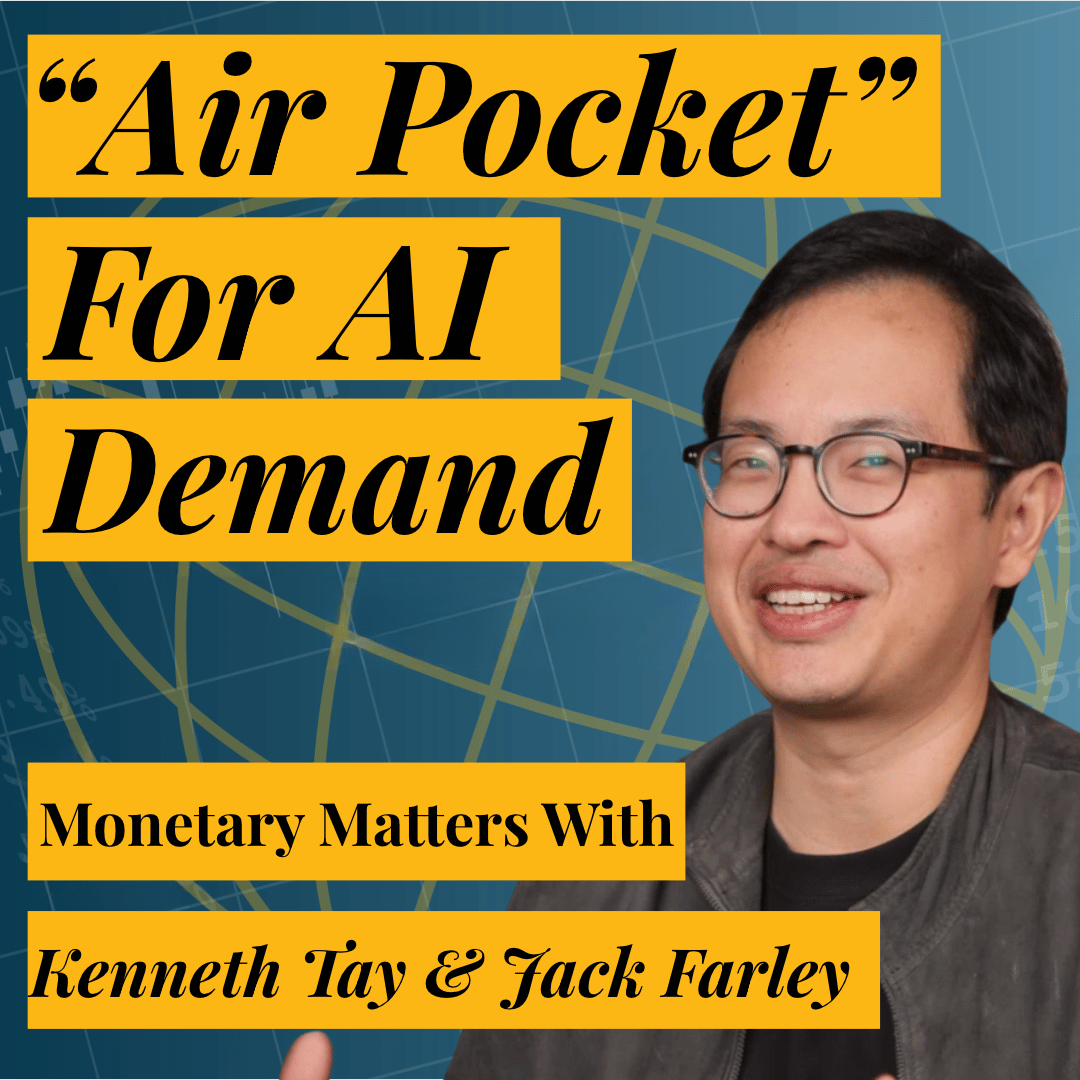
This episode is brought to you by Sarmaya Partners. Learn more about Sarmaya’s LENS ETF, their full data and comparison, including performance here: Recorded at the TomorrowX Summit, Jack sits down with Kenneth Tay, head of content at Funda, the Singapore-based research firm whose analysts call companies around the world to ask what they're really spending on AI. Kenneth explains why Funda's surveys turned the firm cautious: enterprise AI budgets for 2027 aren't growing fast enough to justify what the market expects from frontier-lab revenues, and the scramble for forward-deployed engineers suggests AI is hard to roll out inside large companies. They discuss whether coding alone can carry AI demand, why Funda sees cybersecurity incumbents like CrowdStrike as beneficiaries rather than casualties, and where token prices are headed. Kenneth explains why investors in China and the rest of Asia turned bearish before New York and the Bay Area, and how they spotted shortages in NAND memory an
In today’s episode, Kyle Grieve and Shawn O’Malley discuss Rollins, one of the two giants of American pest control. They look at how a business that has grown revenue for 100 quarters in a row saw its stock fall nearly in half after Google’s AI answers changed how homeowners find pest control companies. Along the way, they cover route density, Rollins’ acquisition playbook, why its customers stick around for years, the family that built it, the risks to its growth, and the company’s current intrinsic value. IN THIS EPISODE YOU’LL LEARN: (00:00:00) Intro (00:04:11) Why a company with 100 straight quarters of revenue growth saw its stock fall nearly in half (00:07:25) Why paying a fast-grower price for a steady grower can hurt investors (00:10:54) How route density makes each new customer almost pure profit (00:12:39) How Google’s AI search changed the way homeowners find pest control (00:27:28) The four reasons customers stick with their pest control provider (00:37:49) How Rollins make
Our guest on the podcast today is David Blanchett (https://www.linkedin.com/in/david-blanchett). David is the head of retirement research (https://www.pgim.com/us/en/individual/about-us/biographies/investments/david-blanchett) for Prudential Financial and a portfolio manager for PGIM. He’s also an adjunct professor of wealth management (https://www.theamericancollege.edu/about-the-college/our-people/faculty/david-blanchett) at The American College of Financial Services and a research fellow for the Alliance for Lifetime Income. Previously, he was head of retirement research (https://www.morningstar.com/people/david-blanchett) at Morningstar Investment Management, LLC. David is a prolific writer and thinker about retirement-related issues. One of the big takeaways from our conversation is that, with so much uncertainty around lifetime spending, health shocks, and long-term-care expenses, it can be valuable to plan for multiple retirement scenarios rather than lock yourself into a single
Today’s guest is Meb Faber (https://mebfaber.com/). Meb is a co-founder and the chief investment officer of Cambria Asset Management (https://www.cambriafunds.com/about). Meb just released a new book called Investing in America: The Rise of a 250-Year Bull Market (https://mebfaber.com/2026/05/28/my-new-book-investing-in-america/). We enjoyed so many things about our conversation with Meb, but first and foremost was the overall tone of hope and optimism looking back over the long history and the long success of American financial markets. We also really liked his comments about the importance of having a written investment plan, and why he thinks we’re starting to see a bull market in diversification. Episode Highlights 00:00:00 Introduction 00:01:17 Investing in America and US Market Resilience 00:11:56 AI, Innovation, and Investment Booms 00:16:18 What Could Drive a Market Rotation? 00:20:32 Why Investors Should Diversify Beyond US Stocks 00:23:17 Hetty Green and the Future of US Inve
Today on the podcast, we welcome back Dr. Jim Dahle (https://www.linkedin.com/in/james-m-dahle-37289150). Jim is a practicing ER physician, and he’s also the founder of The White Coat Investor (https://www.whitecoatinvestor.com/), which is a financial education platform for healthcare professionals. The White Coat Investor includes a podcast (https://www.whitecoatinvestor.com/wci-podcast/), blog (https://www.whitecoatinvestor.com/blog/), conferences (https://web.cvent.com/event/2d1d4234-5b30-4bd1-a561-a1d11b844088/websitePage:956ca350-8971-474f-86b7-8574526b1698), and other educational resources (https://www.wcicourses.com/l/products?page=1&sortDirection=asc&sortKey=recommended). He is also the author of several books about money and investing, including his most recent, The White Coat Investor’s Guide to Asset Protection (https://www.whitecoatinvestor.com/books/). One of the highlights from the episode was Jim’s explanation of how he shifted to become a “recovering optimizer” with his
Keeping personal information private is worth giving up some digital convenience.
Share your view, then see how readers voted. No sign-in required. This poll is shared across stories.
Do you agree or disagree?
Common Quandary
A Common Quandary to discuss
Another conversation to explore, separate from this news story.
The buffet is unlimited while you are inside. Can one sandwich leave in your pocket?
An expensive hotel brunch advertises unlimited food but forbids takeout. You are full, yet quietly assembling a sandwich for later would cost the hotel almost nothing. Several trays will likely be discarded after service.
Does preventing waste justify ignoring the boundary of a bargain?