Listen through the publisher, then discuss the episode here or arrange an in-person Roundtable. Your city determines where to meet.
Roundtables are designed for groups of four, with a shared subject and room for everyone to speak. Come for discussion, with no dating expectation.
The US economy added 165,000 jobs last month, far exceeding expectations, while the unemployment rate fell to 4.1%. But wages continue to lag behind inflation. ... Global markets are stabilizing after a massive sell-off wiped roughly $2.5 trillion from the Nasdaq amid fears a Democratic-led Congress could slow AI growth. ... Democratic presidential hopefuls are already courting Rep. James Clyburn as the jockeying for 2028 begins.
Episode information is provided by the publisher. Listening takes place on the publisher’s service.
Runaway government spending, rising costs, and a new wave of legal battles over constitutional rights. With Democrats preparing to take control of Congress and several state governments, Republicans are confronting a very different political landscape. John Solomon and Amanda Head welcome Montana Senator-elect Kurt Alme, who says Washington must get serious about reining in spending, lowering inflation, and making everyday life affordable again. Already preparing for his arrival in the Senate, Alme discusses his priorities for protecting Montana's way of life, keeping taxes low, creating good-paying jobs, and working across party lines when possible. He also addresses the challenges Republicans face in the minority, the remaining lame-duck session, and concerns about efforts to expand the Supreme Court and eliminate the filibuster. Then, Southeastern Legal Foundation President Kimberly Hermann joins the show with a warning about potential policy reversals in states where Democrats have
Tonight on The Last Word: Democrats take power as voters demand economic relief. Plus, Democrats demand records from law firms who caved to Trump. Also, Trump defends Jensen Huang amid alleged Chinese spy affair. And Google sought failed airline's worker data to feed AI. Rep. Joaquin Castro, Rep. Chellie Pingree, Barbara McQuade, Tim O'Brien, and Sarah Nelson join Jonathan Capehart Hosted by Simplecast, an AdsWizz company.
After a deluge of speculation, the next James Bond has been chosen: British actor Robert Pattinson will be the next face of the franchise. The public response has been overwhelming, if somewhat divided. To celebrate, we’re revisiting an episode from June, about a behind-the-scenes David and Goliath battle between the family business which has held creative control of the franchise since the 1960s and its new owners, Amazon. It is now up to Jeff Bezos’s tech conglomerate to decide how to run the series. In an era when Hollywood studios are desperate to eke out every last dollar from movie franchises, can James Bond retain its mystique and appeal to a new generation of cinema-goers? We speak to Wall Street Journal enterprise reporter Erich Schwartzel. Producers: Xandra Ellin and Lucy Pawle Video producers: Richard Kenny and Jem Westgate Mixed by: Travis Evans Executive producers: James Shield and Martine Powers Senior news editor: China Collins Photo: Robert Pattinson as James Bond. Jaap
The King Charles series builds to a defining moment as King Charles III delivers a masterclass in diplomacy during his pivotal United States visit. From a historic address to Congress to moments of quiet connection in New York, this episode explores how decades of preparation, scrutiny, and patience culminated in a performance that reshaped perceptions of the King. As global tensions simmered and expectations remained high, Charles stepped into the role fully, not as the successor to Queen Elizabeth the Second, but as a monarch in his own right. This is the moment the waiting ended, and the reign truly began. One subscription, the whole family, no ads. Try it free for 30 days: tap Try Free in Apple Podcasts. Got an App Store gift card? This is a good use for it. New episodes every day. Follow on Apple Podcasts, Spotify, or wherever you listen. Part of the Caloroga Media network. Also check out new seasons of
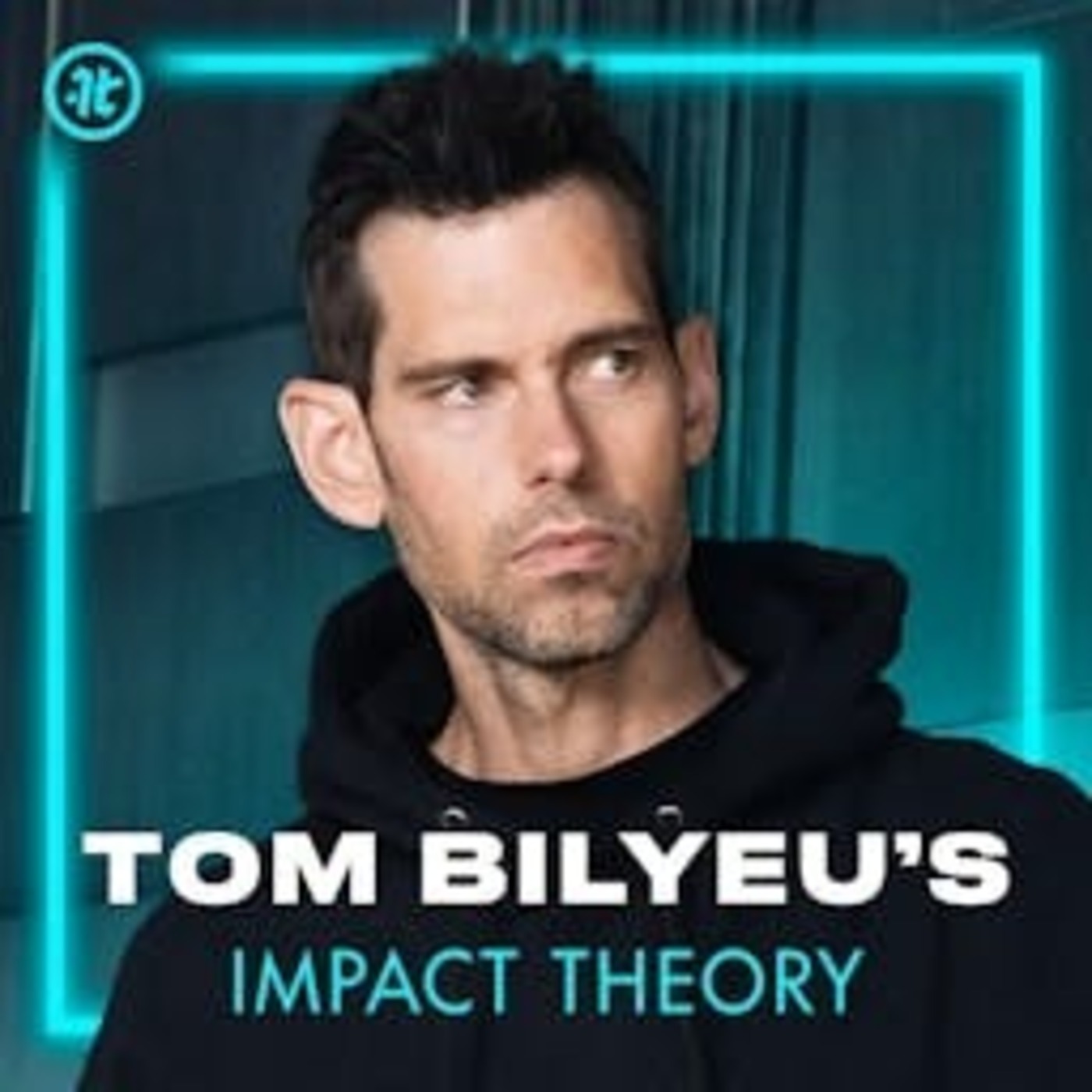
Hey everybody, Tom Bilyeu here. On today’s episode of Impact Theory, we’re taking on a topic that’s got the whole world holding its breath: the escalating crisis between the United States and Iran. As tensions ratchet up, we’re asking the tough questions—how did we get stuck in this “escalation trap,” and what does it mean for America’s global leverage, our economy, and our very sense of security? The conversation focused on why the traditional idea of “strategy” might be failing policymakers, using powerful analogies—like chess versus roulette—to show how doubling down in conflict can spiral out of control. We’ll break down the risks of tactical “wins” that create even bigger crises, the real leverage Iran holds with control of the Strait of Hormuz, and the mounting pressure on President Trump as political support erodes and legacy hangs in the balance. A key theme that emerged is what happens when military might runs into decentralized opposition, and why high-stakes gambles—like the
This week on The Necessary Conversation, it's Chad, Haley, and Mary Lou. Bob is still recovering but sent in a video message about Trump calling Putin his friend that we watch together. 🇷🇺 Trump held the first-ever three-way talks with Putin and Xi, called it a "12 out of 10," and produced nothing. Then at a press conference he called Putin his friend — and when asked if Putin is a friend to America, the president of the United States said, "I can't speak to America." That same day, Trump's friend Putin launched massive strikes into Ukraine, hit Poland with two missiles — an act of war against a NATO ally — then struck near a Ukrainian restaurant and drone-bombed the first responders, killing a 7-year-old child and a 20-year-old paramedic. We watch Bob's video and ask Mary Lou: is Russia our friend? 🇨🇳 The House Foreign Affairs Committee revealed Trump's Commerce Department approved nearly 880,000 advanced AI chips for Chinese military-linked companies including Alibaba, Tencent, a
President Trump faces growing concerns over a series of major tech outages as National Cyber Director Sean Cairncross is replaced. The White House says Trump supported the decision because Cairncross lacked strong cyber credentials ... The NSA says a dayslong outage of its classified internal communications network has been resolved and was caused by a software patch, not a cyberattack ... Cybersecurity expert Judith Germano discusses the growing risks posed by AI and the need for more resilient government and private-sector networks.
President Trump returns from a major Asia tour after an unprecedented trilateral meeting with Chinese leader Xi Jinping and Russian President Vladimir Putin, but without any major agreements ... Anthropic makes the largest stock market debut ever as the AI company goes public at a roughly $1.5 trillion valuation ... Heavy rain and flash flooding swamp parts of South Florida, with more rain on the way.
A string of major technology failures affecting air travel, banking and other critical systems is raising questions about the vulnerability of US infrastructure, even as officials say there is no evidence the disruptions are connected ... President Trump is in Asia ahead of an unprecedented meeting with Chinese President Xi Jinping and Russian leader Vladimir Putin, with trade, AI and nuclear arms among the issues looming over the talks ... New US intelligence indicates Iran is developing potential plans to target senior Trump administration officials in Washington with a dirty bomb or chemical weapon.
A workable temporary compromise is often better than delaying all action.
Share your view, then see how readers voted. No sign-in required. This poll is shared across stories.
Do you agree or disagree?
Common Quandary
A Common Quandary to discuss
Another conversation to explore, separate from this news story.
A donor's family wants to hear their loved one's heart beating in you. Do you meet them?
A transplant recipient receives a letter from the donor's family asking to meet. The recipient feels profound gratitude but also discomfort and wants their recovery to remain private and separate from another family's grief.
Can receiving an extraordinary gift create a personal obligation to strangers?