GOT7's JAY B joins us to talk about his new EP ‘TR.EE,’ the responsibility of leading GOT7, and finding a balance between artistic freedom and the business of making music. He opens up about the group's departure from JYP Entertainment, why protecting the GOT7 name was so important, and how all seven members came together to purchase their trademark rights. He also reflects on growing into his role as leader and the chemistry that makes GOT7 work. JAY B also breaks down his various creative identities and projects, including Def., JJ Project, Jus2 and ØFFSHORE, and how each allows him to explore different sides of his artistry. He discusses his approach to songwriting and production, the inspiration behind ‘TR.EE,’ and the unexpected life lessons he learned from caring for houseplants. Plus, writing in Korean versus English, working with Jay Park, running his own label, his evolving relationship with fans, and his ambitions to release a full-length solo album and explore acting.
2 - 1 = 3. Just like Yoko Ono, we here at The Untitled Beatles Podcast use numerology as a guide to navigating creative decisions, financial matters, and simple math. And since Part 2 of our Double Fantasy deep dish covers Side 1, that means this is a 3-parter. Yes, it’s a UBP Triple Fantasy!!! As T.J. and Tony frolic track by track through the album’s first half, the numbers and cards and dices provoke further ruminations, such as: Is the Cheap Trick version of ABBA’s “Fernando” worth buying this $900 solo Anni-Frid Lyngstad bootleg 45? Can a Sennheiser e 835 Cardioid microphone double as a vibratory massager for women’s health and zest in the joy of living? Could Larry David score a #1 on the European Hot Dance charts by adding a Roland 808 drum machine to S2E3 of “Curb Your Enthusiasm”? EPISODE LINKS Please support our scrappy show.
Few artists have approached electronic music with the restless curiosity of Agoria. This year marks three decades since the French DJ and producer began his journey, alongside another milestone: the 100th release on his Sapiens imprint. For Balance, his connection runs deep. In 2010, he delivered the acclaimed Balance 016, an adventurous double-disc compilation that reflected his disregard for genre boundaries and his instinct for finding unexpected connections between sounds. Sixteen years later, that same exploratory spirit remains central to his work. As he celebrates 30 years in electronic music, we welcome Agoria back for a special edition of Balance Selections. Tracklisting & interview: https://balancemusic.com.au/balance-selections-393-agoria @agoria ------------------------------------- Follow: Instagram: www.instagram.com/balance_series Facebook: www.facebook.com/balanceseriesmusic Youtube: www.youtube.com/@balancemusicofficial
■ PUN He started with an 800-baht microphone in his bedroom — and at the height of it all, he stepped away to become a monk. PUN is a Thai R&B and indie-pop singer-songwriter signed to Universal Music Thailand. He started as a teenager in a school rock band, then recorded songs into an iPad through an 800-baht microphone. As PUNYARB he joined YARBCREW, an underground hip-hop crew, as its youngest member and the one who brought the melodies. He never studied theory; he wrote lyrics "10 times, 100 times, 1,000 times" until he found his voice. His debut single, "Kryptonite," on High Cloud Entertainment, was not hip-hop at all, a deliberate step out of his comfort zone. He moved to Universal Music Thailand in 2023 with "Therapist," then released "GOODBYE," which passed 30 million streams in two months, and "DAY ONE," written in a single day and now past 100 million. His 2024 debut album, "PUN," has passed 600 million streams and won Best New Artist and Best Album in 2025, the year his firs
Thank you Zocdoc for sponsoring Today's video. Your health matters and taking care of yourself shouldn't be complicated. Go to https://www.zocdoc.com/professorofrock (https://www.youtube.com/redirect?event=video_description&q=https%3A%2F%2Fwww.zocdoc.com%2Fprofessorofrock&redir_token=QUlxb01IWkVKTDBwR3ZLWkFHTlhkNk1BMXMyYXxBQnJ0NjlsNTY5QW5PVGg3SmRpN3JZbzhtRmlraHRxaGNsZElZQnRuT2xibUdtNUhFQmV4bkJJamdCUVBJbFh3dWNELWtCVm9xQjIzVXdnQ3ZkcnpYbXhnWm01UE5ZYVhIcDJj&v=Js1l7xE1tko) to get started. Coming up… we're going back to 1983 for a unique perspective on a group of songs that deserved better than they got, including a bunch of special guests on the show. Including the story of Sting, who wrote a self-deprecating masterpiece after his girlfriend made fun of him. He turned it into a smash. Plus several controversial songs that became huge hits because, frankly, their double entendres went over censors' heads… Including the only time the naughty word about self-love was ever sung in a hit song, a
Short version Laura Frank is an artist from the Scenic Rim in Queensland who has been releasing music since 2019 and toured Australia extensively with Tom Curtain and his Outback Experience. She has released her debut album, Life in the Front Seat, and the current single is ‘Living My Life in the Front Seat’. Long version Laura Frank (https://www.laurafrank.com.au/) is a multi-disciplined artist from Queensland’s Scenic Rim who has been releasing music since 2019 and also makes videos, both for her songs and for other people. She’s also a veteran of fellow artist Tom Curtain’s Outback Experience, sharing the stage with him and taking her own animals on the road, joining Curtain’s horses and dogs. Life in the Front Seat is her first album, a collection of songs written by Frank and her husband and collaborator, Nick Morrissey. ‘I’m really proud of the fact that Nick and I have written all of our material,’ Frank tells me in this new interview as we discuss only the album and several oth
Junior Campbell was on his paper round when Heartbreak Hotel started playing inside a house, and he stopped to listen. On his fourteenth birthday in 1961, he met the members of a group called the Gaylords. Five years later they were Marmalade. In part one of this two-part conversation, Junior tells the Marmalade story from the start. ‘How I See the Rain’ gave them a chance to record one of their own songs, Jimi Hendrix’s admiration, and why ‘Lovin’ Things’ felt like the only option left. ‘Ob-La-Di, Ob-La-Da’ was recorded overnight after a charter flight back from the north of England, and the band wore kilts on Top of the Pops to settle a bet. At Decca he had the independence he had been promised. He wrote the music and chorus of ‘Reflections of My Life’ the day before the first session. The episode ends with ‘Can You Help Me?,’ recorded just before he left and found in the Decca archive in the late 1990s. Further information Junior Campbell – YouTube (https://www.youtube.com/@JuniorCa
An AWOL soldier from Vietnam sat down in Love’s booth at a San Francisco club, placed his gun on the table and told a tale which became ‘A House Is Not a Motel’ for Arthur Lee. Love have reunited ahead of their 60th anniversary tour of Forever Changes in the UK in May 2027. They lived next to Frank Zappa in Laurel Canyon so they wanted to capture the whole decade in one place. It wasn’t all straightforward. Elektra said they couldn’t afford to do a double album. The Wrecking Crew didn’t sound like them and Neil Young turned up in the studio to try and produce them. They still managed to complete most of the album. David Angel did the orchestrations. His trumpet solo on ‘Alone Again Or’ was written as Johnny would play his guitar as a warm-up after lunch. Ken Forssi wrote ‘You Set the Scene’ from three different pieces. The photo on the back cover was irrelevant. Someone knocked over a vase and Arthur picked it up. The rest of the interview starts from the beginning. He played his class
Around 1989, as Colin Moulding remembers it, David Gilmour invited him down to the studio to play with Pink Floyd ahead of a world tour that would have taken the best part of a year. Colin thanked him and said no. Touring and writing do not mix for him, and he knew XTC had another album in them. That story arrives late. He explains how the title track of his new single Want It Bad (The Pep Talks and Playing Fields of Old England) began with a line he said to his granddaughter in the kitchen, and how b-side Something About the Boy came out of his wish to write a Bond theme. From there the conversation goes back through XTC: the Dukes of Stratosphear records with John Leckie, Skylarking with Todd Rundgren, and the packaging deduction that led to the strike. Colin says XTC was past its sell-by date by the time Wasp Star was finished. He also looks back on TC&I with Terry Chambers, which drew a live response so big he lost sleep for weeks, and on the two years he spent watching telly befor
Competing digital services should be required to support basic interoperability.
Share your view, then see how readers voted. No sign-in required. This poll is shared across stories.
Do you agree or disagree?
Common Quandary
A Common Quandary to discuss
Another conversation to explore, separate from this news story.
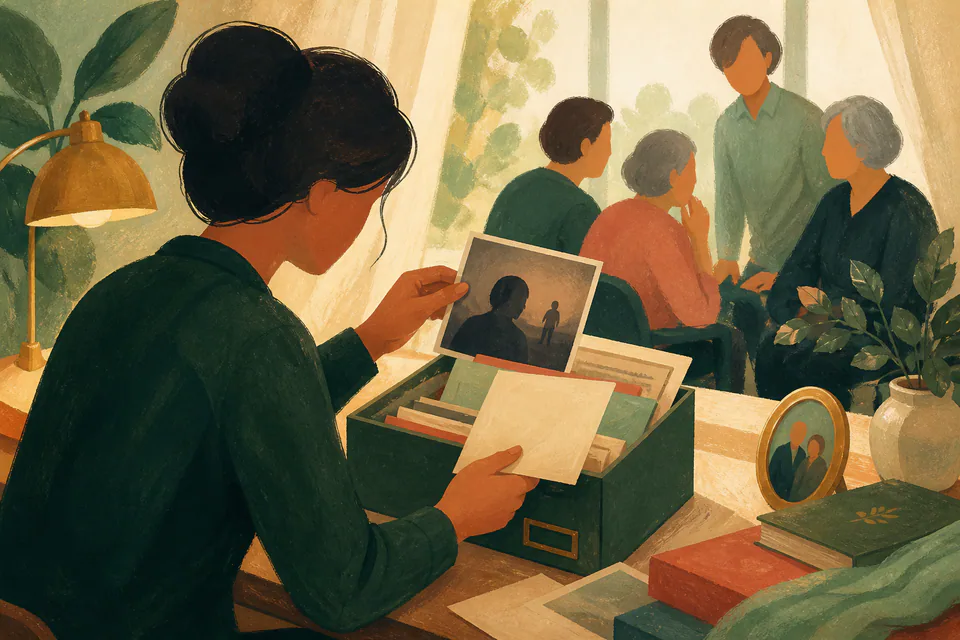
You find a family secret after a relative dies. Does the truth come out?
Sorting through a deceased relative's papers, you discover evidence of a serious betrayal that would change how the family remembers them. Revealing it could answer old questions—and cause fresh pain.