Listen through the publisher, then discuss the episode here or arrange an in-person Roundtable. Your city determines where to meet.
Roundtables are designed for groups of four, with a shared subject and room for everyone to speak. Come for discussion, with no dating expectation.
Australian Women Artists The podcast Ep 93 Kathrin Longhurst Kathrin Longhurst’s story is – to this show – unique. And fascinating. Kathrin is a German-born Australian figurative painter known for her powerful oil portraits that blend classical realism with themes of personal displacement, gender, and resilience. Growing up behind the Berlin Wall, she was steeped in the visual rhetoric of that era and has utilised that to promote and celebrate individual female autonomy and strength. From her breakout series re-evaluating that period’s iconography to winning the Archibald Packing Room Prize with her portrait of singer Kate Ceberano, and the many finalist awards in major art prizes in between as well as having over 25 solo exhibitions, Kathrin has established herself as one of the most compelling voices in Australian contemporary portraiture. “Her large-scale paintings celebrate autonomy and defiance, a reminder of the power in rewriting one’s narrative.” To have a listen to our conversation, head to where you normally find your podcasts and search Australian Women Artists, or hit the link in my bio above. Kathrin is represented by: Eloise Cato Gallery (@cato_gallery) Gallery One (@galleryone_art) Flinders Lane Gallery (@flinderslanegallery) To see more of Kathrin’s work, including some works still available, head to www.kathrinlonghurst.com (http://www.kathrinlonghurst.com/) Images 1. KL by Greg Weight 2. Falling too Far, 2020 oil on linen 180 x 180 3. The Burial of Love, 2020 oil on linen 180 x 180 4. Mariana, 2020 oil on linen 180 x 180 5. Like the Wind, 2018 oil on linen 90 x 90
Episode information is provided by the publisher. Listening takes place on the publisher’s service.
A 7% drop in Australian wine exports doesn’t sound huge until you put it next to the reality of a small local market and a massive national crush. We dig into what’s driving the latest numbers, including tariffs and cost pressures in the US, a lift in Canada as US wine disappears from government-controlled shelves, and why China’s “restocking” story is more complicated than the headlines. We also talk about the uncomfortable truth that a big slice of what we export is bulk wine, which can be cheaper and lower carbon, but can also mean less control over the final bottle and the way your wine shows up for consumers. Then we compare how the major wine states are responding to the squeeze and why their approaches barely resemble each other. South Australia throws serious money at oversupply and vineyard transition, while New South Wales focuses on tourism and consumer demand, Tasmania doubles down on premium, and Victoria prioritises efficiency, risk management, biosecurity and sustainabil
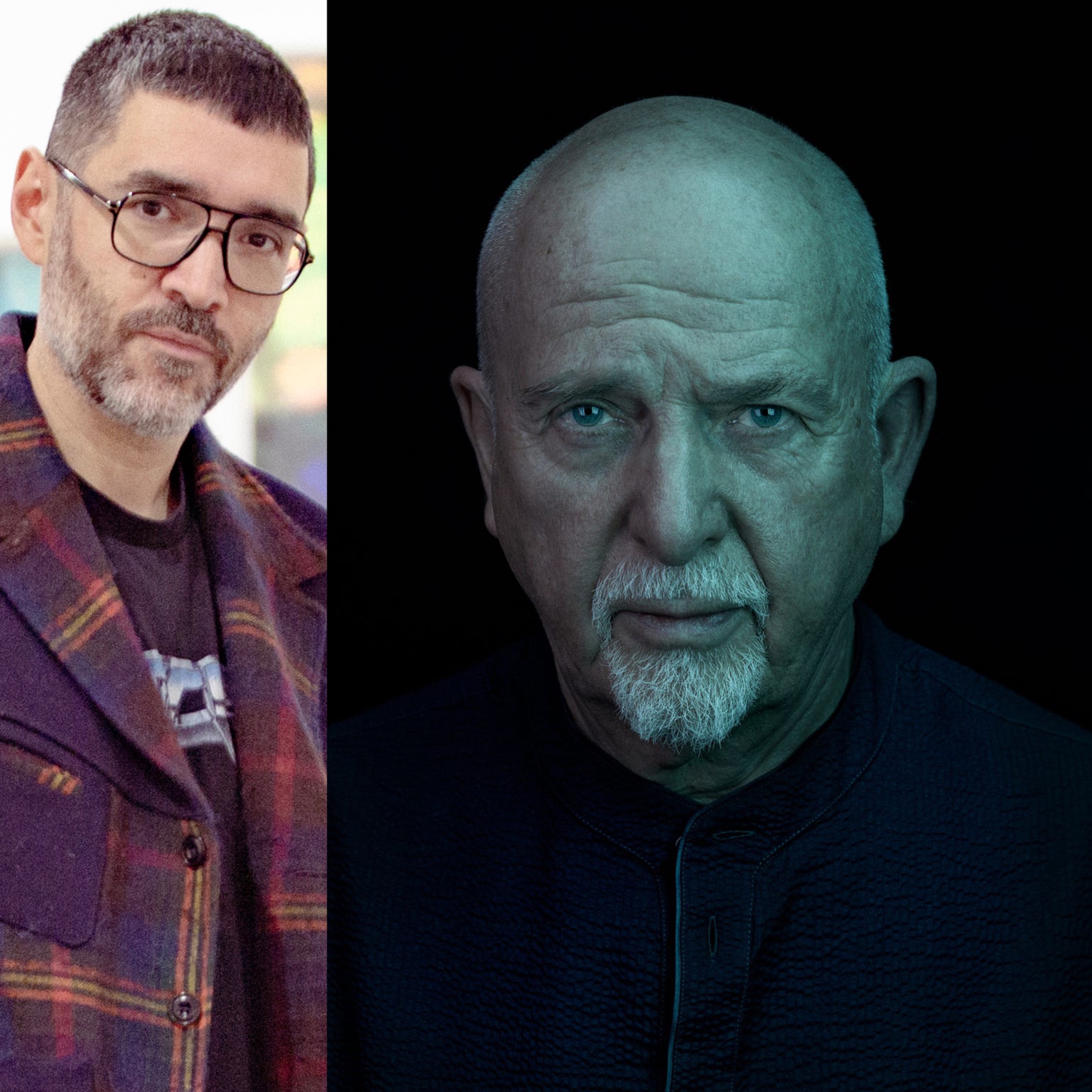
It’s episode 400 of @TalkArt podcast! To celebrate Robert meets PETER GABRIEL, singer, songwriter, producer, musician… ICON! We discuss his inspiring new album o\i and his lifelong passion for art and collaborating with visual artists across six decades including Helen Chadwick, Cathy de Monchaux, Nadav Kander, Ai Weiwei, Cornelia Parker and more. Following a year in which Peter Gabriel has released a new song on every full moon, the 27 November sees the release of his new studio album, o\i, the follow up to his critically acclaimed album of 2023, i/o, a number 1 in the UK album chart. Peter Gabriel returns with a brand-new collection of songs after a mere three years – his shortest gap between studio albums since the early 1980s. o\i is a companion piece to its reflected name-sake i/o expanding on many of the same themes: our relationship with nature, the passing of time, the increasing influence of technology in our lives and our place in the world; “Trying to get a handle on where y
This is the very first episode of Beyond the Label, a bonus series on Behind the Design that steps outside the design and build world and into the wider creative one. Camilla sits down with Madalynne Clifton and Sara Spence, the Newcastle friends behind Kate & Kole, a female-led fine jewellery studio working exclusively with lab-grown diamonds and recycled gold. Eleven years ago they had a 3D-printed ring, an Instagram page and a few glasses of wine. They put in $750 each, reinvested 10% of every sale into marketing, and kept the business deliberately slow alongside their other work. Today they have a team of around 25, a gallery-like studio in Newcastle, residencies around the country and a home in SoHo, New York. They talk about holding the line on lab-grown diamonds from 2015, making 96 to 98% of their pieces in Australia, and why they always say no when a customer asks them to copy another brand's design. They also go back to the year everything happened at once: going full time, m
The Gilded Age is back! I’m not just talking about the billionaires of today, or the hit HBO series (https://news.artnet.com/art-world/john-singer-sargent-the-gilded-age-hbo-2660432), but a new exhibition (https://www.metmuseum.org/exhibitions/designing-the-gilded-age-drawings-from-the-studios-of-louis-c-tiffany) at the Metropolitan Museum of Art dedicated to the spectacular designs of Louis Comfort Tiffany (https://news.artnet.com/art-world/louis-comfort-tiffany-met-nassau-market-2799918). That name will ring a bell for anyone with a passion for decorative arts. Around the turn of the 20th century, Tiffany and his studio revolutionized the field, creating dazzling stained-glass windows, lamps, and other decorative objects. These works were marvels of their time, transforming private homes and public buildings. Today, they’re touchstones of American decorative arts and remain highly sought-after by collectors. The Met's exhibition takes us behind the scenes of these enduring designs. I
What happens when photography becomes more than just a profession, and transforms into something that can change lives? This week on The Camera Life Podcast, we're joined by Gavin Blue OAM, an accomplished Melbourne-based commercial photographer with more than 30 years of experience capturing people, places and stories. From photographing CEOs, politicians, royalty and Olympic athletes to working with major Australian brands, Gavin has built an extraordinary career across advertising, editorial and corporate photography. He's also played a significant role in shaping Australia's photography industry, having served as President of the Australian Commercial and Media Photographers (ACMP). But Gavin's most meaningful contribution to photography goes far beyond his commercial work. Following the heartbreaking loss of his daughter Alexandra in 2006, Gavin went on to co-found Heartfelt in 2010, a volunteer organisation providing professional photographic memories, free of charge, to families
On this week's episode, the legendary Kate Williams joins Nathen Amin (https://aspectsofhistory.com/authors/nathen-amin/) to discuss her recent bestselling epic, Regina: A New History of Women andPower (https://link.amazon/B058V3Hxf). In an illuminating discussion, Kate discusses historical queens like Cleopatra and Boudica, why the 16th Century was a flowering of queenship, and why study of past queens remains vitally important in today's world. Episode Links: Regina: A New History of Women and Power (https://link.amazon/B058V3Hxf) Kate Williams Links: Kate on Instagram (https://www.instagram.com/katewilliamsme/?hl=en) Kate on Twitter/X (https://x.com/KateWilliamsme) Nathen Amin Links: Nathen on Instagram (https://www.instagram.com/nathen_amin) Nathen on Substack (https://substack.com/@NathenAmin) Aspects of History Links AoH online (https://aspectsofhistory.com/) AoH on Twitter /X (https://x.com/AspectsHistory) AoH on Instagram (https://www.instagram.com/aspectsofhistory/) AoH on Sub
Australian Women Artists The podcast Ep 95 Mia Boe Mia Boe is a Brisbane-born, Melbourne-based painter of Butchulla and Burmese ancestry, and in just a few short years she has become one of the most compelling voices in Australian painting. Her elongated, dreamlike figures make her paintings instantly recognisable and they inhabit landscapes that knowingly echo Sidney Nolan and Russell Drysdale, yet they tell the stories those painters left out and the silences that families were forced to keep. Her practice records and recovers histories from both sides of her family tree and it traces the long shadow cast across two countries. Since winning the Brett Whiteley Travelling Art Scholarship in 2021, she has shown at the National Gallery of Victoria, the National Portrait Gallery, ACCA and the Art Gallery of New South Wales, and has twice been a finalist in the Archibald Prize. It's a fascinating story. And she's a special young talent. We had this discussion at the Art Gallery of NSW. If
Australian Women Artists The podcast Ep 94 Jane Guthleben Jane Guthleben is a contemporary Australian painter who reinterprets Dutch Golden Age still life and vanitas traditions through a distinctly Australian lens, making it remarkably contemporary. Her vibrant compositions feature indigenous flora, native birds, and archival references, blending humour and kitsch with commentary on environmental fragility. As well as her floral arrangements, Jane is a portraitist who has also undertaken what she calls ornament-portraits one of which was recently a finalist in the Archibald prize. Starting her career as a journalist she went on to study a Bachelor of Fine Arts with honours at the University of New South Wales and the career change was well and truly rewarded. She has been a finalist in the Calleen Art Award, the Portia Geach Memorial Portrait Prize 7 times, the Archibald Prize, the Salon des Refuses, Mosman Art Prize twice the Eutick Memorial Still Life Award, Ravenswood Women's Art P
Vocational training should receive the same respect as university education.
Share your view, then see how readers voted. No sign-in required. This poll is shared across stories.
Do you agree or disagree?
Common Quandary
A Common Quandary to discuss
Another conversation to explore, separate from this news story.
The stadium can ban violent fans by scanning every face at the gate. Would you walk in?
A stadium can use facial recognition to identify people banned for violence and shorten security lines. Every visitor would be scanned, error rates are not zero, and the resulting biometric data could become useful to police or advertisers.
How much privacy may a crowd be asked to trade for collective safety?