Listen through the publisher, then discuss the episode here or arrange an in-person Roundtable. Your city determines where to meet.
Roundtables are designed for groups of four, with a shared subject and room for everyone to speak. Come for discussion, with no dating expectation.
Laura Kuenssberg, the youngest ever - and first female - BBC political editor, and now host of the BBC's flagship political discussion programme, Sunday with Laura Kuenssberg, is Gyles's guest today. Laura tells Gyles about her fascinating family history: about her impressive great-grandmother who helped the family escape Nazi Germany in the 1930s, and about her grandfather's journey across Europe with his money hidden in a hockey stick. She talks about the work ethic she inherited from this family of determined migrants. She talks about growing up in the Glasgow, about her close-knit school friends and their love of A-Ha, and about her formative experience working on a political talkshow in Washington DC. She talks about the murder of Jo Cox and a disconcerting encounter at a party conference. Laura's new book, Pay Attention, is out now and is available here (https://www.waterstones.com/book/pay-attention/laura-kuenssberg/9781472161833). Our thanks to Laura for her energy, intelligence and insight. Enjoy this, Rosebud Family! Hosted on Acast.
Episode information is provided by the publisher. Listening takes place on the publisher’s service.
This week has been nothing short of surreal: from a tumultuous nuclear three-way in China to inexplicable outages sweeping across America. Amidst this turmoil, we've witnessed alarming developments, including the unsettling rise of Nazi groups in Hamilton and a burgeoning scandal implicating the Ford government and the final countdown for Conservative Leader Pierre Poilievre. Join the Scandal Panel featuring Keith Leslie and Mark Cripps alongside our passionate host Laura Babcock as they navigate these pressing issues with both candour and humour. This isn't just another conversation; it's a therapeutic session where we dissect the realities of the world we inhabit. Together, we're standing up for democracy, and your voice matters! Stick with us until the end for our stress meters and a dose of encouragement. Let's face this fight together—because we truly are in this together! Don't miss out on the insights and camaraderie that can empower us all. Tune in and join the conversation! Pl
Read: Matthew 28:19-20; Hebrews 4:12 (https://www.biblegateway.com/passage/?search=Matthew+28%3A19-20%3B+Hebrews+4%3A12) Sheri clutched her new book to her chest as she held the phone to her ear. “Yes, you totally need to read it! The last few chapters are great!” “You always find such fun books! I’ll look for it at the library the next time I go,” her friend Megan said. “Oh, my dad is calling. I’ve got to go.” Sheri hung up, then went into the family room and plopped on the couch beside Mom. “You really enjoyed that book, didn’t you?” Mom said as she folded some towels. “Yes!” Sheri flipped through it. “It’s the best I’ve read in ages! There’s romance, heroes and villains, battles of good versus evil, and so much more!” “That does sound exciting.” Mom smiled. “I know of another book like that, filled with good versus evil, heroes battling villains, and even romance. It’s my favorite.” Sheri furrowed her brow. “What book is that?” Mom held up the book beside her. “The Bible. Have you t
On this week’s edition of “Happy Hour,” Emily Jashinsky tackles whether America’s political system is irreparably broken, the growing distrust of political institutions, and why voters are increasingly fed up with corruption and self-serving politicians. She discusses Thomas Massie’s political future, the possibility of breaking up the two-party system, why she generally distrusts ProPublica’s reporting, and the ethics of the Supreme Court. She also weighs in on the dangers of authoritarian communism, foreign influence in Washington, and why maintaining faith in elections is so important. Emily addresses the political risks of embracing artificial intelligence, which careers might survive the technological revolution, and why she struggles to unplug from work. Finally, she shares her favorite time to visit Washington, D.C., her thoughts on Robert Pattinson as the next James Bond, and more… Hosted by Simplecast, an AdsWizz company.
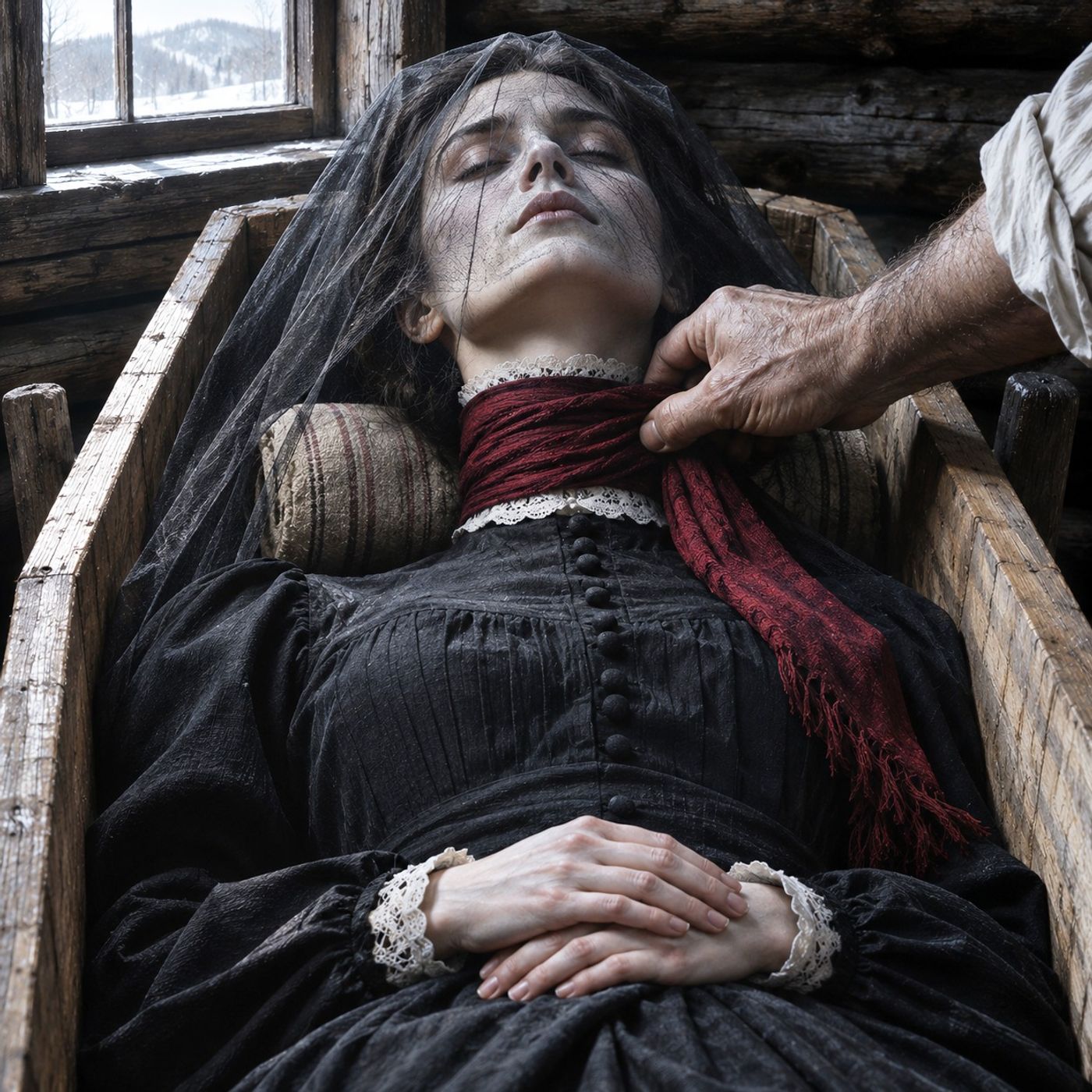
In January 1897, blacksmith Edward Shue washed and dressed his bride of three months for burial before the coroner ever reached their log house in Greenbrier County, West Virginia, and at her funeral he kept fussing with her head and neck, propping it on a pillow and wrapping a scarf around her high collar. Her mother, Mary Jane Heaster, had never liked him, and for weeks afterward she prayed every evening for her daughter to come back and tell her what had really happened. FEATURED STORIES IN THIS EPISODE: This Weird Darkness episode runs from the Greenbrier Ghost, the 1897 West Virginia murder victim whose mother said she came back to name her killer, to a bottomless pit in Washington, a wave of Mothman sightings over Chicago, and a London tomb rumored to be a time machine. Elva Heaster was dead – but that didn’t stop her ghost from solving the murder. *** In Stephen King’s “Pet Semetery”, beloved family pets could come back from the dead. *** In Washington there is a hole that some
Thanksgiving is here, and some of your aunts and uncles may have softened their stances since last year. So, should you engage when politics comes up? And if so, how? Jessica Tarlov, co-host of Raging Moderates and Fox News’s The Five returns to the show to offer some tips for handling Thanksgiving (and the rest of the year), discusses her new book, and she and Sarah listen to some voters talk about how political divisions have affected their lives…and what those voters think of people who think differently. Show links: Raging Moderates with Scott Galloway and Jessica Tarlov (https://www.youtube.com/@RagingModerates) Jessica’s book, I Disagree: Winning Arguments Without Losing Friends (https://www.penguinrandomhouse.com/books/803493/i-disagree-by-jessica-tarlov/) Feeling frustrated by the state of American democracy? The Context, a podcast from the Charles F. Kettering Foundation, explores the challenges facing democracy, how to fix what’s broken, and what we can do to make it work bet
Kerri is making the emotional trip to the vet with her beloved 12-year-old dog, facing the possibility that this could be their final goodbye. Got a dilemma? Follow on social media: Facebook.com/DrLaura (http://facebook.com/DrLaura) YouTube.com/DrLaura (http://youtube.com/DrLaura) Join the Dr. Laura Family!! >> Receive my weekly newsletter, perks, and more! Sign up now, it's FREE > DrLaura.com (https://www.drlaura.com/) Hosted by Simplecast, an AdsWizz company.
Ruby Wax tells Gyles the story of her extraordinary life - and it really is an extraordinary story... Born to Jewish emigrés who had fled Vienna in the 1930s, Ruby was brought up in Evanston, Illinois in a household overshadowed by aggression, OCD and mental illness. Her parents were both, in their own different ways, damaged, and "brought WWII to our kitchen outside Chicago"; they also forbad Ruby from going outside and getting dirty, and wrapped the furniture in plastic to keep it neat. But Ruby escaped; first through her bedroom window to San Francisco, and finally to England, where she eventually got work at the RSC and met lifelong friends Alan Rickman and Zoë Wanamaker. Rickman encouraged her to write about her childhood, and from there Ruby's life was set - she became a writer and performer, known for her wit, irreverence and sass, and went on to interview stars like Donald Trump (find out what she really thought of him) and OJ Simpson. Ruby has also suffered from depression and
Julian Lloyd Webber, the great solo cellist and former principal of the Royal Birmingham Conservatoire, is our guest today. This is a fascinating and frank conversation, full of music, which begins in the South Kensington mansion block flat in which Julian grew up, alongside his complicated musician parents, his grandmother, his brother, Andrew, and various talented musical lodgers - including, at one point, Tim Rice (who once did Julian's homework for him). Julian tells Gyles about his father, an organist and frustrated composer, and his mother, who was a talented pianist and teacher. Gyles and Julian then talk about high points Julian's career - including playing at the handover of Hong Kong to the Chinese and being conducted by Yehudi Menuhin, and also the low point: when Julian was struck down by a serious neck injury and didn't play the cello for 12 years. Julian's memoir, Bows and Arrows, is out now and available here (https://www.waterstones.com/book/bows-and-arrows/julian-lloyd
It's another interesting, and touching, episode of Gyles's diary, today from the second half of 1981. Gyles's life is still busy - with his debut appearance on Just a Minute, public-speaking events, and showbiz parties... but behind the scenes, serious and sad things are happening, as his darling Pa returns from America with a grave illness and quickly deteriorates. Gyles and Harriet also talk some more about Sooty, Sweep and Soo, and read out a brilliant email. We chat about saying final goodbyes to the dying, Punch and Judy, and how to live a fulfilling 100-year life. We hope you enjoy the show! If you have any fun messages for us, please email into [email protected]. And if you want to be eligible to come to our Christmas Party, please join the Rosebud Family at www.patreon.com/rosebud. Hosted on Acast.
Scarce treatments should be allocated by medical need rather than ability to pay.
Share your view, then see how readers voted. No sign-in required. This poll is shared across stories.
Do you agree or disagree?
Common Quandary
A Common Quandary to discuss
Another conversation to explore, separate from this news story.
You inherit a fortune made in ways you despise. Can you keep it?
You inherit a substantial sum from a relative who accumulated it through practices you consider exploitative. Keeping it would improve your family's security; donating it could support people harmed by similar practices.
Can ownership be morally clean when its history is not?