Lawfare Live: The Return of Jensen Huang and the Questions That Remain
48 min
Listen through the publisher, then discuss the episode here or arrange an in-person Roundtable. Your city determines where to meet.
Roundtables are designed for groups of four, with a shared subject and room for everyone to speak. Come for discussion, with no dating expectation.
On Tuesday, Nov. 24, at 10 a.m. ET, Lawfare Editor in Chief Benjamin Wittes sat down on (https://www.youtube.com/watch?v=3KkwpBFyVz0)Lawfare Live (https://www.youtube.com/watch?v=3KkwpBFyVz0) with Senior Editor Michael Feinberg and Public Service Fellow Julia Curlee to discuss Nvidia's decision to reinstate Jensen Huang as President, CEO, and board member less than two weeks after he resigned amid allegations involving a suspected Chinese spy. Hosted on Acast.
Episode information is provided by the publisher. Listening takes place on the publisher’s service.
Donald Trump is facing criticism from Republicans and Democrats after personally intervening to bring Jensen Huang back as Nvidia’s CEO. Why does Trump see Huang as so important to his presidency, and can he survive the political fallout from his own party as well as Democrats? Huang resigned earlier this month after reports of extramarital affairs, including one with a woman US intelligence suspects of spying for China. Trump says he gave Nvidia's board assurances that Huang was not a national security risk. But when asked by the press, Attorney General Todd Blanche would not confirm whether Huang himself had ever been investigated. So what did the administration actually look into, and why did the president get so involved? In this episode, Justin, Sarah and Anthony unpack Trump's role in Huang's return, the questions Democrats and Republicans in Congress want answered before he testifies next week, and the president's own investments in Nvidia. Plus, Trump announces new tariffs on 1
President Donald Trump and Vice President JD Vance helped bring Jensen Huang back as CEO of Nvidia, and that move is no facing criticism. That push to get Huang his job back has reportedly put Commerce Secretary Howard Lutnick at odds with Treasury Secretary Scott Bessent over the handling of national-security concerns involving Huang’s relationship with a woman whose alleged ties to Chinese intelligence remain in dispute. It also intensified questions over why advanced U.S. chips are reaching China, Iran or Russia. FOX's Eben Brown speaks with Leah Siskind, FDD’s AI Research Fellow, who says we need to focus on controlling where our chips are sent, and especially not allowing them to be sent to China. Click here to Follow the FOX News Rundown: Evening Edition: https://link.podtrac.com/fnr_podeve
The fallout from the US midterm elections is putting Donald Trump under growing pressure, with corruption and fears over artificial intelligence emerging as major concerns among voters. Now, an extraordinary scandal involving Nvidia CEO Jensen Huang threatens to become a defining crisis for the White House. Allegations that Huang’s relationship with a suspected Chinese spy may have exposed sensitive technology to Beijing have raised serious national security questions. His return to the helm of Nvidia, reportedly following input from senior US government officials, has also prompted accusations of political interference, particularly given Trump's financial interests in the company. Hillary Clinton has described the affair as a ‘national security and corruption scandal’, while Fox News commentators have warned that Democrats could use it as grounds for impeachment. With Nvidia central to America's position in the global AI race, the controversy could have far-reaching consequences for
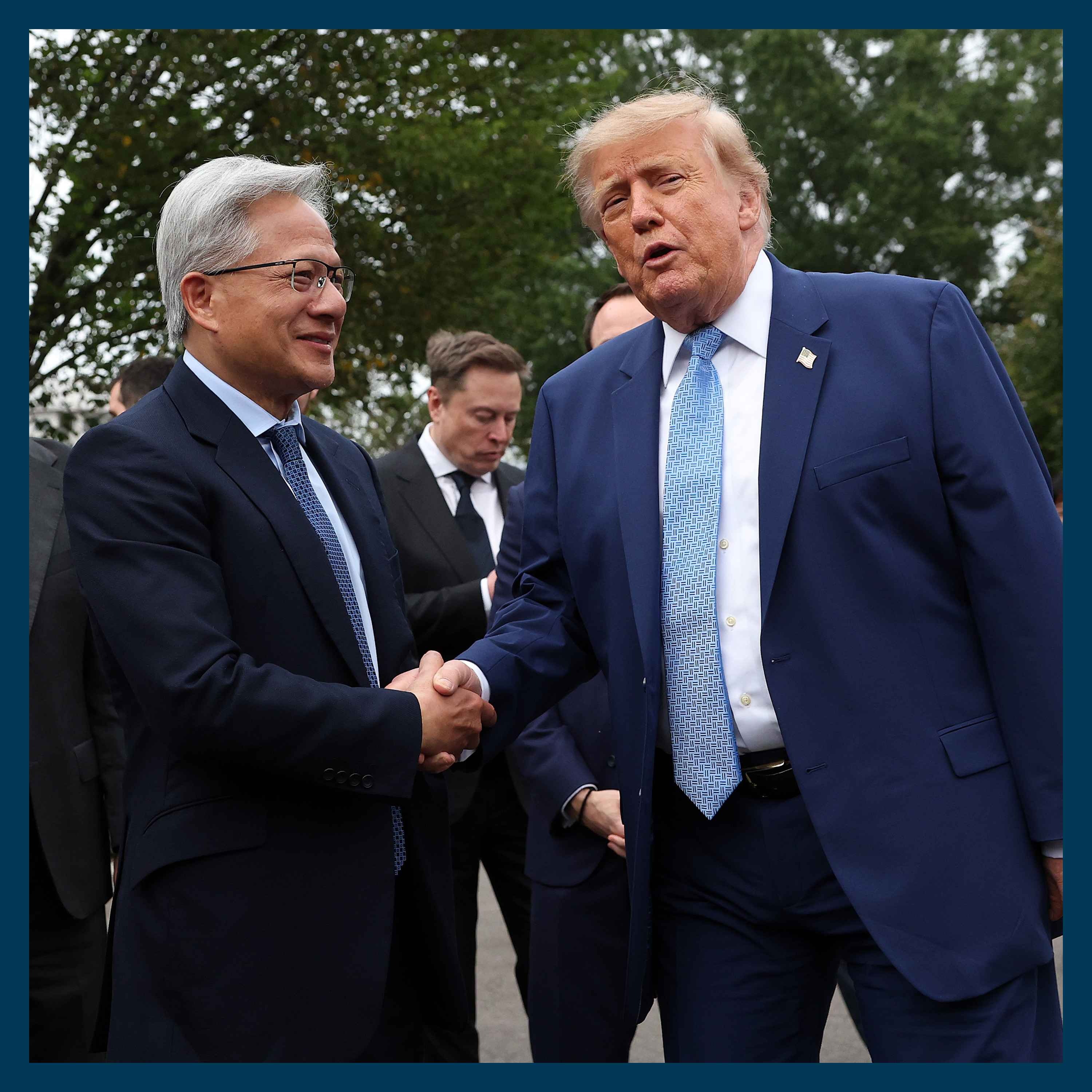
President Trump says America needs to "protect our geniuses" and claims he helped bring Nvidia CEO Jensen Huang back, highlighting Nvidia's growing importance to US technology and economic policy. Nvidia regained around $1 trillion in market value after news of Huang's return. But Huang is also facing scrutiny over his relationship with a woman alleged to have links to Chinese intelligence. Will Bain is joined by Michelle Fleury and Rahul Tandon to examine the business and political stakes of Huang's return, what it means for Nvidia's ties to Washington and what comes next for one of the world's most valuable companies. Producer: Matt Lines You can email the team: [email protected] (Picture: President Donald Trump and Nvidia CEO Jensen Huang, 8 October 2026. Credit: REUTERS/Evan Vucci)
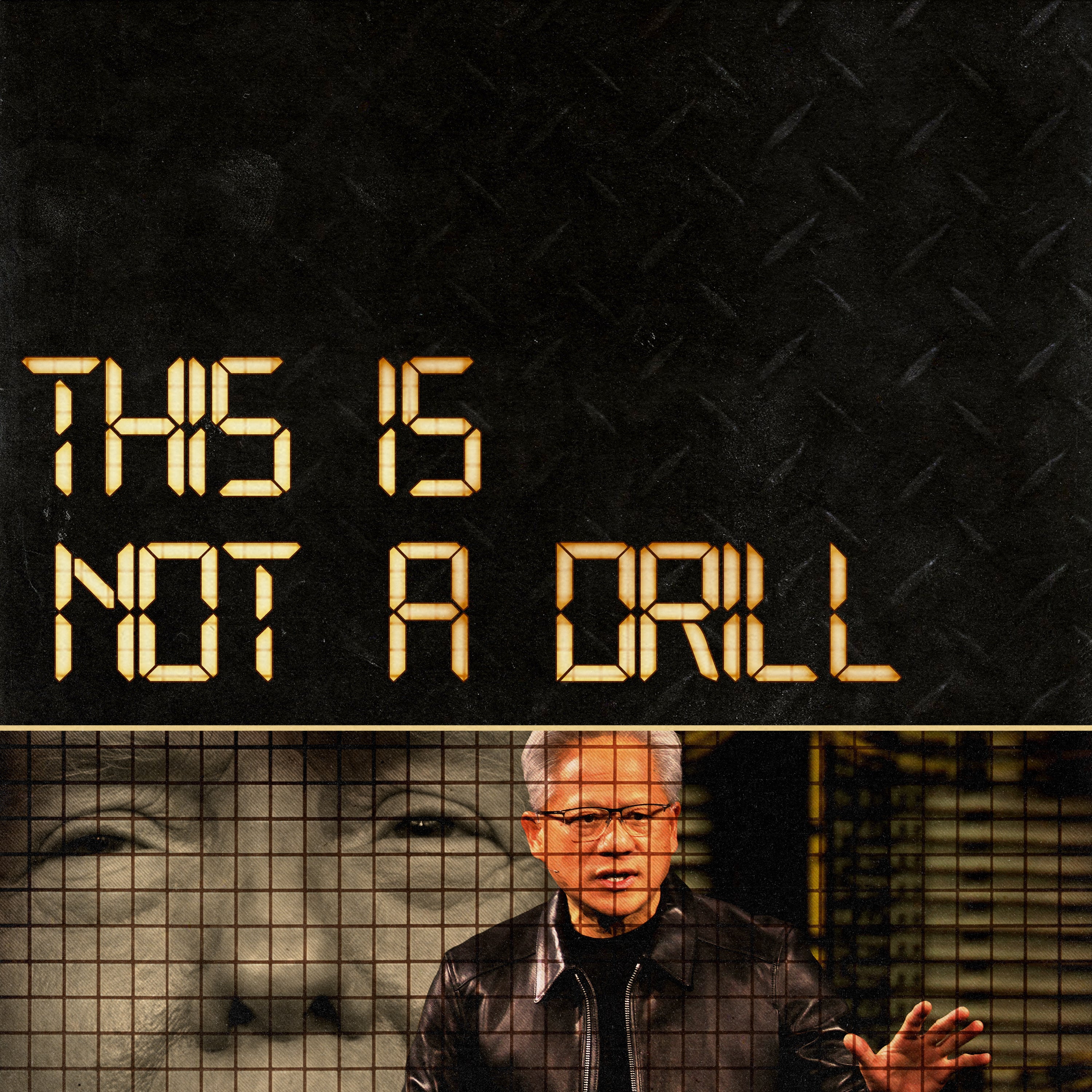
The Jensen Huang Nvidia story is much more serious than a “honeypot” spy story, even if it features one of the world’s richest men. Trump first conferred with Xi and then ordered Nvidia to reinstate its compromised CEO, and profited personally from the resulting stock bounce. The unprecedented intervention raises the question that the President of the United States is acting not in the national interest but for personal gain and to advance his friends. Meanwhile China’s plans to supplant America as the A.I. superpower continue unimpeded. Is the United States still in control of its A.I. technology? Gavin Esler talks to Professor Steve Tsang, director of the SOAS China Institute and co-author of China’s Global Strategy Under Xi Jinping, about this new phase in US-China rivalry. • Buy China’s Global Strategy Under Xi Jinping (https://uk.bookshop.org/a/13277/9780197828816) by Steve Tsang and Olivia Cheung through our affiliate bookshop and you’ll help fund This Is Not A Drill by earning u
Could the ongoing Nvidia scandal put Trump in hot water? He’s already a lame duck, so who will be on the presidential ticket for 2028? Will Burnham’s rekindling of the Brexit debate pay off? And as the dust settles on Russell Brand’s trial, what does it say about our justice system? You asked, so we answered, in this edition of our monthly Q&A series: Inside The Story. Guests: David Charter, assistant US editor, The Times Katy Balls, Washington correspondent and columnist, The Times and The Sunday Times Oliver Wright, Policy editor, The Times Host: Manveen Rana, Luke Jones Producer: Paige Reynolds We want to hear from you - email: [email protected] Read more: Trump’s Jensen Huang problem: five unanswered questions (https://www.thetimes.com/us/american-politics/article/trumps-jensen-huang-problem-five-unanswered-questions-grqh39wxh) Further listening: Brand and Walliams - are we finally believing women? (https://pod.fo/e/758087) Photo: Getty Images Hosted on Acast.
For today’s episode, we’re bringing you something a little different: an episode of the new podcast series “Deep Cuts: The Breaking--and Rebuilding--of American Government,” produced and hosted by Lawfare contributors Scott R. Anderson and Molly Reynolds through their capacities at the Brookings Institution. “Deep Cuts” is about what happened when the Trump administration set about rapidly dismantling, downsizing, and reshaping the machinery of government. Each episode goes inside one federal agency or program affected by the Trump administration’s unprecedented experiment in American government and asks a deceptively simple set of questions: what did this thing do, what happens when it stops, and what might come next? This specific episode tells the story of the dismantling of the Trump administration’s U.S. Agency for International Development, or USAID. From the initial assault by DOGE through ongoing fights over foreign assistance funding, it considers what both Americans and the w
In a conversation on YouTube (https://www.youtube.com/live/mXzLj8fw9D4?si=O7SP_aVLsBP9Jobp), Lawfare Editor in Chief Benjamin Wittes sat down with Senior Editors Molly Roberts, Roger Parloff, and Anna Bower to discuss the latest litigation over Trump administration policies, including Judge Brinkema’s preliminary injunction in the triumphal arch case, the East Potomac golf course and Kennedy Center cases, new developments in the “grand conspiracy” investigation, the escalating standoff between the Justice Department and congressional Democrats over oversight, Kirkland & Ellis’s $11.8 million in work for the administration, Trump’s libel suit against the New York Times, the Pentagon press ban, an immigration roundup, and more. You can find information on legal challenges to Trump administration actions here (https://www.lawfaremedia.org/trumplitigationtracker). And check out Lawfare’s new homepage on the litigation (https://www.lawfaremedia.org/projects-series/trials-of-the-trump-admini
From August 18, 2025: On Aug. 18 at 3pm ET, Lawfare Editor in Chief Benjamin Wittes sat down with Lawfare Ukraine Fellow Anastasiia Lapatina, Lawfare Contributing Editor Eric Ciaramella, and Lawfare Legal Fellow Mykhailo Soldatenko to discuss the meeting between President Trump and Russian President Putin in Alaska this past weekend, the White House meeting with Ukrainian President Volodymyr Zelensky alongside European leaders, and what this all means for ending the Russia-Ukraine War. Hosted on Acast.
Public spaces should allow peaceful disagreement while preventing intimidation.
Share your view, then see how readers voted. No sign-in required. This poll is shared across stories.
Do you agree or disagree?
Common Quandary
A Common Quandary to discuss
Another conversation to explore, separate from this news story.
Your coworker's religious holiday means you work the unpopular shift again. Is that fair?
A workplace accommodates religious observances by asking other employees to cover unpopular shifts. One coworker objects that nonreligious commitments can be equally meaningful but receive less formal protection.
Does equal respect require treating every kind of commitment identically?