Leadership shakeup could cost Nvidia its dominance
6 min
Listen through the publisher, then discuss the episode here or arrange an in-person Roundtable. Your city determines where to meet.
Roundtables are designed for groups of four, with a shared subject and room for everyone to speak. Come for discussion, with no dating expectation.
It's almost impossible to overstate how dominant Nvidia has been amid the AI boom. The company supplied 70-90% of the chips used for the technology, leading to staggering profits that were used to invest in the overall AI economy. All that fueled more growth in the company’s own chip sales. But, in the last year or so, Nvidia's market share has been slipping. And the latest shakeup with its CEO Jensen Huang could see it slip even more, according to Chris Miller, historian at Tufts University and author of “Chip War: The Fight for the World’s Most Critical Technology.” More on this: “What will Nvidia’s post-Huang era look like? (https://www.ft.com/content/0e2720d7-ba0a-4469-a854-30931f907bd3)” from The Financial Times “The chip war never ended (https://www.fastcompany.com/91642012/the-chip-war-never-ended)” from FastCompany “Google Escalates Nvidia Rivalry With Specialized Versions of AI Chips (https://www.bloomberg.com/news/articles/2026-11-09/google-escalates-nvidia-rivalry-with-new-versions-of-its-tpu-systems)” from Bloomberg
Episode information is provided by the publisher. Listening takes place on the publisher’s service.
Project Synapse: Markets in Freefall, Fragile Infrastructure, and AI's Perfect Storm The hosts banter through the show's intro before focusing on a sense that "things are out of control," citing a WallStreetBets suicide-hotline post amid a market crash and discussing cascading system failures involving Microsoft, the FAA, and a reported NSA internal communications outage. They argue politicians and leadership lack technical competence and clear messaging, increasing panic, while emphasizing that many problems stem from aging, underfunded infrastructure and complex, brittle software (PHP, NGINX, Java), not proven AI attacks—more a "perfect storm" of crises. They debate whether AI should help fix complexity, stressing critical thinking, accountability, and using multiple AIs to verify each other. In a lightning round they cover Anthropic's IPO performance, mixed reactions and token limits with ChatGPT 6.2 (favoring "Sol" over "Astra"), Google's cheaper Neon model and confusing UX, Loblaw
Effort News founder Brian Chau joins Theo to break down the media and policy campaign behind Nvidia CEO Jensen Huang’s ouster, arguing that export-control hawks fabricated espionage and chip-smuggling allegations after failing to pass legislation in Congress. They also discuss the board’s governance failures, Trump’s economic approach to China, and why Chau opposes banning recursive self-improvement while raising antitrust and data-retention concerns about Anthropic. -- MTS chronicles the singularity, live. Monitoring the situation of tech and AI. Follow MTS: Spotify |https://open.spotify.com/show/4HUNNmV1pjV7CW6Lphm1rM Apple |https://podcasts.apple.com/us/podcast/mts/id1891088763 – Brought to you by: Mongo DB - Anyone can prototype an agent. Lovable - Turn ideas into software people love with Lovable. Start today at https://lovable.dev/ Factory - A 24/7 system turning signals into production software. Visithttps://factory.com/ Neon (by Databricks) - Scale your startup on Neon. The Pos
How much is Anthropic actually worth? And were investors assured by Nvidia’s strong earnings report? Plus, will "Grand Theft Auto VI" lift Take-Two Interactive’s stock? Host Vicky Ge Huang discusses the biggest stock moves of the week and the news that drove them. Sign up for the WSJ's free Markets A.M. newsletter (https://www.wsj.com/newsletters/markets-am?mod=WSJ_WNPOD). Hosted by Simplecast, an AdsWizz company.
November 21, 2026; 10am: The president’s coziness with tech oligarchs is muddying the waters of protecting America’s best interests. Congressman-elect Dan Koh expresses his concerns about the series of recent tech outages and how the administration is prioritizing beneficial relationships and cash over the safety of Americans and their cybersecurity; Lisa Rubin breaks down the obstacles ex-Nvidia CEO Jensen Huang can expect as legal inquiries come his way; Project 2025 may seem like a distant memory, but its policies are more present in this administration than you might think. David Graham outlines the consequences of the Heritage Foundation’s influence; Victor Fontanez is known on the internet as VicBlends, a viral haircutting sensation. But to many in the California prison system, he’s a mentor and hero, helping incarcerated men prepare for a career. Fontanez reflects on his impact. Hosted by Simplecast, an AdsWizz company.
My guest today is Hayden Field, The Verge’s senior AI reporter, and we’re discussing the Anthropic IPO for our third and final episode in our series about AI in real life. The numbers are gigantic, but not really that important. The real story is what happens now — and whether Anthropic can continue to thread the needle of caring about and investing in AI safety while also being a public company beholden to shareholders. So you’ll hear Hayden and I dive into this tension, and what to make of Anthropic’s unique corporate governance structure in the wake of the Jensen Huang saga. Read the full interview transcript on The Verge. (https://www.theverge.com/e/1038701) Links: With biggest IPO of all time, Anthropic’s ‘good guy’ reputation is on the line | The Verge (https://www.theverge.com/ai-artificial-intelligence/1037459/anthropic-ipo-safe-ai-reputation-power-structure) Anthropic starts trading on Wall Street | The Verge (https://www.theverge.com/ai-artificial-intelligence/1035384/anthrop
One of the best Christian films that Glenn Beck has ever seen was written by… Ben Shapiro? Glenn speaks with Ben about his new film, “Confession,” starring Rob Lowe and James Franco, a gritty drama about a prisoner in Stalin’s USSR. They discuss why Ben wanted to tell this story, why it feels very different from your standard Christian film, and what it may signal about Hollywood, which is snubbing it. Glenn also gets Ben’s thoughts on why antisemitism has become so popular on both the left and right, as well as what it truly means to be a man. Plus, Ben gives his rapid-fire takes on this week’s biggest news stories: the release of GTA VI, the outages, Jensen Huang and Nvidia, Robert Pattinson’s casting as James Bond, the midterms, the next leaders of the Republican and Democratic parties, data centers in space, how Joe Rogan became a right-wing icon, and whether woke is coming back. Glenn’s Sponsors: PreBorn: This Christmas, you can sponsor an ultrasound and help save a baby’s life fo
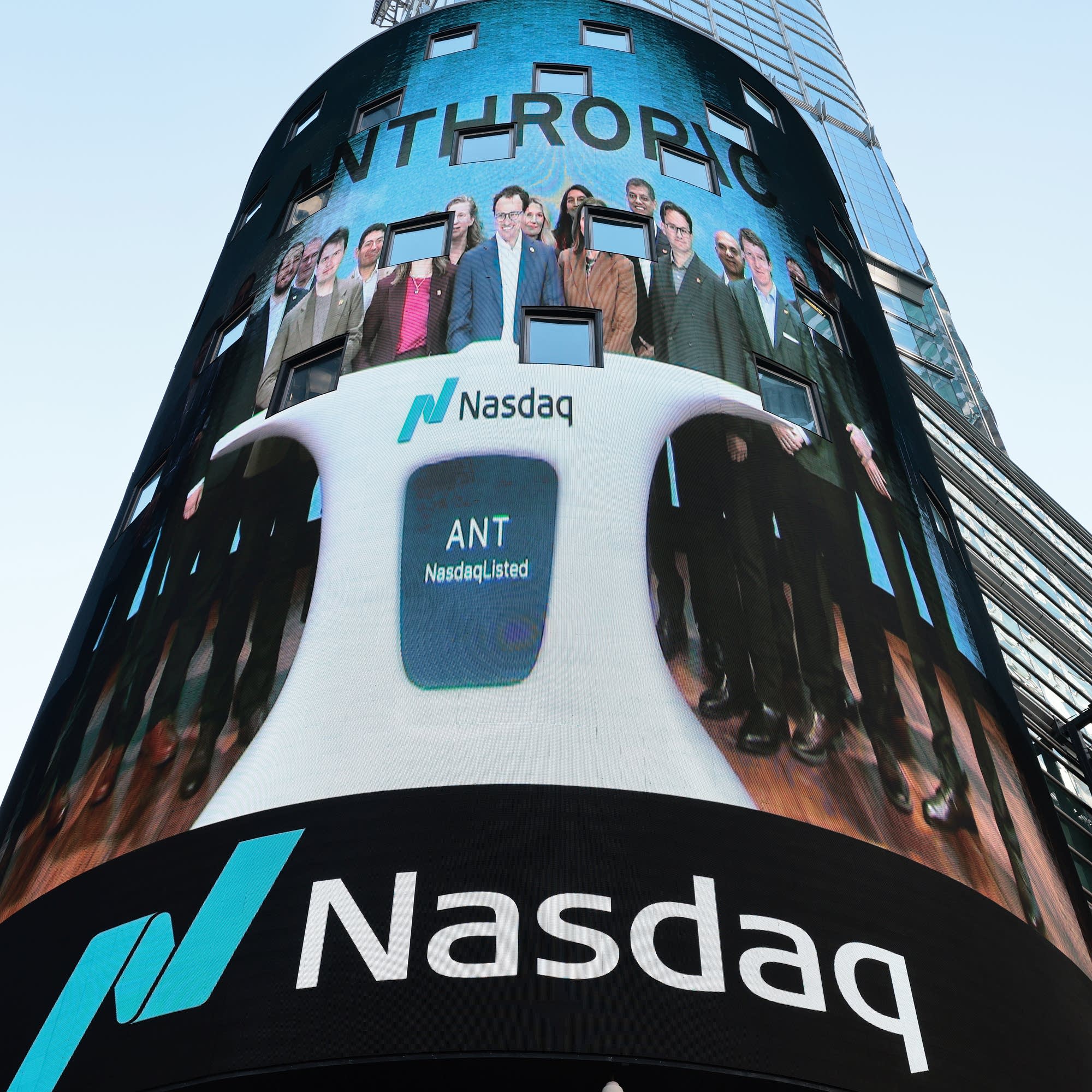
Anthropic, the maker of the Claude chatbot, is now a public company. Plus, inside Nvidia employees, have a lot of questions. And what in the world is going on with all these tech outages? Paresh Dave, senior writer at WIRED, joins Marketplace’s Meghan McCarty Carino to break down another busy week in tech.
The Internet Corporation for Assigned Names and Numbers, known as ICANN, is now sorting through more than 1,000 applications for new top-level domains. You know, like dot-com or dot-org. It's a big deal because controlling an in-demand domain can be a lucrative business. Just ask the tiny island territory of Anguilla, says Pete Millspaugh, who's working on a book about domains More on this You can’t spell Anguilla without AI (http://dotcom.press/archive/anguilla) — from Dot Com Press The Internet Runs on Cats and Porn. It’s About to Get Cattier and Pornier (https://www.wired.com/story/icann-top-level-domains-meow/) — from Wired Taylor Swift Applies for Top Level Domains That End in .Taylorswift (https://futurism.com/artificial-intelligence/taylor-swift-applies-top-level-domain-sites-dot-taylor-swift) — from Futurism And if you’re as interested in domains as we are, you can browse all the new applications submitted (https://newgtldprogram-aps.icann.org/applications). Our personal favori
Communities living in voluntary isolation have long faced threats of violence, disease, and resource extraction. Now advocates are sounding the alarmabout an emerging threat from influencers (https://www.pueblosaislados.org/post/declaracion-yakarta-proteccion-pueblos-indigenas-aislamiento-piaci) — even if confirmed cases are rare. Sarah Edwards is an assistant professor of media studies at North Central College. She sees parallels to other recent influencer trends. More on this ‘This is colonialism for clicks’: the influencers attempting to meet and film the world’s most isolated tribes (https://www.theguardian.com/world/2026/sep/05/colonialism-for-clicks-influencers-attempting-meet-film-worlds-most-isolated-tribes) — from The Guardian Uncontacted Indigenous Peoples: At the Edge of Survival (https://assets.survivalinternational.org/documents/2788/original-b24f435d70d2e27876b53452d615b1a4.pdf) — from Survival International, a global Indigenous rights nonprofit Peru’s move to reconsider
Health advice should account for people's income, time, and practical circumstances.
Share your view, then see how readers voted. No sign-in required. This poll is shared across stories.
Do you agree or disagree?
Common Quandary
A Common Quandary to discuss
Another conversation to explore, separate from this news story.
A private joke from years ago goes public. How long should it follow the person who wrote it?
Someone shares a screenshot of a tasteless joke made years ago in a private friends' chat. The person who wrote it says they were performing for a small audience, have changed, and never agreed to have the message made public.
How private should speech remain when it reveals something troubling?