Listen through the publisher, then discuss the episode here or arrange an in-person Roundtable. Your city determines where to meet.
Roundtables are designed for groups of four, with a shared subject and room for everyone to speak. Come for discussion, with no dating expectation.
Thirty-seven days after Leah Freeman vanished, searchers found her body down an embankment outside Coquille. Her death was ruled a homicide but no one could say how she died, and for years the case went cold. Then a new police chief reopened it, and in 2010 a grand jury indicted Leah’s old boyfriend, Nick McGuffin. A jury convicted him of manslaughter, by a split vote. But nearly a decade later, his lawyers found something buried in a crime lab’s notes from the summer of 2000: DNA from an unidentified man on Leah’s shoes. DNA that was never disclosed at trial, and has never been matched to anyone. Need More to Binge? Instagram: @Crimehouse (https://www.instagram.com/crimehouse/) TikTok: @Crimehouse (https://www.tiktok.com/@crimehouse) X: @crimehousemedia (https://x.com/crimehousemedia) The Final Hours is hosted by Sarah Turney & Kourtney Nichole
Episode information is provided by the publisher. Listening takes place on the publisher’s service.
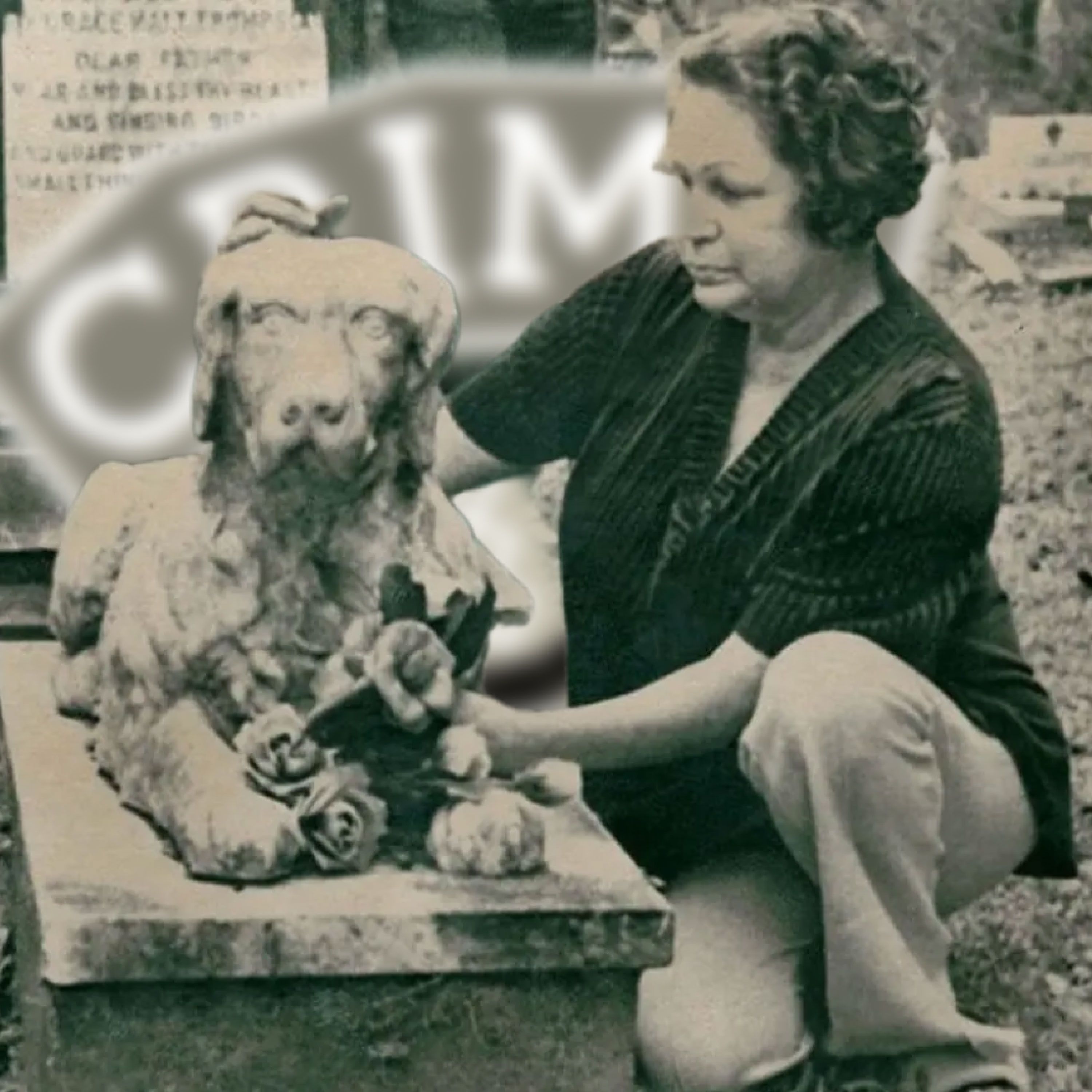
In 1985, when the body of 61-year-old Dorothy Lou Thompson was discovered in the Mississippi River, authorities assumed her murder was somehow connected to her unusual family business. For years her late mother ran a pet cemetery on an abandoned sugar cane plantation, which neighbors found both odd and eerie. While a handful of suspects emerged, the murder case soon went cold. Decades later, witnesses came forward to report what they knew about the homicide. What convinced them to finally tell their stories? They said they were visited by Dorothy’s ghost. The HBO Documentary series “The Pet Cemetery Murders: A Ghost Story” leans into the spooky elements of this Southern Gothic tale. The case goes beyond the homicide and its creepy crime scene, tying historical stories of violence within the family and this community, made for those who like their true crime served with a dash of the supernatural. OUR SPOILER-FREE REVIEWS OF "THE PET CEMETERY MURDERS" BEGIN IN THE FINAL 11 MINUTES OF TH
Join Sarah Turney and Kourtney Nichole for today's second Unsolved Tuesdays episode. In August 2021, 25-year-old Illinois State University graduate student Jelani Day was last seen leaving a dispensary in Bloomington-Normal, far from his apartment and with no clear reason to be there. His car was found abandoned miles away. Weeks later, his unclothed body was recovered from the Illinois River. His death was presumed to be an accidental drowning, but his mother refused to accept that answer. She launched a relentless public campaign that put a spotlight on how missing Black men are treated by investigators and the media. How did a focused, driven graduate student end up in a river with no explanation? And for more cases just like this one, be sure to check out the Crime House Original, The Final Hours. Need More to Binge? Follow me on Social X: @crimehousemedia (https://x.com/crimehousemedia)
When Nick Reiner was born, Rob and Michele Reiner set up a trust that would pay him half at 30 and the rest at 35. He turned 30 two years before his parents were killed. His half, about $558,000, was never paid out. Now Nick is charged with their murders, and he wants that money to rehire his old lawyer, Alan Jackson. The woman running the trust says California law could keep him from inheriting from the parents he's accused of killing. His lawyers say money that came due before the deaths isn't an inheritance at all. Eric Faddis, a defense attorney and former prosecutor, tells me which argument holds up. Then the twist in the law. Nick doesn't have to be convicted to lose his parents' money. The judge in the trust fight can rule against him if he decides it's more likely than not Nick killed them, a lower bar than a jury needs. Eric tells me what that ruling could do to the murder case. Nick Reiner is presumed innocent. Listen Anywhere You Get Podcasts: https://pod.link/1655749292 Wan
For 51 days, the whole country watched a standoff outside Waco, Texas: floodlights all night, music blaring on a loop, and a man inside who kept promising to come out. Then, on April 19th, 1993, Mount Carmel went up in flames on live TV. In the final part of our 3-part series on the Waco siege, Katie Ring breaks down the standoff, the fire that killed 76 people, and what the government said about it that turned out not to be true. Want all three parts of every case all at once? Need More to Binge? Follow me on Social Instagram: @Crimehouse (https://www.instagram.com/crimehouse/) TikTok: @Crimehouse (https://www.tiktok.com/@crimehouse) X: @crimehousemedia (https://x.com/crimehousemedia) America’s Most Infamous Crimes is hosted by Katie Ring
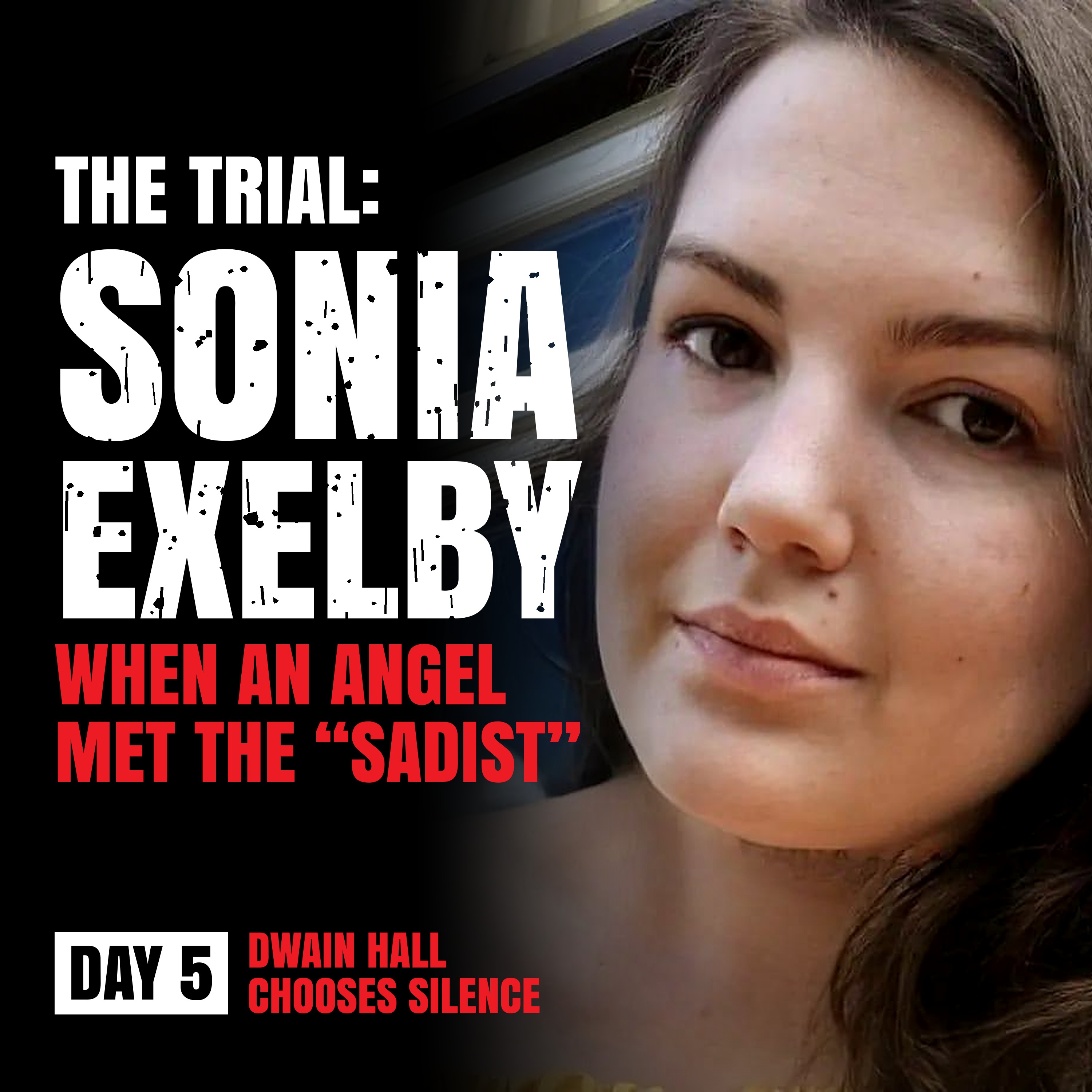
In this episode Caroline and Jack have details of the final evidence in the trial of Dwain Hall, including how his phone tracked his movements to the remote spot where Sonia Exelby was buried. We’ve also heard how police found a knife and sheath hidden at a friend’s house in Ohio, after Dwain Hall had secretly posted them just days after Sonia’s death. DNA experts told the jury that blood found on the knife had matched Sonia's DNA. We’ve also heard from the pathologist who carried out Sonia’s post-mortem, who revealed she had suffered four stab wounds, each of which could have been fatal. The prosecution have now finished presenting their case, and Dwain Hall has made the decision not to give evidence in his own defence. The Trial is part of The Crime Desk. Visit thecrimedesk.com (https://plus.thecrimedesk.com/exelby-podcast?sc_promo=EXELBY) for more information. Email us [email protected] WhatsApp us +447796657512 (start your message with ‘Trial’) Presenters: Caroline Cheetham an
Nine days after eight-year-old Sarah Payne disappears, her face is everywhere and the incident room is drowning in calls. But unbeknown to the public, detectives have a suspect they cannot name — Roy Whiting, a convicted sex offender who lives nearby. Within twenty-four hours of Sarah vanishing, officers interview him and, unconvinced by his account of his whereabouts on the night she went missing, they arrest him. But they are unable to find any real evidence linking him to Sarah, and have to let him go. Meanwhile the hunt for the missing child continues apace, and News of the World editor Rebekah Brooks decides to go down to Sussex herself to talk to Sarah Payne’s mother, Sara, in person. While she is there she learns, but cannot print, that Whiting is a key suspect. Then, after Sarah has been missing for 17 days, a farm worker clearing a field north of Pulborough finds the partially buried body of a child. Presenter and Series Producer: Edmund Coulthard Producer: Joanna Humphreys So
Have you heard about the man in Colorado who used a “killdozer” to settle a zoning dispute, or the Emperor who pickled his wife’s lover? If you love The Final Hours, you are going to love this extra episode of The UnBelievable from Rewind Studios and the History Channel for Thanksgiving. Each episode opens a cabinet of curiosities filled with the strangest-but-true stories from history. When it comes to history, the truth is always more unbelievable than you think. Follow The UnBelievable for a new episode every Friday: https://pod.link/6815976107 Thank you to our experts who contributed to this episode: David O’Keefe, Mitch Horowitz, Larissa Tracy, Rebecca Hsu, Rutledge Wood, Allie Delury, Holly Frey, Sami Jarroush, Paul Sutter, Matthew Steiner, Kavitha Davidson, Yohuru Williams, Narayanan Kasthuri, Chris Mowery, Brandy Schillace, Jason Sweet, and Pryia Krishna.
Just before 9 PM on Wednesday, June 28th, 2000, fifteen-year-old Leah Freeman stormed out of her best friend’s house after an argument in Coquille, Oregon, and started home on foot. Over the next half hour, several people saw her moving around town, past the market, the high school, and in a phone booth at a gas station. One of them, an eleven-year-old girl, saw a car pull up beside her. Around 11:30 PM, a man found a single sneaker lying in the road near the cemetery not knowing it was Leah’s. Her boyfriend spent the night driving the streets looking for her. And for days, police treated her as a runaway. Until a second shoe, stained with blood, turned up on a remote ridge miles out of town. Need More to Binge? Instagram: @Crimehouse (https://www.instagram.com/crimehouse/) TikTok: @Crimehouse (https://www.tiktok.com/@crimehouse) X: @crimehousemedia (https://x.com/crimehousemedia) The Final Hours is hosted by Sarah Turney & Kourtney Nichole
To give thanks in November, join us for the third and final episode of our special Homecoming limited series, where Vanessa Richardson brings you the story of someone who disappeared...and found their way back. On December 4, 1972, seven-year-old Steven Stayner accepted a ride home from school on a rainy stretch of highway in Merced, California...and didn't see his family again for more than seven years. Held under a false name in five Northern California towns, Steven lived in plain sight while his parents searched and his captors' lies kept him in place. When a second child was taken in 1980, Steven made a choice that changed everything. Need More to Binge? Instagram: @Crimehouse (https://www.instagram.com/crimehouse/) TikTok: @Crimehouse (https://www.tiktok.com/@crimehouse) X: @crimehousemedia (https://x.com/crimehousemedia) The Final Hours is hosted by Sarah Turney & Kourtney Nichole
Organizations should explain important automated decisions in language people can understand.
Share your view, then see how readers voted. No sign-in required. This poll is shared across stories.
Do you agree or disagree?
Common Quandary
A Common Quandary to discuss
Another conversation to explore, separate from this news story.
The sign says twelve items and you have fourteen. Is the express lane still yours?
The regular checkout lines are long and the express lane is empty. You count fourteen small items, two over the posted limit. A shopper approaches behind you carrying a single carton of milk as the cashier waves you forward.
Are small rules optional when enforcing them would seem fussier than breaking them?