Listen through the publisher, then discuss the episode here or arrange an in-person Roundtable. Your city determines where to meet.
Roundtables are designed for groups of four, with a shared subject and room for everyone to speak. Come for discussion, with no dating expectation.
Hi Gilded Rage listeners - We heard from J’s attorney since the series launched, and there are a few things we want to clarify. In Episode 1, we read part of an email Penny sent us in early 2024. In it, she described what she believed was a pattern of assaults by J spanning 40 years. That was Penny’s belief, not a finding of ours. J denies that. In our investigation to date, we haven’t found any first hand accounts of allegations against him after college. We’ve added a line to Episode 1 to make that clear. Also, on October 28th, Aliza and I were guests on Heather McDonald’s podcast Juicy Crimes. We talked about Kim Smith, who you’ll hear from in Episodes 5 and 6. What we shared is an overview of Kim’s account of what she says happened with J six weeks before Sherri died. To be clear, J maintains that his encounter with Kim was consensual and no charges were filed in that matter. Also on Juicy Crimes, we made a reference that conflated J’s behavior with the recently convicted serial rapists the Alexander brothers, and we retract that. Also any reference that any other podcast host makes to Sherri’s “murder” is not our own statement and we have asked them to correct that. As of this recording, Sherri Clark’s manner of death is considered “accidental,” though the Boulder County DA’s Office recently told the Daily mail on October 19th - the 41st anniversary of Sherri’s death - that they are working on her case with the sheriff and coroner. Thanks again for listening and we’ll be back Monday with Episode 5. Privacy & Opt-Out: https://redcircle.com/privacy
Episode information is provided by the publisher. Listening takes place on the publisher’s service.
The MK True Crime Show hosts Dave Aronberg and Ashleigh Merchant join the program to discuss the latest Lindsay Clancy hearing, the date set for her retrial in March 2027 despite the Commonwealth’s objection, what prosecutors said to suggest they’ll be trying Clancy for first-degree murder again, the comment that led to a tense exchange with Judge Sullivan as dates were discussed, the case of Lacy Jolee Boles, a Georgia woman accused of shooting her husband Daniel Akers to death in 2019, the defense’s theory of Akers’ death, the unusual objection made during opening arguments, the evidence against Boles, including evidence the defense argues was not properly preserved, the believability of her 911 call reporting Akers’ death, and later Dave and Ashleigh are joined by the host of the new “Unsolved Mysteries” YouTube series, Jordan Murphy, to discuss the legacy of the iconic mystery documentary series, how Jordan got started with “Unsolved Mysteries,” how the newest iteration of the fran
A woman told ITV News that a letter from David Walliams’ lawyers left her shaking. What did that letter demand, and what happens when speaking out brings the threat of legal action? Max Palasi is joined by Melanie Bridgen, Partner and family law solicitor at Nelsons, to examine the reported correspondence, Walliams’ unsuccessful attempt to prevent publication, and the wider pressures facing people making allegations against powerful public figures. We discuss the reported request for a written undertaking within 24 hours, the difference between a solicitor’s demand and a court order, and how confidentiality agreements, legal costs and fear of proceedings can affect someone’s decision to speak. Melanie’s professional experience includes domestic abuse, coercive control and complex family proceedings. She represented former MP Kate Kniveton in proceedings involving abuse findings and their publication, giving her direct experience of the tensions between privacy, public interest and the
Lindsay Clancy will face a second trial over the deaths of her three young children, after a judge set a new court date despite objections from prosecutors. The Massachusetts mother is accused of murdering five-year-old Cora, three-year-old Dawson and eight-month-old Callan in January 2023. Her first trial ended in a mistrial when jurors failed to reach a unanimous verdict, with 11 reportedly favouring a finding that she was not criminally responsible because of her mental illness. Now, following weeks of legal challenges, Judge William Sullivan has ordered a retrial to begin on March 29th, 2027. But the latest hearing saw tensions flare as prosecutors pushed for more time, while Clancy's defense lawyer Kevin Reddington suggested the prosecution intends to pursue first-degree murder charges once again. In this episode, Luke Kenton is joined by reporter Rachel Sharp, who was inside the courtroom, to examine the frosty exchanges, the possibility of a radically different defence strategy,
"I can say with 100% confidence I was raped." Those were Jane Doe's words to Cornell University Police. But when the district attorney explained why no criminal charges had been filed, he characterized her signed statement as describing sexual activity that was voluntary, conscious, and consensual. Then a much longer police interview became public. The prosecutor said he'd never seen it. In Part 2, Tyrella and Nikita examine the six-page statement at the center of the controversy, the evidence behind the decision not to prosecute, and why Cornell's own investigation reached very different disciplinary outcomes. What does New York law actually require to establish a sexual offense? How does that differ from a university's consent policy? And what happens when two institutions examine the same night but answer fundamentally different questions? With the case reopened and institutional decisions under renewed scrutiny, the Cornell 7 story raises a question much bigger than one fraternity
Gypsy Rose Blanchard has said a lot about Ken Urker on tape, and now the coroner has ruled his death an accidental overdose. On a recorded prison call years ago, Gypsy told her then-boyfriend that she'd told Ken she hoped he overdosed. She also described herself as the kind of woman who'd stay in a man's face, knock on his door and throw cans at his car. Years later, Ken was publicly saying Gypsy had blossomed, and Gypsy said their couples therapy was working. On another recorded call, Gypsy said she found a card Ken wrote to an ex, drank, grabbed a kitchen knife and stabbed the headboard of their bed. By her account, Ken photographed the damage and told her he'd go for sole custody of Aurora. Gypsy didn't kill Ken, and the coroner calls it an accident. But in a TV interview that aired just before the ruling, Gypsy said the leaked prison calls were a turning point for Ken. She never mentioned the call about hoping he overdosed. Her voice is on every one of those recordings, and we go t
True Crime Tuesday Presents: The Candy Man Murders: Three Years of Terror in Houston with Podcaster/ Author Jen Schaffer! In the early 1970s, teenage boys began disappearing across Houston, Texas. One by one, they vanished, leaving behind empty bedrooms, unanswered questions, and a city that chose not to look too closely. Police called them runaways. Parents were told to be patient. Lack of concern caused a pattern to go unnoticed, until a single phone call changed everything. On August 8, 1973, a teenage boy confessed to killing a man and exposed a horror hidden in plain sight. What followed was one of the most disturbing discoveries in American criminal history: a network of abduction, torture, and murder that had operated undetected for years. In The "Candy Man" Murders (https://wbp.bz/candymanmurders) (opens in new tab) (https://wbp.bz/candymanmurders), Jen Schaffer delivers a haunting, deeply researched account of the Houston Mass Murders. Through meticulous investigation and grip
Kim Smith knew Sherri from high school and from their sorority. She also knew J., and she had her own horrifying story about him. The day after Sherri was found, Kim told law enforcement what she says happened to her. She wasn't the only one who came forward. So what did investigators do with that information? Forty years later, the former Boulder County sheriff sits down with Lauren and Aliza and sees some of the evidence in his own case for the first time. Privacy & Opt-Out: https://redcircle.com/privacy
At CU Boulder, J. had a nickname: "Psycho Killer." Under oath, he says it came from the Talking Heads song. People who knew him tell a different story. Then Sherri's brother Jason finds something he'd forgotten about for decades: a box of cassette tapes recorded by his parents' private investigator in 1985. What's on them changes everything Lauren and Aliza thought they knew about this case. Privacy & Opt-Out: https://redcircle.com/privacy
Sherri's parents won't let her death go quietly. They sue J. for wrongful death, but getting answers under oath proves harder than they imagined. Lauren and Aliza go back to where J. grew up: a wealthy Rhode Island family, a summer house steps from the Dunes Club, and an elite prep school where senior yearbook quotes takes on a disturbing new meaning. Former classmates begin sharing stories they've kept to themselves for four decades. Privacy & Opt-Out: https://redcircle.com/privacy
School policy should consider all families rather than follow the loudest parental voices.
Share your view, then see how readers voted. No sign-in required. This poll is shared across stories.
Do you agree or disagree?
Common Quandary
A Common Quandary to discuss
Another conversation to explore, separate from this news story.
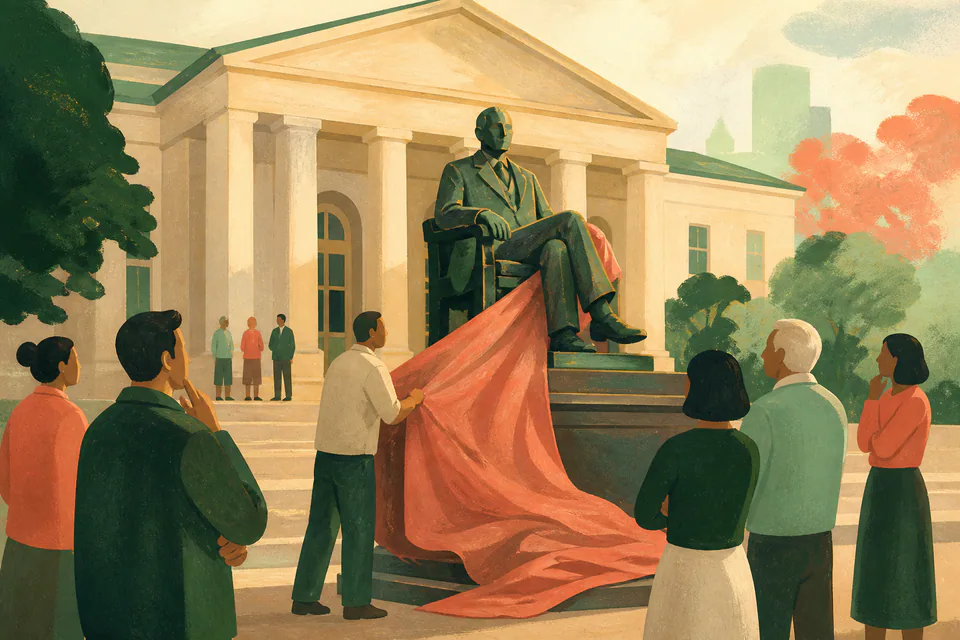
A disgraced billionaire's name is on the beloved campus library. Does it come down?
A major donor funded a beloved public building decades ago. New evidence shows they also caused serious harm that was legal and accepted by many peers at the time. Removing the name may jeopardize future donations.
What does an institution owe the truth when its history funded the present?