Listen through the publisher, then discuss the episode here or arrange an in-person Roundtable. Your city determines where to meet.
Roundtables are designed for groups of four, with a shared subject and room for everyone to speak. Come for discussion, with no dating expectation.
Libya’s second city, Benghazi, sparked the 2011 revolution against dictator Colonel Gaddafi, then descended into chaos as much of it was taken over by Islamist militias. Now, under warlord Khalifa Haftar, who drove out the jihadis, Benghazi’s bouncing back. New skyscrapers are rising, an international football stadium has been refurbished; hospitals, shopping malls and huge housing complexes are being built in a multi-billion dollar construction boom. Parts of the old town with its Ottoman and Italian colonial architecture are being reconstructed. Much of the work has been commissioned by one of Field Marshal Haftar’s six sons, Belkacem, widely known simply as “the Engineer”, head of the Libya Development and Reconstruction Fund. After overseeing the rebuilding of Derna, the eastern Libyan town devastated by a flood in 2023, he has gone on to commission further construction projects across eastern and southern Libya, the area controlled by his father. BBC correspondent Tim Whewell first reported from Benghazi during the 2011 Revolution, and returned later as civil war was breaking out in Libya. Now, in a rare trip to eastern Libya by a major western broadcasting outlet, he goes back to see how people are enjoying stability – and for a rare interview with Engineer Belkacem.
Episode information is provided by the publisher. Listening takes place on the publisher’s service.
AI data centers are popping up across the US — and the people living next to them are increasingly upset. Brian Janous, whose company finds land for some of the biggest data centers, hears those objections firsthand. He proposes a solution that would change who benefits from the AI boom, putting a bigger share of the wealth directly into the hands of local communities. Hosted on Acast.
Welcome back to Two Parents & A Podcast.. the conversation chaos you didn’t know you needed, where nothing is off the table! (TY Morgan from the Spotify comments.. PS guys, do we like this one???) It’s a GIRLS EPISODE today, so OF COURSE we covered everything you thought we would: GTA 6, the Anthropic IPO & HYROX (hahahaha) Harrison is in Dallas doing his third race (spoiler: new PR, we’re proud), and while dad’s away.. Alex had a mommy-daughter SLEEPOVER with Tate. It was equal parts precious and chaotic: Tate slept sideways, Alex ended up at the foot of the bed, and there was a 3am tumble that Tate shook off like a champ. Also on the homefront: Tate CRUSHED her first dentist appointment AND this week she finally said “TATE” during “hey, hi, hello dancer!!”, and Rocky is still just killing it with the solids.. but we can’t say that for like the 5th episode straight, so we spared you. Then it’s Christmas szn business: the mom group chat is throwing a “favorite things” party (we explain
GTA 6 is consuming lives, rock legends are on our minds, plumbing is bracing for Thanksgiving impact, and Rafe is trying to pray a 314,000-mile Jeep back to life. Cam Janssen stops by, broadcasting drama heats up, and somehow everything ends with pizza, wings, and trivia. Things are getting weird. The Rizzuto Show is back with another comedy podcast packed with funny stories, parenting debates, St. Louis memories, rock history, sports drama, holiday plumbing chaos, and the kind of unfiltered morning show madness that makes this appointment listening. Rizz, Cam Janssen, Lern, Rafe Williams, and Devon have a lot to unpack today. Fortunately, some of it comes with pizza and wings. GTA 6 Has Arrived, and Apparently Nobody Has a Job Anymore The show kicks off with the release of Grand Theft Auto 6, which has apparently become a full-time occupation for certain members of the crew. Scott is allegedly in Arkansas or Overland playing GTA, while Cam Janssen admits he's been watching gameplay vi
This is a Grave Talks CLASSIC EPISODE! PART TWO On the eastern shores of Lake Winnebago sits the quiet town of Jericho, Wisconsin—a place that appears peaceful at first glance. But rising above it is the abandoned Holy Trinity Catholic Church, a towering reminder of a past that refuses to stay silent. Closed decades ago, the church, its neighboring convent, and former school have become collectively known as Jericho Haunted Trinity—one of Wisconsin’s most talked-about paranormal locations. Investigators report heavy footsteps echoing through the sanctuary, disembodied voices in empty hallways, and unexplained lights flickering through darkened windows long after the property was vacated. What happened within these walls? Why do so many who enter describe an overwhelming presence that feels anything but holy? Today on The Grave Talks, Cayla and Steve Gregory take us inside Jericho Haunted Trinity, sharing the history, the experiences, and the chilling phenomena that continue to draw inv
Elon Musk tries to walk back his support of Republicans, saying that he’s “not MAGA,” that it was “foolish” to spend so much money on GOP candidates, and that Gina Hinojosa actually seems like a pretty good governor. Jon and Tommy react to Elon and other tech tycoons embracing woke 3.0, Trump’s chummy three-way meeting in China with Vladimir Putin and Xi Jinping, his commitment to protect America’s “geniuses” amid allegations that Nvidia’s Jensen Huang had an affair with a Chinese spy, and his advice to Americans worried about major tech outages to “relax.” Then they discuss Hakeem Jeffries locking up the nomination for Speaker of the House, the latest on Chris Van Hollen’s challenge to Chuck Schumer, and Republicans — including Trump — beginning to turn on JD Vance. Hate listening to ads? Include the podcast name, episode title, and air date. Please allow 48 hours for delivery.
⭕️ NCI GRAD SCHOOL: https://nci.university/home-v2 Uploaded 21-05-26 There are 17 sentence structures that make another person's brain do the persuading for you. You don't argue. You don't push. You deliver the architecture and their own neurology finishes the job. These aren't scripts or phrases. They're machines. Each one was discovered independently — by Socrates, by trial lawyers, by hostage negotiators, by cult leaders — across 2,400 years, by people who never met and never read each other's work. They all found the same invisible thing. In this lecture I break all 17 into the four families nobody has ever mapped before: — Sentences that make the listener argue your position for you — Sentences that collapse resistance without pushing through it — Sentences that install an identity the person's own brain will defend long after you leave — Sentences that make a decision feel like it already happened Not one of them tells anyone what to think. Not one argues a position. Not one pers
Tuvalu looks like paradise – a cluster of islands, with white sandy beaches lined with palm trees, surrounded by the deep blue of the Pacific Ocean. But the tiny nation, which is roughly midway between Australia and Hawaii, is facing the existential threat of rising sea levels, caused by climate change. The 11,000 or so inhabitants are reckoning with a future where their country may no longer be habitable. With world leaders meeting at the UN COP31 climate talks, we bring together three young women to share their experiences of life in Tuvalu. “I want my children to understand [Tuvaluan] values, to know the language,” Moeli tells us. “To know more about Tuvalu, you have to sit down, respect the elders, no talking when elders are talking, everything like that.”
At school in Curaçao, Fré Calmes was called a witch and shunned by classmates. Within the family, spiritual practices were surrounded by secrecy. Today, the Haitian-born artist and Vodou priest is making that faith visible through sculpture, ceremony and a video game. Eric Mugaju travels to the Netherlands to meet Fré and explore the relationship between faith, creativity and belonging.
Kazakhstan is a fast-emerging powerhouse in chess, with young women players leading the way. Chess-mad journalist Zoe Strimpel hears from grassroots players as she explores how central Asia’s largest economy has built a state-led initiative to promote the game. And she asks why chess is so important in nation-building, as the former Soviet republic squeezed between Russia and China uses the game to show itself to the world.
Health technologies should demonstrate better patient outcomes before widespread adoption.
Share your view, then see how readers voted. No sign-in required. This poll is shared across stories.
Do you agree or disagree?
Common Quandary
A Common Quandary to discuss
Another conversation to explore, separate from this news story.
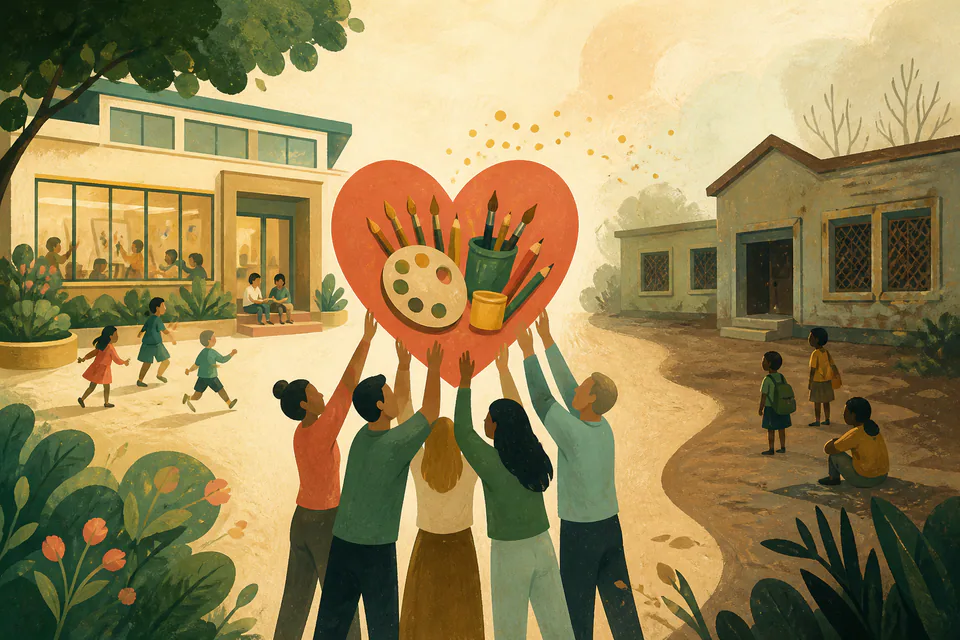
Rich parents want to buy their public-school class an art teacher. Should the school say no?
Parents at a well-resourced public school raise enough money for art teachers and smaller classes. Nearby schools cannot raise comparable amounts, widening differences within the same district.
Can helping your own community become unfair to the larger one?