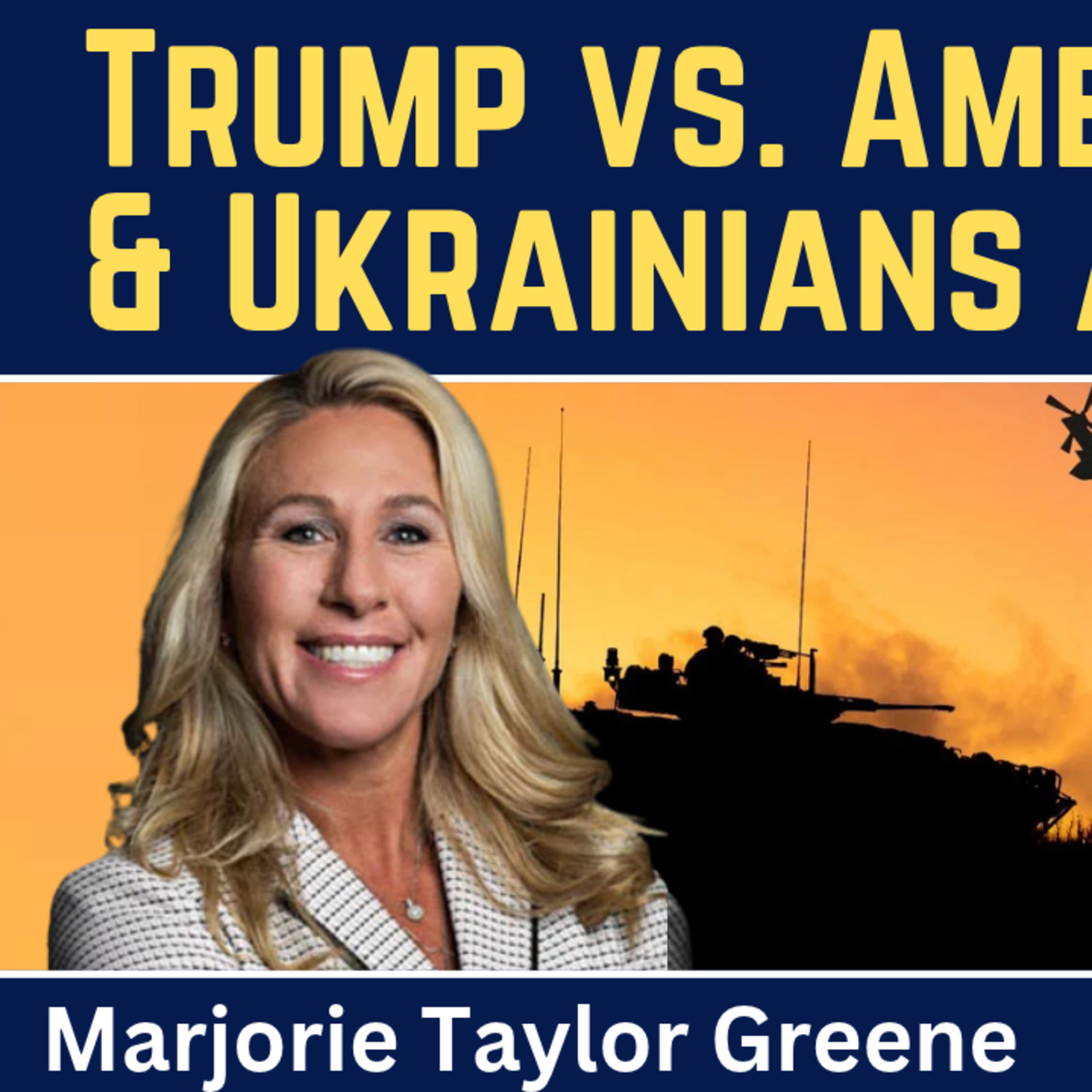
Marjorie Taylor Greene: U.S. Congress Behind Closed Doors - Using Ukrainians to Weaken Russia
27 min
Listen through the publisher, then discuss the episode here or arrange an in-person Roundtable. Your city determines where to meet.
Roundtables are designed for groups of four, with a shared subject and room for everyone to speak. Come for discussion, with no dating expectation.
Marjorie Taylor Greene is an American Republican politician who served as a member of the U.S. House of Representatives representing Georgia from 2021 to 2026. She was a close partner of Trump during the election campaign in support of 'America First', and then became a leading critic of Trump after he betrayed America First.Follow Prof. Glenn Diesen: PayPal: https://www.paypal.com/paypalme/glenndiesenBuy me a Coffee: buymeacoffee.com/gdiesengGo Fund Me: https://gofund.me/09ea012fBuy Diesen merchandise: https://diesen-shop.fourthwall.com/en-nok Books by Prof. Glenn Diesen: https://www.amazon.com/stores/author/B09FPQ4MDL00:00 Introduction to America First01:13 Defining America First03:15 The Discrepancy in American Voting Patterns04:18 Trump's Shift on Foreign Policy06:42 Concerns Over Nuclear Escalation09:21 The Israel-U.S. Relationship12:03 The Ukraine Proxy War15:58 Lobbying and Military Industrial Complex18:58 The Role of Intelligence Agencies25:29 The Future of America First
Episode information is provided by the publisher. Listening takes place on the publisher’s service.
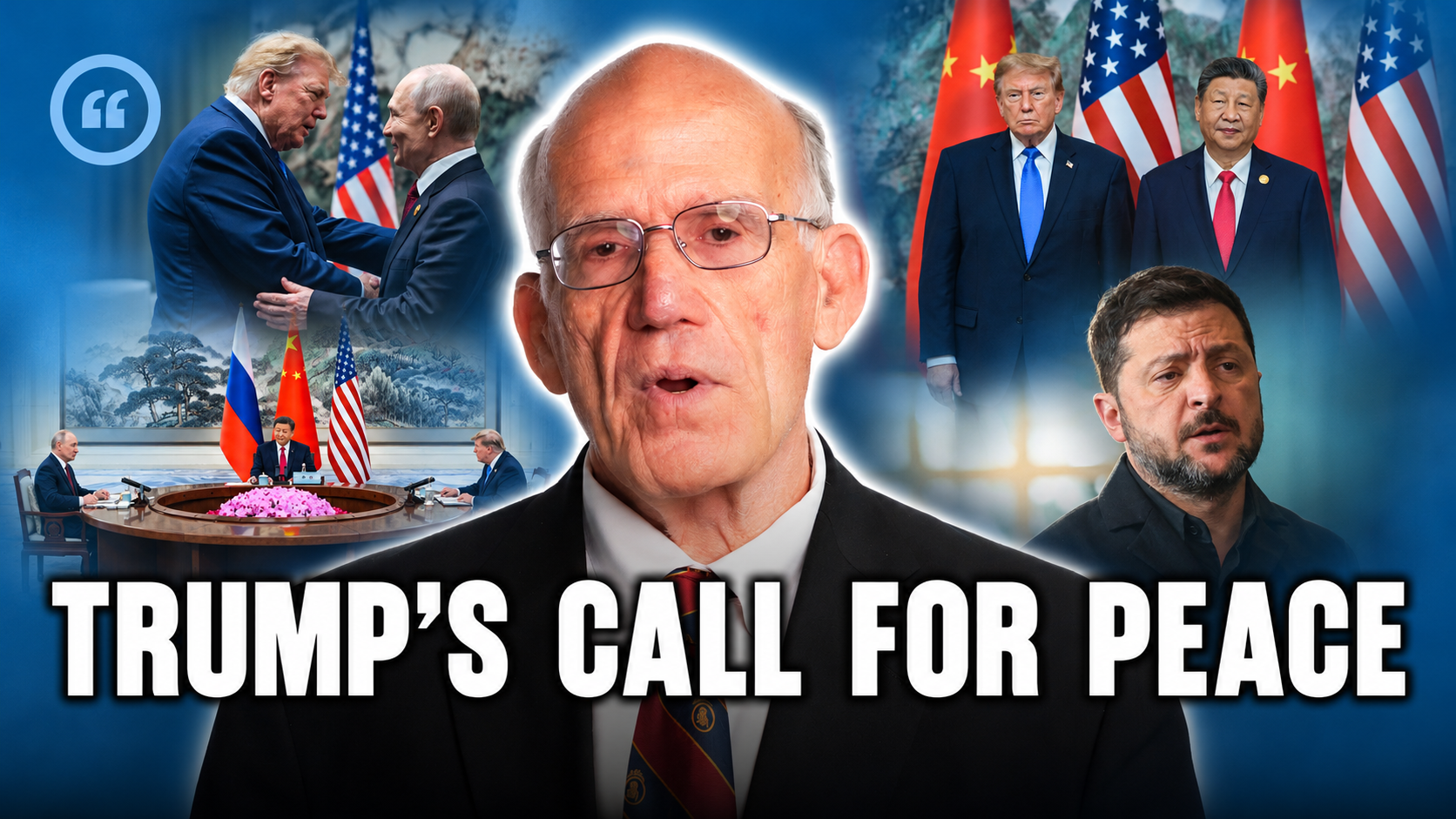
President Donald Trump's first ever trilateral summit with Vladimir Putin and Xi Jinping raises questions about the future of the war in Ukraine and whether a peace agreement could finally be within reach. Victor Davis Hanson and Sami Winc examine the summit on today’s edition of “Victor Davis Hanson: In His Own Words,” discussing Russia's declining influence, potential territorial concessions in Ukraine, and Europe's frustration over Trump's peace negotiations. Hanson criticizes Hillary Clinton's attacks on Trump's diplomacy; he also argues that European leaders have weakened their influence by neglecting defense spending and relying on American military protection. They discuss Elon Musk's shifting political allegiances, and Hanson warns that distancing himself from MAGA may not protect him from Democrat investigations. They also discuss the potential economic benefits of artificial intelligence and the challenges facing Hakeem Jeffries as Democrats prepare to take control of the Hou
November 20, 2026 On November 19, Trump met with Xi Jinping and Vladimir Putin in Shenzhen, China, The fact that the president of the US would meet with leaders of China and Russia was bizarre since both China and Russia have been helping Iran in its current fight against the US, Trump appeared to want the fanfare and President Xi played that up, Putin wanted the meeting because it would suggest that Russia was a great power, although it is far from being so and Putin’s war on Ukraine is going poorly, The meeting’s purpose seemed to be to produce propaganda for each of the three leaders, Beyond the propaganda is the larger story of the destruction of the post-World War II rules-based international order, In its place is the idea of dividing the world into spheres of influence, The three leaders met for 90 minutes and issued only a vague "joint declaration toward peace," which vowed to reform the UN and weaken the International Criminal Court, where Putin is already under indictment for
This week on The Necessary Conversation, it's Chad, Haley, and Mary Lou. Bob is still recovering but sent in a video message about Trump calling Putin his friend that we watch together. 🇷🇺 Trump held the first-ever three-way talks with Putin and Xi, called it a "12 out of 10," and produced nothing. Then at a press conference he called Putin his friend — and when asked if Putin is a friend to America, the president of the United States said, "I can't speak to America." That same day, Trump's friend Putin launched massive strikes into Ukraine, hit Poland with two missiles — an act of war against a NATO ally — then struck near a Ukrainian restaurant and drone-bombed the first responders, killing a 7-year-old child and a 20-year-old paramedic. We watch Bob's video and ask Mary Lou: is Russia our friend? 🇨🇳 The House Foreign Affairs Committee revealed Trump's Commerce Department approved nearly 880,000 advanced AI chips for Chinese military-linked companies including Alibaba, Tencent, a
MeidasTouch host Ben Meiselas reports on Ukrainian President Volodymyr Zelensky’s response to Donald Trump’s trip and Trump’s remarks about speaking for himself and counting Vladimir Putin as a friend. Meiselas breaks down the escalating war, with Russian strikes killing more than 20 people in Ukraine, reports of strikes in Poland, and Ukraine hitting back with strikes inside Russia. Visit https://meidasplus.com (https://meidasplus.com/) for more! Remember to subscribe to ALL the MeidasTouch Network Podcasts: https://meidasnews.com/podcast Support the MeidasTouch Network: https://patreon.com/meidastouch (https://patreon.com/meidastouchAdd) Add the MeidasTouch Podcast: https://podcasts.apple.com/us/podcast/the-meidastouch-podcast/id1510240831Buy MeidasTouch Merch: https://store.meidastouch.com (https://store.meidastouch.com/) Follow MeidasTouch on Twitter: https://twitter.com/meidastouchFollow MeidasTouch on Facebook: https://facebook.com/meidastouchFollow MeidasTouch on Instagram: http
A wave of major technology outages is raising troubling questions about America's cybersecurity, aging infrastructure, and readiness for a new era of artificial intelligence. Are these isolated technical failures, or warning signs of a much larger national security problem? John Solomon and Amanda Head welcome Ohio Congressman and former Army Ranger Warren Davidson, who discusses recent disruptions involving the FAA, Microsoft, and other critical systems. Davidson calls for greater transparency from government agencies and technology companies, questions whether America's infrastructure is adequately protected against emerging cyber threats, and examines how artificial intelligence could be used both to strengthen defenses and exploit vulnerabilities. The conversation also turns to immigration and national security, with Davidson raising concerns about individuals who entered the country illegally, potential gaps in government screening systems, and the surveillance powers used to moni
A summit like no other. In a political first, President Trump sat down with President Putin and President Xi for an unprecedented trilateral meeting. He insists they’re all friends, but what does this mean for their conflicting agendas in Iran and Ukraine? Former Biden adviser Rush Doshi joins Christiane Amanpour to assess what was, or wasn’t, achieved. Then, in a landmark case, the International Court of Justice has found Myanmar guilty of committing genocide against the minority Rohingya population. The U.N. High Commissioner for Human Rights, Volker Türk, joins the show to discuss why this moment is so important. Plus, CNN’s Clare Sebastian takes us underground to look at how Ukraine’s innovative operation is helping the country make substantial gains. And best-selling author Elizabeth Strout discusses her new book ‘The Things We Never Say’, exploring the political and personal tensions of America that emerged during the 2024 presidential election. From the archive, my report from U
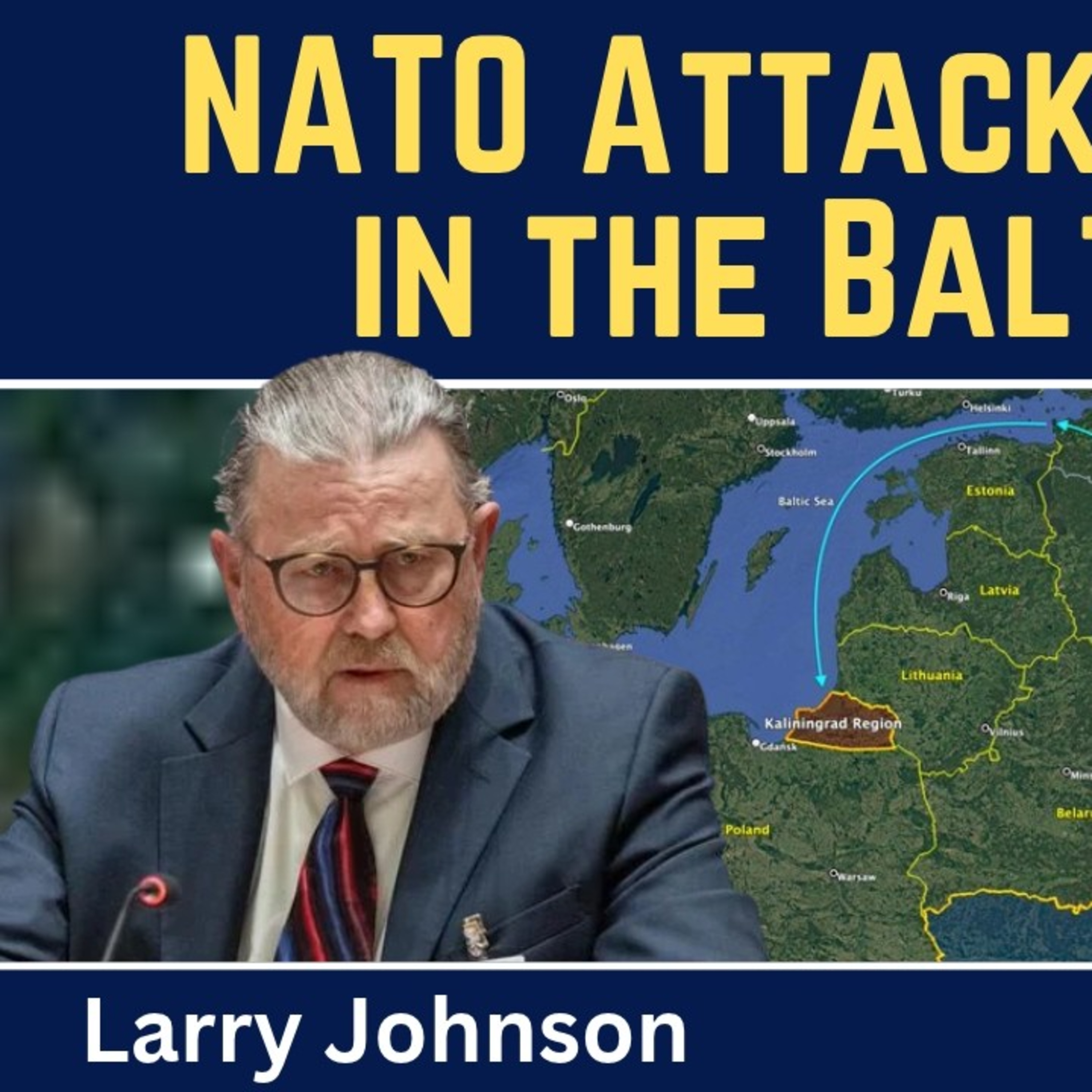
Larry Johnson is a former CIA intelligence analyst who also worked at the U.S. State Department's Office of Counterterrorism. Johnson discusses the attack on a Russian cargo ship in the Baltic Sea, and the air alarms going off in Kaliningrad. Read Larry Johnson's Sonar21: https://sonar21.com/Follow Prof. Glenn Diesen: PayPal: https://www.paypal.com/paypalme/glenndiesenBuy me a Coffee: buymeacoffee.com/gdiesengGo Fund Me: https://gofund.me/09ea012fBuy Diesen merchandise: https://diesen-shop.fourthwall.com/en-nokBooks by Prof. Glenn Diesen: https://www.amazon.com/stores/author/B09FPQ4MDL 00:00 Escalating Tensions in the Baltic Sea02:45 NATO's Role and Russia's Response05:52 The Shift in European Attitudes Towards Russia09:11 Cultural Influences on Perceptions of Russia11:44 The Consequences of Military Escalation15:06 The Irrelevance of Europe in Global Politics25:49 Reassessing Global Power Dynamics32:44 The Role of Europe in a Changing World39:19 The Impact of Economic Interests on Pol
Davis Betz is a Professor of War in the Modern World at King's College London. Prof. Betz discusses how the West is accelerating on its path to civil war.Follow Prof. Glenn Diesen: PayPal: https://www.paypal.com/paypalme/glenndiesenBuy me a Coffee: buymeacoffee.com/gdiesengGo Fund Me: https://gofund.me/09ea012fBuy Diesen merchandise: https://diesen-shop.fourthwall.com/en-nok Books by Prof. Glenn Diesen: https://www.amazon.com/stores/author/B09FPQ4MDL
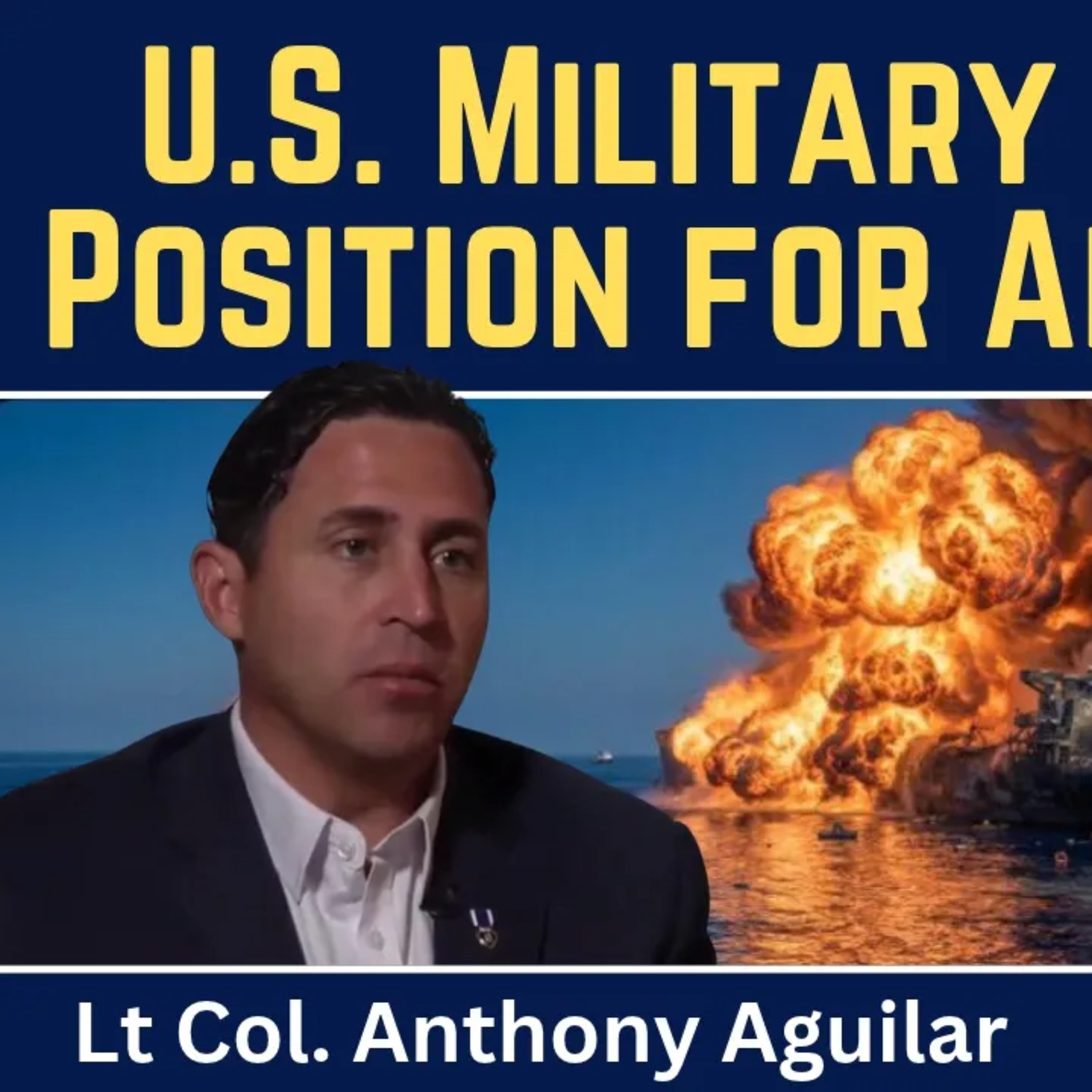
Anthony Aguilar is a retired Lieutenant Colonel in the U.S. Army, a Special Forces Green Beret who served as a combat infantry officer for 25 years in Afghanistan, Iraq, Syria, Jordan, the Philippines, Thailand, Malaysia, Cambodia, Vietnam, Kazakhstan, and Tajikistan. Aguilar worked as an aid contractor for Gaza Humanitarian Foundation (GHF), and became a whistleblower as he exposed the atrocities.Follow Prof. Glenn Diesen: Substack: https://glenndiesen.substack.com/ X/Twitter: https://x.com/Glenn_DiesenPatreon: https://www.patreon.com/glenndiesen Buy Diesen merchandise: https://diesen-shop.fourthwall.com/en-nokSupport the research by Prof. Glenn Diesen: PayPal: https://www.paypal.com/paypalme/glenndiesenBuy me a Coffee: buymeacoffee.com/gdiesengGo Fund Me: https://gofund.me/09ea012fBooks by Prof. Glenn Diesen: https://www.amazon.com/stores/author/B09FPQ4MDL00:00 Introduction to Military Tensions in the Middle East01:06 US Military Build-Up and Strategic Messaging10:24 Iran's Counterac
Arts organizations should take creative risks even when familiar work would sell better.
Share your view, then see how readers voted. No sign-in required. This poll is shared across stories.
Do you agree or disagree?
Common Quandary
A Common Quandary to discuss
Another conversation to explore, separate from this news story.
A pricey AI tutor can turn B students into A students. Should schools let them use it?
An effective AI tutor adapts to each student and dramatically improves performance, but its subscription is expensive. A public school cannot provide it to everyone and worries that allowing its use will deepen existing inequality.
Should access be limited when a beneficial tool cannot yet be shared fairly?