Metabolic Scientist Reveals the 3 Biggest Fat Loss Mistakes | Dr. Latt Mansor
62 min
Listen through the publisher, then discuss the episode here or arrange an in-person Roundtable. Your city determines where to meet.
Roundtables are designed for groups of four, with a shared subject and room for everyone to speak. Come for discussion, with no dating expectation.
If you’ve been consistent with your nutrition and your exercise but you’re still not losing weight, you might be making some common mistakes that inhibit fat loss. On today’s show, you’re going to learn about the biggest mistakes that people make when trying to lose weight, and how to actually make progress that lasts. Dr. Latt Mansor is a health scientist and the lead researcher at Ketone IQ. He’s back on The Model Health Show to share the science behind weight loss and how to optimize your results with science-backed strategies. In this interview, you’re going to take away the three top approaches that could be stopping you from losing fat, the latest science behind exogenous ketones, and more. This episode is packed with science and actionable tips that will yield results. Dr. Latt Mansor is an expert on metabolic flexibility, and his insights will help you gain a full understanding of your overall metabolic health, energy production, and more. I hope you enjoy this episode of The Model Health Show! In this episode you’ll discover: Why bioindividuality is critical when it comes to weight loss. (3:36) The role that insulin plays in fat storage. (4:55) Why muscle is like an engine. (10:18) The mechanics of burning fat and building muscle. (12:16) Why walking an underrated exercise. (17:48) The importance of understanding your total daily energy expenditure. (19:17) How vascular function responds to ketosis. (22:22) The top two benefits of using exogenous ketones. (36:02) How carbs and ketones differ as an energy source. (37:44) The best way to increase insulin sensitivity. (42:03) What metabolic psychiatry is. (44:42) Why understanding that you matter can change your perception. (53:04) Items mentioned in this episode include: Ketone.com/model (https://themodelhealthshow.com/ketone) - Save 30% on your first subscription of Ketone IQ! Connect with Dr. Latt Mansor Podcast (https://open.spotify.com/show/5Vwg1uEzp5PGRc7NjWlpag) / Instagram (https://www.instagram.com/lattmansor/?hl=en) / TikTok (https://www.tiktok.com/@lattmansor) Spotify (https://open.spotify.com/show/6F3aCAq1L6k3eVqfaveMCp) Soundcloud (https://soundcloud.com/themodelhealthshow) YouTube (https://www.youtube.com/@TheShawnModel) This episode of The Model Health Show is brought to you by Ketone IQ. Ketone-IQ is my favorite high-performance energy in a bottle. You’ll experience better focus, improved endurance, and enhanced cognition. Save 30% on your first subscription at ketone.com/model (https://themodelhealthshow.com/ketone).
Episode information is provided by the publisher. Listening takes place on the publisher’s service.
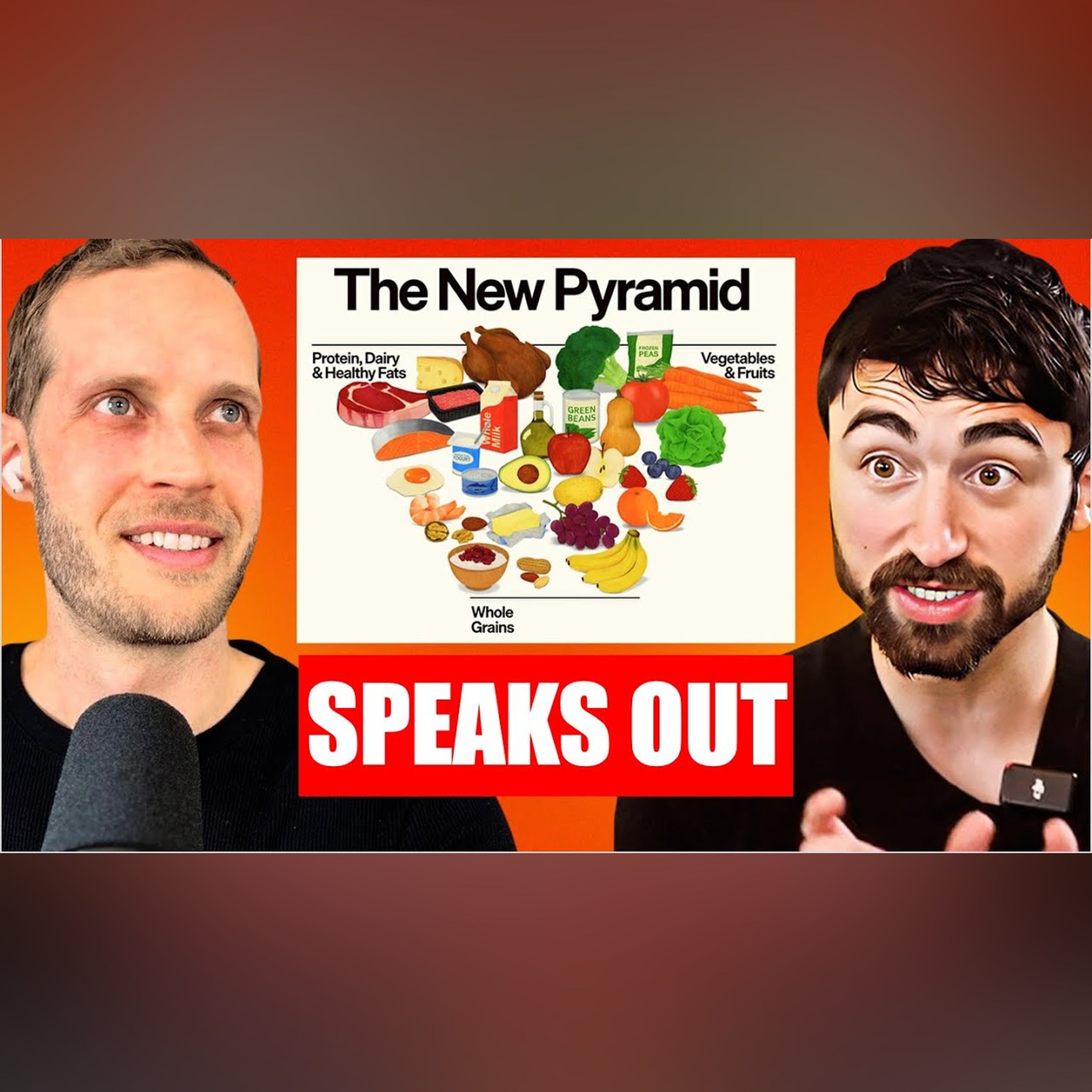
For a written digest on the guidelines, see the StayCurious Metabolism Letter: https://staycuriousmetabolism.substack.com/p/the-new-dietary-guidelines-actually?r=40ekz2 The 2025–2030 Dietary Guidelines are being marketed as a major reset with a simple message: put “real food” back at the center of the American diet. And in a lot of ways, they do represent progress. But when you actually read what’s written, some of the most important details raise real questions. For example, the document still states that saturated fat should not exceed 10% of total daily calories. To separate signal from spin, I’m joined by Dr. Ty Beal PhD, who worked on the evidence review side of the Guidelines process, to explain what the scientific background documents actually say, what happens after scientists submit reviews, and why the final public-facing document can end up with compromises, inconsistencies, or imprecise terminology. If you want a clear, good-faith breakdown—what’s genuinely better, what sti
See the weight loss results on a 7 day water fast, it's amazing! Learn what to expect on an extended fast and if a multi-day, prolonged fast is right for you. Using the #DrBozRatio to estimate your level of autophagy and how to tell if you're in the weight loss zone. Using Exogenous Ketones is a great little boost to help get your body burning ketones, give you a quick hit of energy and I've even been told it's a nice little mood booster. Dr Boz BHB on Amazon: https://amzn.to/2GXLlSw Here's what one reviewer on Amazon said: "I have tried many different exogenous ketone drinks and supplements. This one was one of the best that I have tried. Do yourself a favor and add a little heavy whipping cream to it. It will not disappoint." This is an advanced keto lesson! If you are a beginner please start here - https://www.youtube.com/watch?v=bsHqa4-g3Tw&list=PL2Pw0R3qlUSAjIFtYOgJwVoe52Ncn9MQr (https://www.youtube.com/watch?list=PL2Pw0R3qlUSAjIFtYOgJwVoe52Ncn9MQr&v=bsHqa4-g3Tw) If you would like
Is your body weight stable, but you're still not eating enough to properly fuel your training, recovery, and overall health? Introducing Why Stable Weight Doesn't Always Mean You're Eating Enough from Jeff Hoehn of the Mind Muscle Connection Podcast (https://www.buzzsprout.com/1508401). Just because your weight isn't changing doesn't necessarily mean you're adequately fueled. In this episode, Jeff breaks down why maintaining a stable body weight doesn't always mean you're meeting your body's energy needs, especially if you're training hard, staying lean, or spending long periods dieting. You'll learn: Why stable body weight doesn't automatically mean adequate energy availability Who is most at risk of underfueling, even when their weight isn't changing How high training output, staying too lean, and chronic dieting can contribute to low energy availability The potential signs of underfueling, including changes in performance, recovery, hormones, and menstrual health Why spending too lo
Today, Mel is taking 58 years of hard-earned life lessons and is packing them into under an hour, to save you some of the time, frustration, and worry it took her to learn them the hard way. In this episode, Mel is fielding real questions from listeners around the world. From making friends and bouncing back from rejection to feeling stuck in life and wondering if it's all going to work out, Mel is sharing the advice she wishes she'd known sooner. And she's not holding back. You'll hear Mel get personal about her own setbacks, and what she's learned about starting over, going after what you want, and trusting yourself when life doesn't go according to plan. You'll learn: -How to stop worrying about the future when nothing feels certain -How to make big life decisions, including whether or not to have kids -How to make new friends as an adult -What to do when you get rejected from your dream job -What to do when a friend ghosts you -How to stop procrastinating and finally follow through
Get the 200+ Page Optimal Living Daily Workbook (PDF) - Free. Want to turn today's episode into an actionable plan? Episode 4233: Kate Galliett explains three reasons we make health, fitness and life harder than they need to be: ignoring how the body works as a connected system, trusting only extreme intensity, and leaking the energy that fuels motivation and discipline. She makes the case that appropriate effort, not maximum effort, is the only sustainable path to lasting results. Read along with the original article(s) here: https://fitforreallife.substack.com/p/why-you-make-everything-harder-than Quotes to ponder: "The better way is to give appropriate effort and get appropriate results. This is the only sustainable way." "If you try and live at the extremes, you will constantly ping-pong back and forth from one extreme to the other." "Just imagine - you might not actually lack discipline after all, you just might be leaking energy that feeds your ability to be disciplined." We spen
What actually works when it comes to detecting lies, and why are so many popular ideas about reading people and nonverbal behavior at odds with the scientific research? I talk with Aldert Vrij, one of the world's leading deception-detection researchers, who has spent almost four decades studying these topics. We discuss why what people say is far more revealing than their body language; why the perceived “sexiness” of reading nonverbal behavior has contributed to widespread myths and misconceptions; whether vocal behaviors like pitch, volume, and hesitation contain meaningful clues; and whether there's value in analyzing minor word choices and turns of phrase, as is done in so-called “statement analysis.” We discuss Paul Ekman's legacy as a source of faulty ideas about deception, micro-expression-based deception detection training, and the strategies that popular “body language experts” use to appear scientifically credible while simultaneously promoting ideas that conflict with the sc
On the quest for healthier, younger looking skin, many people turn to natural products. But just because a product is natural doesn’t mean it can’t irritate sensitive skin, cause adverse reactions, or clog pores. On today’s show, you’re going to learn about five things to avoid putting on your face – and what to do instead for healthy skin. Dr. Anthony Youn is a nationally recognized, board-certified plastic surgeon. He is also the most followed plastic surgeon on social media. Today, Dr. Youn returns to The Model Health Show for a discussion on five common products you should never use on your face. You’re going to learn why certain natural products can actually harm your skin, the dangers involved with popular cosmetic treatments, and more. You’ll also learn about the inextricable link between health and beauty, science-backed treatments that actually work, and how to take good care of your skin. Dr. Youn is an absolute expert in his industry. I hope you enjoy this conversation on sk
Antidepressants are commonly prescribed to manage depression, anxiety disorders, and other mental health conditions. Like any prescription drug, antidepressants can be a helpful tool, but they don’t come without side effects and downsides. Today, you’re going to learn the truth about depression, antidepressant medications, and the future of mental health treatment. Our guest, Dr. Mark Horowitz, is a psychiatrist and researcher who specializes in psychiatric drug withdrawal and deprescribing. Today, Dr. Horowitz joins us on The Model Health Show for an important conversation on depression and safely stopping antidepressants. His work draws on his combined experience as a researcher, psychiatrist, and former antidepressant patient who experienced severe withdrawal symptoms. In this interview, you’re going to learn about the fascinating study that Dr. Horowitz co-authored on the chemical imbalance theory of depression, the latest science on safer antidepressants tapering, and better pract
For most folks, food is an important cornerstone of holiday traditions and celebrations. The food industry understands the nostalgia and comfort that can accompany certain foods and flavors, and they work tirelessly year round to develop strategies to keep your family hooked on their products. Today, you’re going to learn about the ingredients that food companies are using to sabotage our health. Today’s guest, Vani Hari, is a revolutionary food activist and New York Times bestselling author. On this episode of The Model Health Show, Vani is back to discuss how food companies profit on holiday celebrations, often at the expense of our health. You’re going to learn all about how to make the most of the holidays and how to celebrate with your loved ones without sacrificing your health. Vani is also going to be sharing her experiences working to change food policy, how she convinced big name brands to disclose their hidden ingredients, and what you can do to serve the highest quality ingr
Sports eligibility rules should be based on transparent evidence and allow meaningful appeal.
Share your view, then see how readers voted. No sign-in required. This poll is shared across stories.
Do you agree or disagree?
Common Quandary
A Common Quandary to discuss
Another conversation to explore, separate from this news story.
An AI wrote the perfect condolence message for you. Is it still from the heart?
Your friend is grieving. You want to reach out, but words fail you, so you ask an AI to draft a condolence message. It expresses exactly what you feel. You revise it and send it without mentioning the help.