Listen through the publisher, then discuss the episode here or arrange an in-person Roundtable. Your city determines where to meet.
Roundtables are designed for groups of four, with a shared subject and room for everyone to speak. Come for discussion, with no dating expectation.
Michael Lewis, author of Moneyball, The Big Short, and the new book Blockers: Rebels in the Deep State (https://www.pushkin.fm/news/norton-pushkin-publish-michael-lewis-blockers-rebels-in-the-deep-state), joins Scott Galloway to discuss what happened when DOGE went after the career civil servants who stood in its way. He explains why DOGE’s young engineers led with contempt over curiosity, how the IRS’s chief privacy officer fought to keep immigrants’ tax data away from ICE, and why watching DOGE’s leadership up close made him question how the world’s richest man runs his companies. They also explore how prediction markets are upending sports betting, why gambling apps go after their most vulnerable users, and what it’s like to watch a son leave for college. To order the audiobook or learn more about buying the book, visitBlockers.fm (https://www.pushkin.fm/audiobooks/blockers).
Episode information is provided by the publisher. Listening takes place on the publisher’s service.
Bitcoin stages a powerful comeback after crashing to $55,000, triggering massive short liquidations as the bears get caught on the wrong side of the market. Meanwhile, Michael Saylor drops a cryptic message: "The dots aren't done," alongside Strategy's Bitcoin purchase tracker showing 850,849 BTC. With Strategy facing approximately $17.4 BILLION in unrealized Bitcoin losses at the recent lows, is Saylor preparing to reveal another major BTC acquisition? We examine the Bitcoin short squeeze, Strategy's accumulation strategy, Peter Schiff's prediction of sub-$10K Bitcoin, and what Monday's expected SEC filing could mean for the market. Prefer video?
Introducing the “Facts From the Frontlines” episode of #TheTonyRobbinsPodcast – where Tony uncovers the truth about coronavirus with a 7-person panel of highly qualified researchers, an experienced epidemiologist, a Nobel Laureate, and M.D.s testing and treating patients on the frontlines. Together, they reveal the evidence-based research that has come to light in the last two months. Uploaded 23-05-20 This is one of the most important interviews Tony has ever conducted. It reminds us to stand guard at the door of our mind, practice discernment when determining trustworthy sources, and think critically in order to stay flexible and maintain the ability to pivot in light of new information – especially when lives depend on it. To hear the full interview, go here: https://www.tonyrobbins.com/podcasts/covid-19-facts-from-the-frontline/ *COVID-19 Playlist* https://www.youtube.com/watch?v=YgP_Au5RZVw&list=PLYTXvUDQT5pUaoPTzi71UIqilqgBOKkQe (https://www.youtube.com/watch?list=PLYTXvUDQT5pUao
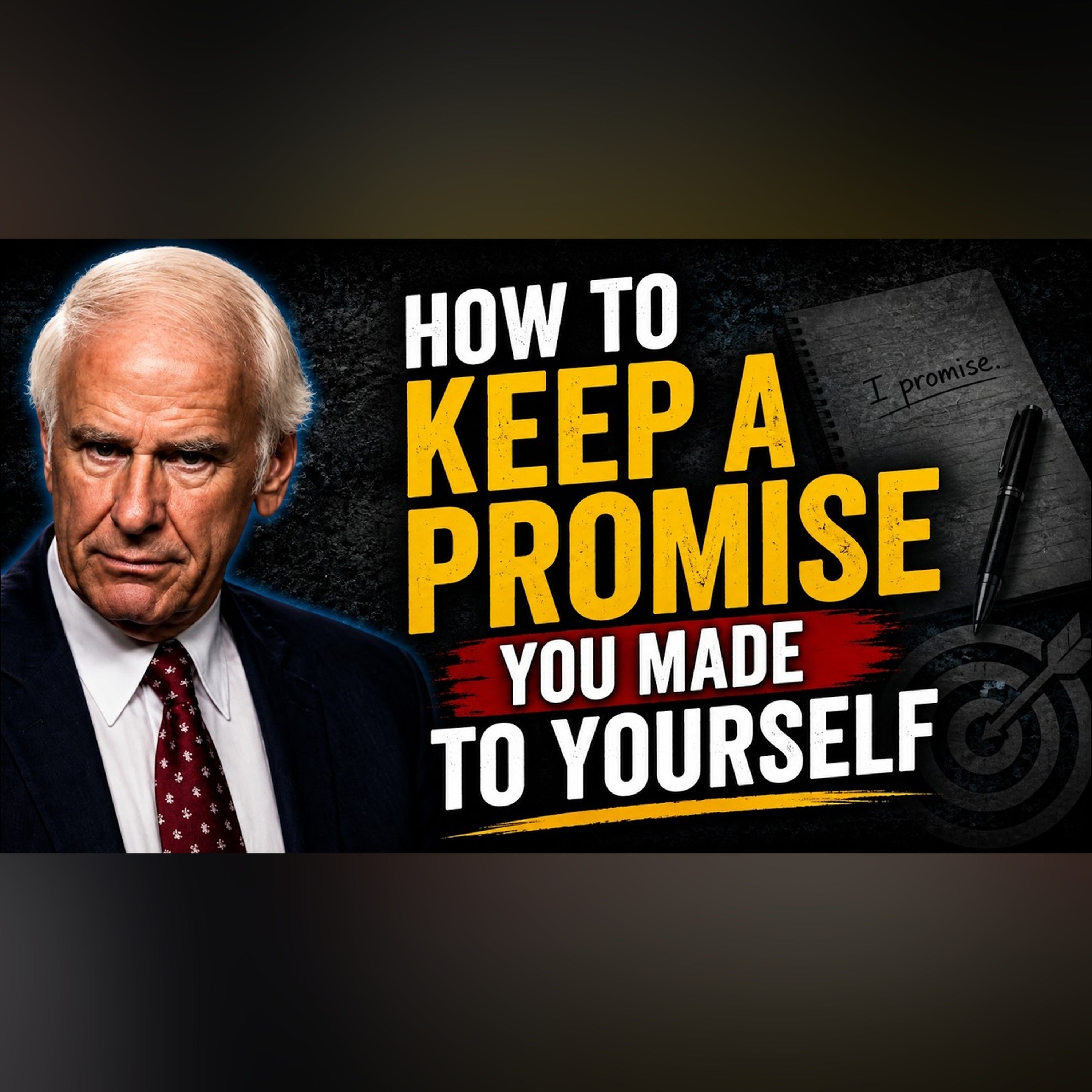
I'd be willing to bet that somewhere along the way, you broke it. Not because you're a bad person. Not because you lack character. But because the promise you made to yourself is the one promise in your life that has no witness, no contract, no consequence you can see. And so you let it slide. Uploaded 19-08-26 If you gave your word to a business partner, you'd move heaven and earth to deliver. You'd stay up late. You'd cancel plans. Because someone was watching, and there was a cost to failing. But when the promise is to yourself, all of that evaporates. There's no partner waiting. And so the promise to yourself becomes the most breakable promise you own. Here is the truth: the reason you can't keep promises to yourself isn't a willpower problem or a motivation problem. It's a trust problem. And trust is the whole game. This seminar walks through the things you must understand about keeping your word to the one person who has to live with the results — you. CHAPTERS 0:00 Intro — the p
We spend so much time caught up in the demands of everyday life that we forget to appreciate how extraordinary it is to be alive. Inspired by Robert Greene's new book, The Law of the Sublime (https://www.thepaintedporch.com/products/the-law-of-the-sublime?_pos=13&_sid=e0d7a8c03&_ss=r), Ryan explores what the Stoics understood about finding beauty in the ordinary, seeing life from a different perspective, recognizing our connection to something bigger than ourselves, and remembering just how lucky we are to be alive. Watch this episode (https://www.youtube.com/watch?v=eCjqWcbsK1M) on YouTube: https://www.youtube.com/watch?v=eCjqWcbsK1M Watch the NEW Robert Greene Daily Stoic Podcast Episode HERE (https://www.youtube.com/watch?v=Kp_wYiuPD_o): https://www.youtube.com/watch?v=Kp_wYiuPD_o If you want to get your own dedicated privacy specialist and an emergency threat response team who can protect the privacy of you and your family, go to https://incogni.com/dailystoic Hosted on Acast.
This episode is brought to you by Sarmaya Partners. Learn more about Sarmaya’s LENS ETF, their full data and comparison, including performance here: https://sarmayaetf.com/ In this episode of Other People's Money, Max Wiethe sits down with Muddy Waters Capital founder Carson Block to discuss his firm's explosive new short thesis on Nvidia. Block breaks down the alarming connections between a former Nvidia executive and a former SMCI executive recently implicated in a major chip smuggling scandal. The conversation dives deep into the national security implications of dual-use technology and how the ongoing geopolitical tug-of-war between the US and China is reshaping the semiconductor sector. Tune in to hear why Block believes this scandal goes far beyond CEO indiscretions and could trigger a massive regulatory reckoning for Silicon Valley's biggest players. Follow Muddy Waters on X: https://x.com/muddywatersre Follow Max on X: https://x.com/maxwiethe Follow Other People’s Money on: App
Bitcoin doesn't excite Ran Neuner anymore, and the Crypto Banter founder explains where he sees the real opportunity in crypto now. Ran tells me why he took profits at $84K, how he's deploying that cash now that sentiment has hit extreme fear, and the two tests he's watching to tell whether the bull market is still on. He explains why he thinks tokenized stocks and AI agents will run on blockchain rails, how he values tokens on "pressure" instead of FDV, why he thinks the old Bitcoin crowd is moving to Zcash, and how worried he really is about quantum. We also get into the midterms, World Liberty Financial, Solana Breakpoint and STRC. Recorded Thursday, November 19. In this episode: 00:00 Intro 01:10 Is the bull market still on? 02:17 What a correction is supposed to do 03:28 Two tests for the bull market 04:12 Why Bitcoin excites Ran less now 05:11 Trading tokenized Anthropic before the IPO 07:24 How AI agents will move your money 09:31 Why agents will settle on blockchain rails 13:25
George Hahn connects the dots across the week’s biggest stories: why the real Nvidia scandal may lie within the Commerce Department, what top strategists say the Democratic Congress needs to deliver on, and why the author of “The 48 Laws of Power” warns against chasing success 24/7. We’d love your feedback as we build this show! Let us know what you think: [email protected].
Scott Galloway sits down with Robert Reich, former Secretary of Labor and author of Saving Capitalism, to discuss the kitchen-table agenda Democrats should run on ahead of 2028. They debate whether unions or the federal government should lead the fight for higher wages, which industries regulators should break up next, and whether wealth taxes can work. Robert also shares his advice for parents of young men who feel lost. This conversation was recorded as a Substack livestream on Thursday, November 12. For more Substack content from Scott and Prof G Media, become a Prof G+ subscriber here (https://www.profgmedia.com/subscribe?next=https%3A%2F%2Fwww.profgmedia.com%2F&simple=true).
Scott Galloway speaks with demographer Lyman Stone, director of the Pronatalism Initiative at the Institute for Family Studies, about why falling U.S. birth rates come down to fewer people marrying and pairing off. They also cover why money and immigration won’t close the gap, what a shrinking pool of 18-year-olds means for American colleges, and how marriage penalties in the safety net push young working-class couples away from marriage. Read more of Lyman's work on Substack here: https://lymanstone.substack.com/
Officials should distinguish confirmed facts from uncertainty during developing incidents.
Share your view, then see how readers voted. No sign-in required. This poll is shared across stories.
Do you agree or disagree?
Common Quandary
A Common Quandary to discuss
Another conversation to explore, separate from this news story.
Your adorable child could pay for college by becoming an influencer. Do you start filming?
Parents post cheerful videos of their young child and earn enough to fund the child's education. The child enjoys filming now but cannot understand what it means for strangers to watch those moments years later.
Can parents consent to a permanent public identity on a child's behalf?