My Drunk Driving Accident Killed a Man — Then I Spent 6 Years in Prison | Bo Cornelius
135 min
Listen through the publisher, then discuss the episode here or arrange an in-person Roundtable. Your city determines where to meet.
Roundtables are designed for groups of four, with a shared subject and room for everyone to speak. Come for discussion, with no dating expectation.
Bo Cornelius went from battling alcohol addiction to serving six years in Missouri state prison after a drunk driving accident took another man's life. In this episode of Locked In with Ian Bick, Bo opens up about how his drinking spiraled out of control, the devastating day that changed two families forever, and what it took to survive behind bars. He shares how prison forced him to confront his actions, rebuild his life, and discover a new purpose. Today, as the founder of Second Mountain, Bo is helping transform prison culture through leadership programs that empower incarcerated individuals and correctional staff across state and federal facilities. _____________________________________________ Connect with Bo Cornelius: _____________________________________________ Hosted, Executive Produced & Edited By Ian Bick: _____________________________________________ Timestamps: 00:00 Drinking Every Day 00:32 Who Is Bo Cornelius? 00:52 Childhood and Moving Around 02:38 Following His Mom's Marriages 03:18 A Chip on His Shoulder 05:16 Childhood Trauma and Religious Abuse 07:02 Finding Perspective in Prison 09:48 Where Leadership Came From 12:00 What Money Meant to Him 13:42 The First Drink at Work 15:12 Pain, Pills, and Escalation 17:02 Seizures and Probation 19:50 The Rehab That Failed 21:05 Family History of Addiction 22:37 How the Community Saw Him 23:54 The Day of the Accident 28:00 Learning Someone Died 31:32 Functioning While Drunk 33:25 Community Reaction and Shame 36:58 Depression in the Aftermath 38:20 The First Prison Visit 41:48 Facing the Prison Sentence 43:52 Why His Wife Stayed 47:56 Preparing for Prison 49:18 First Day Behind Bars 54:11 Entry Point and Rock Bottom 57:53 From Five House to 16 House 01:00:10 Finding His Way in Prison 01:03:38 Prison Politics Surprises 01:07:53 Why Prisons Make It That Way 01:11:43 Case Managers and Counselors 01:14:40 No Real Job Training 01:17:30 Why He Chose the Dog Program 01:21:00 The Moment It Hit Him 01:22:36 The Day Kenny Died 01:28:00 Finding Leadership at the Summit 01:33:20 Building Community Behind Bars 01:37:17 Writing the GLA Proposal 01:40:02 Launching the GLA Program 01:43:55 How the Program Works 01:48:40 Sticking With It After Release 01:51:20 The Summit After Prison 01:54:01 Starting Second Mountain 01:59:00 Returning to Prison 02:00:10 The Death That Changed Things 02:03:40 Bridging Inmates and Staff 02:08:51 What He Values Now 02:09:39 Trying to Make Amends 02:10:50 Advice to His Teenage Self 02:14:31 Closing Thoughts _____________________________________________
Episode information is provided by the publisher. Listening takes place on the publisher’s service.
Imagine if every big change in our lives came with a whole community stepping up beside us… In this episode, I sit down with Dr Arne Rubinstein, former GP and emergency doctor, founder of the Rites of Passage Institute, and a man who's spent more than 30 years walking young people across the threshold into adulthood. Arne's work began around a fire at his very first men's gathering, listening to a hundred men wrestle with the same handful of wounds. Then in the Emergency Dpt, he kept meeting teenagers who'd pushed it one step too far... kids trying to become adults with nobody there to hold them. He came to believe every young person will go through a rite of passage either way. The question is whether we leave them to create their own, or gather around and help. We talk about why our culture is so good at turning away from the big moments - from first periods to menopause to death - and what opens up when we turn towards them. We explore: Separation, transformation and integration, an
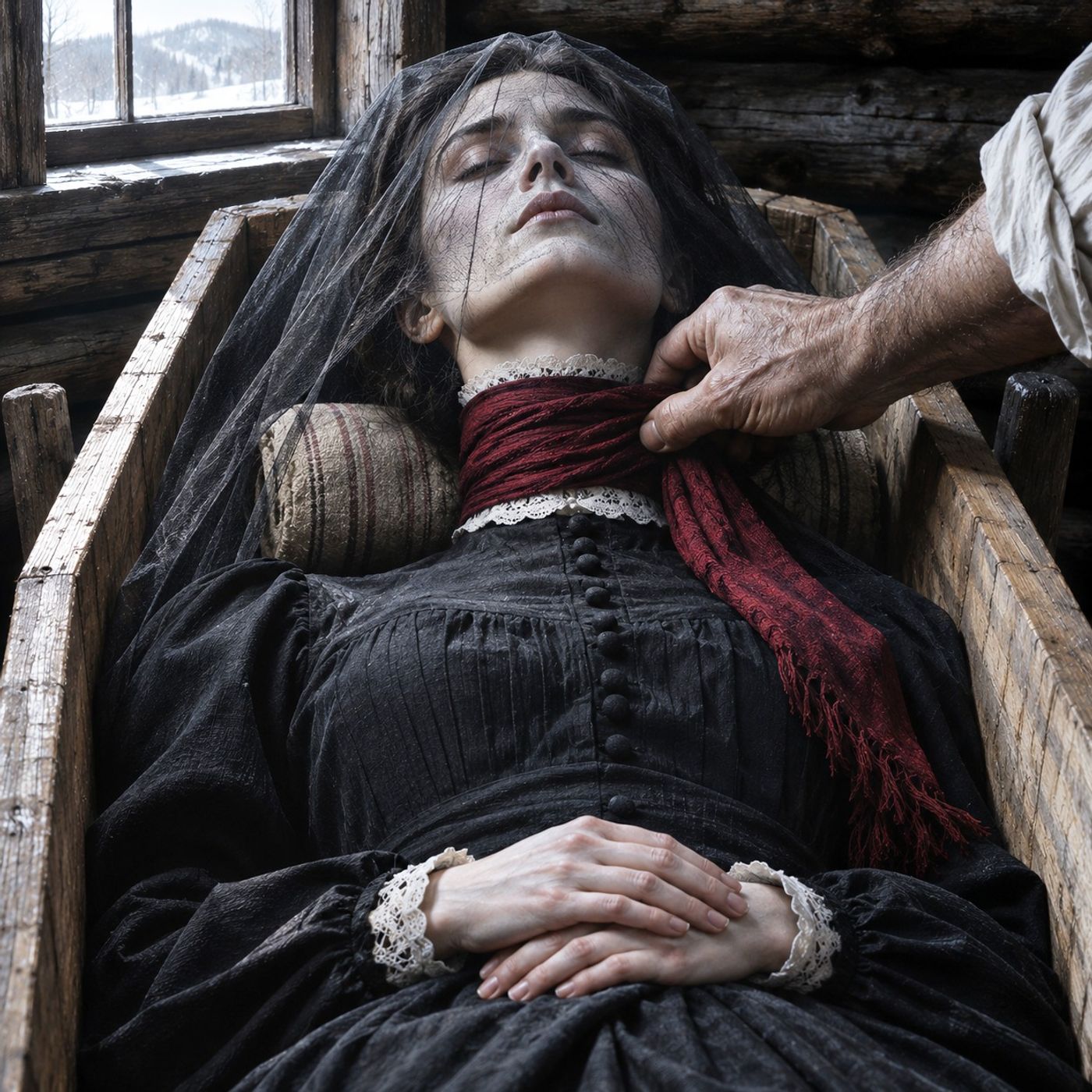
In January 1897, blacksmith Edward Shue washed and dressed his bride of three months for burial before the coroner ever reached their log house in Greenbrier County, West Virginia, and at her funeral he kept fussing with her head and neck, propping it on a pillow and wrapping a scarf around her high collar. Her mother, Mary Jane Heaster, had never liked him, and for weeks afterward she prayed every evening for her daughter to come back and tell her what had really happened. FEATURED STORIES IN THIS EPISODE: This Weird Darkness episode runs from the Greenbrier Ghost, the 1897 West Virginia murder victim whose mother said she came back to name her killer, to a bottomless pit in Washington, a wave of Mothman sightings over Chicago, and a London tomb rumored to be a time machine. Elva Heaster was dead – but that didn’t stop her ghost from solving the murder. *** In Stephen King’s “Pet Semetery”, beloved family pets could come back from the dead. *** In Washington there is a hole that some
As a young mother preparing for her first baby, she was delighted when her husband's grandparents offered her an old oak rocking chair. After stripping away layers of paint and restoring it, she placed it in the living room, where she spent countless nights rocking her newborn son. But soon, she began hearing the chair's unmistakable creaking long after everyone had gone to bed. Her husband never found anything unusual, yet the sound continued. Then one night, she woke on the couch to hear the chair rocking behind her—and caught a glimpse of something heartbreaking. Unable to live with the experience, she returned the chair to the grandparents. Their strangely unsurprised reaction, followed by something they revealed about its history, raised an unsettling question: Had another mother's grief remained attached to the chair all those years? #RealGhostStoriesOnline #HauntedRockingChair #HauntedAntiques #HauntedObjects #GhostlyApparitions #SpiritAttachments #ParanormalEncounters #HauntedF
Louisiana State Penitentiary, more commonly known as Angola Prison, is America’s biggest maximum security prison in a state that incarcerates more people than any other. That means they are there for having committed the most serious crimes, including murder. Most will never leave jail. Several days a year, some inmates are allowed to take part in the US's last prison rodeo. Whilst the inmates are primarily black, the paying audience is mostly white. Supporters of the rodeo say it’s a chance for the prisoners to interact with people from outside the prison and also potentially earn some money to send back to family or make their life more palatable. Opponents say it is exploitation - not unlike a roman gladiatorial contest, where the audience gleefully waits to see if the bulls are going to get the better of the cowboys. Anna Adams reports from Louisiana.
The stage and screen actor Dame Kristin Scott Thomas is currently on stage in Anton Chekov's The Cherry Orchard at the Harold Pinter Theatre in London. She joins Nuala McGovern to talk about the play, losing her mother and that Fleabag scene. Joanne Young who was drugged, raped and advertised for sex online by her husband has said she will "never feel completely safe" after four men were found guilty of sexually abusing her, in the first trial of its kind in England. Anita Rani talks to campaigner Zoe Watts whose husband was jailed in 2023 for the drugging and sexually assaulting her while she was unconscious and who waived her right to anonymity earlier this year after the Gisele Pelicot trial, and also to Jess Phillips, Labour MP and former Minister for Safeguarding . We hear from Shanaze Reade whose rise in British cycling was extraordinary. A BMX world champion before 20, she went on to win five world titles across BMX and track cycling and arrived at the Beijing Olympics as the fa
Sam McClure is an award-winning Journalist, TV personality, Radio figure & podcaster. This one is fascinating! Whatever you thought life was like as a journalist or your pre-conceived opinion of Sam is about to change after this one. Sam is about to open up like you haven't heard him before. Sam shares his Quill Award winning investigation into the Adelaide training camp and the backlash it copped. Including winning the award, having it stripped and then it being reinstated. Plus, the legal issues that followed. What came after that was a dark period in Sam's life...which he opens up about. We talk about the passion of journalism and if it is really there, why he isn't on social media and what it on and off the record actually means! Plus, the tension between clubs, journalists, players and administrators when stories are broken. Sam talks about the obsession with trade week and the broader media landscape. Which ones he loves...and which ones not so much. And possibly the craziest sto
Charles "Buck" Gibson grew up in the Bronx, raised by his grandmother while his father was in prison and his mother struggled with drug addiction. Pulled into the streets at a young age, Buck moved to Connecticut after his father was released, hoping for a fresh start. Instead, his life spiraled further into gangs, drugs, and violence. After joining the Bloods, he landed in state prison, where authorities classified him as a gang leader and transferred him to a federal penitentiary to serve his state sentence. Once released, Buck returned to drug dealing and robberies until a federal investigation brought everything crashing down. Facing serious prison time, he made the decision to cooperate against fellow gang members and received a 12-year sentence. After serving 18 years behind bars altogether, Buck shares how he survived prison, walked away from the streets, and completely turned his life around. _____________________________________________ Ready to be him? Visit https://www.hims.
Larry Mazza never imagined an affair with a mobster's wife would turn him from a college student into a member of New York's deadly Mafia underworld. After becoming involved with Linda Scarpa, he was taken under the wing of her husband, notorious Colombo crime family captain Greg Scarpa, known as "The Grim Reaper." In this episode of Locked In with Ian Bick, Larry reveals his involvement in the bloody Colombo family war, the murders, betrayals, and secrets of life inside the Mafia, his time in federal prison, and how his cooperation helped expose alleged FBI corruption. _____________________________________________ Ready to be him? Visit https://www.hims.com/lockedin to get personalized, affordable care for weight loss, hair loss, sex, testosterone, and more. _____________________________________________ Connect with Larry Mazza: Instagram: https://www.instagram.com/larrymazzathelife/?hl=en Website: https://larrymazza-thelife.com (https://larrymazza-thelife.com/) Book: https://larrymaz
Pat Brosnan is a legendary former NYPD detective who worked what was considered the most dangerous square mile in North America, serving in the notorious 46th Precinct in the South Bronx during NYC's violent crack epidemic of the 1980s and 1990s. With 900 arrests, over 500 loaded handguns personally recovered from the streets, and 135 medals, Pat became the second most decorated detective in NYPD history. He was involved in four shootings, two of them fatal and another leaving someone seriously wounded, while facing multiple contracts on his life. A recipient of the New York State Medal of Valor and the first NYPD officer ever named New York State Police Officer of the Year, Pat shares his wildest stories from the streets and what it took to survive policing one of America's most dangerous neighborhoods. After hanging up his shield, Pat founded Brosnan Risk Consultants from his basement in 1996, growing it into a national security firm with over 7,000 professionals operating across 500
Companies should explain underlying business problems when reporting financial results.
Share your view, then see how readers voted. No sign-in required. This poll is shared across stories.
Do you agree or disagree?
Common Quandary
A Common Quandary to discuss
Another conversation to explore, separate from this news story.
The prettiest trees on your street are ecological troublemakers. Do they come down?
A row of mature flowering trees defines a neighborhood and provides valuable shade. Ecologists identify them as invasive and recommend replacing them with native saplings that will take decades to grow.
How should visible community value be weighed against gradual ecological harm?