Listen through the publisher, then discuss the episode here or arrange an in-person Roundtable. Your city determines where to meet.
Roundtables are designed for groups of four, with a shared subject and room for everyone to speak. Come for discussion, with no dating expectation.
The holidays are a wonderful time for family gatherings, celebrations, and creating memories, but they can also bring stress, overwhelming emotions, and unexpected challenges for parents and children. In this episode of Connected Parenting, Jennifer explores why the excitement and demands of the holiday season can leave children feeling dysregulated, and how family gatherings can add another layer of pressure, especially when relatives have different opinions about parenting and behaviour. Jennifer discusses how judgment, family expectations, and our own emotional reactions can influence how our children respond during stressful situations. From navigating difficult family dynamics to preparing for big holiday dinners, she shares strategies to help parents manage expectations, support their children's emotional needs, and create a more enjoyable holiday experience. Listen to this episode of the Connected Parenting Podcast for practical guidance on reducing holiday stress, handling family gatherings, and finding more connection and joy throughout the season. Jennifer's Takeaways: Understanding Holiday Stressors (00:00) Prioritizing Connection Over Performance (01:25) Strategies for Front-Loading Success (07:11) Managing Critical Family Members (07:26) Respecting Bodily Autonomy (10:47) Navigating Natural Consequences (11:37) Meet Jennifer Kolari
Episode information is provided by the publisher. Listening takes place on the publisher’s service.
Lindsie and Hunter are back together for some kitchen table conversations! This week, they're diving into Mormon Wives: Orange County, sharing their thoughts on the relationships, questionable reality TV storylines, and what happens when your personal life becomes public entertainment. Lindsie reflects on her own divorce, the challenges of co-parenting, and why a change of scenery doesn't always mean a fresh start. With the holidays right around the corner, they're also talking about navigating Thanksgiving and Christmas after divorce, creating new family traditions, gift-giving expectations, and whether they regret keeping the magic of Santa alive. Plus, dressing vs. stuffing, holiday hosting, and why sometimes the simplest traditions are the best ones. Want to watch The Southern Tea? Full video episodes are now available at patreon.com/cw/LindsieChrisley (https://patreon.com/cw/LindsieChrisley). Thank you to our sponsors! Avocado Mattress: Find an Avocado near you or shop online at A
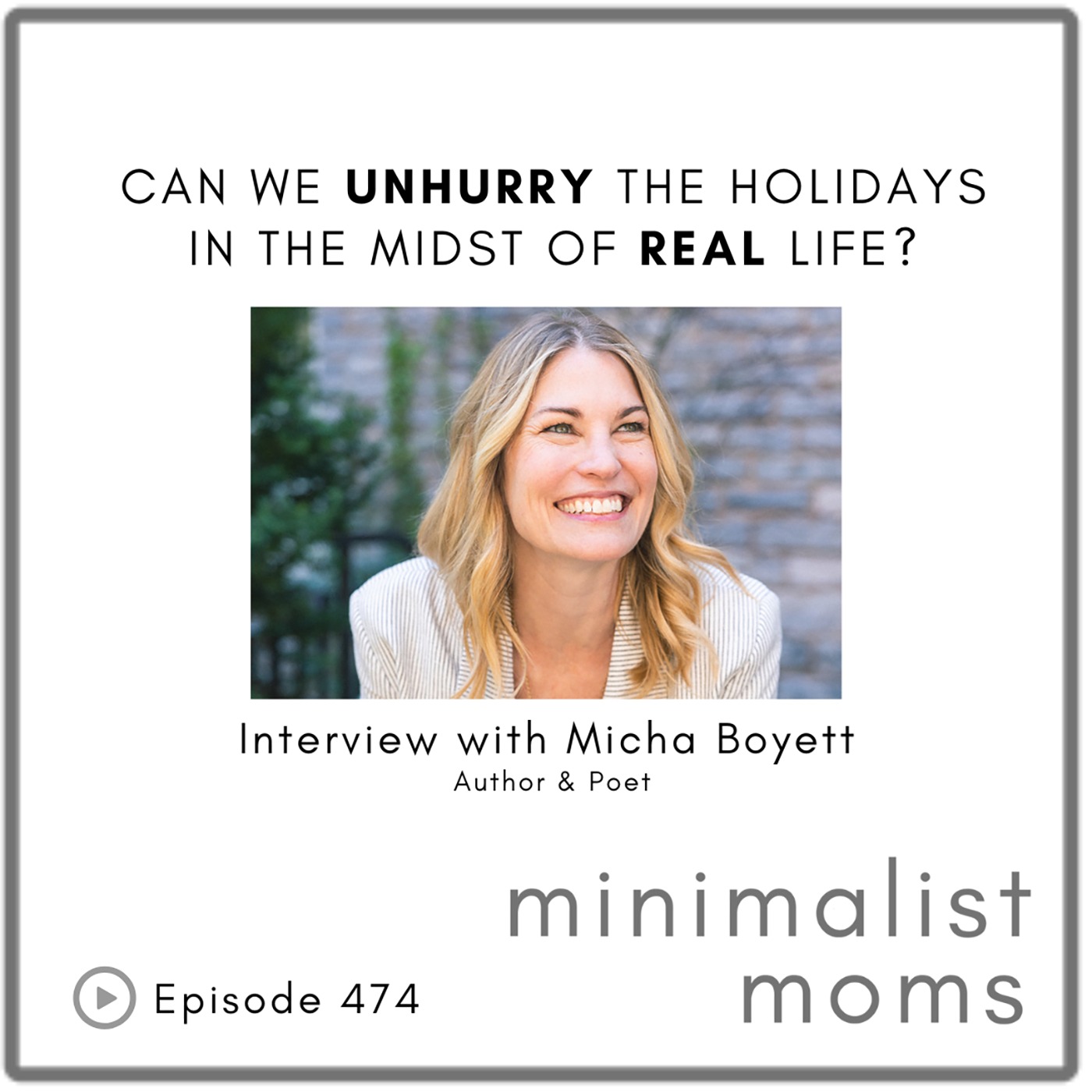
Today I'm joined by author Micah Boyett, whose new book Advent Unhurried (http://amazon.com/dp/1587436108?asc_item-id=amzn1.ideas.DL4M6AD2Z4ZN&creativeASIN=1587436108&linkCode=ssc&ref_=aip_sf_list_spv_ofs_mixed_d_asin&tag=dianeboden-20) offers a refreshing invitation to slow down, pay attention, and rediscover the beauty of waiting. Drawing from her own experiences with motherhood, grief, and raising three boys, Micah shares how she's learned to separate our worth from our productivity and embrace a more intentional approach to the holidays. We explore why we feel responsible for manufacturing wonder, how to make room for both joy and grief during a season that often demands happiness, and why slowing down doesn't necessarily mean doing less. Sometimes, it's simply about noticing more. In this episode, we discuss: Why the pressure to make Christmas magical can steal our joy The surprising connection between Advent and minimalism What motherhood has taught Micah about worth, productivit
Families have systems. They also have conflict styles. When you're an avoidant since the cradle, and you marry into a family of "we yell because we care," it can be unsettling, to say the least. But conflict styles all have their benefits and drawbacks. Understanding them as distinct approaches to a universal issue (differences of opinion) can help you take a blowup out of nowhere less seriously, and also help you communicate your own needs and frustrations more successfully. Here's how to recognize and reconcile the different conflict styles that people show up to disagreements with, especially as the holidays approach. We discuss: the "family systems" theory (Murray Bowen) how generational expectations can create friction, particularly when two different family systems come together through marriage the most common conflict styles: competing, collaborating, compromising, avoiding, and accommodating why setting a boundary needn't require delivering a long list of grievances why approa
Would you let your 10-year-old have a mobile phone? And should parents be allowed to read their children's messages? This week on You Don't Know You're Born, Danny Miller, Brooke Vincent and Wingman get stuck into some of the biggest dilemmas of modern parenting. From kids getting their first phones and navigating friendships on Roblox to bedtime battles, sleeping arrangements and the little moments that make being a parent so special, there's plenty to unpack. The gang also discuss the importance of being the parent your child can call when they're in trouble, share some hilarious school photo memories and return for another round of Acting Up! In this episode: - Should 10-year-olds have mobile phones? - Is it OK to check your child's messages? - Dealing with friendship fallouts and online gaming - The never-ending battle of bedtime routines - Those little parenting moments you'll always remember - School photos and childhood memories - Another chaotic round of Acting Up! What do you
What if the behavior that frustrates you most about your child is actually connected to one of their greatest God-given strengths? In this special Q&A episode of the Celebrate Kids Podcast, Dr. Kathy Koch and Wayne Stender answer real questions from parents and leaders they recently met in San Antonio. They explore how to help children develop genuine belonging, why the 8 Great Smarts can change how we understand misbehavior, and how Christian families can navigate difficult relationships during the holidays with biblical conviction, unconditional love, and thoughtful hospitality. Dr. Kathy explains why knowing how God made our children changes the way we correct them, encourage them, and prepare them for healthy relationships. Wayne also shares how understanding his own children's strengths has helped him become a father whose kids know they are seen, understood, and loved. As Celebrate Kids prepares to expand its ministry in 2027, we're also exploring new ways to bring Dr. Kathy's te
On Episode 37 of The Dave and Candace Rae Show, Dave Wheeler and Candace Rae cover everything from unexpected celebrity interviews to real-life reflections on grief, marriage, and holiday chaos. Dave shares the behind-the-scenes story of stepping in at the last minute to interview Juno Awards host Carly Rae Jepsen—and reveals his bold plan to submit Candace Rae's The Rae Within 365 audio program for a Juno nomination next year. The couple also opens up about recent family losses, offering heartfelt reflections on making time for loved ones, supporting their co-host Tyler Carr, and navigating life's unpredictable curveballs alongside their lively household of pets. Between laughs over a local couple's rare double hole-in-one, teenage dinner requests, holiday decorating surprises, and Dave's upcoming 12-hour Hope for the Holidays charity broadcast for Harvest Manitoba, the two also dive into a spirited debate over massive global tech outages and whether they're mere coincidences or somet
Have you ever asked your child how their day was, only to receive a quick “fine” or “I don't know”? In this episode of Connected Parenting, Jennifer explores why getting children and teenagers to open up can be challenging and why asking more questions isn't always the answer. Meaningful conversations aren't about finding the perfect words. They're about creating the emotional safety and trust that help children feel comfortable sharing what's really going on in their lives. Jennifer discusses how to move beyond everyday conversations about homework, chores, and schedules to build deeper connections. She reminds us that feeling heard and understood is something we all need, yet often miss in a world filled with constant digital communication. Listen to this episode of the Connected Parenting Podcast to discover how creating a safe, welcoming space for conversation can strengthen your relationships and encourage your children to open up. Jennifer's Takeaways: The Goal of Deep Connection
Have you ever noticed that the more you try to calm your overwhelmed child, the more upset they seem to become? In this episode of Connected Parenting, Jennifer takes a deeper look at co-regulation and what happens in both the parent's and child's brain and body during moments of emotional distress. Whether your child is having a meltdown, struggling with a friendship, or your teenager is spiraling with anxiety, our natural instinct is often to jump into problem-solving mode. We ask questions, offer reassurance, share advice, and try to make everything better. But sometimes, all that talking can actually make things worse. Jennifer explores why co-regulation is one of the most powerful tools parents have for helping children navigate overwhelming emotions. Rather than rushing to fix the problem or explain why everything will be okay, she encourages parents to focus on finding calm within their own bodies and creating a sense of safety through their presence. Sometimes, the most effecti
Reinterpreting familiar stories for new audiences is usually worthwhile.
Share your view, then see how readers voted. No sign-in required. This poll is shared across stories.
Do you agree or disagree?
Common Quandary
A Common Quandary to discuss
Another conversation to explore, separate from this news story.
Rich parents want to buy their public-school class an art teacher. Should the school say no?
Parents at a well-resourced public school raise enough money for art teachers and smaller classes. Nearby schools cannot raise comparable amounts, widening differences within the same district.
Can helping your own community become unfair to the larger one?