Nedra Glover Tawwab: Why You Have Less Patience for People Since Becoming a Mum
11 min
Listen through the publisher, then discuss the episode here or arrange an in-person Roundtable. Your city determines where to meet.
Roundtables are designed for groups of four, with a shared subject and room for everyone to speak. Come for discussion, with no dating expectation.
Have you ever thought, “I just don’t have the capacity anymore”? Maybe you used to be the friend who was always available, and now you feel guilty that you can’t show up in the same way. In this Motherkind Moment, Zoe is joined by therapist, bestselling author and boundaries expert Nedra Glover Tawwab. Nedra shares how becoming a mother made her boundaries clearer almost overnight. With less time and energy, the things she used to tolerate or make excuses for simply no longer fit. Together, they explore how to explain to the people you love that your availability has changed, and what to do when someone finds that hard to hear. Nedra also opens up about finding her way back to friendships now that her children are older, including the courage it takes to reach out after years of drifting apart. If you’re missing a friend, struggling to keep up with the people you love, or wondering how to say “I care about you, but I can’t give what I used to,” this conversation offers a gentle and practical way forward. In this Moment, you’ll learn: Why becoming a mother can change what you’re willing to tolerate How to be honest with friends about your new capacity without ending the friendship What to do when someone doesn’t understand your boundary Simple ways to stay connected when you have less time, from voice notes to shorter catch-ups How to let people know you’re ready to be invited again Why reconnecting after losing touch is often easier than you think A thought to take with you: friendships move through seasons, too. Losing touch doesn’t have to mean losing the friendship, and most people will be happy to hear from you. Loved this episode? If you enjoyed this episode, you can listen to the full episode: Nedra Glover Tawwab: Why Mothers Feel So Resentful (And The Boundaries That Change Everything) (https://podcasts.apple.com/gb/podcast/nedra-glover-tawwab-why-mothers-feel-so-resentful-and/id1295306961?i=1000777014970) Feeling different since becoming a mother? OR Feeling like you’re carrying it all? Download your FREE Mental Load Cheat Sheet (https://course.motherkind.co/mental-load-podcast-cheat-sheet) and learn how to start feeling lighter, even if nothing in your life changes. Connect with Zoe: This Motherkind episode is sponsored by: Want to feel the Food-Grown difference yourself? Ts and Cs apply. Grape Tree Feel Good Foods.
Episode information is provided by the publisher. Listening takes place on the publisher’s service.
What if some of the things you've always considered part of your personality were actually skills you developed to survive? In this episode, Danielle is joined by senior coach Brigid Morgan for a deeply personal, thought-provoking and refreshingly candid conversation about the Good Girl Contract, childhood conditioning, healthy relationships and what it means to live with genuine autonomy. Brigid shares the profound impact of listening to the Good Girl Contract podcast series, reflecting on her own experiences of conditional love, hypervigilance, rebellion and the difference between who she is and who she learned to become. Together, Danielle and Brigid explore: The possible origins of the qualities and abilities we've always considered our personality. Why rebellion isn't necessarily the same thing as freedom. The discomfort of holding boundaries and allowing others to be disappointed. How we build self-trust through the choices we make. Navigating conflict, disagreement and genuine r
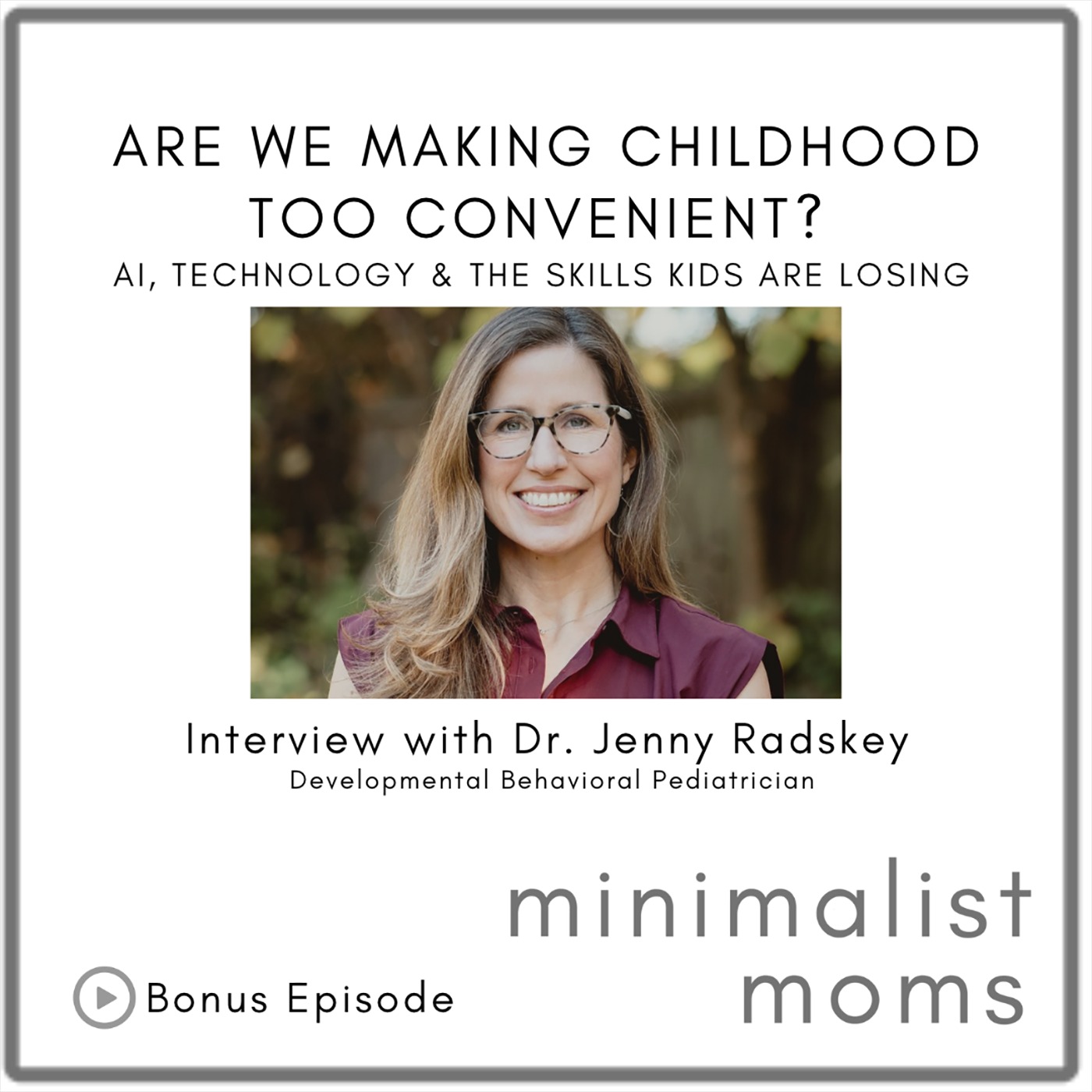
Are we making childhood easier at the expense of the very skills our kids need to thrive? We've talked about screen time and technology on the podcast before, but today's conversation takes us into territory we haven't really explored on the show yet: artificial intelligence and its potential impact on our children's development. As AI becomes more integrated into everyday life, I think it's worth asking some important questions about what our kids might be gaining - and what they could be missing along the way. I'm joined by pediatrician and researcher Dr. Jenny Radesky to explore how technology is reshaping childhood in ways we may not even recognize. From handing over a device to calm a difficult emotion to turning to AI for instant answers, are we unintentionally removing the everyday opportunities our children need to develop patience, persistence, creativity, and critical thinking? Just because something makes life easier doesn't necessarily mean it's making life better. Links Di
Families have systems. They also have conflict styles. When you're an avoidant since the cradle, and you marry into a family of "we yell because we care," it can be unsettling, to say the least. But conflict styles all have their benefits and drawbacks. Understanding them as distinct approaches to a universal issue (differences of opinion) can help you take a blowup out of nowhere less seriously, and also help you communicate your own needs and frustrations more successfully. Here's how to recognize and reconcile the different conflict styles that people show up to disagreements with, especially as the holidays approach. We discuss: the "family systems" theory (Murray Bowen) how generational expectations can create friction, particularly when two different family systems come together through marriage the most common conflict styles: competing, collaborating, compromising, avoiding, and accommodating why setting a boundary needn't require delivering a long list of grievances why approa
It takes a village to raise a child. But what happens when the village starts telling you how to parent? Today, Dale is joined by returning guest Ali Knowles, emotional therapist and founder of the Ollie Model, to discuss why it takes a village to help raise a child (https://thesendcast.com/why-it-takes-a-village-to-help-a-child), and what that support should really look like. Together, they explore: - Why the village has changed, and why so many parents now feel isolated. - The difference between offering support and giving advice, and why wisdom helps where instructions don't. - How social media and well-meaning opinions can wear down parents' confidence. - Why a parent's own school experiences can quietly shape how they respond to their child. - What 'safe' means to a child, and why feeling safe is not the same as being told you are. When parents ask her what they should do, Ali's answer is always the same: "I can't tell you, because there isn't a book. You haven't written it. This
**A familiar friend has returned to Dreamland, and Emerald couldn't be more excited!** When a fluffy little cat with golden eyes and one bent ear unexpectedly reappears, Emerald can't wait to take him on a grand adventure. There are crystal caves to explore, rainbow waterfalls to visit, and magical discoveries waiting around every corner! There's just one tiny problem. **The cat has absolutely no interest in going anywhere.** Determined to make the most of their reunion, Emerald and her best friend, Sapphire the Pegasus, try to convince their furry companion to join the fun. But when the cat refuses to budge, something wonderful happens. Clouds begin to wave, tiny beetles march beneath flower-petal umbrellas, and a very unexpected sneeze sends everyone into fits of giggles! Could it be that Dreamland's magic has been right under their noses all along? Join Emerald, Sapphire, and a beloved returning friend for a funny, heartwarming bedtime adventure about friendship, unexpected surprise
One of the greatest ways to honor your parents is to build upon what they gave you and become even better. Seth Troutt, author of Authentic Masculinity: Leaving Behind the Counterfeits for God's Design, (https://link.amazon/B0hlyX1J2) joins Ginny Yurich for an encouraging conversation about raising boys, becoming better parents, and building a family legacy worth carrying forward. Seth offers a refreshing, faith-filled vision of masculinity that begins with humility, embraces mistakes as opportunities for growth, and recognizes that strength and gentleness belong together. He shares an ingenious bedtime storytelling tradition that helps his children prepare for peer pressure, explains why lasting discipline has more to do with what we love than willpower, and recounts the surprisingly freeing parenting advice he received from his own father. Woven throughout is a hopeful reminder that we can build on the good we inherited, change the patterns we didn't want to repeat, and give our chil
TRIGGER WARNING: This episode includes discussion of miscarriage, bereavement, breast cancer, fertility treatment and health anxiety. What happens when the motherhood you wanted so much feels harder than you expected? And why can finally having your baby make it difficult to admit you’re struggling? Peloton instructor Leanne Hainsby-Alldis joins Zoe Blaskey for an honest conversation about becoming a mother after miscarriage, breast cancer and IVF, and finding space for yourself once the baby you dreamed of is here. Leanne shares her experience of being diagnosed with breast cancer at 34, preserving her fertility before treatment, and navigating the loneliness of watching friends grow their families while her own plans were on hold. Now a mum to her son Ace, she opens up about the realities of postpartum life: sleep deprivation, mum guilt, changes in identity and the resentment she felt when her husband, fellow Peloton instructor Ben Alldis, returned to work. They also explore why retu
What if you achieve everything you’ve worked towards, but still feel empty? In this Motherkind Moment, Zoe is joined by Maria Hatzistefanis, founder of skincare brands Rodial and NIP+FAB, bestselling author and mother of two. Having launched Rodial in 1999, Maria has spent more than two decades building her business alongside raising her sons. She shares how becoming a mother changed her definition of success - from growing her business and proving herself to protecting her time, becoming a more compassionate leader and making space to enjoy her life. Maria recalls sitting outside her home in her car, completely burnt out. On paper, things were going well. Inside, she felt caught on a treadmill of work and family responsibilities, with little left for herself. Together, Zoe and Maria explore why we can’t keep waiting for life to slow down before we start living it, and how deliberately making room for ourselves can change the way we experience both work and motherhood. In this Moment,
What if the skills you’ve gained in motherhood could help you get a pay rise, change careers or build something of your own? When you’re juggling school runs, navigating toddler negotiations and making a hundred decisions before breakfast, it can be hard to recognise the skills you’re developing - let alone see their value at work. In this solo episode, Zoe explores seven skills motherhood can strengthen, from prioritisation and communication to staying calm when everything changes. She shares how she runs Motherkind within school hours, why working longer isn’t always the answer, and how to talk about your strengths with more confidence. Whether you’re returning to work, ready for a change, or wondering what to do next, this episode offers practical ways to recognise what you bring and take your next step. In this episode, you’ll learn: 7 skills you may have developed through motherhood and how they translate to work. Why having less time can sharpen your focus on what matters. How to
New community initiatives should have a realistic long-term support plan before launching.
Share your view, then see how readers voted. No sign-in required. This poll is shared across stories.
Do you agree or disagree?
Common Quandary
A Common Quandary to discuss
Another conversation to explore, separate from this news story.
Your neighbor saves a public parking spot with an orange cone. Do you move it?
Street parking is scarce after a snowstorm. Your neighbor spent an hour digging out the space in front of their home and now guards it with an orange cone, even though curb spaces legally belong to everyone. You arrive tired and the cone is blocking the only open spot.
Can effort create a personal claim to something public?