US stock indices cut losses on Wednesday after slumping earlier in the session, as dip buyers faded a selloff driven by uncertainty over the outlook for the AI trade. The S&P 500 fell 0.2% and the Dow added 164 points, while the Nasdaq 100 lost 0.6%, recovering from a plunge of over 4% Dip buyers lifted the S&P 500 off session lows. The earlier selloff reflected worries over the AI trade, as the market faded the rally that followed Nvidia's reinstatement of CEO Jensen Huang. His return eased fears of a leadership vacuum, but spending concerns and rising borrowing costs still weigh on the sector. Nvidia shed 3.9%, Micron lost 4.6% and Sandisk fell nearly 5.6%. Among hyperscalers, Alphabet fell 2.1% while Meta rose 3.4%. Financials were mostly higher, with Visa up 1.8% and Mastercard up 2%. Meanwhile, new US tariffs on China, the EU, India and Japan added to headwinds from a hawkish Fed. SPI up 58 - FPH upgrades - BVS Upgrades - Gold bounces off lows - Copper still struggling Marcus Toda
In our news wrap Wednesday, severe weather is threatening Thanksgiving travel for millions of Americans, authorities in Egypt say at least 30 are dead after a crash involving a fuel tanker sparked a massive fire near Cairo and the Treasury Department's financial crimes enforcement network suffered what it calls a "cybersecurity incident." PBS News is supported by - https://www.pbs.org/newshour/about/funders. Hosted on Acast. See acast.com/privacy
Thanksgiving travel headaches are piling up and forcing a historic change to an iconic parade. The US economy ran hotter than expected, fueled by AI spending. The man who became the face of the Trump administration’s deportation campaign has left the US on his own terms. The Israeli prime minister’s corruption trial took a major turn in his favor. Plus, AI jitters rattled Wall Street again today
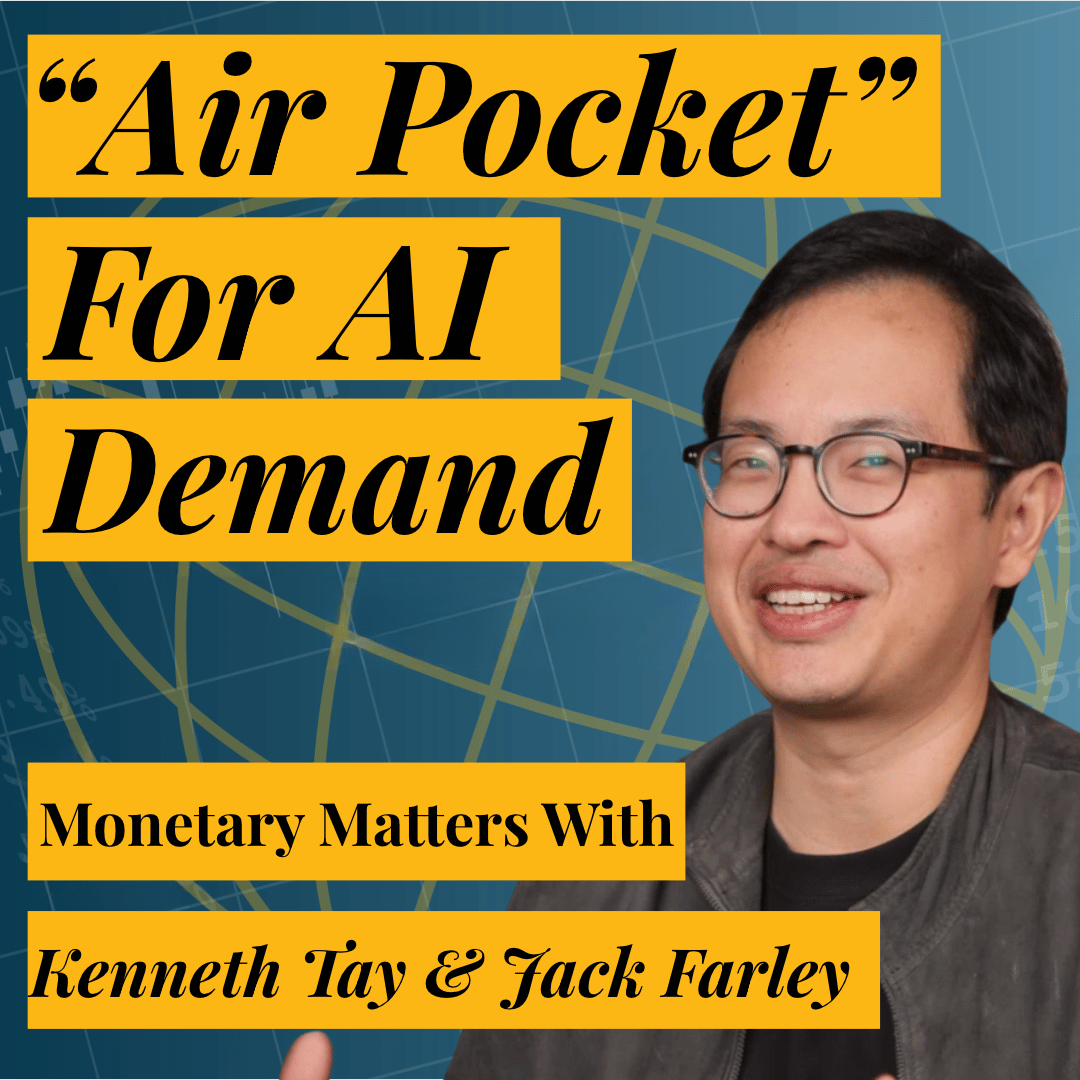
This episode is brought to you by Sarmaya Partners. Learn more about Sarmaya’s LENS ETF, their full data and comparison, including performance here: Recorded at the TomorrowX Summit, Jack sits down with Kenneth Tay, head of content at Funda, the Singapore-based research firm whose analysts call companies around the world to ask what they're really spending on AI. Kenneth explains why Funda's surveys turned the firm cautious: enterprise AI budgets for 2027 aren't growing fast enough to justify what the market expects from frontier-lab revenues, and the scramble for forward-deployed engineers suggests AI is hard to roll out inside large companies. They discuss whether coding alone can carry AI demand, why Funda sees cybersecurity incumbents like CrowdStrike as beneficiaries rather than casualties, and where token prices are headed. Kenneth explains why investors in China and the rest of Asia turned bearish before New York and the Bay Area, and how they spotted shortages in NAND memory an
November 25, 2026; 4pm: Deadline: White House examines the NVIDIA scandal as a collision of AI power, market dependence, China policy, national security and alleged Trump-era corruption. The hour also tracks Iowa’s lead explosives detonation, Obama alumni in elected office and worsening Thanksgiving travel delays. Hosted by Simplecast, an AdsWizz company.
The US Army carries out a controlled detonation of unstable lead azide at an ammunition plant in Middletown, Iowa, as residents are told to shelter in place ... Thanksgiving travel faces disruption from storms, high winds and potentially record tides on both coasts ... The CIA and Office of the Director of National Intelligence investigate an apparent hack of unclassified systems that may have originated in China
Nvidia reinstates Jensen Huang as CEO (https://seekingalpha.com/news/4675565-nvidia-reinstates-jensen-huang-as-ceo?source=wsb_podcast%3Ajensen_huang_is_back_nvidia_soars_30) just 11 days after ousting him. (0:17) Nvidia soars 30%, igniting massive rally. (0:37) Cheers from tech leaders and sharp political criticism (https://seekingalpha.com/news/4675600-sp500-nasdaq-composite-dow-jones-wall-street?source=wsb_podcast%3Ajensen_huang_is_back_nvidia_soars_30). (2:07) Episode transcripts seekingalpha.com/wsb (https://seekingalpha.com/wsb?source=wsb_podcast%3Ajensen_huang_is_back_nvidia_soars_30). Sign up for our daily newsletter here (https://subscriptions.seekingalpha.com/newsletter_wsb/?source=wsb_podcast%3Ajensen_huang_is_back_nvidia_soars_30) and for full access to analyst ratings, stock quant scores, dividend grades, subscribe to Seeking Alpha Premium at seekingalpha.com/subscriptions (https://seekingalpha.com/subscriptions?source=wsb_podcast%3Ajensen_huang_is_back_nvidia_soars_30).
Wall Street futures surge as dip buyers revive AI names (https://seekingalpha.com/news/4675470-sp500-nasdaq-dow-jones-outlook-stock-market?source=wsb_podcast%3Awall_street_bulls_charge_back_into_ai). (0:17) CrowdStrike strikes a $43.9B deal (https://seekingalpha.com/news/4675424-crowdstrike-to-buy-zscaler-in-439b-all-stock-deal?source=wsb_podcast%3Awall_street_bulls_charge_back_into_ai) for rival Zscaler. (1:35) The Hunger Games stands strong (https://seekingalpha.com/news/4675413-hunger-games-helps-box-office-rebound-amid-gta-6-fever?source=wsb_podcast%3Awall_street_bulls_charge_back_into_ai) against GTA 6. (2:05) Episode transcripts: seekingalpha.com/wsb (https://seekingalpha.com/wsb?source=wsb_podcast%3Awall_street_bulls_charge_back_into_ai) Sign up for our daily newsletter here (https://subscriptions.seekingalpha.com/newsletter_wsb/?source=wsb_podcast%3Awall_street_bulls_charge_back_into_ai) and for full access to analyst ratings, stock quant scores, dividend grades, subscribe to S
Companies should explain underlying business problems when reporting financial results.
Share your view, then see how readers voted. No sign-in required. This poll is shared across stories.
Do you agree or disagree?
Common Quandary
A Common Quandary to discuss
Another conversation to explore, separate from this news story.
Scientists can edit mosquitoes until a deadly disease disappears. Who gets to say yes?
Scientists can potentially release modified mosquitoes whose genes would spread through wild populations and sharply reduce a deadly disease. The ecological effects could cross borders and may be impossible to reverse.
Who may authorize an irreversible change intended to save lives?