New ownership, new leadership: Warner Bros. resets DC again
31 min
Listen through the publisher, then discuss the episode here or arrange an in-person Roundtable. Your city determines where to meet.
Roundtables are designed for groups of four, with a shared subject and room for everyone to speak. Come for discussion, with no dating expectation.
The shakeups keep coming at Warners: James Gunn and Peter Safran are out as DC’s film chiefs. Kim Masters and Matt Belloni break down the latest move under new owner Skydance and why the hiring of former Marvel executive Jeremy Latcham raises questions about DC’s future slate. Plus, we revisit Masters’ conversation with Brazilian writer-director Kleber Mendonça Filho about his Oscar-nominated political thriller, The Secret Agent. The former film critic explains why he still reads every review of his work and recalls how his 2016 Cannes red carpet protest against Brazil’s leadership sparked a backlash that complicated the Oscar hopes for r. And a special guest drops by for a brief chat.
Episode information is provided by the publisher. Listening takes place on the publisher’s service.
Newsround Part 1. Lewis Aspinall returns with another edition of Newsround on Anfield Index, discussing Virgil van Dijk's uncertain Liverpool future, positive developments in Trey Nyoni's contract talks and Ronald Araújo's potential permanent move to Anfield. With Virgil van Dijk approaching the end of his current Liverpool contract, Lewis admits he is becoming increasingly concerned that the Reds could lose their captain this summer. Despite Van Dijk insisting he still has several years of top-level football ahead of him, Liverpool face a difficult decision over the defender's age, wages and the development of their younger centre-backs. Lewis examines Van Dijk's performances and underlying statistics, explaining why the Dutchman remains one of the Premier League's outstanding defenders and why his leadership could be invaluable to Jeremy Jacquet, Giovanni Leoni and Ifeanyi Ndukwe. Could Liverpool offer Van Dijk another two-year contract, or will the club's long-term planning lead to
Hey everybody, Tom Bilyeu here. On today’s episode of Impact Theory, we’re taking on a topic that’s got the whole world holding its breath: the escalating crisis between the United States and Iran. As tensions ratchet up, we’re asking the tough questions—how did we get stuck in this “escalation trap,” and what does it mean for America’s global leverage, our economy, and our very sense of security? The conversation focused on why the traditional idea of “strategy” might be failing policymakers, using powerful analogies—like chess versus roulette—to show how doubling down in conflict can spiral out of control. We’ll break down the risks of tactical “wins” that create even bigger crises, the real leverage Iran holds with control of the Strait of Hormuz, and the mounting pressure on President Trump as political support erodes and legacy hangs in the balance. A key theme that emerged is what happens when military might runs into decentralized opposition, and why high-stakes gambles—like the
Rebuilding the government after Trump and DOGE will take more than rehiring the people they fired last year. The Supreme Court enabled the administration’s assault on services and protections millions of Americans rely upon, and it could still block the rebuilding, too. On this week’s Amicus, Dahlia Lithwick talks with Cornell law professor and former Biden administration official K. Sabeel Rahman about his new book, Remaking the State: A New Blueprint for American Democracy (https://www.amazon.com/dp/1967190208?tag=slatmaga-20&th=1), about why restoring the old machinery of the administrative state won’t be enough. Rahman connects DOGE’s slash-and-burn campaign to a much longer legal project. He explains why doctrines that constrain regulation remain a threat to future policymaking, even as the high court supercharges Trump’s executive power grabs. But this is not just a damage assessment. From stronger consumer protections to easier access to public benefits and a meaningful democrat
Howard Deutch, director of Pretty in Pink, offers a candid look at the making of the 1986 John Hughes classic, starring Molly Ringwald, Jon Cryer, Andrew McCarthy, James Spader, Annie Potts and Harry Dean Stanton. Deutch shares his unlikely path to the director's chair, from a two-week attempt at veterinary school at Ohio State and a string of record-business jobs to the United Artists mailroom. He went on to run UA's advertising department, working on campaigns for Rocky, Annie Hall and James Bond, and then built one of New York's top trailer companies. That work led him to John Hughes and a music video for Sixteen Candles. He explains why he risked everything to move to California for his first feature, how he begged a reluctant Molly Ringwald to play Andie, and why he couldn't stand James Spader at his audition. He also talks about the moment Jon Cryer won the role of Duckie, Annie Potts's ad-lib on the very first shot, and an unforgettable reunion with Harry Dean Stanton years late
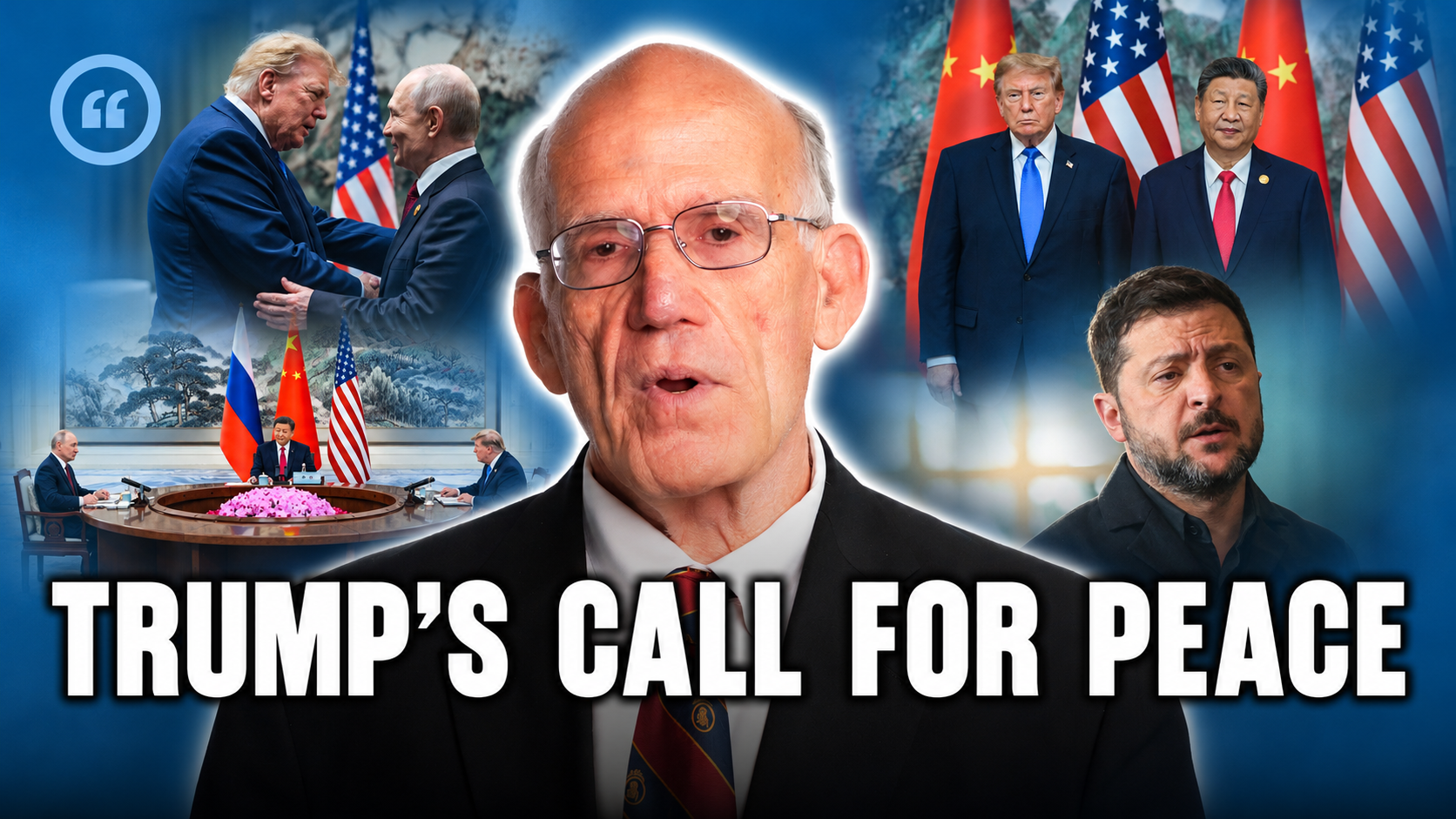
President Donald Trump's first ever trilateral summit with Vladimir Putin and Xi Jinping raises questions about the future of the war in Ukraine and whether a peace agreement could finally be within reach. Victor Davis Hanson and Sami Winc examine the summit on today’s edition of “Victor Davis Hanson: In His Own Words,” discussing Russia's declining influence, potential territorial concessions in Ukraine, and Europe's frustration over Trump's peace negotiations. Hanson criticizes Hillary Clinton's attacks on Trump's diplomacy; he also argues that European leaders have weakened their influence by neglecting defense spending and relying on American military protection. They discuss Elon Musk's shifting political allegiances, and Hanson warns that distancing himself from MAGA may not protect him from Democrat investigations. They also discuss the potential economic benefits of artificial intelligence and the challenges facing Hakeem Jeffries as Democrats prepare to take control of the Hou
Matthew Farwell’s conviction settled the federal case against him. It did not settle what may have happened to evidence, what other officers knew, or how many cases depended on his work as a Stoughton police detective. Tony Brueski is joined by retired FBI agents Jennifer Coffindaffer and Robin Dreeke to connect two questions that belong together: could there be more arrests in the Sandra Birchmore case, and should prosecutors review the cases Farwell once investigated? These are not the same question, and neither has an automatic answer. William Farwell, Matthew’s twin, testified under federal immunity. Former Stoughton deputy chief Robert Devine has contested an oversight board’s findings concerning the “Marty Riggs” Facebook account, saying he was hacked. Neither has been charged in Sandra’s death. Coffindaffer lays out what investigators would need: corroborated communications, authenticated account access, consistent timelines and proof of each person’s conduct. Knowing somebody i
This week, Kim Masters speaks with Russian filmmaker Andrey Zvyagintsev about his Cannes Grand Prix-winning film, Minotaur. He opens up about his long recovery from a devastating illness and the consequences of speaking out against Russia’s war in Ukraine. His first feature in nine years, made while living in exile in France, is now that country’s unlikely Oscar submission—even though the film is set in Russia and entirely in Russian. Plus, Masters and Matt Belloni examine the casting of Robert Pattinson as the next James Bond. The banter partners discuss why Amazon opted for an established star (https://puck.news/hollywood/2026/11/the-case-for-robert-pattinson-as-james-bond), and who actually made the decision, as former Amazon CEO Jeff Bezos (https://www.hollywoodreporter.com/movies/movie-news/jeff-bezos-chose-robert-pattinson-as-james-bond-amazon-mgm-1236757909/) and incoming Bond director Denis Villeneuve (https://www.gq.com/story/denis-villeneuve-men-of-the-year-2026) both claim c
This week, Kim Masters speaks with casting director Wittney Horton about helping Kane Parsons navigate his feature debut, Backrooms. Horton shares how she used a practice Zoom call to prepare Parsons for a meeting with Oscar nominee Chiwetel Ejiofor. She also considers how the new Oscar for casting might change the way her colleagues approach their craft, and whether an actor’s social media following should influence casting decisions. Plus, Masters and Matt Belloni explore what the 2026 midterm results (https://deadline.com/2026/11/stocks-tank-erasing-post-election-rally-1237214822/) could mean for Hollywood in the coming year. They discuss whether changes in the Senate could create hurdles for the federal tax incentive (https://www.hollywoodreporter.com/business/business-news/federal-film-and-tv-tax-incentive-bill-1236687205/) endorsed by Trump, and whether the recent Skydance deal could draw scrutiny from both the House and Senate.
Public-health protections can justify some limits on individual choice.
Share your view, then see how readers voted. No sign-in required. This poll is shared across stories.
Do you agree or disagree?
Common Quandary
A Common Quandary to discuss
Another conversation to explore, separate from this news story.
You are not sick—you just cannot face work today. Do you call in sick?
Your employer offers sick leave but no personal days. You are not physically ill, yet you feel exhausted and know a day away would help. Saying you are sick is the only way to take paid time off without explanation.
Do unjust workplace rules change the duty to be truthful?