Nik Storonsky: The most uncompromising banking CEO
52 min
Listen through the publisher, then discuss the episode here or arrange an in-person Roundtable. Your city determines where to meet.
Roundtables are designed for groups of four, with a shared subject and room for everyone to speak. Come for discussion, with no dating expectation.
Nik Storonsky, Founder and CEO of Revolut, joins John to break down how Revolut scales across 80 million customers worldwide, their strategy to challenge Amex and Chase in the US, and why products live or die by strict retention curves in their "new bets" process. They also discuss building a profitable fintech around subscriptions rather than lending, how they are cutting 210-day compliance approval cycles with AI, and why CEOs should skip conferences in favor of product development. Timestamps (00:00:00) Introduction (00:00:21) Revolut growth (00:04:03) New bets framework (00:12:35) Why bank lending is like selling options (00:20:12) Automated cross-sell machine (00:27:39) Stripe Radar (00:28:10) Lightweight users to primary accounts (00:33:16) Building the AI-pilled bank (00:39:04) Taking on Amex and Chase (00:42:36) Products over conferences
Episode information is provided by the publisher. Listening takes place on the publisher’s service.
Microsoft systems down. Air traffic systems down. Problems at Chase, United and Apple. After a week of outages across big systems, the AI conspiracy theories are in full swing. CrowdStrike founder and CEO George Kurtz joins Rapid Response to explain what’s actually going on. Kurtz describes how AI agents can turn a patch into a working exploit within an hour, why the old pyramid of hacktivists, criminals, and nation states has collapsed, and how CEOs are now taking services offline rather than risk being hacked. He also discusses CrowdStrike’s new AI Kill Switch, why slowing down the frontier labs won’t slow down the attackers, and what endurance racing has taught him about risk and speed. Visit the Rapid Response website here:https://www.rapidresponseshow.com/
Effort News founder Brian Chau joins Theo to break down the media and policy campaign behind Nvidia CEO Jensen Huang’s ouster, arguing that export-control hawks fabricated espionage and chip-smuggling allegations after failing to pass legislation in Congress. They also discuss the board’s governance failures, Trump’s economic approach to China, and why Chau opposes banning recursive self-improvement while raising antitrust and data-retention concerns about Anthropic. -- MTS chronicles the singularity, live. Monitoring the situation of tech and AI. Follow MTS: Spotify |https://open.spotify.com/show/4HUNNmV1pjV7CW6Lphm1rM Apple |https://podcasts.apple.com/us/podcast/mts/id1891088763 – Brought to you by: Mongo DB - Anyone can prototype an agent. Lovable - Turn ideas into software people love with Lovable. Start today at https://lovable.dev/ Factory - A 24/7 system turning signals into production software. Visithttps://factory.com/ Neon (by Databricks) - Scale your startup on Neon. The Pos
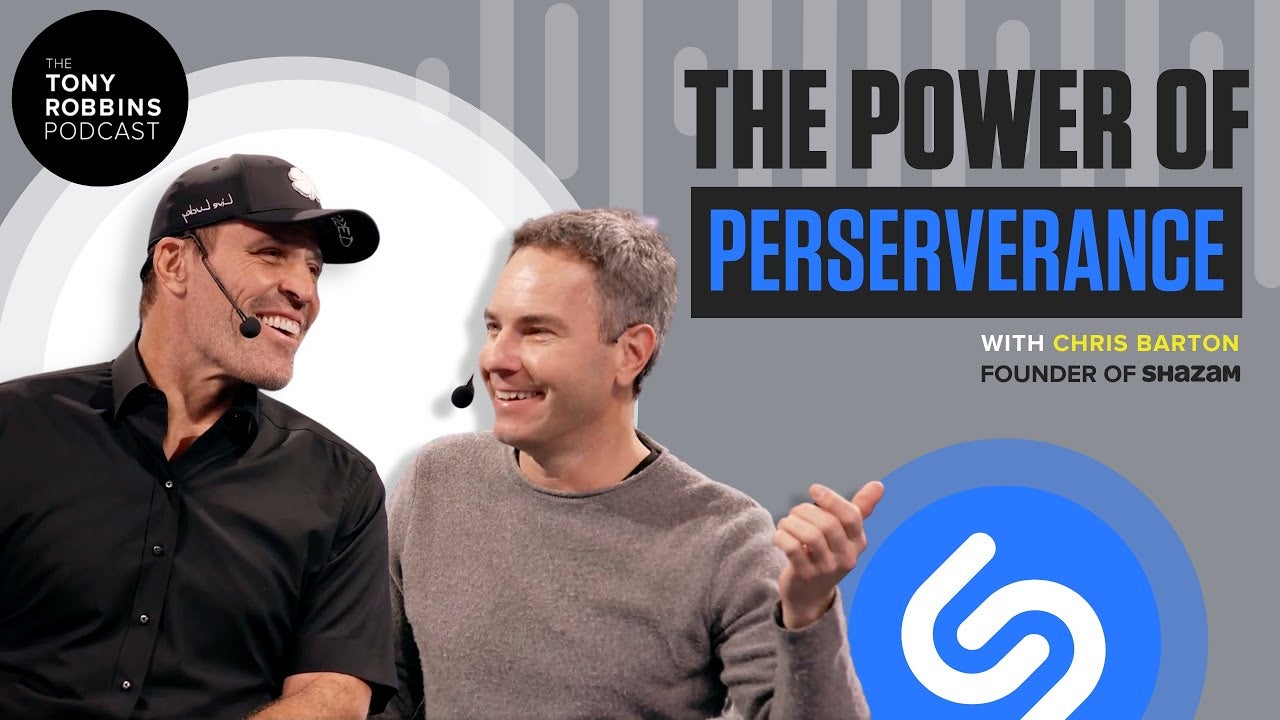
In this video, we drop you inside a Tony Robbins Business Mastery seminar for a 1-hour masterclass in how to take a far-fetched seemingly impossible business idea all the way from your brain to market. Uploaded 30-09-22 You’ll see Tony Robbins in a one-on-one interview with the co-founder of the wildly popular music recognition app, Shazam. Shazam is one of those magic tech innovations that stopped us in our tracks with its astonishing capability the first time we saw it. Launched in the summer of 2002, Shazam just turned 20 years old, and in those 20 years, it has surpassed 70 billion song I.D.s with its 225 million monthly users around the world. All of this began in 1999 when Chris Barton, then an undergrad student at UC Berkeley, founded Shazam Entertainment with his business partner. Watch the video for the whole story of how Chris’s creation led to an Apple acquisition in September 2018 for a reported $400 million. Tony digs into the mindset of a true creative entrepreneur and ex
Commodities, precious metals, and broader equity markets are caught in a sharp sell-off fueled by a surging U.S. dollar, aggressive Federal Reserve rhetoric, and year-end tax-loss selling. In this Weekend Edition of The KE Report, hosts Cory and Shad speak with Mike Larson (Editor-in-Chief at MoneyShow) and Brien Lundin (Editor of The Gold Newsletter) to separate short-term market panic from long-term fundamentals. Both guests share how they are navigating extreme sentiment swings, fading crowded trades, and identifying overlooked bargains across the resource sector. Segment 1 & 2 - Mike Larson, MoneyShow Editor-in-Chief, kicks off the show to unpack the sharp pullbacks across precious metals, copper, critical minerals, energy, and AI-driven tech stocks, exploring how a surging U.S. dollar and shifting Federal Reserve expectations are driving recent market volatility. Tune in as we discuss whether the recent downturn signals lasting chart damage or a contrarian opportunity to lean agai
Is the property downturn shifting from city to city, or are national headlines hiding what is happening on the ground? On this week's Australian Property Podcast, Pete Wargent and Chris Bates look at changing listings, buyer demand and price movements across Australia's housing markets. If you're considering a first home, an upgrade or an investment property, this episode offers questions to ask before acting. Check current lending and tax rules, and seek qualified personal advice rather than treating a podcast discussion as a recommendation. Episode resources Show partner resources Rask resources – Pete's Buyers Agency (https://www.allenwargent.com.au/) – All services (https://bit.ly/R-services) – Financial Planning (https://bit.ly/R-plan) – Invest with us (https://bit.ly/R-invest) – Access Show Notes (https://bit.ly/R-notes) – Ask a question (https://bit.ly/R-quest) – We love feedback! (https://raskau.typeform.com/to/ZbfHy6IP) – Instagram: @rask.invest (https://www.instagram.com/rask
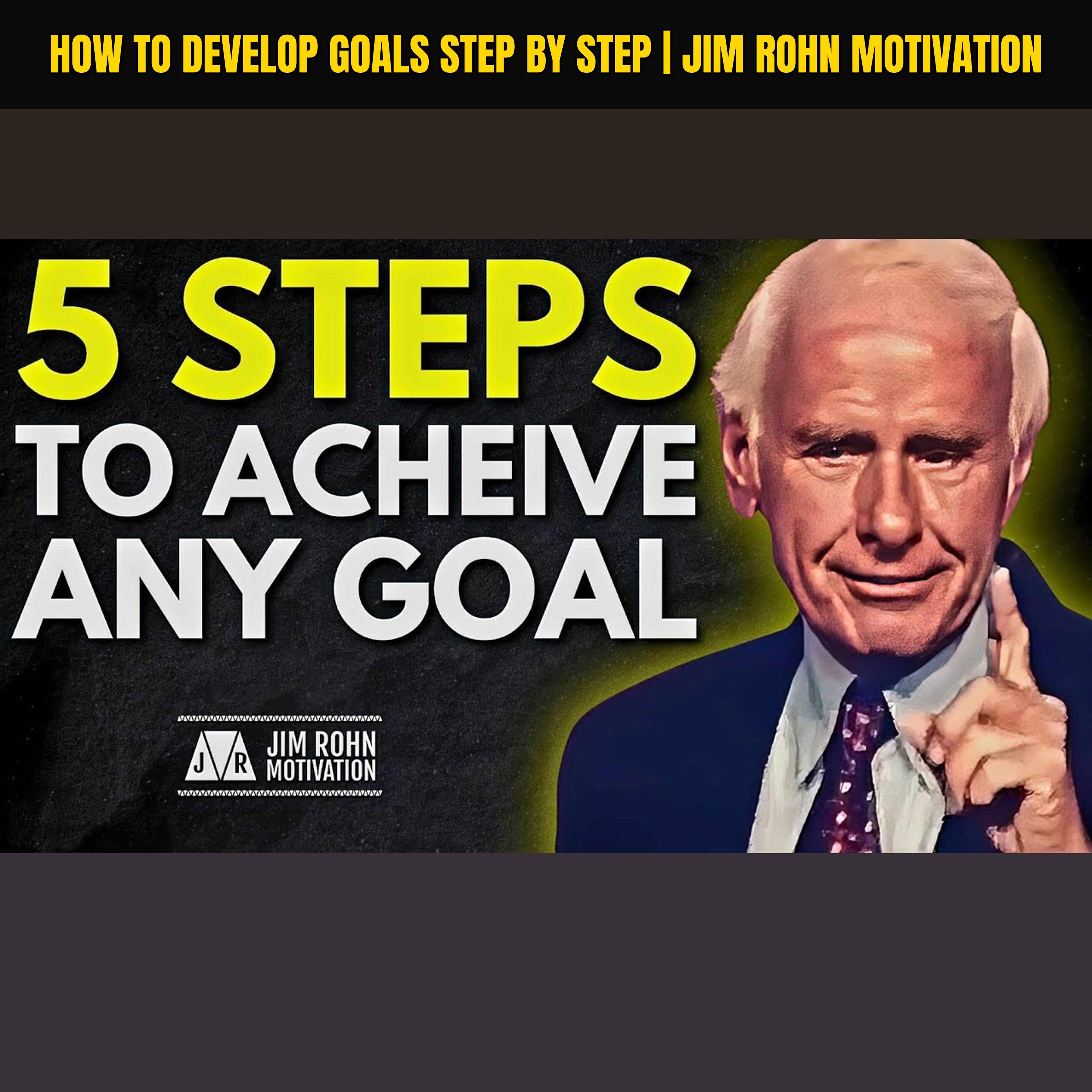
#JimRohnMotivation #JimRohn #JimRohnSpeech In this Jim Rohn Motivation video, Jim shares a powerful 5-step process that helps you achieve any goal, no matter how big. These steps involve clarity, planning, action, accountability, and persistence—essential tools to move from where you are to where you want to be.The Five Steps to Achieving Your Goals: A Clear Path to Success (Written Version): https://lincolnandmeade.com/2024/10/21/the-five-steps-to-achieving-your-goals-a-clear-path-to-success/ Key Topics From This Motivational Video: - The importance of clarity in achieving goals - Creating a detailed plan to reach your goals - Taking consistent action toward your dreams - The power of accountability to stay on track - Persistence as the key to overcoming obstacles In this inspiring speech, Jim Rohn emphasizes that achieving success is not about luck or vague dreams but following simple, proven steps. First, clarity: know exactly what you want. Second, plan your way forward. Third, tak
Scott Nolan, Co-Founder and CEO of General Matter, joins John for a pint to discuss the engineering, economics, and geopolitics behind uranium enrichment. Scott breaks down why advanced reactors can't scale without High-Assay Low-Enriched Uranium (HALEU), why the US outsourced its fuel supply following the Cold War, and how General Matter is building a domestic facility in Paducah, Kentucky, to replace Russian imports. He also shares lessons as an early employee at SpaceX, and why 1970s interest rates stalled nuclear. Timestamps (00:00:00) Introduction (00:00:41) America’s missing nuclear fuel (00:05:27) Why small reactors need stronger fuel (00:11:42) Can nuclear power the AI buildout? (00:15:25) Why nuclear became so expensive (00:22:24) The startups reinventing nuclear (00:25:31) General Matter’s race to 2030 (00:29:44) Stripe Press’ new books (00:30:22) The SpaceX playbook applied to nuclear (00:35:18) Uranium enrichment, explained (00:45:53) How small startups beat stagnant incumb
Public arts funding should prioritize access over attracting the largest audiences.
Share your view, then see how readers voted. No sign-in required. This poll is shared across stories.
Do you agree or disagree?
Common Quandary
A Common Quandary to discuss
Another conversation to explore, separate from this news story.
Your neighbor's doorbell camera watches everyone entering your home. Is that their business?
A neighbor installs a doorbell camera that records your front yard and every visitor entering your home. They say the wide angle is necessary to capture package theft and the footage is rarely reviewed.
Where should private security stop in a shared public view?