Listen through the publisher, then discuss the episode here or arrange an in-person Roundtable. Your city determines where to meet.
Roundtables are designed for groups of four, with a shared subject and room for everyone to speak. Come for discussion, with no dating expectation.
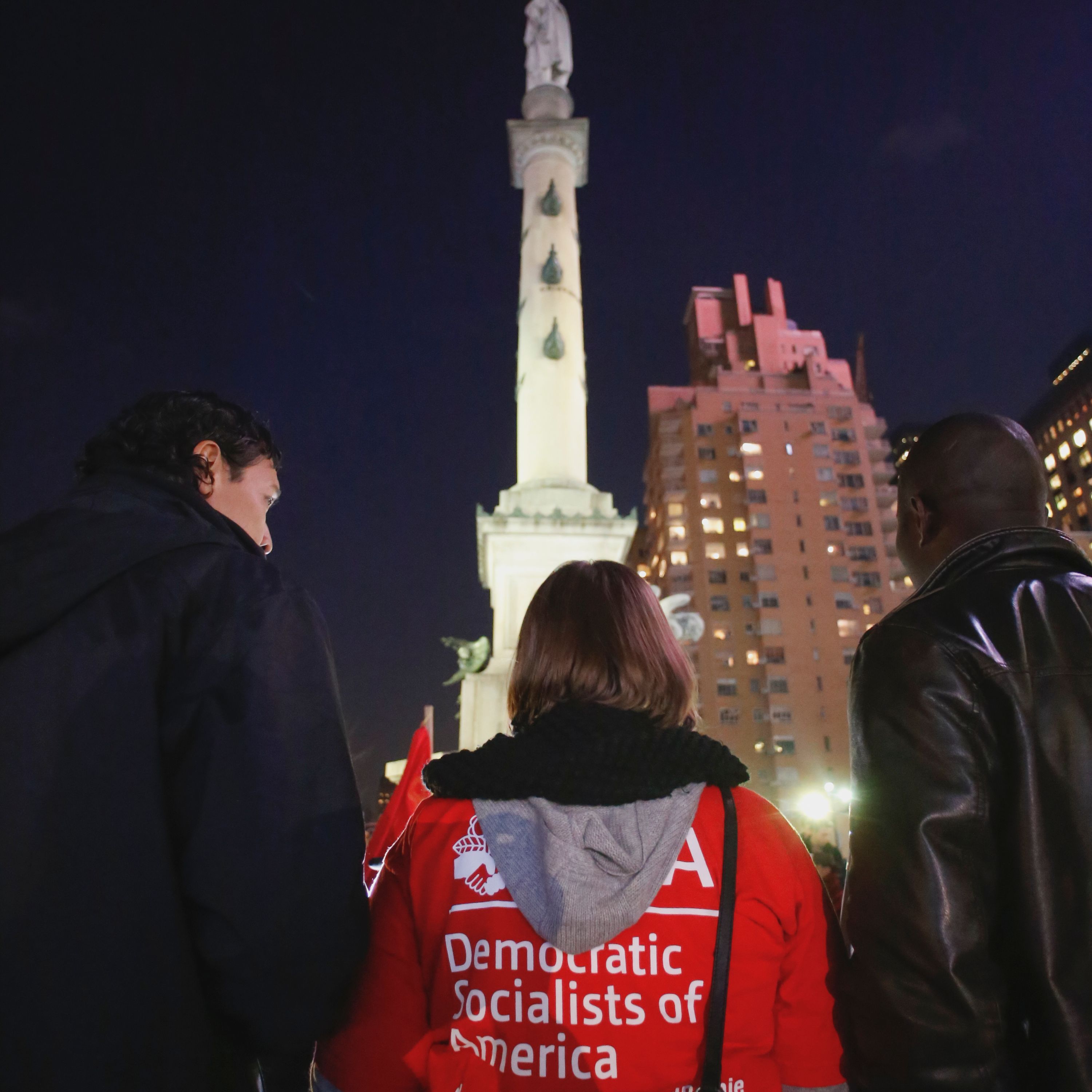
Voters sent several NYC Democratic Socialists of America members to Congress, and sixteen up to Albany. Grace Mausser, NYC-DSA co-chair, and Gustavo Gordillo, NYC-DSA co-chair, reflect on their wins, and talk about what their policy priorities will be on both the state and federal level. Photo: Democratic Socialists of America at rally in Columbus Circle. (Photo by Andy Katz/Corbis via Getty Images) Hosted by Simplecast, an AdsWizz company.
Episode information is provided by the publisher. Listening takes place on the publisher’s service.
Runaway government spending, rising costs, and a new wave of legal battles over constitutional rights. With Democrats preparing to take control of Congress and several state governments, Republicans are confronting a very different political landscape. John Solomon and Amanda Head welcome Montana Senator-elect Kurt Alme, who says Washington must get serious about reining in spending, lowering inflation, and making everyday life affordable again. Already preparing for his arrival in the Senate, Alme discusses his priorities for protecting Montana's way of life, keeping taxes low, creating good-paying jobs, and working across party lines when possible. He also addresses the challenges Republicans face in the minority, the remaining lame-duck session, and concerns about efforts to expand the Supreme Court and eliminate the filibuster. Then, Southeastern Legal Foundation President Kimberly Hermann joins the show with a warning about potential policy reversals in states where Democrats have
One week after the U.S. midterm elections, join Valérie Beaudoin, one of Canada's most respected commentators on U.S. politics, for a discussion on how Canadian policymakers and officials are digesting the results in Washington. From the new balance of power in Congress to the potential implications for Canada-U.S. relations, trade economic growth, and cross-border policy priorities, we'll explore what the election outcome could mean for Canada in the months ahead. Recorded on November 10, 2026. -- Optique canadienne sur les élections américaines de mi-mandat – Valérie Beaudoin Pour une version avec des sous-titres français, veuillez consulter Une semaine après les élections de mi-mandat aux États-Unis, Valérie Beaudoin, l’une des commentatrices de la politique américaine les plus respectées du Canada, discute des façons dont les décideurs canadiens et Ottawa ont réagi aux résultats à Washington. Du nouvel équilibre des pouvoirs au Congrès aux répercussions possibles sur les relations
November 21, 2026; 12pm: In almost every presidency, there comes a time when the president turns their attention overseas – usually after some sort of political defeat. President Trump’s attention is definitely overseas, but for personal reasons. Ruth Ben-Ghiat points out the red flags of Trump cozying up to notorious Strongmen; Democrats have never held this much power before and it’s not just in Congress, it’s at the state level too. State Rep.-elect Allie Phillips (D-TN) and State Senator-elect Robyn Vining (D-WI) explain how they will set their most important agenda items into action; MS NOW’s Rachel Maddow continues her discussion with Jacob Soboroff about her brand new book “The Department of Fate,” Stephen Miller’s rise, and much more. Hosted by Simplecast, an AdsWizz company.
In a candid conversation, US Sen. Raphael Warnock (D-GA) explains why voters haven’t necessarily fallen in love with the Democratic brand, why the party must center people over politics, and how the path to power runs through the South. This show was edited by Kasia Broussalian, fact checked by Sarah Schweppe, mixed by Shannon Mahoney, video edited by Christopher Snyder, and hosted by Astead Herndon. Photo caption: US Sen. Raphael Warnock (D-GA) reacts while taking the stage to speak during the What's Next summit at Mission Ballroom on November 13, 2026 in Denver, Colorado. Photo by Mark Makela/Getty Images. You can also watch this episode on youtube.com/vox (http://youtube.com/vox). Listen to Today, Explained ad-free by becoming a Vox Member: vox.com/members (http://vox.com/members). New Vox members get $20 off their membership right now.
November 21, 2026; 8am: With just weeks left before democrats take control of Congress, Senate Republicans are in a race against the clock to put as many of president trump’s judicial nominees on the federal bench as possible. Seven Trump nominees appeared before the Senate Judiciary Committee just this week. Retired Judge J. Michael Luttig, who served on the U.S. Court of Appeals for the Fourth Circuit, joins “The Weekend” to discuss. For more, follow us on social media Bluesky: @theweekendmsnow.bsky.social Instagram: @theweekendmsnow TikTok: @theweekendmsnow Hosted by Simplecast, an AdsWizz company.
Flights stopped nationwide. Banks locked people out. Outlook went dark. Even a classified NSA network failed. That's six outages in six days, and Congress reportedly heard that some came from rushed fixes for security holes AI found. On November 13th, a router failure caused the longest nationwide ground stop in 25 years. Investigators are still working out whether faulty equipment or installation work was to blame. Dr. Hassan Shahidi, president and CEO of the Flight Safety Foundation, explains what went wrong and what it means for your holiday travel. Then, Grand Theft Auto VI is finally here, 13 years after GTA V. Sensor Tower estimates it earned $1.84 billion by release day, employers are bracing for sick calls, and 43 soldiers at Fort Stewart reenlisted for four days off to play it. Plus: Tyler Brickley's Kindness Mob rallied around Kahri Salyars when online bullies struck A 9-year-old's AI python photo fooled firefighters The best days to buy for Black Friday How to scan the famil
Three of our favorite segments from the week, in case you missed them. Schumer vs. Van Hollen (First) | Wild NYC: Trees (Starts at 45:05) | Are You Polite to AI Bots? (Starts at 59:51) If you don't subscribe to the Brian Lehrer Show on iTunes, you can do that here (https://itunes.apple.com/us/podcast/brian-lehrer-show-from-wnyc/id73331636?mt=2). Hosted by Simplecast, an AdsWizz company.
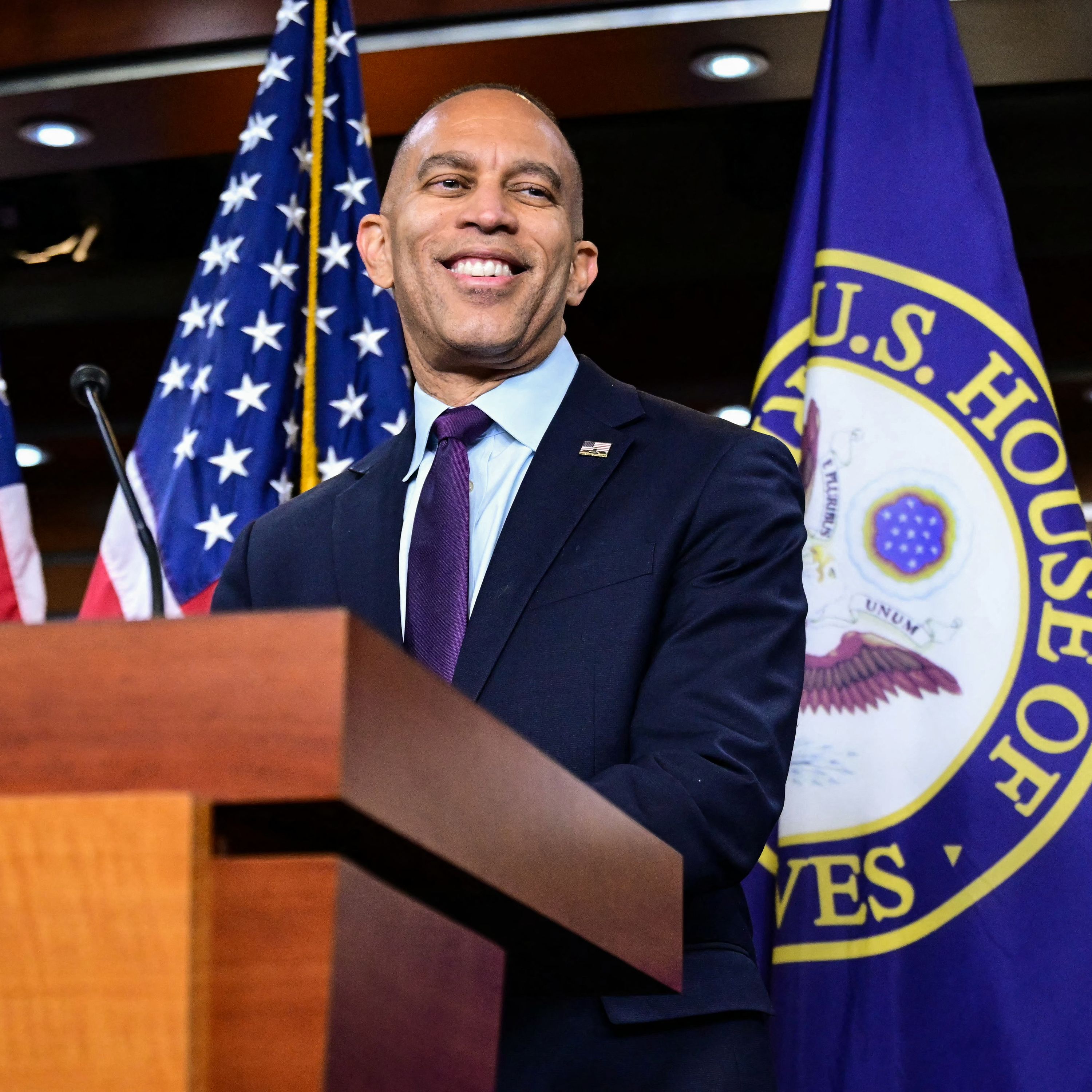
Congressman Hakeem Jeffries is on the edge of becoming the first Black speaker of the House, after a vote this week where Democratic members nominated him for the role. Errol Louis, political anchor of Spectrum New NY1, host of "Inside City Hall (https://ny1.com/nyc/all-boroughs/politics/inside-city-hall)" and "The Big Deal with Errol Louis, (https://spectrumlocalnews.com/section/the-big-deal)" New York Magazine columnist (https://nymag.com/author/errol-louis/) and host of the podcast"You Decide: (https://ny1.com/nyc/all-boroughs/politics/you-decide-with-errol-louis)talks about his Brooklyn roots, and how he might lead the "big tent" Democratic caucus. Photo: US House Minority Leader Hakeem Jeffries, Democrat from New York, speaks during a news conference at the US Capitol in Washington, DC, on November 18, 2026. (SAUL LOEB / AFP via Getty Images) Hosted by Simplecast, an AdsWizz company.
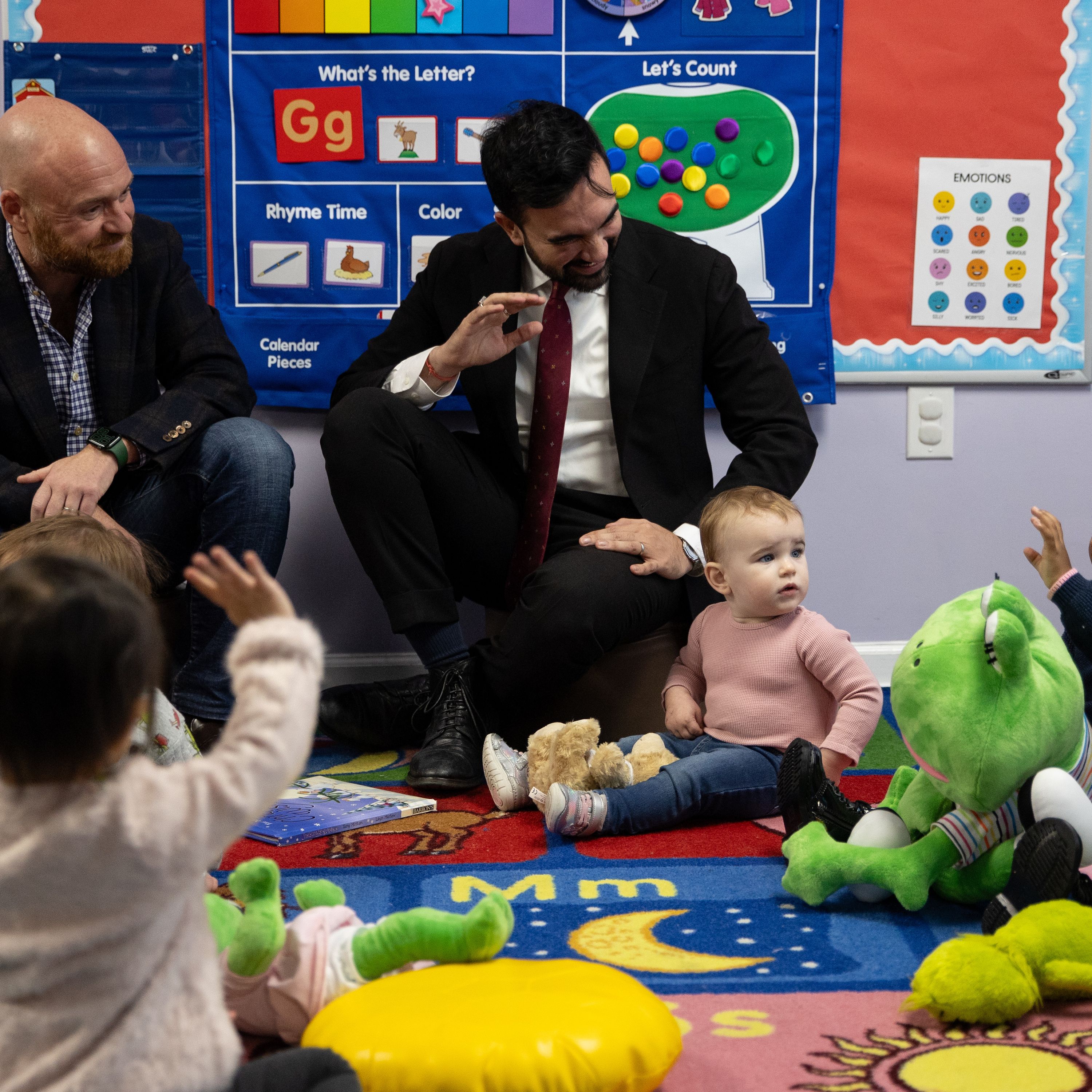
Grace Rauh, executive director of Citizen's Union, talks about their new report (https://citizensunion.org/document/2026-11-17/new-report-free-child-care-in-nyc-could-deliver-a-boost-to-new-yorks-economy/) on the "cost" of childcare to NYC and why making it free would boost the economy. Photo: New York City Mayor-elect Zohran Mamdani interacts with children during his visit to a childcare center in Manhattan, New York, U.S., (Mostafa Bassim/Anadolu via Getty Images) Hosted by Simplecast, an AdsWizz company.
Leagues should limit financial advantages that make competition persistently unequal.
Share your view, then see how readers voted. No sign-in required. This poll is shared across stories.
Do you agree or disagree?
Common Quandary
A Common Quandary to discuss
Another conversation to explore, separate from this news story.
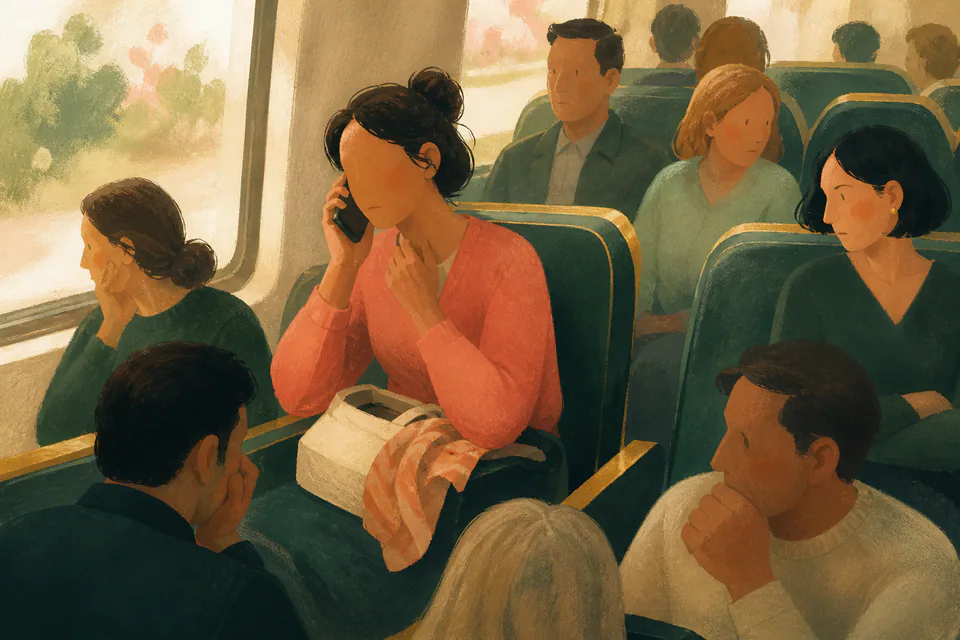
A stranger takes an emotional call in the quiet car. Do you shush them?
On a crowded train's designated quiet car, a passenger answers a call and begins discussing an apparent family emergency. They are speaking softly but continuously, and everyone nearby is listening despite trying not to.
Do public rules make room for private emergencies?