Bill Browder has spent his life watching what happens when money and power become the same thing. In Russia, he says, you cannot be the most powerful man without also being the richest. The result is a country where nothing works, nobody is safe and the law belongs to whoever is at the top. He learned it first-hand. Once the largest foreign investor in Russia, he was thrown out of the country for exposing corruption. His lawyer, Sergei Magnitsky, uncovered a $230 million tax fraud carried out with Browder's stolen company documents and was arrested, tortured and beaten to death in a Russian jail. The Magnitsky Act that followed is now law in 35 countries and Putin has had Bill convicted in absentia and put on the Interpol list eight times. - - - - - - - - - - - - - - - - - - - - - - - - - - - - - - - - - - - - - - - - - - - - - - - - - - TIMESTAMPS: 00:00:00 - Money And Power Are Merging 00:02:14 - Is It Happening In America? 00:04:30 - The Fish Rots From The Head 00:06:04 - The Grands
How many times in your life have you set expectations for yourself? Perhaps you believed you would have achieved a number of goals by a certain time. Or maybe you expected that you’d be married by a certain age. Or that your relationship would last a lifetime. While it’s admirable to set goals, and aspire to find love and connection, it’s also dangerous to tie our happiness to our expectations. Because when reality doesn’t meet our expectations, we often find ourselves lost, confused and in pain. Uploaded 27-08-19 Welcome back to the Tony Robbins Podcast where we are continuing our breakthrough series – taking you to events like Date with Destiny, UPW and Business Mastery, where you’ll have a front row seat to life-changing transformations. And in this episode, you are going to hear Tony work with Dano. Dano has been with his partner for decades. They’ve built a family and a life together, but they are finding themselves at a crossroad. He’s deeply in love, and struggling to let go, bl
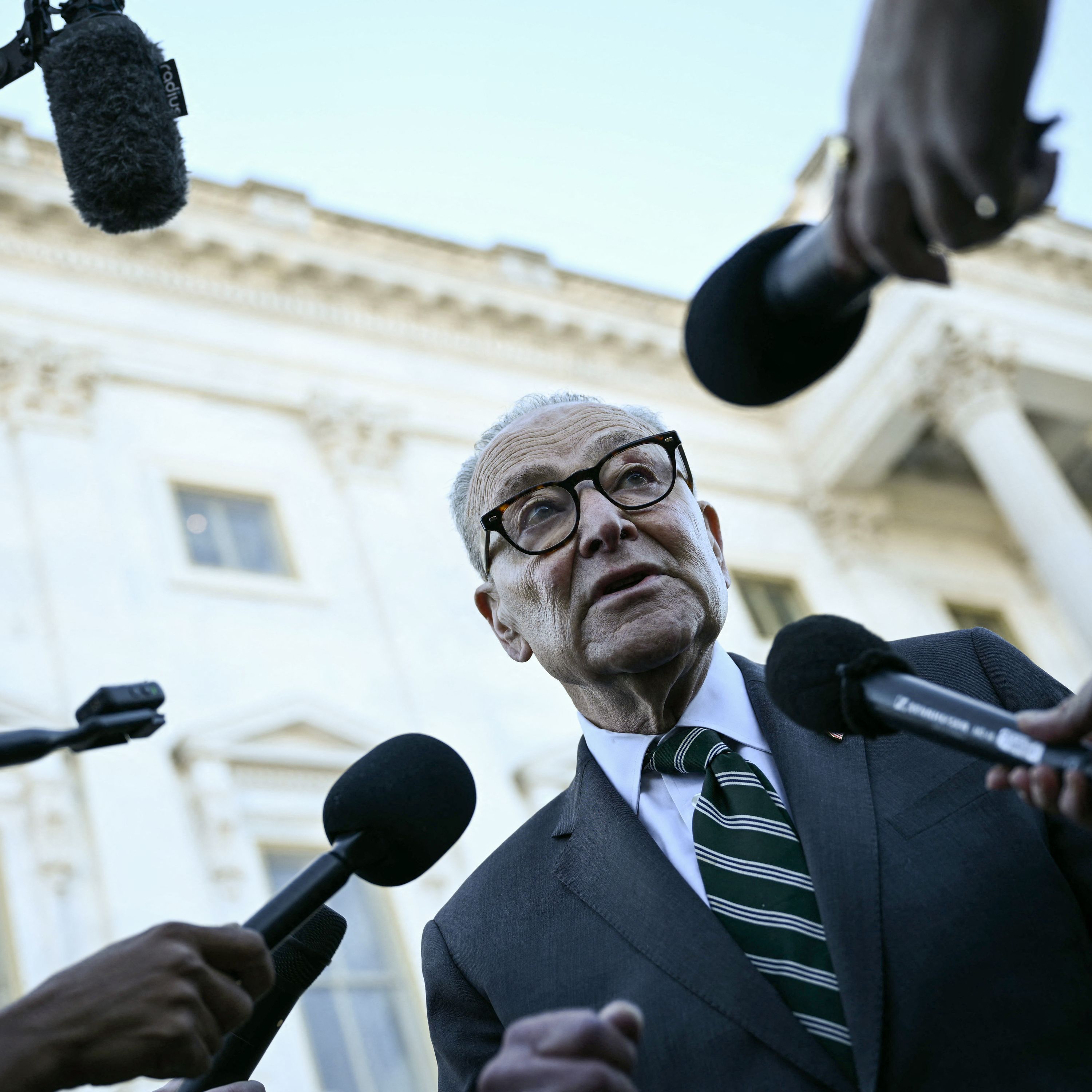
Leigh Ann Caldwell, (https://puck.news/authors/leigh-ann-caldwell?adset_id=176331673387&campaign_id=21689104315&campaign_type=&gad_campaignid=21689104315&gad_source=1&gbraid=0AAAAABTpuUW1TFjRGl8PVrElWs-tpLOO7&placement=g) chief Washington correspondent for Puck News, talks about the national political news of the week, including the leadership race between Schumer and Van Hollen, the debate over the Iran war as the government funding deadline approaches, the debate over abolishing the filibuster and more. Photo: US Senate Minority Leader Chuck Schumer, Democrat from New York, speaks to reporters outside the US Capitol in Washington, DC, on November 18, 2026.(Brendan SMIALOWSKI / AFP via Getty Images) Hosted by Simplecast, an AdsWizz company.
You might know Nix Adams from social media- she has 3 million followers across Tik Tok, Facebook and Instgram. Or maybe you know her as the winner of 2026 Celebrity Treasure Island. Or perhaps you have never heard of her at all- I guarantee you will be a fan after hearing her story. Nix has a new book out too, "Nothing to Lose" which you can check out at all the usual book stores. Nix was raised around gang members in Northland. She became a teenage mum. She moved to Australia, got out of a violent relationship and started a business out of her garage. Then her little boy, Alaska, died. We talk about the years spent addicted to meth after Alaska died, losing custody of her other kids, turning to sex work to fund her drug habit and the circuit breaker of prison to get her clean. She started making videos for Facebook in the hope that her kids might see them and know their mum was doing okay. And that has grown into her becoming one of the country’s top content creators with her often hi
Why hold gold after a slide like this? GBI Chief Economist Trey Reik joins Maggie Lake to explain why he still sees it as long-term portfolio insurance, how expectations for Fed rate hikes are weighing on gold and why silver faces a different set of pressures.Trey argues that debt and liquidity pressures could limit the Fed’s ability to keep raising rates. He explains why his gold outlook rests on protecting purchasing power over several years, and why focusing on January’s highs can make investment decisions harder. Silver presents a different challenge: solar manufacturers are reducing the amount they use and developing substitutes, making investor demand more important to his outlook. The conversation also covers the difficulty of timing a bottom, jurisdictional risks in gold-mining shares and why digital-system vulnerabilities form part of his case for physical gold.CHAPTERS00:00 Gold, silver and investor concerns01:35 Why Trey doubts a prolonged Fed hiking cycle03:38 Fed communica
You say you are afraid the next step will fail. Picture it working for a moment. Are the responsibilities that follow part of what makes you hesitate? In this episode of The Level Up Podcast, Paul Alex breaks down how to identify concerns about success and prepare for the next responsibility without carrying every imagined future demand. An opportunity can bring expectations about delivery, time, and being seen. Naming the specific concern gives you something to prepare for instead of turning hesitation into a judgment about your character. Look at what the actual next step requires. You may be able to define what you can deliver, limit the time it occupies, or learn a missing skill. The first opportunity does not obligate you to accept every opportunity afterward. Responsibility can grow alongside your ability to handle it. In this episode, you’ll learn: • How to notice when a good outcome brings concerns of its own. • Why a specific responsibility is easier to prepare for than a vagu
Users should have access to human review when a platform restricts their account.
Share your view, then see how readers voted. No sign-in required. This poll is shared across stories.
Do you agree or disagree?
Common Quandary
A Common Quandary to discuss
Another conversation to explore, separate from this news story.
Your teenager locks you out of their phone. When is it okay to look?
Your usually outgoing sixteen-year-old has withdrawn and stopped seeing friends. They insist they are fine and refuse to talk. You know their phone passcode and could read their messages without being discovered.
How serious must a fear be before protection outranks privacy?