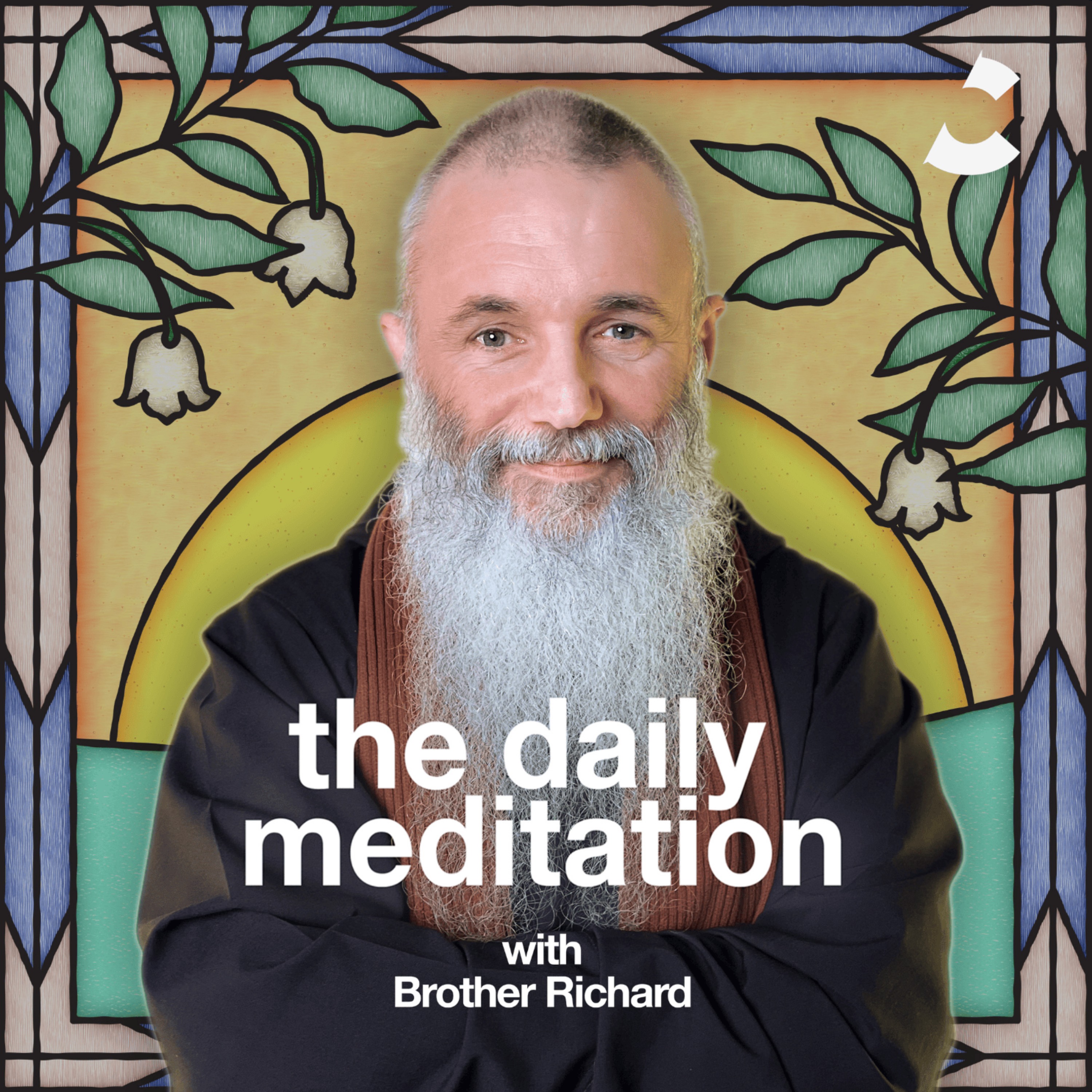
Peace Prayer of St. Francis (Part 8): Not So Much to Be Consoled as to Console
10 min
Listen through the publisher, then discuss the episode here or arrange an in-person Roundtable. Your city determines where to meet.
Roundtables are designed for groups of four, with a shared subject and room for everyone to speak. Come for discussion, with no dating expectation.
In this meditation, I invite you to continue our journey through the Peace Prayer of St. Francis as we enter the second half of this beautiful prayer. We reflect on the words, “O Divine Master, grant that I may not so much seek to be consoled as to console.” These words invite us to move beyond simply seeking peace for ourselves and towards becoming instruments of peace in the lives of others. Through meditation, we explore what it means to offer consolation, to accompany those who are struggling and to become a presence of compassion and understanding in the world. We also acknowledge our own need for comfort and support, entrusting those needs to divine compassion while making the deliberate choice to bring peace to others. As we breathe in and breathe out, we make the intention to become peacemakers, allowing divine love to guide our actions throughout the day. Chapters: 00:00 – Introduction: The second half of the Peace Prayer 00:50 – Entering meditation with intention 01:25 – Relaxing the body and following the breath 02:25 – Lord, make me an instrument of your peace 02:50 – Not so much to be consoled as to console 03:15 – The courageous act of becoming a peacemaker 03:40 – Bringing consolation rather than seeking it 04:10 – Becoming a place where peace can be encountered 04:40 – Moving beyond our own needs 05:05 – Letting others know they are not alone 05:35 – The sacrifice of time and energy 06:10 – Offering ourselves to divine compassion 06:45 – Recognising our own need for consolation 07:10 – Entrusting our needs to divine love 07:45 – Breathing in peace and offering peace 08:10 – Making the resolution to be a peacemaker 08:40 – Returning awareness to the body Hosted on Acast.
Episode information is provided by the publisher. Listening takes place on the publisher’s service.
Immerse yourself in 10 minutes of the best calming meditation music, designed to help you find focus and tranquility. As you listen to this soothing composition, allow the gentle melodies and serene tones to guide you into a state of deep relaxation and heightened awareness. Close your eyes, take a deep breath, and let go of any distracting thoughts or external worries. Allow the music to create a peaceful atmosphere, where your mind can find stillness and clarity. With each note and melody, feel the tension melting away from your body and mind. Let the music wash over you, bringing a sense of calm and centeredness. Allow it to anchor your attention, enabling you to focus on the present moment. As you tune in to the subtle nuances of the music, feel your mind becoming more attuned and receptive. Notice how your breathing naturally slows down, guiding you into a more relaxed and peaceful state. During these 10 minutes, let the calming meditation music become your refuge, a sanctuary of
Wednesday 25 November 2026 Today is Wednesday the 25th of November, in the 34th week of Ordinary Time. Remember that the Lord seeks you, even when you do not seek Him. He offers you peace, even when you are restless. Allow Him to come close. Draw near, listen, and let Him lead you into prayer as Josh Garrels sings, ‘Fear Thou Not’. Fear thou not For I am with thee Be not dismayed For I am thy God And I will strengthen thee I will help thee And I will uphold you With the right hand of my righteousness Today’s reading is from the Gospel of Luke. Luke 21:12-19 ‘But before all this occurs, they will arrest you and persecute you; they will hand you over to synagogues and prisons, and you will be brought before kings and governors because of my name. This will give you an opportunity to testify. So make up your minds not to prepare your defence in advance; for I will give you words and a wisdom that none of your opponents will be able to withstand or contradict. You will be betrayed even by
What would make someone with plenty of money risk their reputation, career, and freedom to steal something they don't even need? Is it greed, poor judgment, or something happening inside the brain that most of us don't understand? In this episode of Off the Couch Psychology Podcast, Dr. Jerry Cunningham explores kleptomania, a psychological disorder that can leave people struggling with powerful urges to steal, even when they know the consequences could be devastating. You'll discover what separates kleptomania from ordinary shoplifting, how emotional tension and temporary relief can create a difficult cycle, and what psychological treatments may help people regain control. We'll also revisit the famous shoplifting case involving actress Winona Ryder and examine what her story can teach us about the dangers of making assumptions about someone's mental health. Whether you're curious about human behavior, concerned about someone you love, or struggling with impulses yourself, this episod
Dr Anna Lembke is one of the world's foremost authorities on addiction – a professor of psychiatry at Stanford, chief of its Addiction Medicine Dual Diagnosis Clinic, and the author of the international bestseller Dopamine Nation, which sold more than 1.5 million copies and changed the way the world understands pleasure, pain and dependence. Her new book, Radical Surrender, goes a step further than Dopamine Nation. Its argument is that we have become addicted not just to pleasure, but to control – that in a world of endless levers to press, we now pursue control for its own sake, and that when reality refuses to cooperate, our instinct to try harder tips us into denial, anxiety and despair. It is one of the most important and useful books I've encountered in the making of this podcast. But Anna's understanding was forged through almost unbearable personal loss. Her infant son, Lucas, died of leukaemia. What emerged was an acceptance of human limitation and the hard-won understanding th
How Do I Love My Enemy as a Christian? (Luke 6:27-28, Part 2) | Daily Devotional and Bible Study How do I love my enemy as a Christian when they hurt me? Jesus gives four verbs in Luke 6:27-28, and not one of them is a feeling. In part two of our look at Luke 6:27-28 we ask who your enemies really are and what kind of love Jesus is asking for. It’s a decision, not a feeling, and that lets us off the hook of trying to manufacture warmth. We walk through the four verbs, what it means to bless someone who has cursed you, and why the feelings usually follow the actions and not the other way around. I share what blessing someone who hurt me actually looked like, and we close by laying that person’s name before the Lord. Join me on an immersive Bible Study Experience. Learn more at BibleStudyLive.org (https://biblestudylive.org/) Have a question about the series or a prayer request? Ad-free episodes and the full library of past series: Patreon (https://www.patreon.com/c/HearingJesus) Questio
In this meditation, I invite you to return once again to the basic form of relaxation that prepares us for deeper contemplative practice. Whether you are new to meditation or have been practising for many years, returning to these foundations can help us rediscover the stillness that lies beneath the distractions of everyday life. Beginning with a simple ritual gesture, we settle into our posture, release the weight of the body and become aware of the breath. Through gentle visualisation, we imagine breathing out tension and breathing in warm golden light. We then turn our attention towards our thoughts and feelings, recognising that although these are part of our experience, they do not define the fullness of who we are. Resting at the centre of our being, we encounter the stillness of divine love and make the intention to carry that peace into the rest of our day. Chapters: 00:00 – Introduction: Recovering the form 00:40 – Preparing to enter meditation 01:00 – Beginning with a ritual
One of the most beautiful images of a guardian angel I’ve ever seen is an icon of an old woman standing in the snow. Beside her, an angel bends down to tie her shoelaces. I love that detail. It reminds me that even the smallest things in our lives matter. In this Sunday Reflection, I explore what the Franciscan tradition teaches us about guardian angels. What does it mean to have a companion who walks beside us through difficulty? And when did you last ask your guardian angel for help? I also reflect on the seraphim, the angels we describe as being on fire with love, and on how St Francis shared that same warmth with those around him. I invite you to take a quiet moment today to ask for a little of that love in your own heart, for yourself, for others and for the whole of creation. Peace be with you. Timestamps 00:00 Angels and the image of a love that burns 01:20 Guardian angels and unseen companionship 03:09 The angel tying an old woman’s shoelaces 04:02 An invitation to open ourselv
In this meditation, I invite you to reflect on the changing light of autumn as we move towards the darker days of winter. As the daylight hours grow shorter, we can sometimes feel that we are losing something. Yet the contemplative life invites us to receive each season as it is, discovering beauty and sacredness in the present moment. Beginning with the breath, we explore the difference between the changing light around us and the unchanging light of divine presence within. From the gentle light of morning to the lamps that illuminate our evenings, every expression of light becomes an invitation to awareness. As we breathe, we allow ourselves to be filled with divine light, offering compassion, peace and prayer to those in need. Chapters: 00:00 – Introduction: Autumn light 01:10 – Entering meditation with intention 01:58 – Relaxing the body and following the breath 02:48 – Returning to the present moment 03:12 – Becoming aware of the light within 03:40 – The gift of divine light 04:10
Employers should measure outcomes instead of continuously monitoring workers' activity.
Share your view, then see how readers voted. No sign-in required. This poll is shared across stories.
Do you agree or disagree?
Common Quandary
A Common Quandary to discuss
Another conversation to explore, separate from this news story.
You find a wallet full of cash. Can you take a finder’s fee before returning it?
You find a wallet containing identification and several hundred dollars. Returning it will require a detour and some effort. The owner would probably never know if a small amount were missing.
Can an unrequested good deed entitle someone to compensation?