Listen through the publisher, then discuss the episode here or arrange an in-person Roundtable. Your city determines where to meet.
Roundtables are designed for groups of four, with a shared subject and room for everyone to speak. Come for discussion, with no dating expectation.
The Polish Constitutional Tribunal, which was heavily politicised by the previous Government, has been holding up multiple reforms that would restore rights, for example to abortion. After an attempted takeover of the tribunal by judges aligned with the current liberal Government, it is possible the right will be more unified and in a stronger position to win next year's election. Guest: Bartosz Brzesinski, senior reporter for Politico Europe Producer: Ann Arnold
Episode information is provided by the publisher. Listening takes place on the publisher’s service.
The Democrats swept the midterms. Donald Trump is still president. What will the next two years look like? And what can history teach us about what comes next? Martin Wolf speaks to historian Heather Cox Richardson about the cycles in the past 250 years of US politics — how renewal (and division) can both follow periods of oligarchy, and how the Democrats should react to a “constitutional crisis”. To enjoy future episodes, be sure to subscribe to ‘Martin Wolf on the World’ wherever you get your podcasts. You can also watch Martin’s podcast series on the FT’s YouTube channel here:https://www.youtube.com/@FinancialTimeshttps://www.youtube.com/@FinancialTimes Host: Martin Wolf Producer: Mischa Frankl-Duval Senior producer: Laurence Knight Video editor: Richard Topping Senior audio engineer: Breen Turner Broadcast engineer: Andrew Georgiades Podcast development: Laura Clarke FT Global Head of Audio: Flo Phillips Learn more at www.ft.com/martin-wolf-on-the-world (http://www.ft.com/martin-wo
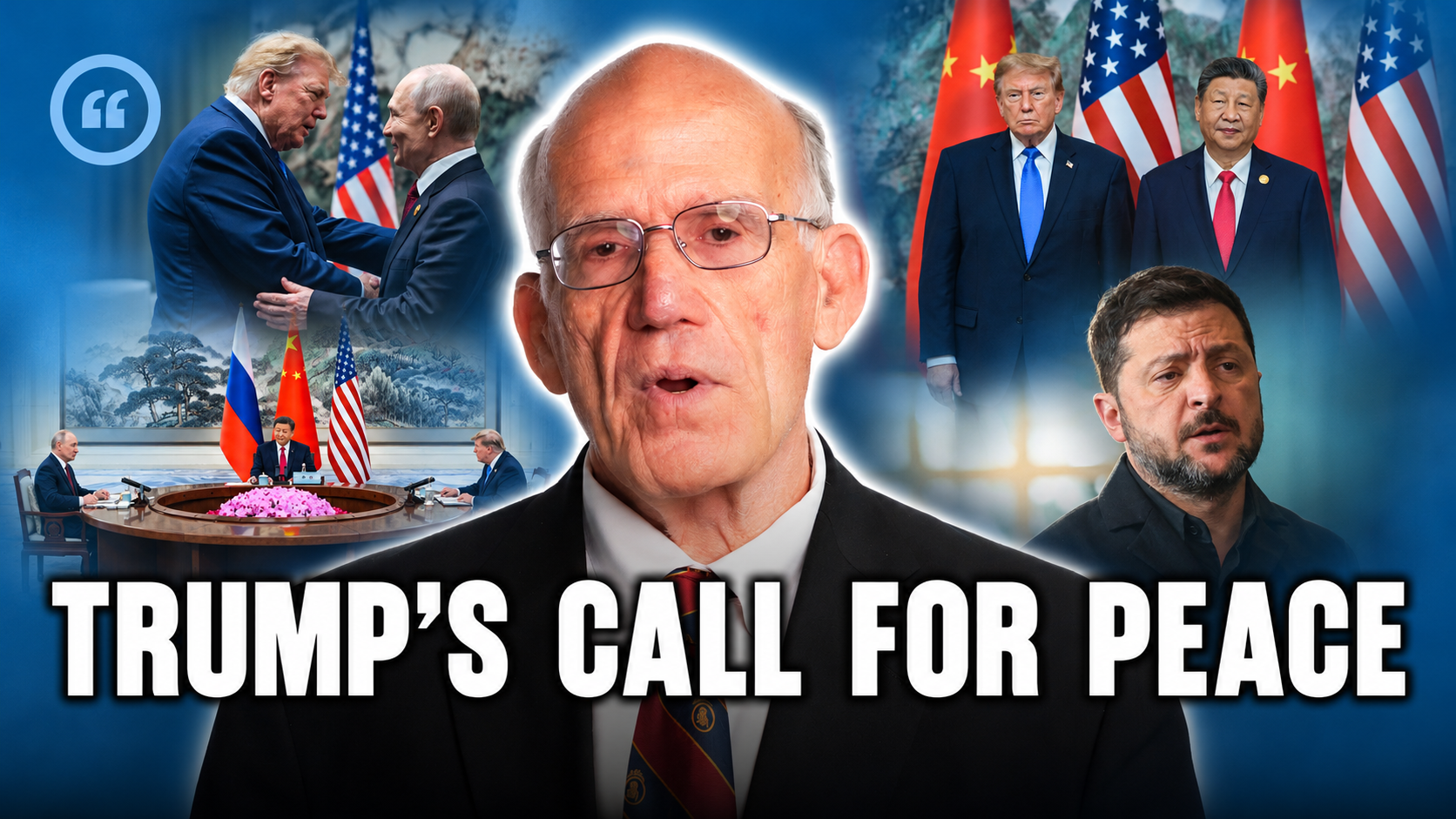
President Donald Trump's first ever trilateral summit with Vladimir Putin and Xi Jinping raises questions about the future of the war in Ukraine and whether a peace agreement could finally be within reach. Victor Davis Hanson and Sami Winc examine the summit on today’s edition of “Victor Davis Hanson: In His Own Words,” discussing Russia's declining influence, potential territorial concessions in Ukraine, and Europe's frustration over Trump's peace negotiations. Hanson criticizes Hillary Clinton's attacks on Trump's diplomacy; he also argues that European leaders have weakened their influence by neglecting defense spending and relying on American military protection. They discuss Elon Musk's shifting political allegiances, and Hanson warns that distancing himself from MAGA may not protect him from Democrat investigations. They also discuss the potential economic benefits of artificial intelligence and the challenges facing Hakeem Jeffries as Democrats prepare to take control of the Hou
Runaway government spending, rising costs, and a new wave of legal battles over constitutional rights. With Democrats preparing to take control of Congress and several state governments, Republicans are confronting a very different political landscape. John Solomon and Amanda Head welcome Montana Senator-elect Kurt Alme, who says Washington must get serious about reining in spending, lowering inflation, and making everyday life affordable again. Already preparing for his arrival in the Senate, Alme discusses his priorities for protecting Montana's way of life, keeping taxes low, creating good-paying jobs, and working across party lines when possible. He also addresses the challenges Republicans face in the minority, the remaining lame-duck session, and concerns about efforts to expand the Supreme Court and eliminate the filibuster. Then, Southeastern Legal Foundation President Kimberly Hermann joins the show with a warning about potential policy reversals in states where Democrats have
Newsround Part 2. Lewis Aspinall returns for the final section of Newsround on Anfield Index, focusing on Ronald Araújo's Liverpool future and why the Reds should make his move from Barcelona permanent. With Araújo enjoying his time at Anfield, the defender has spoken positively about the welcome he has received from Liverpool's players, staff and supporters. However, the Uruguay international remains cautious about his future, admitting that any permanent transfer will depend on several parties reaching an agreement. Lewis examines Barcelona's position, including comments from sporting director Deco, and explains why Liverpool could have an opportunity to secure a defender who has quickly become an important part of Andoni Iraola's system. From his physicality and aerial dominance to his ability to operate at right-back and drop into a back three, Lewis believes Araújo offers Liverpool something their defence has been missing. But what happens when Conor Bradley returns? Lewis explain
A summit like no other. In a political first, President Trump sat down with President Putin and President Xi for an unprecedented trilateral meeting. He insists they’re all friends, but what does this mean for their conflicting agendas in Iran and Ukraine? Former Biden adviser Rush Doshi joins Christiane Amanpour to assess what was, or wasn’t, achieved. Then, in a landmark case, the International Court of Justice has found Myanmar guilty of committing genocide against the minority Rohingya population. The U.N. High Commissioner for Human Rights, Volker Türk, joins the show to discuss why this moment is so important. Plus, CNN’s Clare Sebastian takes us underground to look at how Ukraine’s innovative operation is helping the country make substantial gains. And best-selling author Elizabeth Strout discusses her new book ‘The Things We Never Say’, exploring the political and personal tensions of America that emerged during the 2024 presidential election. From the archive, my report from U
Hey everybody, Tom Bilyeu here. On today’s episode of Impact Theory, we’re taking on a topic that’s got the whole world holding its breath: the escalating crisis between the United States and Iran. As tensions ratchet up, we’re asking the tough questions—how did we get stuck in this “escalation trap,” and what does it mean for America’s global leverage, our economy, and our very sense of security? The conversation focused on why the traditional idea of “strategy” might be failing policymakers, using powerful analogies—like chess versus roulette—to show how doubling down in conflict can spiral out of control. We’ll break down the risks of tactical “wins” that create even bigger crises, the real leverage Iran holds with control of the Strait of Hormuz, and the mounting pressure on President Trump as political support erodes and legacy hangs in the balance. A key theme that emerged is what happens when military might runs into decentralized opposition, and why high-stakes gambles—like the
How we kiss, who we kiss, and where we kiss them, has changed continually over millennia. As has the meaning of the kiss, from medieval male leaders mouth kissing to seal a legal deal, to the intimate act of men kissing women's hands in 19th Century England. Guest: Katie Barclay Professor of History, and ARC Future Fellow, Macquarie University Author of 'The Kiss: a History of Passion and Power' (Reaktion, Nov 2026) Her previous book was Loneliness in World History (Routledge, Feb 2025) Producer: Ann Arnold Get in touch: Email us at [email protected]
New Zealand's election outcome is far from clear. The country is in limbo for several weeks, until final votes are counted. The result could be a very different government grouping than the most recent one, a coalition led by the National Party. That in turn will affect NZ's foreign outlook, Anna Fifield says. Guest: Anna Fifield Wellington-based journalist and commentator, author of the Between Giants newsletter on Substack Former foreign correspondent Producer: Ann Arnold Get in touch: Email us at [email protected]
"Attack, counterattack, and never apologise". That was the advice of attorney Roy Cohn to the embattled real estate mogul Donald Trump in the 1970s and 80s, decades before Trump's entry into politics. A new biography reveals the ruthlessness of Mr Cohn, a brutal fixer from the McCarthy era, until his death from HIV/AIDS in 1986. It's quite a story. Guests: Kai Bird and Susan Goldmark, co-authors of 'American Scoundrel: Roy Cohn's Dark Journey from Joe McCarthy to Donald Trump (https://www.simonandschuster.com.au/books/American-Scoundrel/Kai-Bird/9781398566903)' Producer: Catherine Zengerer Get in touch: Email us at [email protected]
Equipment rules should preserve fair competition even when they limit innovation.
Share your view, then see how readers voted. No sign-in required. This poll is shared across stories.
Do you agree or disagree?
Common Quandary
A Common Quandary to discuss
Another conversation to explore, separate from this news story.
You can clone the best dog you ever had. Would you?
After a beloved dog dies, its owner can afford to have it cloned. The procedure is legal and improving, but it uses animals as surrogates and will not recreate the original dog's memories or personality.
What do our obligations to animals permit us to create for our own comfort?