Q&A: Should NATO shoot down Russian drones before they cross the border?
21 min
Listen through the publisher, then discuss the episode here or arrange an in-person Roundtable. Your city determines where to meet.
Roundtables are designed for groups of four, with a shared subject and room for everyone to speak. Come for discussion, with no dating expectation.
In this month’s Q&A, Patrick and Tom ask how far Nato should go in responding to Russian provocations including whether drones should be shot down before they enter allied airspace. They also discuss whether the armed forces should rethink who is eligible to serve in an age of drones and cyber warfare, the relationship between veterans and the public, and whether Robert Pattinson is the right choice for Britain’s next James Bond. Send your questions to [email protected] Hosted on Acast.
Episode information is provided by the publisher. Listening takes place on the publisher’s service.
A Russian cargo ship has been struck by drones in the eastern Gulf of Finland, in an attack that was likely carried out by Ukraine, according to Finland's military. We hear from General Jarmo Lindberg , a current MP in Finland’s parliament, and the former Chief of Defence. Also on the programme; British endurance athlete Lewis Pugh describes his swim through the Strait of Hormuz, and the concerns about the UN's COP climate summit in Antalya, which could end with no agreement.(Photo: The damaged Russian cargo ship Sparta II, in a location given as the Gulf of Finland, November 21, 2026. Credit:FINNISH BORDER GUARD/Handout via REUTERS)
A Russian missile strikes within Poland’s borders, President Trump’s Cyber Chief is stepping down after a chaotic series of technical failures and hacks, and New York City Mayor Zohran Mamdani has outlawed the cities iconic horse drawn carriages, spurring a lawsuit from the driver. Get the facts first with Evening Wire. - - - Ep. 3207 - - - Wake up with new Morning Wire merch: https://bit.ly/4lIubt3 - - - Today’s Sponsor: ShipStation - ShipStation brings orders into one place and automatically compares carrier rates in real time, helping businesses stay organized and save when volume spikes. Get ahead of it today with ShipStation, and get 60 days free athttps://ShipStation.com (https://shipstation.com/), with code wire. - - - Privacy Policy:https://www.dailywire.com/privacy
In this episode of the Weekend T, Michael Deacon and Tim Stanley debate whether Robert Pattinson has what it takes to be James Bond (https://www.telegraph.co.uk/films/2026/11/18/unlikely-rise-007-oddball-robert-pattinson/), why the franchise should return to its Cold War roots and whether modern 007 films have lost their sense of fun. They also question why grown men are taking time off work to play Grand Theft Auto VI (https://www.telegraph.co.uk/news/2026/11/18/school-send-minibus-truants-playing-grand-theft-auto/), and discuss Russell Brand’s right to maintain his innocence after his convictions. Plus, David Beckham’s Poundland perfume problem, a royal who boils eggs in hotel kettles and a taste test of this year’s Christmas sandwiches – including Gail’s (https://www.telegraph.co.uk/news/2026/03/17/gails-anti-semitism-and-far-left-conspiracy-theories/) £7.80 offering. ► Subscribe to our new Daily T YouTube channel: youtube.com/@dailytpodcast ► We want to hear from you! ► Sign up to
Iran says it shot down a U.S. drone over the Strait of Hormuz as CBS News reports the U.S. and Israel are weighing a new assault on Iran. MIKE DROP NEWSROOM | 21 NOVEMBER 2026 Iranian state TV claimed Saturday that Iran downed a U.S. drone near Qeshm Island; the U.S. has not confirmed it. CBS News reported, citing sources, that the U.S. and Israel are considering a new assault in the short term, driven by Israeli concern over how fast Iran is rebuilding its missile production and moving sites underground. President Trump told Israel's Channel 12 he is not rushing any decision. At the same time, the New York Times reported Israeli warnings that Iran has made progress on chemical and biological weapons and could use them against U.S. officials, though some U.S. officials doubt those warnings. Mike Ritland breaks down why a single intelligence source shouldn't drive a decision this big, how corroboration works when lives are on the line, and what would actually change his mind. Also cover
After a deluge of speculation, the next James Bond has been chosen: British actor Robert Pattinson will be the next face of the franchise. The public response has been overwhelming, if somewhat divided. To celebrate, we’re revisiting an episode from June, about a behind-the-scenes David and Goliath battle between the family business which has held creative control of the franchise since the 1960s and its new owners, Amazon. It is now up to Jeff Bezos’s tech conglomerate to decide how to run the series. In an era when Hollywood studios are desperate to eke out every last dollar from movie franchises, can James Bond retain its mystique and appeal to a new generation of cinema-goers? We speak to Wall Street Journal enterprise reporter Erich Schwartzel. Producers: Xandra Ellin and Lucy Pawle Video producers: Richard Kenny and Jem Westgate Mixed by: Travis Evans Executive producers: James Shield and Martine Powers Senior news editor: China Collins Photo: Robert Pattinson as James Bond. Jaap
On this week’s edition of “Happy Hour,” Emily Jashinsky tackles whether America’s political system is irreparably broken, the growing distrust of political institutions, and why voters are increasingly fed up with corruption and self-serving politicians. She discusses Thomas Massie’s political future, the possibility of breaking up the two-party system, why she generally distrusts ProPublica’s reporting, and the ethics of the Supreme Court. She also weighs in on the dangers of authoritarian communism, foreign influence in Washington, and why maintaining faith in elections is so important. Emily addresses the political risks of embracing artificial intelligence, which careers might survive the technological revolution, and why she struggles to unplug from work. Finally, she shares her favorite time to visit Washington, D.C., her thoughts on Robert Pattinson as the next James Bond, and more… Hosted by Simplecast, an AdsWizz company.
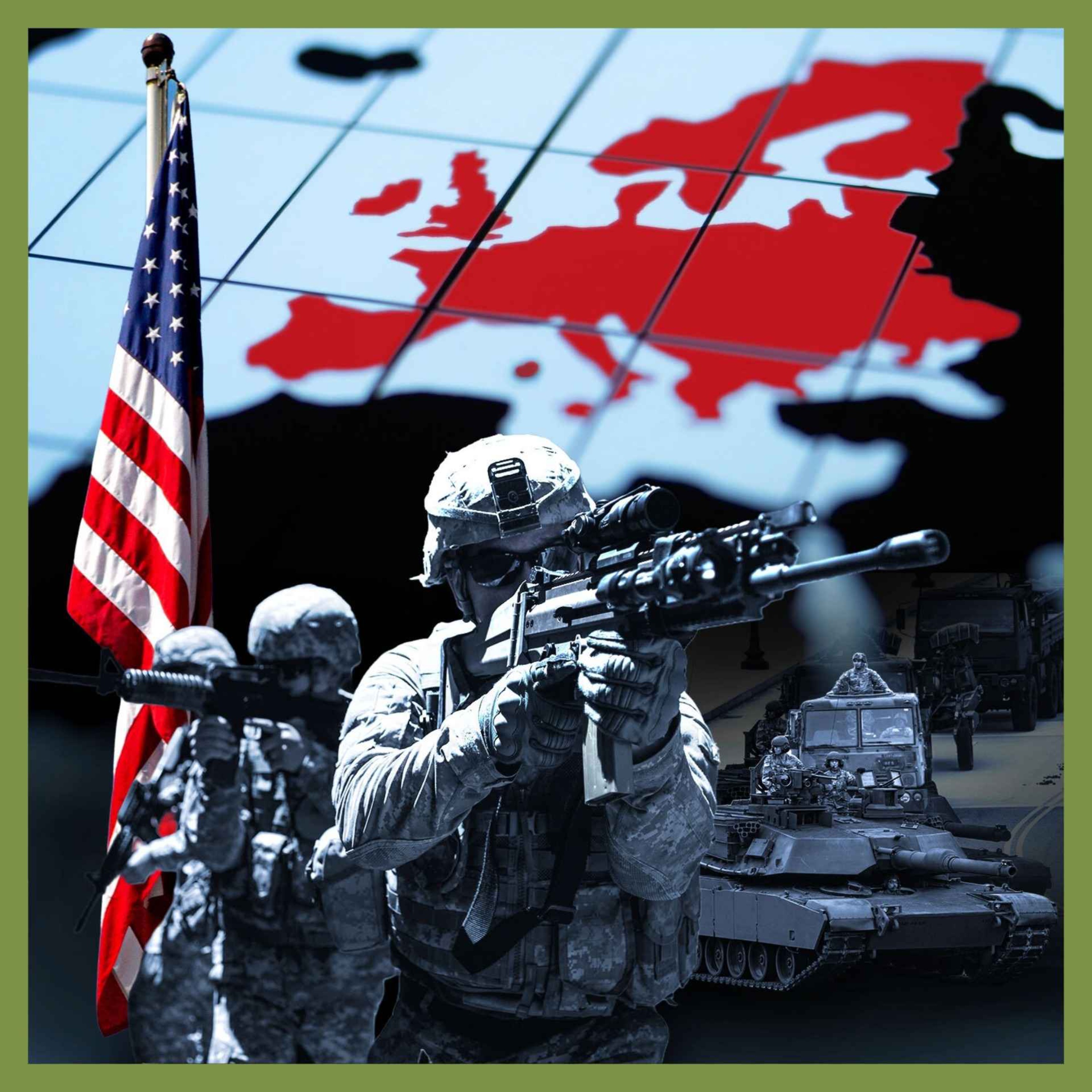
America has repeatedly threatened to pull back its military forces from Europe. Now a major Pentagon review could reveal just how serious those threats are. Is the United States turning its back on Europe, and can the continent defend itself without America? Former US Army Europe commander Lieutenant General Ben Hodges joins Tom and Patrick to discuss the future of NATO, Trump's approach to Ukraine and the decline of American soft power. Get in touch: [email protected] 1:44 How Ben Hodges transformed NATO's military readiness 5:29 Ukraine peace talks and why Putin must be defeated 10:34 Trump, Putin and Xi meet in Shenzhen 12:14 Pentagon troop review and the future of US forces in Europe 19:13 Why America's retreat from soft power threatens global security Guest: General Ben Hodges, Former commanding general of the US Army in Europe Hosts: General Patrick Sanders and Tom Newton Dunn Patrick brings his experience as a former head of the British Army to the podcast. He
Our modern world depends on thousands of miles of undersea cables carrying everything from internet traffic to electricity. But it’s suspected that Russia and China are increasingly threatening this vital infrastructure, exposing just how vulnerable Britain and its allies have become. Elisabeth Braw, Atlantic Council fellow and author of The Undersea War, joins Tom and Patrick to explore the growing threat beneath the waves. Get in touch: [email protected] 02:34 How undersea cables power the modern world 05:02 What happens if Britain's undersea cables are cut? 11:12 Russia's shadow war against undersea cables 17:23 Why it is so hard to prove who is behind cable attacks 26:10 How Britain can prepare for hybrid warfare Guest: Elisabeth Braw, Atlantic Council fellow and author of The Undersea War Hosts: General Patrick Sanders and Tom Newton Dunn Patrick brings his experience as a former head of the British Army to the podcast. He is also a Conservative peer and advises
America has voted, and the midterms have changed the balance of power in Washington. But with two years left in the White House, will Donald Trump change course or double down on Ukraine and Iran? General Keith Kellogg, Trump’s former national security adviser and Ukraine envoy, joins Tom to explain why he believes Vladimir Putin remains the main obstacle to peace, why the next round of Ukraine talks is unlikely to succeed, and why he thinks Trump’s current approach to negotiations is failing. So what does Trump do next – and is he getting the right advice? Get in touch: [email protected] 02:32 Trump’s midterm defeat and the future of US alliances 05:19 Will Trump double down on foreign policy? 15:39 Keith Kellogg on Trump’s Ukraine strategy 25:17 Trump’s next move in the Iran war 30:51 Has Trump made America and its allies safer? Guest: General Keith Kellogg, Former US Special Envoy for Ukraine Host: Tom Newton Dunn Producer: Julia Webster, Robert Wallace Executive p
Countries should consider serious effects on people abroad when setting domestic policies.
Share your view, then see how readers voted. No sign-in required. This poll is shared across stories.
Do you agree or disagree?
Common Quandary
A Common Quandary to discuss
Another conversation to explore, separate from this news story.
A stranger takes an emotional call in the quiet car. Do you shush them?
On a crowded train's designated quiet car, a passenger answers a call and begins discussing an apparent family emergency. They are speaking softly but continuously, and everyone nearby is listening despite trying not to.
Do public rules make room for private emergencies?