Wall Street has its worst week since the Covid-19 pandemic as investors lose faith that billions of dollars spent on AI will pay off. Climate talks in Turkey run into extra time as countries can't agree on whether to mention quitting fossil fuels. And Republicans are exploring their options for 2028 - as JD Vance no longer seems the obvious candidate. Podcasts, breaking news, and video analysis from the source.https://reuters.sng.link/Eng86/ulfm?_dl=https%3A%2F%2Fwww.reuters.com_smtype%3D3 Download the Reuters app here. (https://reuters.sng.link/Eng86/ulfm?_dl=https%3A%2F%2Fwww.reuters.com_smtype%3D3)
It was the longest COP on record - and it ended with no deal. Minister for Climate Change and Energy Chris Bowen was president of negotiations - so is he responsible for the result? And what does this failure say about the world’s ability to work together on climate change, and other major issues, in the future? Back in Canberra it’s finally the last sitting week of 2026. Controversial bills, last minute concessions, and plenty of political horse trading will be underway - including around Digital Duty of Care, a Gas Reservation Scheme, trusts and tax, and any cost-of-living measures the government can squeeze in. So who’s getting what they want and who’s walking away empty-handed? Patricia Karvelas and Jacob Greber break it all down on Politics Now. Read PK's latest analysis here (https://www.abc.net.au/news/2026-11-23/election-victorian-labor-election-defeat-albanese-stays-away/107414442). Listen to our sister podcast, ABC Business Daily, unpack if we're already in a recession in tod
The COP31 summit has gone into a second day of overtime after talks were suspended for the night. There is no agreement in sight with the European Union and Pacific Island nations threatening to walk away without agreeing to a deal because the draft text makes no mention of reducing global demand for fossil fuels. Also: Croatians take to the streets over the death in hospital of a psychiatric patient who was beaten and smothered. We hear from British endurance athlete Lewis Pugh who swam through the Strait of Hormuz to highlight the environmental cost of the war between the US and Iran. Nepal's Prime Minister Balendra Shah visits India to try to secure much needed financial aid following devastating floods in the Himalayan nation. And has a maths problem that has puzzled humans for 167 years finally been solved? Follow or subscribe now and never miss a moment. Get in touch: [email protected] Photo: Members of the public visit the free-entry 'Green Zone' during the 31st United Nat
Overnight world leaders have walked away from the COP31 summit without a deal. After the longest negotiation in COP history, several countries - including the 27-nation European Union - declared they couldn't accept a draft from the joint Turkish-Australian leadership that didn't mention fossil fuels. Then, Defence Minister Richard Marles has criticised the US Congressional Budget Office over a report that says the AUKUS pact will decrease the number of attack submarines available to the US navy. We hear from the report's author.
Have you ever tried something so hard, failed, and then tried again anyway? Meet Tony Hawk, the boy who turned his restless energy into skateboarding history! Growing up in sunny San Diego, California, Tony was a frustrated kid until his brother gave him a scratched-up blue skateboard. It was pure magic! By age 14, he was a fearless professional skater inventing wild, sky-high tricks on massive wooden ramps. Imagine being at the 1999 X Games, watching Tony attempt the ultimate, "impossible" trick: the 900! That's two and a half dizzying spins high in the air. Crash after crash, he fell ten times. But on his eleventh try? He landed it perfectly, while the crowd went absolutely wild! That same year, his smash-hit video game made him a superstar all around the world. But Tony didn't just want fame. He wanted every kid to have a safe place to ride, fall, and get back up. Through his charity, he has helped build hundreds of free public skateparks everywhere! Grab your helmet and drop in as
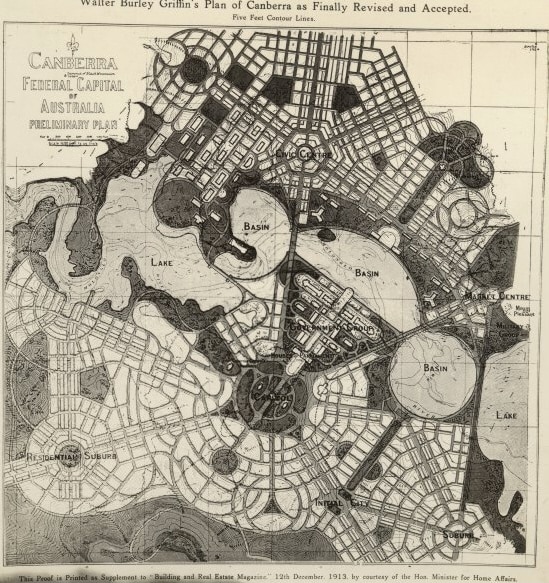
This Tuesday 24 November is the 150th anniversary of the birth of Walter Burley Griffin, the American architect who, in partnership with his wife and close collaborator Marion Mahony Griffin, won Australia’s Federal Capital Design Competition. The Griffins "radical" vision for Canberra was inspired by great thinkers at the turn of the 20th century, but the advent of The Great War was the beginning of the end of the Walter Burley Griffin plan. This year's Marion Mahony Griffin lecture, titled “The magic of two Americans (https://www.library.gov.au/whats-on/events/2026-marion-mahony-griffin-lecture-magic-two-americans)” is being given by Professor David Headon at the National Library of Australia on Tuesday November 24 at 6pm. It will also be lifestreamed on the National Library of Australia’s YouTube (https://www.youtube.com/@NationalLibraryofAustralia/featured) channel. Guest: Professor David Headon of the ANU Australian Studies Institute. David has also been Cultural Advisor at the Na
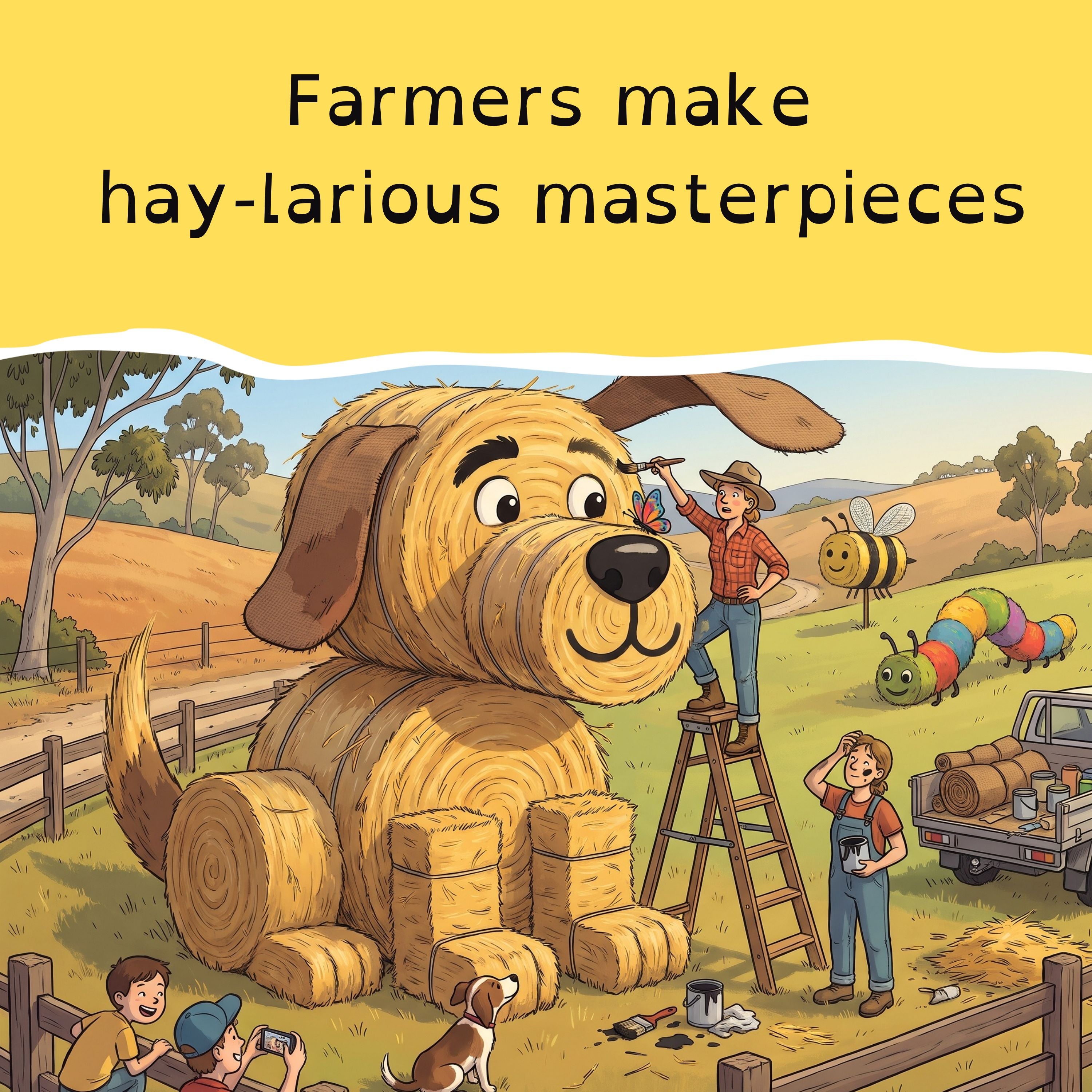
Your daily kids news podcast. Why ‘human’ is word of the year; Whale speed limits in Tahiti; AFLW grand finalists decided; and Toy Story hay sculptures. Cambridge Dictionary has crowned human its Word of the Year for 2026! One incredible photograph of a humpback whale's eye (https://www.bbc.com/future/article/20261118-the-tragic-tale-of-sweet-girl-the-whale-death-that-changed-the-law) is making a big splash in Tahiti! North Melbourne's Kangaroos are one win away from an AFLW three-peat after beating the Sydney Swans! What a cricket cracker! Australia chased down England's total with just one ball to spare, thanks in part to Nikhil Chaudhary's explosive 66 runs and two wickets. Victorian farmers have turned ordinary hay bales into giant cartoon characters (https://www.abc.net.au/news/2026-11-22/upper-murray-hay-bale-art-trail-fire-flood-recovery/107390424)! For the full episode transcript, click here (https://www.squizkids.com.au/wp-content/uploads/2026/11/261123-Quiz-Transcript.pdf). R
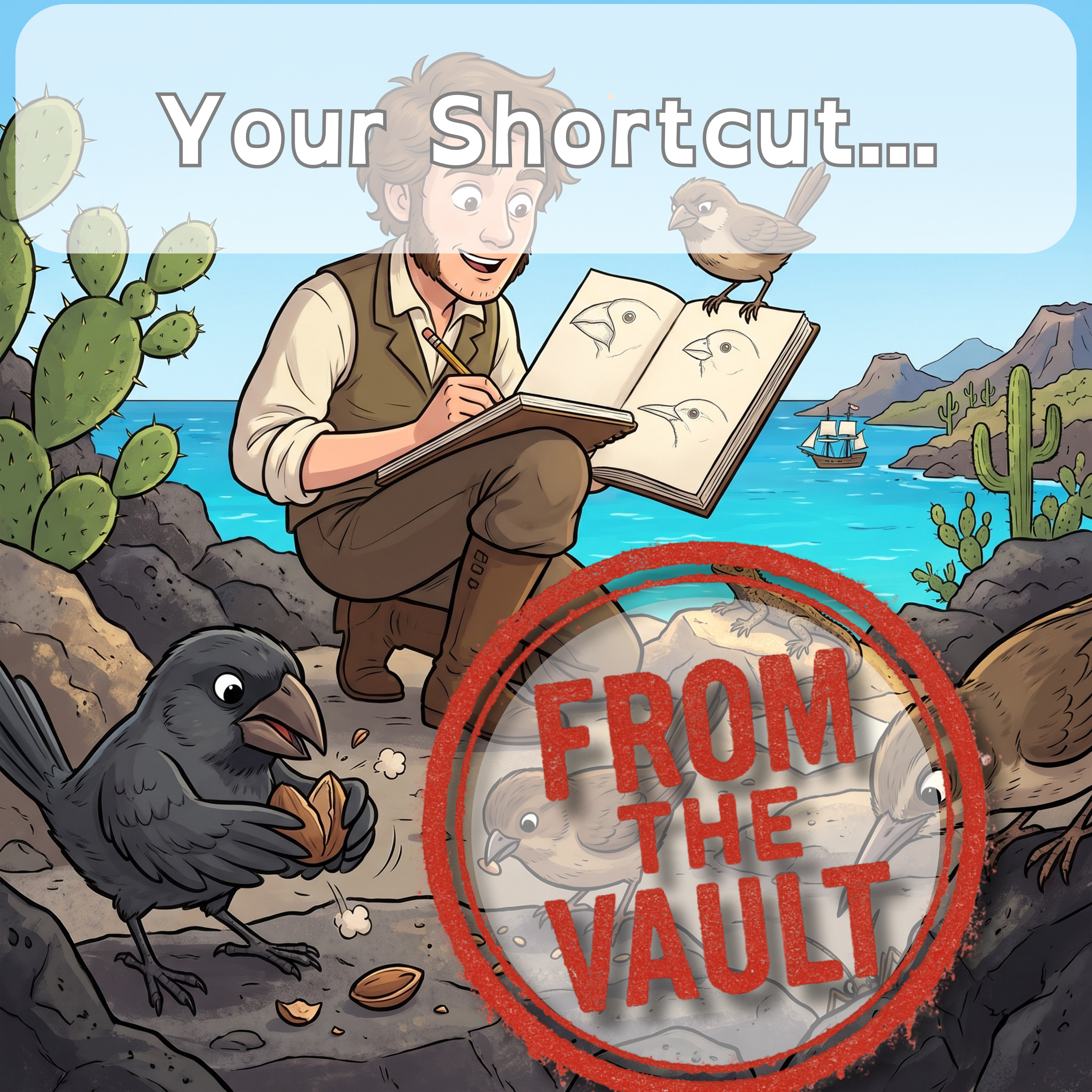
Tuesday 24 November marks the anniversary of the publication of Charles Darwin’s On the Origin of Species in 1859. So this week, we’re dusting off our Shortcut to Evolution to find out how living things change over generations and how all life on Earth is connected. Join Christie and Bryce as they travel back in time in the Squiz Kids Time Machine, dig into the clues fossils leave behind and meet two scientists who came up with the idea of natural selection independently, Charles Darwin and Alfred Russel Wallace. Along the way, find out what bird beaks can tell us about survival and how tiny changes in DNA can help shape life over generations. Listen carefully … there’s a S’Quiz at the end!
Say cheese! Now hold that smile… and keep holding it. In the early days of photography, you might have had to sit still for several minutes to get your portrait taken. So how does the camera on your phone snap a picture in the blink of an eye and save it for later? That’s what seven-year-old Chloe from Northcote, Victoria, wants to know. This week, Christie takes us from photos made on shiny metal plates and cameras you had to send in the post to the millions of tiny pixels in a digital photo. Plus, find out why there might be a grown-up hiding under a blanket in an old baby picture. Got a science question of your own? Email us at [email protected] and Christie might investigate it in a future Science Short.
Welcoming newcomers involves responsibilities for both receiving communities and new arrivals.
Share your view, then see how readers voted. No sign-in required. This poll is shared across stories.
Do you agree or disagree?
Common Quandary
A Common Quandary to discuss
Another conversation to explore, separate from this news story.
A DNA test reveals a family time bomb. Do you tell relatives who would rather not know?
A genetic test reveals that you carry a serious inherited condition. Your siblings and adult cousins may carry it too, but one has previously said they would rather live without predictions about illnesses that cannot yet be prevented.
Can someone's wish not to know outweigh your responsibility to warn them?