Listen through the publisher, then discuss the episode here or arrange an in-person Roundtable. Your city determines where to meet.
Roundtables are designed for groups of four, with a shared subject and room for everyone to speak. Come for discussion, with no dating expectation.
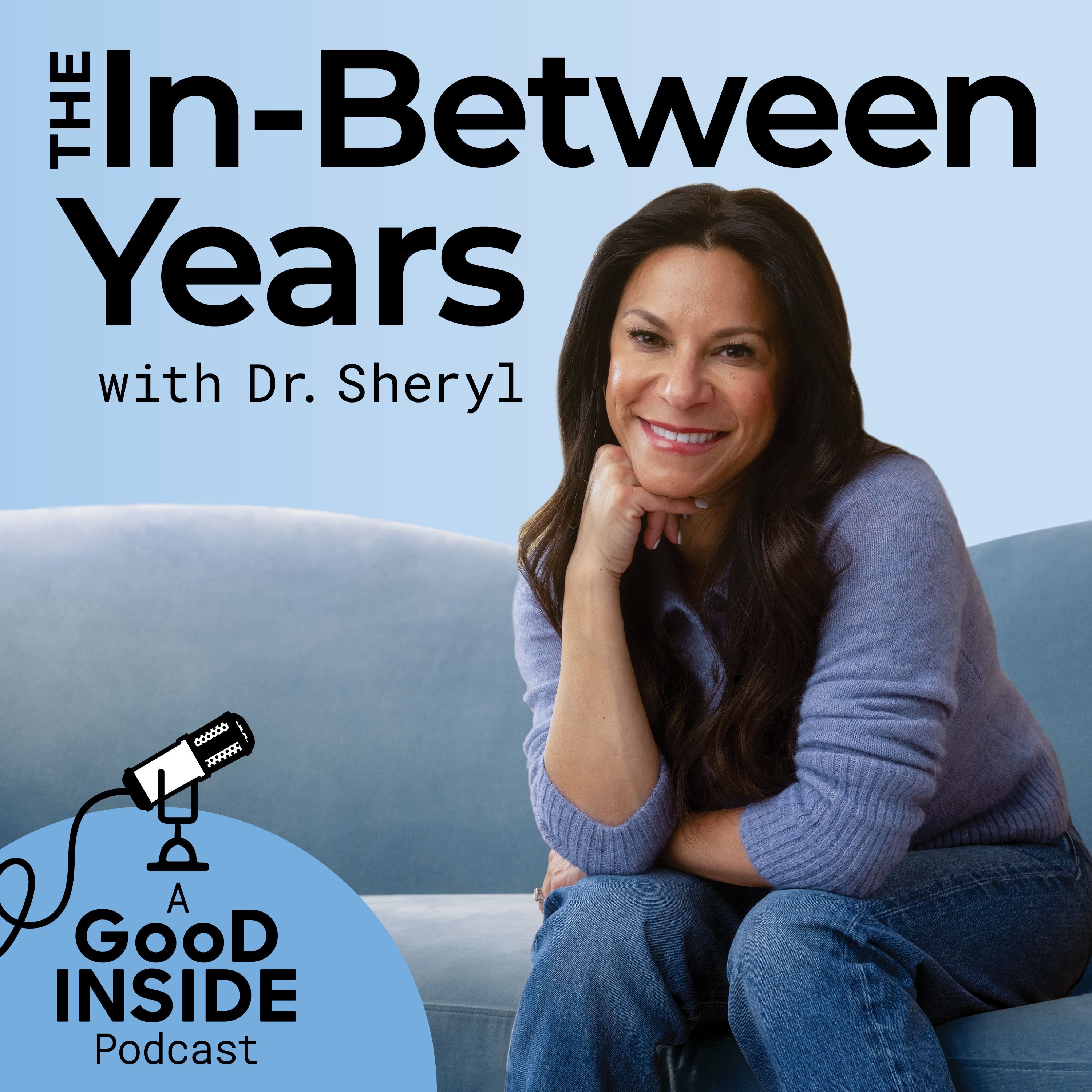
Your son used to tell you everything. Now you get one-word answers and a closed door. Pediatrician and bestselling author Dr. Cara Natterson (Decoding Boys (https://www.amazon.com/Decoding-Boys-Science-Behind-Raising/dp/1984819054), The Care and Keeping of You) joins Dr. Sheryl to explain what's actually happening inside a boy's brain in the years before puberty shows up anywhere you can see it. They get into testosterone's real effect on the brain, the first time a boy encounters porn, what body image actually looks like for boys (it's not the script parents already know from raising girls), and the groundwork parents can lay years before their son is old enough to make the kind of decision that ends up in the news. Natterson also breaks down what moms specifically get wrong about their sons, and who else - dad, a coach, an uncle - needs to be in the room for these conversations. * Thank you to our partners for making this episode possible: Frida: Shop Frida for Kids at Walmart and Amazon today Good Inside’s Dr. Becky and Dr. Sheryl have a new show on YouTube - Teens & Screens, a bi-weekly video series helping parents navigate today's biggest technology questions. Watch the first episode on youtube.com/@goodinside (http://youtube.com/@goodinside). Follow Dr. Hosted by Simplecast, an AdsWizz company.
Episode information is provided by the publisher. Listening takes place on the publisher’s service.
There's no how-to for this human experience and certainly none for being a woman. But there are patterns, seasons, and chapters, each with its own gift and its own invitation. In this heartfelt reflection, Sage Robbins shares what the decades have taught her: the innocence of her younger years, the humbling health awakening of her 40s, and the gradual coming home to herself that she calls the most authentic chapter of her life. Uploaded 07-10-26 Watch more videos like this How Sage and Tony Robbins Finally Became Parents After 20 Years of Trying: https://youtu.be/oUx3Uj9rUTc 5 Simple Ways to Feel More Peaceful Every Day: https://youtu.be/NaYILgJK15g You're Not Broken, You're Just Living the Wrong Identity: https://youtu.be/pqMOp4ROz1E How to Free Yourself from Difficult Emotions: https://youtu.be/hwsHxLR259M Join my weekly newsletter 'The Mirror' to receive these exclusive videos each week: https://www.sagerobbins.com (https://www.sagerobbins.com/) Follow Sage Robbins: Instagram: https
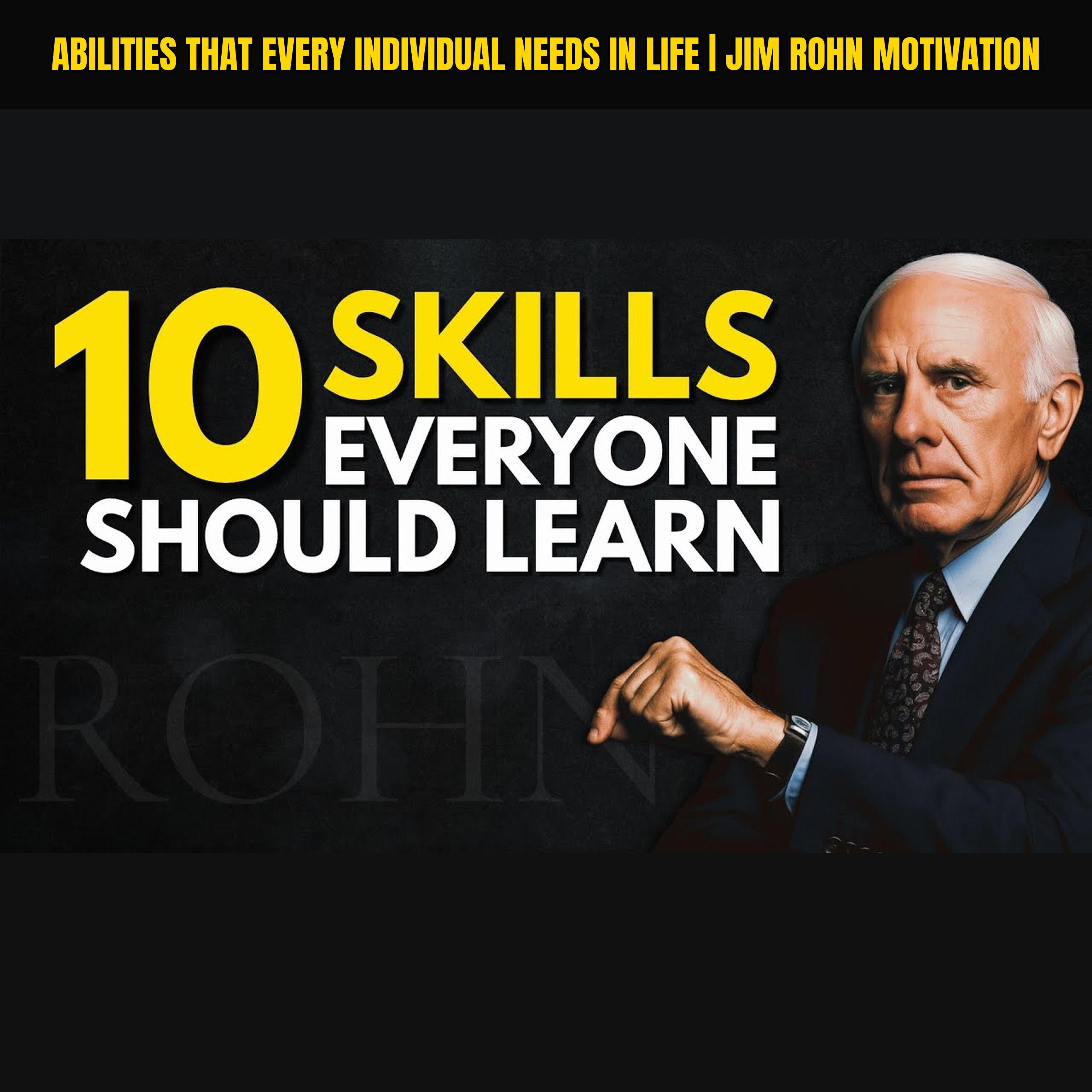
#JimRohnMotivation #JimRohn #JimRohnSpeech In this Jim Rohn Motivation video, discover the 10 timeless life skills that separate those who thrive from those who stay stuck. These aren’t shortcuts or gimmicks—they’re real, buildable disciplines that strengthen your character, sharpen your focus, and help you lead your life with intention. Key Topics From This Motivational Video: Why emotional control is more powerful than raw talent How daily focus compounds into massive results The secret edge of people who delay gratification Why adaptability is more valuable than rigid plans How self-awareness and discipline shape your entire destiny This Jim Rohn-style motivational video breaks down what it truly takes to lead a strong, resilient, purpose-driven life. You’ll learn how to sharpen skills like focus, emotional regulation, adaptability, and decision-making—so you stop chasing the next hack and start becoming the kind of person success finds. These life skills are simple, transferable, a
What actually works when it comes to detecting lies, and why are so many popular ideas about reading people and nonverbal behavior at odds with the scientific research? I talk with Aldert Vrij, one of the world's leading deception-detection researchers, who has spent almost four decades studying these topics. We discuss why what people say is far more revealing than their body language; why the perceived “sexiness” of reading nonverbal behavior has contributed to widespread myths and misconceptions; whether vocal behaviors like pitch, volume, and hesitation contain meaningful clues; and whether there's value in analyzing minor word choices and turns of phrase, as is done in so-called “statement analysis.” We discuss Paul Ekman's legacy as a source of faulty ideas about deception, micro-expression-based deception detection training, and the strategies that popular “body language experts” use to appear scientifically credible while simultaneously promoting ideas that conflict with the sc
Does your relationship feel like home, or does it feel like standing on the edge of something you might lose? In Part 3 of our Relationship Anxiety series, clinical hypnotherapist and former paramedic Martin Hewlett guides you through the process of teaching your nervous system that love doesn't have to hurt to be real. We explore the physical manifestations of anxiety—the tight chest, the 2:00 AM racing mind, and the "stomach drop" when a text takes too long—and provide the tools to "turn down the alarm" of your internal survival response. If you are ready to stop "cherry-picking" evidence of disaster and start building a foundation of trust, this session is for you. In This Episode, We Cover: The Science of Safety: Understanding how your nervous system confuses love with danger. Guided Visualization: A journey into your own "safe room" where you are already enough. Rewiring the Brain: Moving from worst-case disaster reels to the reality of small, daily kindnesses. Breaking the Cycle:
Have you ever told someone, "Thanks a million!" or claimed you have "a million toys to clean up"? We use the word "million" all the time to mean "a whole lot," but have you ever stopped to wonder just how big a real million actually is? Join Mira and Finn on a mind-blowing math adventure as they discover the quiet power of giant numbers! Imagine counting one number every single second without ever stopping to eat or sleep. It wouldn't take a few hours or a long weekend—it would take you about eleven and a half days just to reach one million! And what about its giant neighbor, the billion? Counting to a billion the exact same way would take a whopping thirty-two years. That's a grown-up's whole life so far! In this amazing episode, we won't just look at numbers on a page; we’ll learn to feel their true size. Find out how much space a million grains of rice would take up, and discover exactly how far a million footsteps would carry you. Get ready to stretch your brain and learn why being
This week Kiley and I discuss Carb Cycling while Pregnant. Is it safe to Carb Cycle and break Ketosis during Pregnancy? I also talk about my experience at a conferences were I learned about Carb Cycling and explain the interesting research done on Carb Cycling. I also talk about Ketones for Brain development and more specifically, Ketones for Brain development as an Infant. It’s incredible to know how much significance Ketones for Brain development has as an Infant. Thanks for tuning into my channel. Find more stories and information at my website: www.BozMD.com BOOK-LINK - ANYWAY YOU CAN. AUDIBLE: https://adbl.co/2SLLfS1 PAPERBACK= (Affilate link) https://amzn.to/2Cq1IVC The two most common questions I get ... 1) "Doc, what BLOOD METER do you recommend?" ANSWER: FORACARE: http://bit.ly/2QKGmKG For years my diabetics told me this system was great. I tried several others before I bought this one. I can't count the number of times I have tested my blood only to get an ERROR message from
YouTube star Hank Green (https://www.hankgreen.com/) has spent almost 20 years inside the attention economy. He and his brother John started Vlogbrothers in 2007, built SciShow and Crash Course, and helped build the genre of content an entire generation of kids grew up on. He knows exactly how these platforms are built to keep you watching, because he's spent his career building things people watch. In this episode, Dr. Sheryl talks to Hank about what all that experience has taught him. One of the newest things he’s built is ClockwiseTV (https://clockwisetv.com/), an app he made after one too many fights with his 10-year-old son about screen time: no feed, no autoplay, and a cutoff you set in advance that the app just honors. They also get into what the algorithm is mechanically exploiting in a kid's brain; why "it's inexcusable that I had to build this myself" is both a complaint about the platforms and an admission about himself; and his own family’s positions on AI and chatbots. Fol
Eve Rodsky (https://www.everodsky.com/) wrote Fair Play (https://www.fairplaylife.com/the-book), the book that gave millions of parents a word for the invisible labor of running a household. Years later, Dr. Sheryl asks her what actually changed after releasing the book -- and what didn't. The real conversation starts somewhere Eve rarely goes: what a parent does with the hour they get back once the mental load lifts, and what happens when they don't take it. A story about a mother's hidden journals, discovered only after she died. A walk a parent almost cut short out of guilt, and why finishing it mattered more than it seemed. And the identity Rodsky calls Unicorn Space, the part of a parent that exists outside of managing everyone else's life, and the part their kid is quietly watching for. * Good Inside’s Dr. Becky and Dr. Sheryl have a new show on YouTube - Teens & Screens, a bi-weekly video series helping parents navigate today’s biggest technology questions. Watch the first episo
Regulators should challenge excessive market power even when a company's products are popular.
Share your view, then see how readers voted. No sign-in required. This poll is shared across stories.
Do you agree or disagree?
Common Quandary
A Common Quandary to discuss
Another conversation to explore, separate from this news story.
You both hate the invitation. Which partner has to become the excuse?
A couple receives an invitation neither wants to accept. One suggests claiming the other is ill, reasoning that friends will question a vague excuse but respect sickness. The proposed patient dislikes lying but also wants to stay home.
Is a shared lie fair when only one person's reputation carries it?