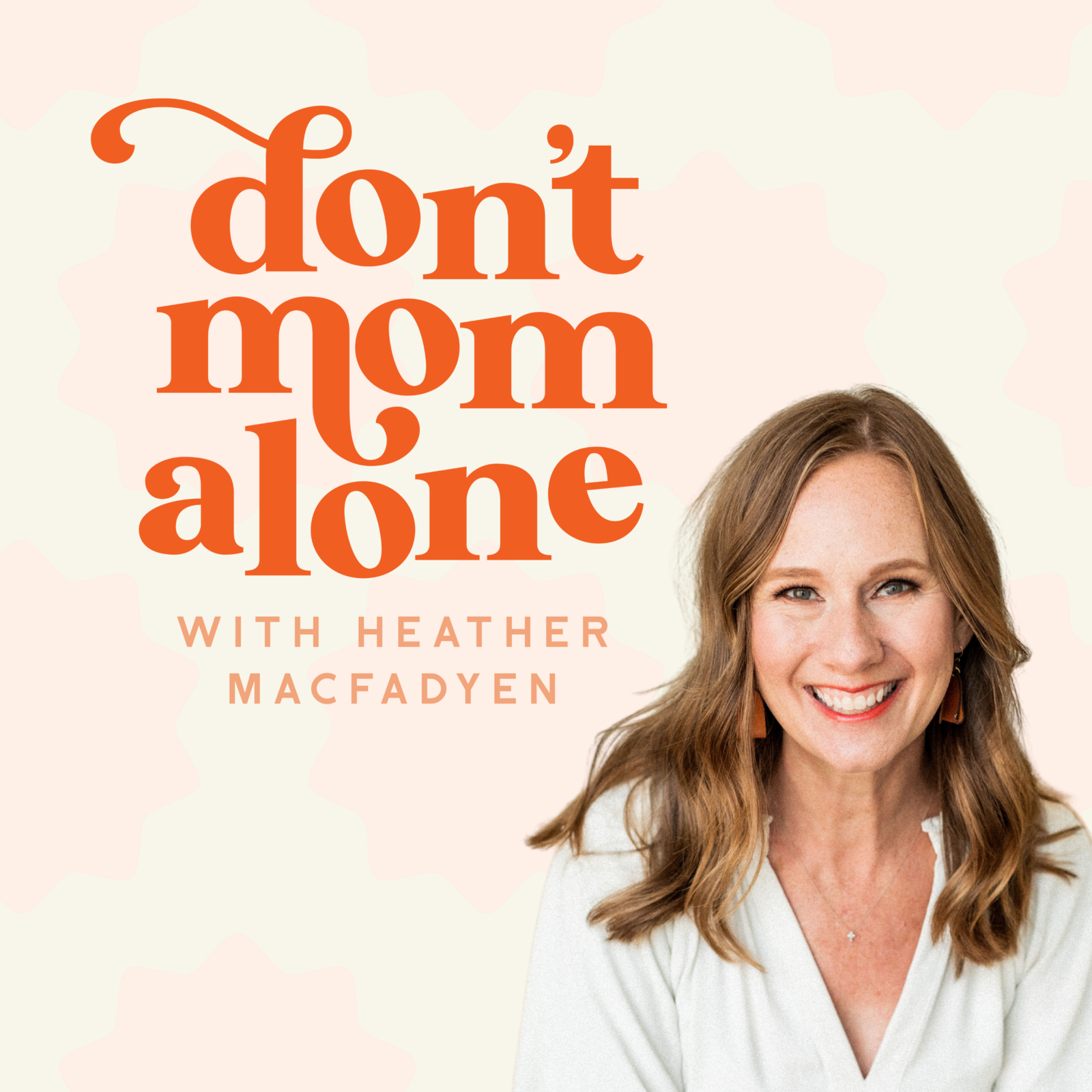
Raising Kids and Trying to Have It All: The Economics of Parental Burnout
52 min
Listen through the publisher, then discuss the episode here or arrange an in-person Roundtable. Your city determines where to meet.
Roundtables are designed for groups of four, with a shared subject and room for everyone to speak. Come for discussion, with no dating expectation.
If you feel like you’re working harder than ever yet constantly falling short at home and in your career, the issue isn’t your ambition…it’s the math. In this episode, economist and author Corinne Low breaks down “the squeeze,” revealing how modern working mothers spend more time parenting than 1960s stay-at-home moms while juggling peak career demands. She unpacks the myths of the “rugrat race,” offers strategies to redistribute the mental load and explains why building durable human capital matters more than over-scheduling your kids. We discuss: How working parents today spend record time with children That the “rugrat race” creates immense pressure to overschedule How to survive “the squeeze” when time and finaces peak Why boundaries beat workplace flexibility for working parents That splitting the invisible mental load with a partner is important and necessary Promoting partners to household co-CEOs can reduce family resentment To connect with Corinne Low follow her on Instagram @corinnelowphd, visit her substack: https://corinnelow.substack.com (https://corinnelow.substack.com/) and purchase her book “Having it All” https://link.amazon/B0akdDMqZ (paid link) Our podcasts are also now on YouTube. Shop Dr. We love the sponsors that make this show possible!
Episode information is provided by the publisher. Listening takes place on the publisher’s service.
One of the greatest ways to honor your parents is to build upon what they gave you and become even better. Seth Troutt, author of Authentic Masculinity: Leaving Behind the Counterfeits for God's Design, (https://link.amazon/B0hlyX1J2) joins Ginny Yurich for an encouraging conversation about raising boys, becoming better parents, and building a family legacy worth carrying forward. Seth offers a refreshing, faith-filled vision of masculinity that begins with humility, embraces mistakes as opportunities for growth, and recognizes that strength and gentleness belong together. He shares an ingenious bedtime storytelling tradition that helps his children prepare for peer pressure, explains why lasting discipline has more to do with what we love than willpower, and recounts the surprisingly freeing parenting advice he received from his own father. Woven throughout is a hopeful reminder that we can build on the good we inherited, change the patterns we didn't want to repeat, and give our chil
My guest today David Williams is a counselor at Jesuit College Preparatory School of Dallas, where he has spent 30 years working with adolescent boys including my own. He's also someone I've learned so much from over the years. I've shared things he's taught me in other podcast conversations, but I decided it was time to bring him on for an entire episode. Raising teenage boys comes with its own set of challenges in a world that constantly tells them to be faster, stronger, smarter, and better. In this conversation, David shares what boys are really navigating beneath the surface, why so many struggle to express emotions or ask for help, and how parents can create a home where they feel safe. We talk about breaking out of the expectations of the "act like a man box," knowing when to step in and when to give them room to grow, and how to raise boys with both high expectations and high support. We also explore the growing pressures of AI, social media, and gambling, and why our ultimate
A kiss can be wonderful. It can create an instant connection, spark romance, or make you feel closer to someone. But a kiss can also have the opposite effect — and sometimes ruin everything. So what makes kissing so powerful, and why can one kiss make such a difference? There's some fascinating science behind it. https://www.scientificamerican.com/article/why-we-kiss/ We spend an enormous amount of time worrying about what's going to change. What's next? What's coming? How do we prepare? But what if we're paying attention to the wrong things? Some of the most important forces shaping our lives never change, and understanding them may be far more valuable than trying to predict the future — something humans are notoriously bad at. Morgan Housel, partner at The Collaborative Fund and author of Same as Ever: A Guide to What Never Changes (https://amzn.to/3SwWn6u) (https://amzn.to/3SwWn6u)), joins me to explain why the things that stay the same may be the most important things to understan
Big News! Clicking Here (https://meditationsounds.supercast.com/) Email List (https://bit.ly/3T010m4) Guided Meditation for Children | Hot Air Balloon Ride AdventureLet your child’s imagination soar in this relaxing guided meditation designed just for kids. In this peaceful hot air balloon adventure, your child will float high above the clouds, exploring the sky while feeling calm, safe, and happy. Perfect for bedtime, nap time, or quiet moments during the day, this meditation helps children slow down, breathe deeply, and find their inner calm. With gentle storytelling and soothing background music, this experience promotes emotional balance, better sleep, and a peaceful heart. Ideal for ages 4–10, but magical for dreamers of all ages. #GuidedMeditationForChildren#KidsMeditation#RelaxationForKids#BedtimeMeditation#MindfulnessForKids#HotAirBalloonMeditation#CalmKids#MeditationStory#PositiveKidsContent#PeacefulParenting guidedmeditation for children, kids meditation, bedtime meditation f
In this episode, Dr. K analyzes candid feedback from over a hundred software engineers facing burnout, loss of joy in coding, and existential dread in an AI-driven tech landscape. He breaks down the friction between developer reality and executive expectations, where corporate pressure to rapidly increase output with AI tools often results in code instability, production incidents, and tedious code-review assembly lines. Drawing on engineering benchmarks like the DORA report, Dr. K outlines tactical communication strategies for developers to manage upward by matching leadership enthusiasm while proactively documenting technical risks. Ultimately, he emphasizes that cultivating emotional resilience, social proficiency, and clear communication provides engineers with their strongest competitive edge during periods of industry disruption. Mental health resources designed by Dr. K and made with love: https://bit.ly/3ZOopgQ Talk to a HG Coach 1-on-1: https://bit.ly/46bIkdo Dr. Dr. K's Guide
How do you get your kids interested in learning without making it feel like homework? In today's episode, we're revisiting some of Ryan's favorite conversations with Kenny Curtis, host of Greeking Out (https://podcasts.apple.com/us/podcast/greeking-out-from-national-geographic-kids/id1483233279) and History Snacks (https://podcasts.apple.com/us/podcast/history-snacks/id1874130976), about how to encourage your kids' interests, nurture their natural curiosity, take those interests beyond a screen, and turn their curiosity into real-world experiences. Check out the full episodes with Kenny Curtis (https://podcasts.apple.com/us/podcast/greeking-outs-kenny-curtis-on-how-ancient-myths-teach/id1430315931?i=1000682597107)! | Apple Podcasts (https://podcasts.apple.com/us/podcast/greeking-outs-kenny-curtis-on-how-ancient-myths-teach/id1430315931?i=1000682597107), Spotify (https://open.spotify.com/episode/2CZPpfwjiwEsvb84EZyyz5), YouTube (https://www.youtube.com/watch?v=qAu5_O-KZNg) Pick up a cop
In this Follow-Up episode, Dr. Mona is joined by registered dietitian Jennifer Anderson of Kids Eat in Color to discuss navigating sugar, sweets and treats with your kids. They explore how using candy as a bribe, hyping up desserts and forbidding sweets can unintentionally place treats on a pedestal. Jennifer recommends approaching food without good-or-bad labels and to help kids learn moderation. They discuss: - How overhyping treats places them on an unhealthy emotional pedestal - That rigid good-or-bad food labels confuse children about eating habits - Bribing with candy reduces kids' intrinsic motivation for vegetables - How finishing plates for dessert disrupts children's natural hunger cues - That parents can promote balanced nutrition without creating food guilt Get Jennifer Anderson's new book, Feed Them Well (https://link.amazon/B0eSbe98q) (paid link) Want more? Listen to the full, original episode. (https://pedsdoctalk.com/podcast/why-we-shouldnt-put-sweets-and-treats-on-a-pe
When your kid says “I hate my body,” every part of you wants to rush in and fix it. I get it. In this episode, I sit down with Zoe Bisbing, a licensed psychotherapist, to talk about why that rush to reassure can backfire and what to say instead. The goal isn’t for our kids to love their bodies all the time and this one changed how I think about my own body too. We discuss: What body positivity actually means How I learned postpartum that I didn’t have to love my body to take care of it Why saying “Don’t say that, you’re beautiful” can shut down a child who is hurting That some kids notice their bodies as young a sage three How even kind compliments about looks can make kids more focused on their appearance How getting help for yourself is one of the best things you can do for your kid To connect with Zoe Bisbing follow her on Instagram @mybodypositivehome and read her Substack: https://substack.com/@bodypositivehome?r=hlot0&utm_medium=ios Our podcasts are also now on YouTube. Shop Dr.
In this Follow-Up episode, Dr. Mona sits down with Lynda Cormier-Hanser, an author and coach, to discuss navigating grief and finding joy. They explore how personal growth and purpose can happen alongside life's hardest moments. They emphasize seeking help, staying connected to gratitude and embracing life to honor what has been lost. They discuss: - How grief and gratitude can exist at the same time - That trusting the process helps through painful seasons of loss - How people can choose to seek treatment and proper support - That healing allows people to grow and choosing joy honors lost loved ones and past dreams Want more? Listen to the full, original episode (https://pedsdoctalk.com/podcast/how-to-stay-connected-to-purpose-and-joy-in-chaotic-times/). Our podcasts are also now on YouTube. Shop Dr. We love the sponsors that make this show possible!
A study's methods should be available before its findings influence public policy.
Share your view, then see how readers voted. No sign-in required. This poll is shared across stories.
Do you agree or disagree?
Common Quandary
A Common Quandary to discuss
Another conversation to explore, separate from this news story.
Someone holds a grocery line spot while their partner fills the cart. Is that cutting?
A shopper with one item stands ahead of you in a long checkout line. Just before reaching the register, their partner arrives with a cart packed to the top and joins them. They insist they were shopping together all along.
Can one person reserve a place in line for an unknown amount of work?