Reality Check: Dan Neidle on Britain's most hated tax
21 min
Listen through the publisher, then discuss the episode here or arrange an in-person Roundtable. Your city determines where to meet.
Roundtables are designed for groups of four, with a shared subject and room for everyone to speak. Come for discussion, with no dating expectation.
Inheritance tax is one of Britain's most unpopular taxes – but why, when so few people actually pay it? Michael Simmons is joined by tax expert Dan Neidle, founder of Tax Policy Associates, to explore why the tax hits the middle classes while the super-rich often escape it. They discuss the Conservatives' plans to exempt family homes, the unintended consequences for the housing market, and Neidle's radical proposal to overhaul the system. Plus, why are Britain's politicians so reluctant to pursue meaningful tax reform? Hosted on Acast.
Episode information is provided by the publisher. Listening takes place on the publisher’s service.
Prince Harry criticizes the Trump administration’s approach to Ukraine and says he would return to military service if asked. Palace Intrigue covers his interview with The Telegraph during a visit to Lviv, his support for Ukraine, and his comments about veterans being prepared to serve again. Former royal protection chief Dai Davies argues that Harry’s public remarks could complicate his security and create difficulties for King Charles. A source close to the Duke of Sussex pushes back, questioning Davies’s decision to discuss Harry’s protection publicly. Royal writer Tom Sykes also criticizes the timing of Harry’s publicity during Prince William and Kate Middleton’s Earthshot visit to India. Plus, Harry discusses life in Britain with Meghan Markle, Prince Archie, and Princess Lilibet during an appearance on ITV’s This Morning. He shares updates on the children’s adjustment to school, Christmas plans, country walks, and pub life. The family’s Winter Wonderland visit also draws coverage
A pilgrimage to England’s biggest Poundland, a celebration of Parliament’s “sitting Fridays” and the GB News presenter who thought Robert Pattinson wasn’t British. Anoosh Chakelian and Will Dunn round up the stories of the week. LISTEN AD-FREE: MORE FROM THE NEW STATESMAN: Hosted on Acast.
When you’re feeling a little blue, eating to feel better can be an appealing proposition. But the reality is we often turn to junk food or sugary treats that are high in calories and packed with salt or saturated fats. Of course, our mood can be impacted by a number of factors and there’s no magic fix that will instantly make us feel better. But there are actually types of food out there that have been proven to improve brain health and thereby beat mood disorders. Which foods are proven to improve brain health? Avocados are rich in Omega 3, aren’t they? Don’t bananas also contain tryptophan? In under 3 minutes, we answer your questions! To listen to the last episodes, you can click here: Do tongue scrapers actually help with bad breath? (https://originals.bababam.com/do-you-really-know/202406140300-do-tongue-scrapers-actually-help-bad-breath) Do our brains really tell the whole story about us? (https://originals.bababam.com/do-you-really-know/202406130300-do-our-brains-really-tell-who
Master the skills that change lives — enroll in your free human behavior course today: https://nci.university/learn Uploaded 01-03-26 Iran didn’t slowly become what you see on the news — it was psychologically taken. In this episode, I break down the real mechanism behind Iran’s transformation: the difference between a people and the system that cages them, how revolutions don’t shift power but shift who gets to use violence, and why fear — not religion — became the enforcement tool. From a modern, secular Iran in the 60s and 70s to a regime sustained by narrative control, surveillance, and compliance rituals, this is a case study in how educated civilizations get hijacked without realizing it. We’ll dissect the psychological trap that started in 1979, why today’s protests are memory colliding with fear, and the three paths Iran is likely to take next. This isn’t just about Iran — it’s a preview of what happens anywhere belief becomes mandatory and truth becomes a liability. Please not
Runaway government spending, rising costs, and a new wave of legal battles over constitutional rights. With Democrats preparing to take control of Congress and several state governments, Republicans are confronting a very different political landscape. John Solomon and Amanda Head welcome Montana Senator-elect Kurt Alme, who says Washington must get serious about reining in spending, lowering inflation, and making everyday life affordable again. Already preparing for his arrival in the Senate, Alme discusses his priorities for protecting Montana's way of life, keeping taxes low, creating good-paying jobs, and working across party lines when possible. He also addresses the challenges Republicans face in the minority, the remaining lame-duck session, and concerns about efforts to expand the Supreme Court and eliminate the filibuster. Then, Southeastern Legal Foundation President Kimberly Hermann joins the show with a warning about potential policy reversals in states where Democrats have
Project Synapse: Markets in Freefall, Fragile Infrastructure, and AI's Perfect Storm The hosts banter through the show's intro before focusing on a sense that "things are out of control," citing a WallStreetBets suicide-hotline post amid a market crash and discussing cascading system failures involving Microsoft, the FAA, and a reported NSA internal communications outage. They argue politicians and leadership lack technical competence and clear messaging, increasing panic, while emphasizing that many problems stem from aging, underfunded infrastructure and complex, brittle software (PHP, NGINX, Java), not proven AI attacks—more a "perfect storm" of crises. They debate whether AI should help fix complexity, stressing critical thinking, accountability, and using multiple AIs to verify each other. In a lightning round they cover Anthropic's IPO performance, mixed reactions and token limits with ChatGPT 6.2 (favoring "Sol" over "Astra"), Google's cheaper Neon model and confusing UX, Loblaw
In this episode of Americano, Freddy Gray welcomes journalist and author David Aaronovitch into the studio for a candid, wide-ranging, and frequently fiery debate as the two clash over whether the media frenzy surrounding Brand is driven by genuine moral reckoning or political hypocrisy, while also locking horns over the legacy and excesses of the MeToo era. Hosted on Acast.
Lara Prendergast is joined by The Spectator's political editor Tim Shipman, broadcaster Jon Sopel and Noble Rot founder Dan Keeling to discuss Andy Burnham's plans to get closer to the EU, Nigel Farage's renewed Brexit campaign and whether Boris Johnson could be tempted back onto the battle bus. Plus, why are so many young men turning to influencing instead of traditional careers? Is Robert Pattinson the right choice for the next James Bond? And Dan shares his tips for finding a great bottle of wine without breaking the bank. Hosted on Acast.
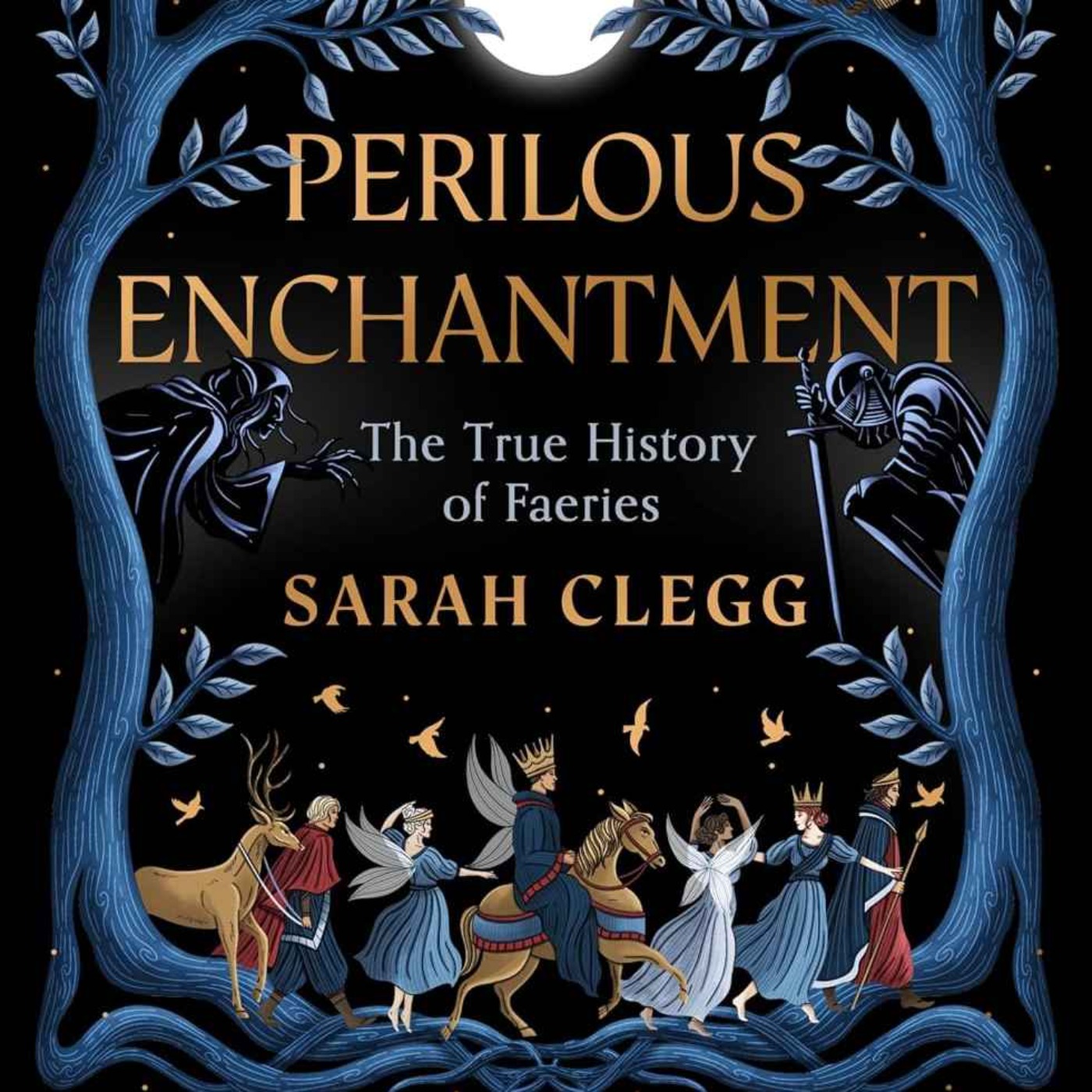
Forget the glitter, wings and magic wands – fairies were once far darker, more dangerous and considerably more seductive creatures. In this episode of Book Club, Sam Leith is joined by historian and author Sarah Clegg to discuss her new book, Perilous Enchantment: The True History of Fairies. From baby-snatching demons and Shakespeare’s sprites to Tinker Bell and the modern romantasy boom, Sarah traces how our understanding of fairies has evolved over the centuries. How did these powerful, often terrifying beings become the innocent creatures of children’s stories? And why are they now enjoying a distinctly sexier revival in popular fiction? Produced by Abigail Brierley. Hosted on Acast.
Public information should be withheld only when there is a clear reason for confidentiality.
Share your view, then see how readers voted. No sign-in required. This poll is shared across stories.
Do you agree or disagree?
Common Quandary
A Common Quandary to discuss
Another conversation to explore, separate from this news story.
A pill can erase your most painful memory without changing anything else. Do you take it?
A safe new treatment can remove the emotional pain attached to one chosen memory while leaving the factual memory intact. Losing the pain might bring enormous relief, but the experience shaped your relationships, choices, and sense of who you are.
Are painful memories injuries to heal or parts of ourselves to keep?