Rewind: The woman who brought down Elizabeth Holmes
3 min
Listen through the publisher, then discuss the episode here or arrange an in-person Roundtable. Your city determines where to meet.
Roundtables are designed for groups of four, with a shared subject and room for everyone to speak. Come for discussion, with no dating expectation.
We’ve got a fascinating episode of Lives Less Ordinary coming your way later today, but we would hate to leave you without a juicy story to listen to before then, so we thought you might be particularly interested right now after the release of the documentary You Can See Everything, to hear our interview with Erika Cheung, who went from a trailer park to a top tech company job, but something was off. She ended up blowing the whistle on Theranos and its founder, Elizabeth Holmes. You'll find ‘Exposing Silicon Valley's multimillion dollar fraud' which we put out on 7 April, 2024 in the Lives Less Ordinary feed. Step into someone else’s life and expect the unexpected. Got a story to tell? You can read our privacy notice here:
Episode information is provided by the publisher. Listening takes place on the publisher’s service.
In today's brief: The Bigfoot rehearsal reel: a new documentary says a 1966 reel shows someone in a Bigfoot suit rehearsing the walk from the 1967 Patterson-Gimlin film. A radar ghost over Japan: a 1956 file in the Pentagon's eighth UAP release describes an F-86D that could never catch a target on its radar. The Forest Service's plaster casts: a 1982 investigation of giant tracks in the Umatilla National Forest, later called a very clever hoax. A flash over Cranbrook: seven fireball reports over British Columbia, not yet confirmed. Connecticut's Haunted History Trail: about 130 sites, from a 1647 witch hanging to the Mark Twain House. The sea pig's secret: an unknown bacterium living under the skin of deep-sea sea cucumbers. Quick hits: more Pentagon UFO files on a rolling basis, a soaked Sasquatch in New Jersey, and the last week of the million-dollar Bigfoot bounty. Every story and source: https://believepod.com/ufo-paranormal-news-23-november-2026/ New episodes every morning. Keep y
Imagine if every big change in our lives came with a whole community stepping up beside us… In this episode, I sit down with Dr Arne Rubinstein, former GP and emergency doctor, founder of the Rites of Passage Institute, and a man who's spent more than 30 years walking young people across the threshold into adulthood. Arne's work began around a fire at his very first men's gathering, listening to a hundred men wrestle with the same handful of wounds. Then in the Emergency Dpt, he kept meeting teenagers who'd pushed it one step too far... kids trying to become adults with nobody there to hold them. He came to believe every young person will go through a rite of passage either way. The question is whether we leave them to create their own, or gather around and help. We talk about why our culture is so good at turning away from the big moments - from first periods to menopause to death - and what opens up when we turn towards them. We explore: Separation, transformation and integration, an
Abbie sits down with actor, and star of ABC's Austin, Michael Theo, to talk about his journey from a nonverbal childhood to a successful screen career. Michael shares how cartoons like Looney Tunes helped him develop speech, his love of villains, and how. He also reflects on how his diagnosis helped explain feeling different, the misconceptions about autistic people and empathy, and how he thinks people can best accommodate for neurodivergent friends. Plus, Michael shares where he's at right now in his journey to buy a house, and find a wife. LINKS: Stream all episodes of Austin on ABC iView: https://iview.abc.net.au/show/austin Follow Michael on Instagram: @mr_a_plus_michael (https://www.instagram.com/mr_a_plus_michael/) Buy Michael's book: https://www.dymocks.com.au/edwards-astonishing-animals-by-michael-theo-and-ella-brissenden-9781761720949 Follow It's A Lot on socials https://linktr.ee/itsalotpod CREDITS Guest: Michael Theo @mr_a_plus_michael (https://www.instagram.com/mr_a_plus_m
A respected postmistress, a murdered man, $32,000 in missing cash, and a woman who claimed to have lived twelve previous lives. In 1921, Lena Clarke became the center of one of Florida’s strangest murder trials. Her defense involved a dead millionaire, a crystal ball, and the extraordinary claim that her alleged victim had tormented her across multiple lifetimes. But was she genuinely convinced of her past lives, or had she found an ingenious way to escape a murder conviction? Then, in the summer of 1973, something enormous and covered in pale, muddy hair began terrifying residents of Murphysboro, Illinois. Witnesses reported bloodcurdling screams, enormous footprints, and a foul-smelling creature lurking near the Big Muddy River. Police investigated, a trained search dog refused to enter an abandoned barn, and the legend of the Big Muddy Monster was born. More than fifty years later, the case remains officially open. Join Kat and Jethro for two remarkable stories involving a bizarre h
This week, I'm talking about a particular kind of person: someone who's always doing things for everybody else, who never seems to have a moment for themselves, and who is absolutely determined that you should know about it. We're probably all guilty of a bit of martyrdom from time to time. I certainly am. The theatrical sigh as you empty the dishwasher for the third time; the "I'll just have a piece of toast"; the "no, no, you sit down, I'll do it" when what you really mean is "I can't believe you're sitting down while I'm doing this." But when martyrdom becomes someone's habitual way of relating to others, it can leave you feeling grateful and resentful at exactly the same time. Today's dilemma comes from a listener whose mum does everything for everyone, and then complains about how much she has to do. She'll spend the morning cooking a family lunch, refuse every offer of help, only to spend the afternoon telling everyone how tired she is. Now, our listener is finding herself snappi
Siren is back to talk all about her slut weekends, throwing wild sex parties, her BBC gangbangs, and her newly poly marriage. Tune in to hear all the details including how her ethically non-monogamous marriage is set up, the huge BBC birthday party she and her husband are planning and what's going to go down, the recent sex party she threw at her house and how she set everything up, who attended, how she got the party started and exactly what went down throughout the night, how and why she's now helping other people throw their own sex parties and how she sets them up for success, how she vets the people who want to attend her parties and what you should and shouldn't do if you want to get invited, her slut weekends and why she enjoys them more than hotel takeovers, what went down during her recent slut weekend with her girlfriend, how they hooked up with 14 guys over three days and exactly what went down, how she and her husband decided to become poly, why she wasn't into it at first
Tammie Jo Shults dreamed of flying fighter jets. But sexism meant she was rejected repeatedly by the military. She persisted and, eventually, a US Navy recruiter gave her the chance to become one of their first female fighter pilots. She spent 10 years flying fighter jets and training other pilots, honing the skills and composure that, one day, would allow her to land a beleaguered passenger plane on a wing and a prayer. After leaving the US Navy Tammie Jo joined Southwest Airlines as a civilian pilot. On 17 April, 2018 she was the captain of a routine passenger flight when debris from a catastrophic engine failure smashed a hole in a passenger window at 30,000 feet. In cockpit recordings from the incident Tammie Jo sounds cool, calm and precise, just relaying the facts. The plane was flying sideways on one engine. Harnessing all the skills she gained from training the Navy’s fighter pilots she managed to wrestle the aircraft safely onto the runway in Philadelphia. After the window bro
Diane Sheehan was in her early 60s when she finally met the son she thought had died at birth. In her early 20s Diane was working as an au pair in Canada when she fell in love with a neighbour and became pregnant – only realising months later after moving to Sydney on her own. Diane's strict Roman Catholic upbringing in New Zealand meant she didn't tell anyone what had happened, including her family – the shame of being a single and unwed mother was too great for her. When she gave birth in hospital the nurses told her that her baby had died, and took him away. Distraught, she threw herself into her studies, qualifying as a veterinary surgeon and telling no-one what happened to her. Until, 42 years later when she was in her early 60s, she received an email from a man saying he was her son. Diane soon discovered that she had been part of Australia's former policy of forced adoptions that affected around 250,000 others. What followed was a moving reunion with her son and a focus on forgi
Growing up gay in Jamaica, the Booker Prize winning writer fought against his sexuality. Marlon James is now one of the world’s most celebrated writers, but he grew up feeling like an outsider. Fearing ostracisation for being gay, he voluntarily entered into an exorcism at church, but the process didn’t work as intended, and Marlon broke with organised religion. His burgeoning career as a writer took him away from Jamaica, to newfound freedoms, and eventually literary acclaim. His new Booker Prize shortlisted novel, The Disappearers, is about the Jamaican underground gay scene that he never got to experience. Presenter: Jo Fidgen Producer: Harry Graham Step into someone else’s life and expect the unexpected. Got a story to tell? You can read our privacy notice here:
Scarce treatments should be allocated by medical need rather than ability to pay.
Share your view, then see how readers voted. No sign-in required. This poll is shared across stories.
Do you agree or disagree?
Common Quandary
A Common Quandary to discuss
Another conversation to explore, separate from this news story.
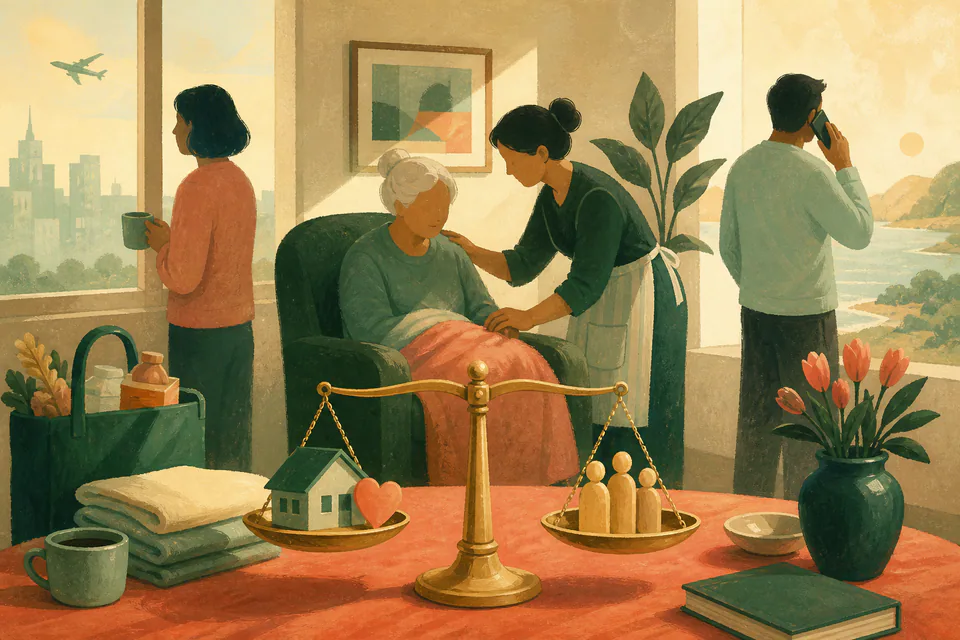
One sibling did years of caregiving. Should they get more of the inheritance?
One sibling lives near an aging parent and handles appointments, errands, and emergencies. The others live far away, call regularly, and assume the nearby sibling will receive the same inheritance despite years of unpaid work.
When does family care become labor that should be repaid?