Ridgeline Minerals: Why Is the Market Giving Its Exploration Assets No Value?
15 min
Listen through the publisher, then discuss the episode here or arrange an in-person Roundtable. Your city determines where to meet.
Roundtables are designed for groups of four, with a shared subject and room for everyone to speak. Come for discussion, with no dating expectation.
Ridgeline Minerals CEO Chad Peters joins Trevor Hall at the Precious Metals Summit in Zurich to discuss ongoing exploration at the Selena Project in Nevada and the company's capital allocation strategy following its C$32.7 million asset sale. Peters provides an update on South32-funded drilling at Selena, where the current program aims to demonstrate the continuity and scale of the project's massive sulfide discovery. The conversation examines South32's approaching US$10 million earn-in milestone, potential joint venture structures, and plans for follow-up drilling at the Big Blue Project in 2027. With approximately C$25 million in cash and additional marketable securities, Peters discusses Ridgeline's valuation disconnect, potential M&A opportunities, and how the company intends to deploy its capital to generate shareholder value. The interview also covers Ridgeline's strategic investment in Spartan Metals and potential opportunities to monetize that position.
Episode information is provided by the publisher. Listening takes place on the publisher’s service.
Bitcoin plunges to $55,000 as massive crypto liquidations and billions in Bitcoin ETF outflows fuel extreme bearish panic. BlackRock's IBIT suffers a reported record $541 million single-day outflow, while Peter Schiff predicts Bitcoin could crash below $10,000. With Bitcoin more than 50% below its all-time high, are the bears finally winning? Michael Saylor reveals how he survived a devastating 99.8% collapse in MicroStrategy stock during the dot-com crash and went on to build the world's largest publicly traded corporate Bitcoin treasury. Meanwhile, Tom Lee describes the current market as MAX PAIN. Is Bitcoin approaching a historic turning point? Prefer video?
Bitcoin doesn't excite Ran Neuner anymore, and the Crypto Banter founder explains where he sees the real opportunity in crypto now. Ran tells me why he took profits at $84K, how he's deploying that cash now that sentiment has hit extreme fear, and the two tests he's watching to tell whether the bull market is still on. He explains why he thinks tokenized stocks and AI agents will run on blockchain rails, how he values tokens on "pressure" instead of FDV, why he thinks the old Bitcoin crowd is moving to Zcash, and how worried he really is about quantum. We also get into the midterms, World Liberty Financial, Solana Breakpoint and STRC. Recorded Thursday, November 19. In this episode: 00:00 Intro 01:10 Is the bull market still on? 02:17 What a correction is supposed to do 03:28 Two tests for the bull market 04:12 Why Bitcoin excites Ran less now 05:11 Trading tokenized Anthropic before the IPO 07:24 How AI agents will move your money 09:31 Why agents will settle on blockchain rails 13:25
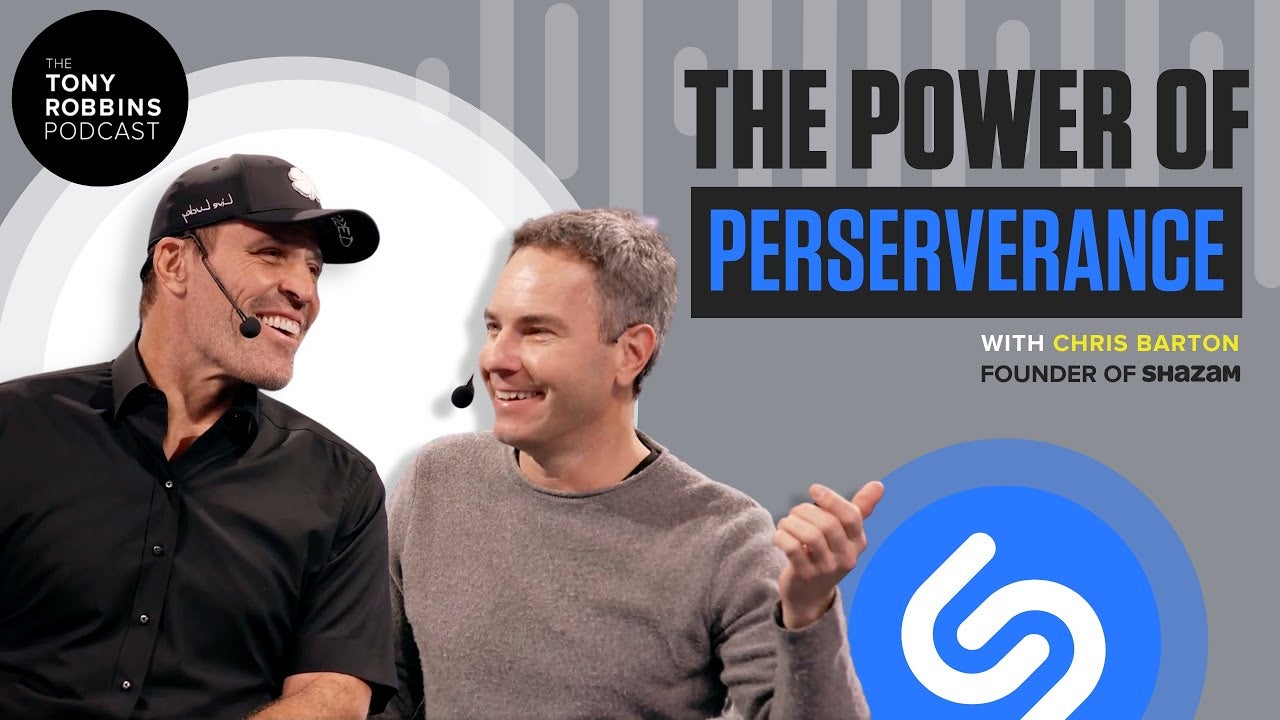
In this video, we drop you inside a Tony Robbins Business Mastery seminar for a 1-hour masterclass in how to take a far-fetched seemingly impossible business idea all the way from your brain to market. Uploaded 30-09-22 You’ll see Tony Robbins in a one-on-one interview with the co-founder of the wildly popular music recognition app, Shazam. Shazam is one of those magic tech innovations that stopped us in our tracks with its astonishing capability the first time we saw it. Launched in the summer of 2002, Shazam just turned 20 years old, and in those 20 years, it has surpassed 70 billion song I.D.s with its 225 million monthly users around the world. All of this began in 1999 when Chris Barton, then an undergrad student at UC Berkeley, founded Shazam Entertainment with his business partner. Watch the video for the whole story of how Chris’s creation led to an Apple acquisition in September 2018 for a reported $400 million. Tony digs into the mindset of a true creative entrepreneur and ex
This episode is brought to you by Sarmaya Partners. Learn more about Sarmaya’s LENS ETF, their full data and comparison, including performance here: https://sarmayaetf.com/ In this episode of Other People's Money, Max Wiethe sits down with Muddy Waters Capital founder Carson Block to discuss his firm's explosive new short thesis on Nvidia. Block breaks down the alarming connections between a former Nvidia executive and a former SMCI executive recently implicated in a major chip smuggling scandal. The conversation dives deep into the national security implications of dual-use technology and how the ongoing geopolitical tug-of-war between the US and China is reshaping the semiconductor sector. Tune in to hear why Block believes this scandal goes far beyond CEO indiscretions and could trigger a massive regulatory reckoning for Silicon Valley's biggest players. Follow Muddy Waters on X: https://x.com/muddywatersre Follow Max on X: https://x.com/maxwiethe Follow Other People’s Money on: App
In this Jim Rohn Motivation speech, discover what real leadership is made of — not titles, not applause, but deep-rooted service, clarity, self-mastery, and consistent influence that shapes others even in your absence. Leadership begins inside, long before it’s ever celebrated outside. Key Topics From This Motivational speech: Why leadership is influence and not position The role of consistency, clarity, and self-leadership How to build a culture that sustains excellence Why feedback, proximity, and personal energy matter How legacy, not applause, defines true leadership This Jim Rohn motivational speech teaches that true leaders aren't born at the podium — they're formed through daily discipline, decisive action, relentless service, and unwavering self-mastery. Leadership isn't loud; it's lasting. Build a foundation others can follow with trust and belief, not hype and noise. This Jim Rohn Motivational speech Is Perfect For: Aspiring leaders ready to build influence that lasts Entrepr
Monday 23rd November 2026 Phil and NAB’s Taylor Nugent unpack Friday’s sharp, AI-driven sell-off on Wall Street—where the VIX spiked past 29 and the Nasdaq plunged 5.3% to log a sixth straight loss. Nvidia tumbled 14% following Reuters reports of an SEC accounting probe, while Anthropic fell 8.5% to close near 88.90, after surging past111 following its IPO debut. The risk-off wave sparked a rally in safe-haven bonds—pushing 10-year US Treasury yields down 10 basis points below 5%—and lifted the yen and Swiss franc, while weighing heavily on the Australian dollar. Curiously, precious metals bucked the safe-haven trend—with Comex gold sliding 4.6% and copper falling another 3%—as markets digested stronger UK retail sales, slightly softer Japanese inflation, and a holiday-shortened week ahead, with global PMIs today’s highlight. Hosted on Acast.
Is Namibia the next major frontier for copper exploration—and how should mining investors navigate a brutal selloff in gold and copper equities? Mining Stock Daily heads to Namibia for a special long-form conversation recorded at Omaruru Lodge. Trevor Hall is joined by Brandon Macdonald, CEO of privately held Red Dune Resources, along with investors Koala and Panda, following several days visiting mineral exploration projects in the country. The discussion begins with Namibia's potential as a mining jurisdiction, including its infrastructure, permitting environment, geological opportunities, and growing appeal to international exploration capital. Brandon explains why he made the move from Canada's Yukon to Namibia and what attracted him to Red Dune's massive West Kalahari copper exploration project. The group explores the geological opportunity along the underexplored Namibian extension of the Kalahari Copperbelt, the importance of building a strong technical team, and why Red Dune ma
How big could the Antino Gold Project in Suriname become? Founders Metals VP of Corporate Development Katie MacKenzie joins Trevor Hall at the Deutsche Goldmesse in Frankfurt to discuss another successful year of exploration, including high-grade drill intercepts of 54 meters at 8.5 g/t gold and 27 meters at 20 g/t gold from separate discoveries. With five company-owned drill rigs operating, Founders expects to exceed 75,000 meters of drilling in 2026 while continuing to expand Upper Antino and test emerging discoveries across the property. MacKenzie explains why the company is resisting pressure to publish a maiden resource estimate, how Gold Fields' strategic investment is supporting exploration, and why approximately C$80 million in cash provides considerable flexibility heading into 2027. The conversation explores whether Antino could ultimately host multiple significant gold deposits rather than a single discovery.
Tiernan Gold CEO Fausto Di Trapani introduces the Volcan gold project in Chile’s Maricunga belt. The discussion explores its 9.8 million-ounce resource base, proposed heap-leach operation, low strip ratio and potential annual production of 330,000 ounces during the first decade. Di Trapani outlines the company’s priorities: advancing a prefeasibility study, completing environmental baseline work and submitting an environmental impact assessment. He also explains the importance of existing water rights, ongoing metallurgical testing and exploration opportunities across six kilometers of untested strike. With approximately C$47 million in cash, Tiernan says it is funded through its upcoming technical studies and environmental permitting submission.
Documentaries should disclose editing choices that substantially affect how events are understood.
Share your view, then see how readers voted. No sign-in required. This poll is shared across stories.
Do you agree or disagree?
Common Quandary
A Common Quandary to discuss
Another conversation to explore, separate from this news story.
Your boss offers lessons to make you sound “more professional.” Do you take them?
Clients sometimes ask an employee to repeat themselves during calls. Their manager offers company-paid speech coaching framed as clearer communication, but the employee experiences the request as pressure to hide part of their identity.
When does improving communication become demanding conformity?