Ross Edgley: Why I Pushed Myself To Extremes And What It Cost Me (E448)
79 min
Listen through the publisher, then discuss the episode here or arrange an in-person Roundtable. Your city determines where to meet.
Roundtables are designed for groups of four, with a shared subject and room for everyone to speak. Come for discussion, with no dating expectation.
For years, Ross Edgley believed there was no problem that couldn't be solved by pushing harder. As an ultra-endurance athlete, he swam around Great Britain, took on extraordinary physical challenges and repeatedly tested the limits of human performance. But behind that determination was a personal struggle he couldn't outrun. Ross opens up about losing his father, using physical suffering to cope with grief, and the moment he realised that the struggle alone was no longer enough. He explains how finding a purpose bigger than himself changed his approach to endurance, and why grit is something we can all train. An honest look at the difference between pushing yourself to your limits and understanding why. Ross’ latest book How to Hero is available now: https://linktr.ee/HowtoHeroBook GoHenry Build smart money habits that last a lifetime at https://www.gohenry.com/uk/with 1 month free to get started! IFS - award-winning Asset & Service Management software Reimagine your operations at: https://highpfrmc.com/HPP-IFS-AU Vitality We've partnered with Vitality because our philosophies align perfectly: healthy habits build high performance and can lead to a healthier, longer life. Find out more about health and life insurance with Vitality: https://highpfrmc.com/vitality-hpp-au Hosted on Acast.
Episode information is provided by the publisher. Listening takes place on the publisher’s service.
Get the 200+ Page Optimal Living Daily Workbook (PDF) - Free. Want to turn today's episode into an actionable plan? Episode 4233: Kate Galliett explains three reasons we make health, fitness and life harder than they need to be: ignoring how the body works as a connected system, trusting only extreme intensity, and leaking the energy that fuels motivation and discipline. She makes the case that appropriate effort, not maximum effort, is the only sustainable path to lasting results. Read along with the original article(s) here: https://fitforreallife.substack.com/p/why-you-make-everything-harder-than Quotes to ponder: "The better way is to give appropriate effort and get appropriate results. This is the only sustainable way." "If you try and live at the extremes, you will constantly ping-pong back and forth from one extreme to the other." "Just imagine - you might not actually lack discipline after all, you just might be leaking energy that feeds your ability to be disciplined." We spen
What you’re about to hear is a conversation between myself and Dr. Aseem Malhotra, a renowned consultant cardiologist, and close friend of RFK Jr.. I mention that upfront to address the elephant in the room. Our conversation centers around the latest research that colleagues and I have published on LDL cholesterol, ApoB, and their implications for heart disease, particularly in the context of metabolic health. Why are these new findings so important for understanding cardiovascular risk? Is High LDL and ApoB dangerous in the context of Metabolic Health? How can meditation impact heart disease prevention and overall heart health? Why does the scientific community move slowly when it comes to adopting new research? I encourage you to keep an open mind. Scientific narratives, health models, and medical practices evolve as new data emerges. This is the essence of the scientific method. Please Watch THIS Video: https://youtu.be/a_ROZPW9WrY NEW Paper: https://www.jacc.org/doi/10.1016/j.jacad
Get the 200+ Page Optimal Living Daily Workbook (PDF) - Free. Want to turn today's episode into an actionable plan? Episode 3614: Kym Wilson shares how she left a corporate finance career to pursue scuba diving and a 2,000-kilometer pilgrimage, and the panic she felt when her savings fell behind her peers. She explains why she came to see that net worth and life's worth are different measures, and why the experiences that change us also ripple out to others. The takeaway is that the cost of neglecting a dream can be greater than the money it takes to follow one. Read along with the original article(s) here: https://tinybuddha.com/blog/value-following-dreams-dont-make-money/ Quotes to ponder: "When you answer the call to adventure, you never know where you will end up." "Your net worth is not your life's worth." "I know that one day, when I am old and dying, I won't regret the things I never had, but I will regret the moments I didn't seize and the adventures and growth I never experien
Today, Mel is taking 58 years of hard-earned life lessons and is packing them into under an hour, to save you some of the time, frustration, and worry it took her to learn them the hard way. In this episode, Mel is fielding real questions from listeners around the world. From making friends and bouncing back from rejection to feeling stuck in life and wondering if it's all going to work out, Mel is sharing the advice she wishes she'd known sooner. And she's not holding back. You'll hear Mel get personal about her own setbacks, and what she's learned about starting over, going after what you want, and trusting yourself when life doesn't go according to plan. You'll learn: -How to stop worrying about the future when nothing feels certain -How to make big life decisions, including whether or not to have kids -How to make new friends as an adult -What to do when you get rejected from your dream job -What to do when a friend ghosts you -How to stop procrastinating and finally follow through
Sam McClure is an award-winning Journalist, TV personality, Radio figure & podcaster. This one is fascinating! Whatever you thought life was like as a journalist or your pre-conceived opinion of Sam is about to change after this one. Sam is about to open up like you haven't heard him before. Sam shares his Quill Award winning investigation into the Adelaide training camp and the backlash it copped. Including winning the award, having it stripped and then it being reinstated. Plus, the legal issues that followed. What came after that was a dark period in Sam's life...which he opens up about. We talk about the passion of journalism and if it is really there, why he isn't on social media and what it on and off the record actually means! Plus, the tension between clubs, journalists, players and administrators when stories are broken. Sam talks about the obsession with trade week and the broader media landscape. Which ones he loves...and which ones not so much. And possibly the craziest sto
Tennessee Volunteers overpower LSU Tigers with a 27-13 victory, fueled by a dominant defensive performance and clutch fourth-quarter runs from Faizon Brandon. Can Josh Heupel’s squad finish the season strong and secure a coveted College Football Playoff spot? The conversation focused on Tennessee’s resilience, emphasizing the effective quarterback rotation between Faizon Brandon and George MacIntyre, key stops from Arion Carter and TJ Metcalf, and the “Neyland Effect” that rattled LSU. A key theme that emerged was Jim Knowles’ elite defense, posting eight sacks and stifling LSU’s high-powered offense. Several points were raised, including officiating controversies, handling injuries to stars like DeSean Bishop, and Lane Kiffin’s failed attempts at mind games. The discussion explored playoff implications, the significance of the upcoming game against Vanderbilt, and whether this Volunteers team has what it takes to go all the way. Click HERE to listen now. Part of the Locked On Podcast
Jimmy Carr, Mo Gilligan, John Bishop and Sara Pascoe help Jake and Damian work out what comedians know about performance that the rest of us can use. Stand-up might be the most exposed job there is. There’s no team and no script to hide behind, and the feedback is instant: the room laughs or it doesn’t. Jimmy Carr explains why he thinks about Mike Tyson at the start of every show. Mo Gilligan says why he sits in the back row at every soundcheck. John Bishop remembers how he took control of the Comedy Store just by sitting down, and Sara Pascoe explains why an athlete’s self-talk would never work for her, and what she tells herself instead. Jake talks about the months of obsessive preparation behind his early years presenting Formula 1, what John Motson taught him at his first major tournament, and how Rio Ferdinand used calm to unsettle strikers. Damian brings the science: the snap judgements we make in seconds, the status games actors play with silence, why calling nerves “excitement”
Manchester United look set to have a new manager and he doesn’t arrive alone. Mauricio Pochettino and his assistant Jesús Pérez have worked side by side since Espanyol, through Southampton, Tottenham, Paris Saint-Germain, Chelsea and the USA. Earlier this year they sat down with Jake and Damian together. It’s as close as you’ll get to sitting in their staff room before they walk into Carrington. In this conversation: The statement Mauricio refused to put out at Tottenham, and how it protected a young Harry Kane Six o’clock every morning, going through the squad from player one to twenty-five, and how they decide when to challenge a player and when to put an arm round him What Cole Palmer told them in their office after only a handful of sessions at Chelsea Walking into a Chelsea squad that had just finished twelfth, and why the foundations came first Messi, Neymar and Mbappé in one dressing room, and the substitution that even Mauricio’s wife questioned Why tactics are the easy part, a
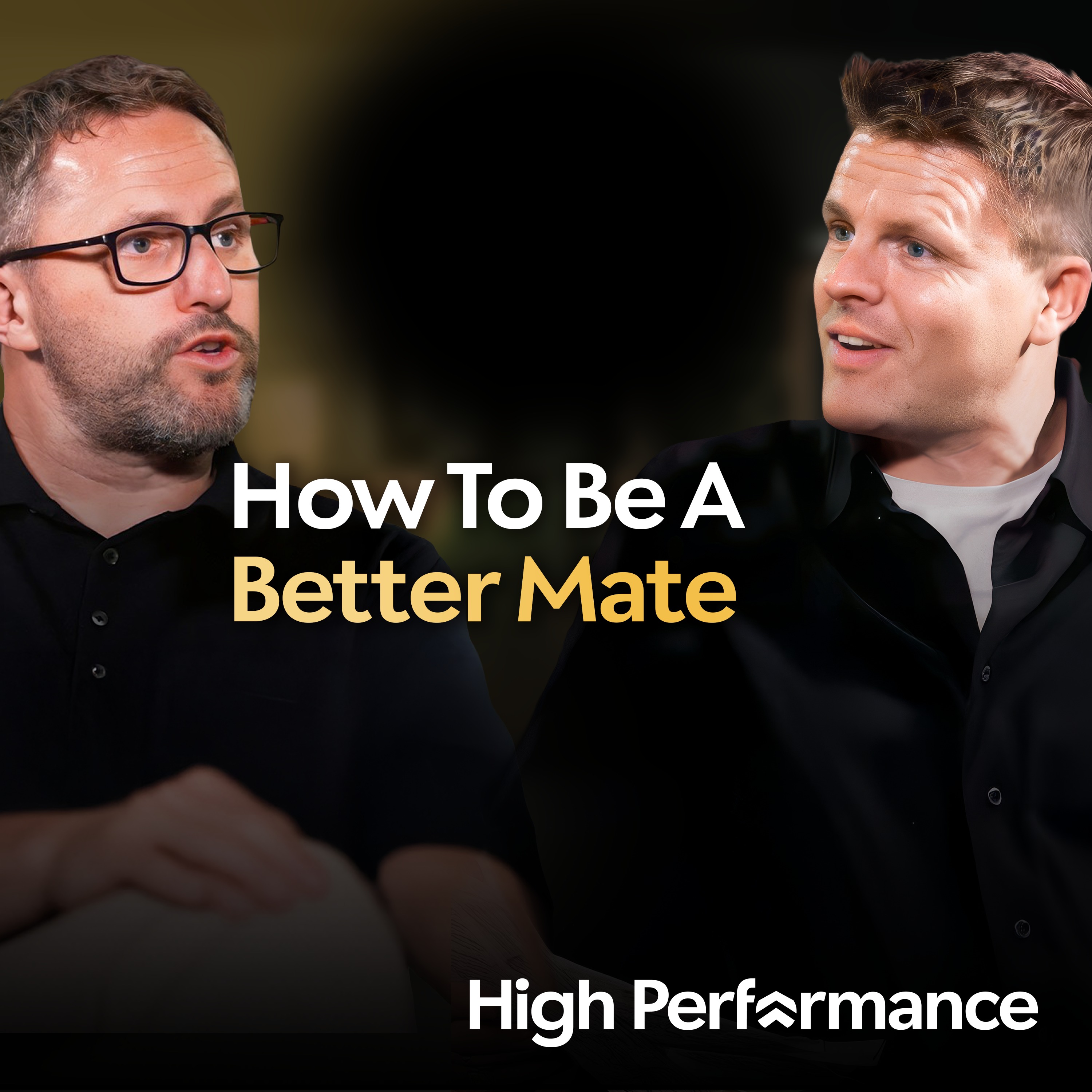
On this weeks episode Jake and Damian mark Movember by taking on one of the biggest threats to men’s health: loneliness. We recently interviewed Kevin Sinfield about his relationship with Rob Burrow which inspired this week’s question: what does it really take to be a better mate? The answer starts with the small things you do for someone and ends with the things you finally say out loud. Kevin Sinfield remembers the last time he saw Rob, and the smile he always got Dr Rangan Chatterjee tells the story of the patient he prescribed friendship instead of antidepressants Alain de Botton shares the one brave question that builds real trust Aldo Kane describes the small, free act he did for his teammate every shift in the middle of the Atlantic Josh Warrington recalls the mate whose honesty gave him exactly the kick he needed Shane Parrish explains the “patch of grass” between you and everyone in your life, and what happens if you stop watering it Sarina Wiegman shares her sister’s request
Products should disclose expected service life and repairability before purchase.
Share your view, then see how readers voted. No sign-in required. This poll is shared across stories.
Do you agree or disagree?
Common Quandary
A Common Quandary to discuss
Another conversation to explore, separate from this news story.
A parent clearly built the winning science project. Who should lose the prize?
An elementary student submits an elaborate science project far beyond their apparent ability. The parent proudly describes working together all weekend, and the child clearly learned something, but other students completed simpler projects themselves.
What is a fair response when help improves learning but distorts achievement?