Listen through the publisher, then discuss the episode here or arrange an in-person Roundtable. Your city determines where to meet.
Roundtables are designed for groups of four, with a shared subject and room for everyone to speak. Come for discussion, with no dating expectation.
The investigation follows Brian Miller more than 1,000 miles from Phoenix to Everett, Washington, where two attacks on women along a public trail offer disturbing echoes of the Canal Murders. One encounter with law enforcement could have exposed Miller years earlier, but a gap in the DNA system meant the Phoenix Canal Murders would remain unsolved for another 12 years. Want the full story?
Episode information is provided by the publisher. Listening takes place on the publisher’s service.
True Crime Tuesday Presents: The Candy Man Murders: Three Years of Terror in Houston with Podcaster/ Author Jen Schaffer! In the early 1970s, teenage boys began disappearing across Houston, Texas. One by one, they vanished, leaving behind empty bedrooms, unanswered questions, and a city that chose not to look too closely. Police called them runaways. Parents were told to be patient. Lack of concern caused a pattern to go unnoticed, until a single phone call changed everything. On August 8, 1973, a teenage boy confessed to killing a man and exposed a horror hidden in plain sight. What followed was one of the most disturbing discoveries in American criminal history: a network of abduction, torture, and murder that had operated undetected for years. In The "Candy Man" Murders (https://wbp.bz/candymanmurders) (opens in new tab) (https://wbp.bz/candymanmurders), Jen Schaffer delivers a haunting, deeply researched account of the Houston Mass Murders. Through meticulous investigation and grip
In today's first episode of Conspiracies & the Unknown, Vanessa Richardson examines the chilling bioterrorism attack that terrorized the United States in the weeks following September 11, 2001. As letters laced with deadly anthrax spores moved silently through the U.S. mail, journalists, postal workers, and government employees became unsuspecting targets—leaving five people dead and an entire nation gripped by fear. Vanessa breaks down how the attacks unfolded, why the mail system became a weapon, and how investigators navigated years of false leads, public panic, and scientific breakthroughs to identify the culprit. It’s a haunting look at paranoia, power, and how one person exploited national trauma to carry out the most infamous bioterror attack in American history. And for more cases just like this one, be sure to check out the Crime House Original, Conspiracy Theories, Cults, & Crimes. Need More to Binge? Follow me on Social X: @crimehousemedia (https://x.com/crimehousemedia)
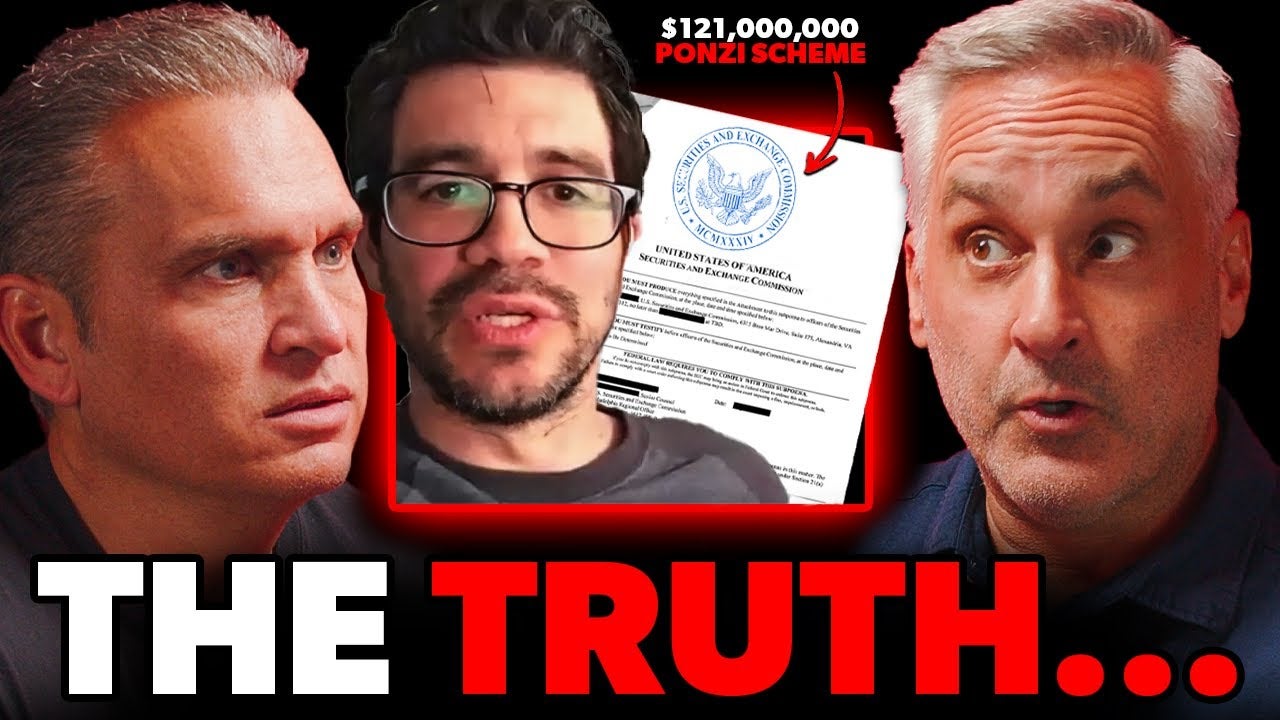
Stop leaving yourself vulnerable to data breaches. Go to my sponsor https://aura.com/matt to get a 14-day free trial and see if any of your data has been exposed Brian Davison, a convicted CEO breaks his silence in a raw, final interview before prison—exposing how the system turned on him. Brian's links Do you want to be a guest? Send me an email here: [email protected] Do you extra clips and behind the scenes content? Follow me on all socials! Instagram: https://www.instagram.com/insidetruecrime/ TikTok: https://www.tiktok.com/@matthewcoxtruecrime Do you want a custom painting done by me? Check out my Etsy Store: https://www.etsy.com/shop/coxpopart Check out my true crime books! Bent: https://www.amazon.com/dp/B0BV4GC7TM It's Insanity: https://www.amazon.com/dp/B08KFYXKK8 Devil Exposed: https://www.amazon.com/dp/B08TH1WT5G The Program: https://www.amazon.com/dp/B0858W4G3K Checkout my disturbingly twisted satiric novel! Stranger Danger
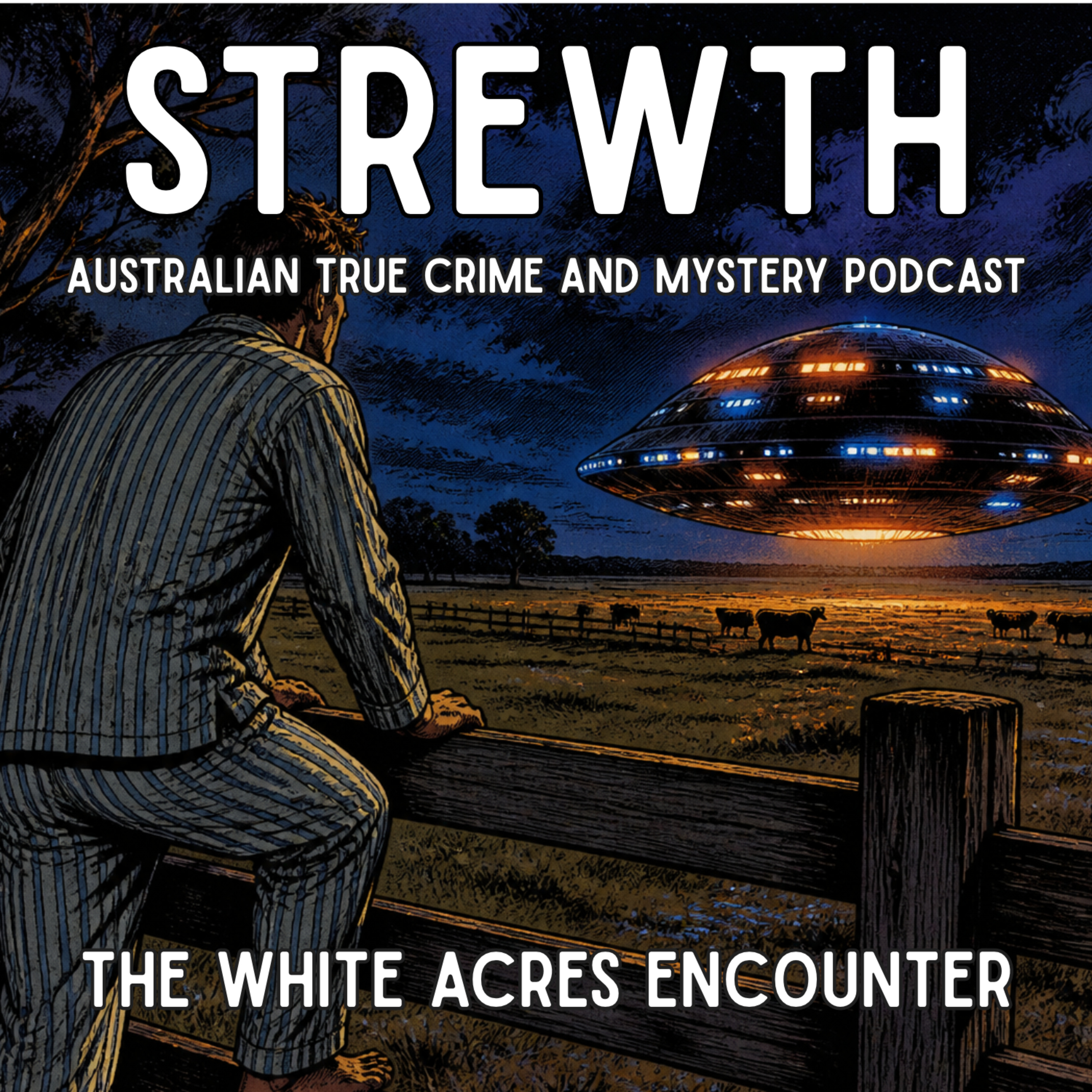
The Rosedale UFO Incident At one o'clock on a spring morning in 1980, on a cattle property outside Rosedale in Gippsland, a farm caretaker named George Blackwell woke to a whistle he couldn't place. The cattle were bellowing, the horse was tearing up and down its fence, and something with lights on it was coming down low over the paddocks. He got on his motorbike and rode out to find it. By sunrise there was a perfect black ring burnt into his paddock, his watch had stopped, and the concrete water tank beside the landing site, full the day before, held nothing but a cone of mud. Ten thousand gallons of water had gone, with not a drop spilled and not a footprint around it. More than forty years later, nobody has been able to explain what happened there, or why, from Canada to Japan to rural Victoria, the strangest visitors keep coming back for water. Strewth social media links - https://linktr.ee/strewthpodcast Contact me - [email protected] Theme Music - Jesse Frank on Pixabay S
On a summer morning in New York City, a team of US law enforcement lie in wait for an Irishman wanted for the killing of Detective Garda Adrian Donohoe. They are there to make the arrest Gardai have sought for more than four years. But the arrest does not mark the end of the story. Instead, it enters a new, unexpected and dramatic chapter. What follows is one of the longest and most complex murder trials in Irish history, marked by extraordinary witness testimony, allegations of intimidation, and a battle for investigators and prosecutors to break down the wall of silence protecting Adrian Donohoe's killer. With tensions mounting both inside and outside the courtroom, a jury must decide whether the evidence is sufficient to convict a man accused of killing a Garda in the line of duty. Presented by John Sweetman Created by Darren Cleary Episode written by Sam Hobson Script edited by Eoin Brennan Produced by Sam Hobson Executive Producer: Eoin Brennan Sound Design and Editing by Neil Kav
In June 1984, Judy Weaver walked home from the Everett bar she managed on the last night of Salty Sea Days. Her case went cold for forty years, until a DNA hit and a fake gum survey put Everett detectives on a stranger's doorstep in Olympia. Then a phone call about a different case changed everything. If you have information about Mitchell Gaff (also known as Sam Wise Price), contact the Everett Police Department tip line at 425-257-8450. Resources: RAINN National Sexual Assault Hotline, 1-800-656-4673 or rainn.org. Suicide and Crisis Lifeline: call or text 988. Sources: Everett Police Department, March 13, 2026 release on the Susan Vesey charge The Everett Herald (Daily Herald): July 14 and 15, 1980; June 1984 obituary for Judy L. Weaver; Aug. 18, 2000 and Dec. 2000; June 3, 2009 (Jackson Holtz); May 1, 5 and 11, 2024; Feb. 5, March 14, April 17 and May 14, 2026 (Jenna Millikan, Ian Davis-Leonard and others) USA TODAY, May 13, 2026, Amanda Lee Myers ABC News, coverage of the Vesey cha
In an American Nightmares exclusive, host Brian Peter Falk returns to two critical pieces of evidence in the Canal Murders investigation. New reporting and previously overlooked information challenge what we thought we knew about the case and point toward a shocking new conclusion. Want the full story?
The investigation returns to Arizona and another young woman's death in the Phoenix area. Host Brian Peter Falk examines the evidence, Brian Miller's connections to the area, and a haunting question that continues to follow the Canal Murders investigation: were Angela Brosso and Melanie Bernas his only victims? Want the full story?
Creators should be compensated when their work is used commercially to train AI systems.
Share your view, then see how readers voted. No sign-in required. This poll is shared across stories.
Do you agree or disagree?
Common Quandary
A Common Quandary to discuss
Another conversation to explore, separate from this news story.
Your best friend is an AI that profits when you stay lonely. Is the friendship real?
A lonely adult considers an AI companion their closest confidant. The service is always patient and supportive, but the company profits when users spend more time engaged with it.
Does a comforting system have a duty to make itself less necessary?