Sam Dutney: The Truth About Fatherhood, Fear, And Quitting Your Job
78 min
Listen through the publisher, then discuss the episode here or arrange an in-person Roundtable. Your city determines where to meet.
Roundtables are designed for groups of four, with a shared subject and room for everyone to speak. Come for discussion, with no dating expectation.
Sam Dutney is a former school director of sport and rowing coach who now runs Top Crew Academy, an online coaching service for rowers. He joins James Smith to talk about fatherhood, fear and quitting a secure school job to go full time, how a $20,000 side hustle month showed it could be a real business, and what he has learned about social media, email and sales calls while growing towards seven figures. They also compare rowing, jiu-jitsu and rugby on pacing, fitness and mindset. A practical listen for coaches and anyone thinking about turning a side hustle into a full-time online coaching business. In this episode: ◼️ Why he left school sport leadership to build an online coaching business around being home for his kids ◼️ How a $20,000 side hustle month, then James's gun to the head advice, took him from about $5,000 a month to seven figure pace ◼️ Why a warm-up should follow a ramp protocol and prime your VO2 kinetics so less lactate builds early ◼️ Why many mindset problems in sport are really fitness problems ◼️ How he grows on social media by answering client questions, posting seven reels a week and keeping a 10,000 person email list warm ️ Try Neutonic: https://www.neutonic.com/jamessmith ♂️ Wear Adapt BJJ: https://adaptjj.com/ Business Mentoring: https://www.jamessmith.business Top Crew Academy - https://www.topcrewacademy.com.au/ Follow Sam on instagram - https://www.instagram.com/p/DcRs8Q9E5PO/ Chapters: 00:00 Intro 01:17 From Rower to School Director of Sport 02:59 Why He Left School Rowing 05:18 Starting Online Coaching as a Side Hustle 07:04 Quitting the School Job 07:56 Gun to the Head and the Move to Full Time 10:42 Why Going All In Beats the Fear 13:45 Staff, Revenue and a New Kind of Stress 17:48 Online Coaching Is Closer to Business Coaching 19:02 Why a Business Network Matters 24:49 James's Rowing Story 28:51 Why Rowing Overvalues Height 32:07 Pacing Mistakes in Running and Rowing 35:04 Pacing in Jiu-Jitsu and CrossFit 37:32 Warm-Ups and VO2 Kinetics 39:54 Testing Energy Systems and Fixing Bottlenecks 45:02 Rugby in New Zealand and Why Fitness Wins 47:28 Mindset Problems That Are Really Fitness Problems 48:46 Held in Mount by a Black Belt 51:27 The Race Where the Tactics Almost Worked 55:52 What Works on Social Media 59:11 Why People Care About Your Content 1:03:43 Pro Bono Content and Repetition 1:06:58 Email as Extra Nurture 1:08:32 Growing on LinkedIn 1:11:00 Sales Calls and an 80% Close Rate 1:12:49 Email Lists and Sales Pages 1:15:31 Where to Find Sam
Episode information is provided by the publisher. Listening takes place on the publisher’s service.
This is a PREVIEW of the upcoming episode of Change Agents. The full episode drops tomorrow at 5pm EST Uploaded 18-06-26 On this week's episode of Change Agents, Andy travels to Chase Hughes' new studio to break down how human behavior is manipulated at scale, from bot farms manufacturing fake consensus to the psychological framework Chase calls WOUND that explains why outrage, fear, and loneliness keep us glued to our phones. They dig into why Chase believes the algorithm is less a sinister mastermind and more an engine optimized purely for ad revenue, how think tanks may shape policy more than most people realize, and why Walter Cronkite and Julia Child both have far stranger backstories than anyone learned in school. Andy also gets a tour of Chase's new independent news studio, Station One, built to show audiences the psyops behind the headlines rather than just the headlines themselves. Change Agents is an IRONCLAD Original Firecracker Farm Norwood Sawmills: Learn more about Norwoo
Today, Mel is taking 58 years of hard-earned life lessons and is packing them into under an hour, to save you some of the time, frustration, and worry it took her to learn them the hard way. In this episode, Mel is fielding real questions from listeners around the world. From making friends and bouncing back from rejection to feeling stuck in life and wondering if it's all going to work out, Mel is sharing the advice she wishes she'd known sooner. And she's not holding back. You'll hear Mel get personal about her own setbacks, and what she's learned about starting over, going after what you want, and trusting yourself when life doesn't go according to plan. You'll learn: -How to stop worrying about the future when nothing feels certain -How to make big life decisions, including whether or not to have kids -How to make new friends as an adult -What to do when you get rejected from your dream job -What to do when a friend ghosts you -How to stop procrastinating and finally follow through
Imagine if every big change in our lives came with a whole community stepping up beside us… In this episode, I sit down with Dr Arne Rubinstein, former GP and emergency doctor, founder of the Rites of Passage Institute, and a man who's spent more than 30 years walking young people across the threshold into adulthood. Arne's work began around a fire at his very first men's gathering, listening to a hundred men wrestle with the same handful of wounds. Then in the Emergency Dpt, he kept meeting teenagers who'd pushed it one step too far... kids trying to become adults with nobody there to hold them. He came to believe every young person will go through a rite of passage either way. The question is whether we leave them to create their own, or gather around and help. We talk about why our culture is so good at turning away from the big moments - from first periods to menopause to death - and what opens up when we turn towards them. We explore: Separation, transformation and integration, an
This is a Grave Talks CLASSIC EPISODE! For Melissa Clevenger, the spirit world has never been a distant mystery—it has been a lifelong reality. Since the age of five, Melissa has been able to see and hear spirits. But her early encounters weren’t comforting or controlled. The voices didn’t ask permission. The apparitions didn’t wait for understanding. What began as terrifying childhood experiences slowly evolved into something she could manage—and eventually embrace. As she matured, the chaos of those early years transformed into meaningful communication, guiding her toward a deeper understanding of her abilities and the messages coming through. Today, Melissa shares her journey from fear to purpose, reflecting on what it means to live with heightened sensitivity and dedicate her life to connecting the living with those who have passed on. On this episode of The Grave Talks, we explore the reality of growing up with psychic abilities, the challenges of navigating unseen energies, and t
Why did Alan Carr buy a castle? In this episode of The Romesh Ranganathan Show, Romesh is joined by the king of the celebrity chat show, Alan Carr, to talk about his new Prime Video series, Alan Carr’s Great Big Bucket List. They also cover life in his very own castle, his stand-up tour and what he really misses about hosting Chatty Man. Alan settles whether the Traitors inspired the castle purchase, and they compare notes on the round table, the paranoia and the online speculation over every little moment. Plus, a surprise gift for Alan, a game of Misquoted, and some questionable wellness advice. A Ranga Bee Production. Chapters: 00:00 Intro 04:19 A gift for Alan 06:46 Reintroducing the red squirrel 11:08 Running his Dad’s pub 12:38 Alan’s castle 16:48 The Traitors round table 18:49 Alan’s new castle TV show 19:41 The reality of castle life 22:50 Alan Carr’s Great Big Bucket List 26:05 The Gretna Green wedding 26:39 Who’s on the bucket list? 31:29 A dating app mishap 36:35 Alan’s stan
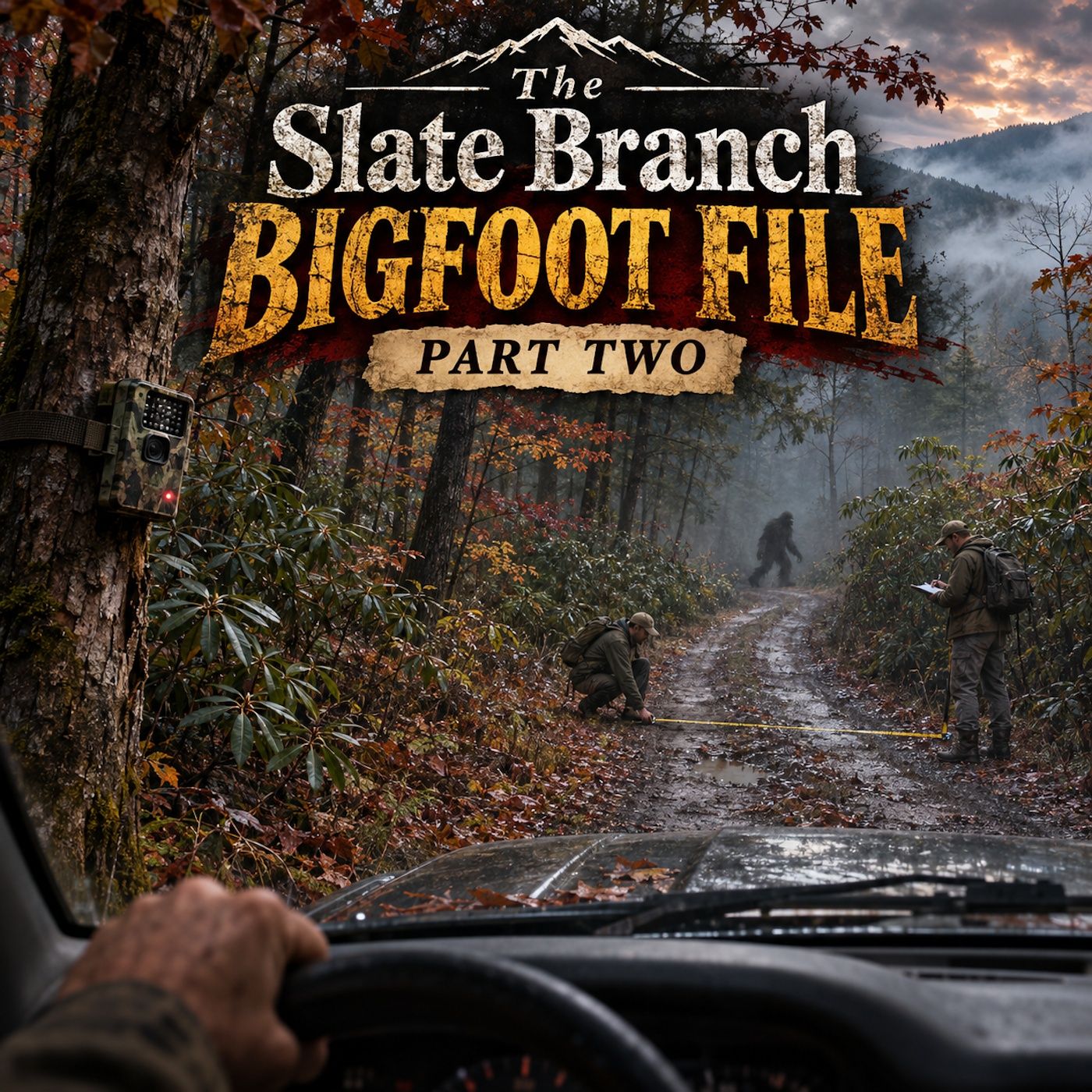
On October 7, 2017, Tom Rigsby watched something large, dark, and walking upright cross a remote logging road in western North Carolina. The encounter lasted less than five seconds. Tom waited two days before reporting it, and when he finally put his experience in writing, he never once used the word Bigfoot. In Part Two of The Slate Branch File, Brian takes a closer look at the encounter that started it all. Drawing from the field notebooks of former wildlife survey technician Nate Calder, Brian examines Tom’s credibility, his years of experience working in bear country, and the details he initially refused to include in his official statement. When Nate and Evan Harlan return to the crossing site to recreate the encounter, their measurements raise more questions than answers. Meanwhile, a mysteriously repositioned trail camera, an overlooked access route through the surrounding national forest, and troubling gaps in the crew’s assumptions suggest the remote property may not have been
Michael Corcoran, the former Head of Social at Ryanair and founder of the social media consultancy Slice, joins James Smith to explain why social media is broken for brands, and how the ones that win still manage to be remembered. They get into how Ryanair went from a glorified bus in the air to one of the most talked-about brands online, why trend-jacking makes every brand look the same, testing content like a stand-up comedian, honest marketing, and why brands are moving their spend to TikTok. Plus TikTok's Creator Search Insights, why YouTube is becoming television, and why reposting your bangers works. ️ Try Neutonic: https://www.neutonic.com/jamessmith Check your Test: https://www.manual.co/smith Business Mentoring: https://www.jamessmith.business ♂️ Online Coaching: https://www.jamessmithacademy.com Follow Michael Corcoran on Instagram: https://www.instagram.com/mc_so_me/ Michael on LinkedIn: https://ie.linkedin.com/in/michaelrichardcorcoran Slice website: https://www.slice-socia
Self-employment in the UK has never been harder. Accountant Rachel Harris (@accountant_she), one of the most followed accountants on Instagram, joins James Smith to explain why growing a business got 10x harder: UK tax, business expenses, the tax bands, child benefit over £100K, and why taxing the rich makes them leave. Being self-employed in the UK is no longer as necessary as it once was. Rachel Harris explains why the landscape has shifted. Rachel Harris, one of the most followed accountants on Instagram, joins the show to discuss the current reality of business ownership. She contrasts the significant benefits of the past with the modern environment, where the system makes starting a company easier than ever, but feeling like you are winning is increasingly difficult. In this episode: - Why financial education fails in the UK - Why business expenses are really half price - Tax relief for businesses vs families, and the 2.5% mortgage deposit scheme - Reverse-engineering your dream l
Businesses that attract visitors should help reduce the disruption experienced by neighbors.
Share your view, then see how readers voted. No sign-in required. This poll is shared across stories.
Do you agree or disagree?
Common Quandary
A Common Quandary to discuss
Another conversation to explore, separate from this news story.
Your best friend is an AI that profits when you stay lonely. Is the friendship real?
A lonely adult considers an AI companion their closest confidant. The service is always patient and supportive, but the company profits when users spend more time engaged with it.
Does a comforting system have a duty to make itself less necessary?