Listen through the publisher, then discuss the episode here or arrange an in-person Roundtable. Your city determines where to meet.
Roundtables are designed for groups of four, with a shared subject and room for everyone to speak. Come for discussion, with no dating expectation.
Dear friends, Last week, Peter answered the question of why he is still a Christian, in terms of the arguments for Christianity found in the person and work of the Lord Jesus Christ. This week, in part 2 of our mini-series, he turns to the more existential answer of the effect that Christianity has in changing life for the better. This podcast is provided free of charge by the generosity of our friends. If you are a friend who would like to give to this work, the details of how to do so are at the end of this episode’s transcript. Yours, Phillip Freely available, supported by generosity. If you enjoy Two Ways News, why not lend us a hand? This is a public episode.
Episode information is provided by the publisher. Listening takes place on the publisher’s service.
Read Online (https://catholic-daily-reflections.com/2026/11/25/gratitude-that-heals-your-redemption-is-at-hand/) Your Redemption is at Hand “People will die of fright in anticipation of what is coming upon the world, for the powers of the heavens will be shaken. And then they will see the Son of Man coming in a cloud with power and great glory. But when these signs begin to happen, stand erect and raise your heads because your redemption is at hand.” Luke 21:26–28 Today’s Gospel presents a vivid and unsettling prophecy from our Lord. He foretells the destruction of Jerusalem and the terrible suffering that will come upon its inhabitants. He speaks of armies surrounding the city, people fleeing for safety, and a time of judgment and punishment. But then, in the midst of this apocalyptic vision, Jesus turns His disciples’ gaze upward with these words of hope: “Stand erect and raise your heads because your redemption is at hand.” The initial portion of this discourse is often understood a
When Turning the Other Cheek Hurts (Luke 6:29-31) | Daily Devotional and Bible Study What does it mean to turn the other cheek? In Luke 6:29-31 Jesus describes defiance without violence, not staying within reach of someone who keeps swinging. In today's Bible study we look at the three examples Jesus gives right after "love your enemies": the slap on the cheek, the stolen cloak, and giving without demanding it back. We step into an honor and shame culture to see why a backhanded slap cost so much, why Luke pictures a mugging and not a lawsuit, and why handing over your tunic leaves the thief ashamed. If this verse has ever been handed to you to keep you quiet, this episode is for you. Join me on an immersive Bible Study Experience. Learn more at BibleStudyLive.org (https://biblestudylive.org/) Have a question about the series or a prayer request? Ad-free episodes and the full library of past series: Patreon (https://www.patreon.com/c/HearingJesus) Questions we answer today What does it
Could your approach to evangelism be leaving people with a false sense of assurance? Todd Friel and Ray Comfort put real-world gospel presentations and popular evangelism methods to the test. Discover what even well-meaning Christians can overlook and how to share the gospel more clearly and faithfully. Segment 1 What a viral airplane message gets wrong. Is telling someone “Jesus loves you” enough? Should you street preach on an airplane? Segment 2 How Ray Comfort created 27 false converts. Should you start evangelism with John 3:16? What this Tim Keller gospel presentation missed. Segment 3 Can you distinguish regret from true repentance? Does the 3 Circles method get the gospel right? Is the Romans Road missing something essential? Segment 4 How do you awaken someone to their need for Christ? Can you accurately share the gospel in 90 seconds? The witnessing encounter that terrified Ray. ___ Thanks for listening! As part of our Multiply 2027 year-end campaign, every gift made through
In 2013, Laurel “Lolly” Shea appeared on Mormon Stories alongside her then-husband, Josh Weed, in an interview that explored their marriage, Josh’s sexuality, and the complicated realities of being a gay man and a straight woman trying to make a marriage work within the LDS Church. More than a decade later, Laurel returns to Mormon Stories to tell her story on her own terms. Growing up in a devout Mormon family, Laurel had an early understanding of the complicated relationship between homosexuality and the Church. Her grandfather came out as gay after decades of marriage and Mormon leadership, and his experience left a lasting impression on her understanding of sexuality, family, and faith. As a teenager, Laurel became close friends with Josh Weed, the son of her bishop. When Josh eventually came out to her as gay, she initially believed that marrying a gay man was something she would never do. But over time, their emotional intimacy, shared faith, family expectations, and deeply ingra
Luke 21: 20-28 - 'There will be signs in the sun and moon and stars.' Catechism of the Catholic Church Paragraphs: - 58 (in 'The Covenant with Noah') - The covenant with Noah remains in force during the times of the Gentiles, until the universal proclamation of the Gospel (abbreviated). - 674 (In 'The glorious advent of Christ, the hope of Israel) - The glorious Messiah’s coming is suspended at every moment of history until his recognition by “all Israel,” for “a hardening has come upon part of Israel” in their “unbelief” toward Jesus. St. Peter says to the Jews of Jerusalem after Pentecost: “Repent therefore, and turn again, that your sins may be blotted out, that times of refreshing may come from the presence of the Lord, and that he may send the Christ appointed for you, Jesus, whom heaven must receive until the time for establishing all that God spoke by the mouth of his holy prophets from of old.” St. Paul echoes him: “For if their rejection means the reconciliation of the world,
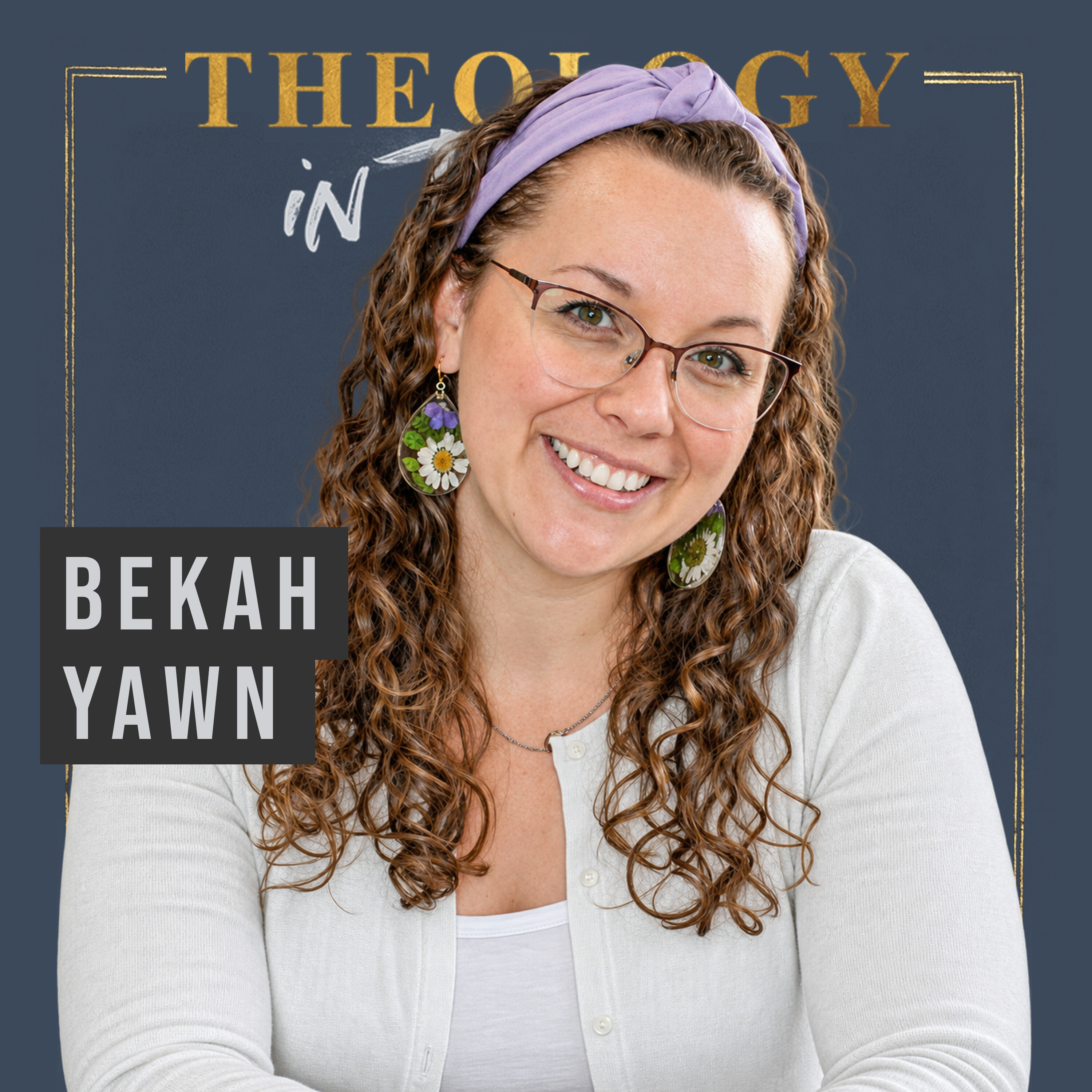
What happens when your church celebrates growing families while you’re grieving a miscarriage or struggling to conceive? How do you hold on to faith when the children you’ve prayed for haven’t come? Bekah Yawn joins Preston to discuss infertility, pregnancy loss, and how the church can better care for women and couples experiencing both. Drawing on her own experience of three pregnancy losses, Bekah shares the loneliness of grieving in a church culture that can make motherhood feel like the measure of a woman’s faithfulness. They explore infertility in the biblical storyline, the relationship between motherhood and Christian calling, and finding purpose when life looks different from what you hoped. They also discuss spiritual warfare, fertility awareness, and Bekah’s convictions about IVF—subjects on which Christians hold differing views. At the heart of the conversation is a practical question: How can we offer more than “I’m sorry” to families navigating infertility and miscarriage?
Dear friends, When Peter and I became Christians in the middle of the 20th century, the great atheist mathematician and philosopher of the time was Bertrand Russell. He produced a book of great effect entitled Why I Am Not a Christian. We both read it, as most of our contemporaries seemed to have as well, yet it didn’t talk either of us out of being a Christian. So this week, I will be asking Peter why he is still a Christian. The answer to that question is too long for one episode, so this will be Part 1 of 2. I hope you enjoy this episode and share it with your friends. Yours, Phillip Freely available, supported by generosity. If you enjoy Two Ways News, why not lend us a hand? This is a public episode.
Dear friends, Some topics are such a universal way of thinking that it is surprising to see how rarely they are mentioned in the Bible. Conscience is such a topic that is critical to our behaviour and mustn’t be undermined, yet the Bible’s teaching on conscience is more connected to its education than its slavish following. This is a tricky subject to explore. If you have questions or comments that you want to follow up on this topic, we are always glad to read them, but we don’t promise to respond. Simply write to [email protected]. Yours, Phillip Freely available, supported by generosity. If you enjoy Two Ways News, why not lend us a hand? This is a public episode.
New health services should prioritize communities with the poorest existing access.
Share your view, then see how readers voted. No sign-in required. This poll is shared across stories.
Do you agree or disagree?
Common Quandary
A Common Quandary to discuss
Another conversation to explore, separate from this news story.
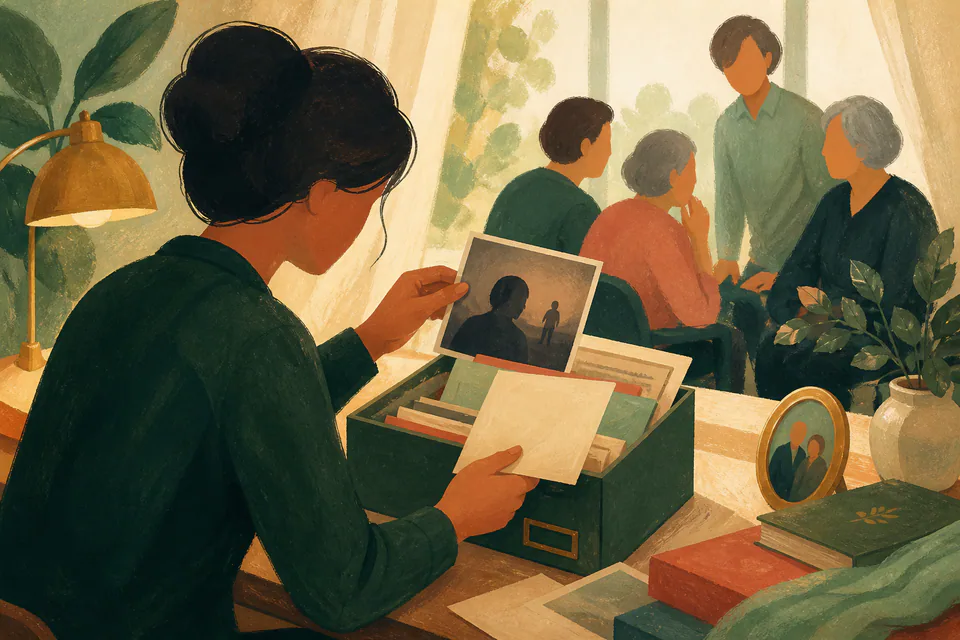
You find a family secret after a relative dies. Does the truth come out?
Sorting through a deceased relative's papers, you discover evidence of a serious betrayal that would change how the family remembers them. Revealing it could answer old questions—and cause fresh pain.