Sex, lies and (alleged) Chinese spies: the Nvidia CEO’s affair
12 min
Listen through the publisher, then discuss the episode here or arrange an in-person Roundtable. Your city determines where to meet.
Roundtables are designed for groups of four, with a shared subject and room for everyone to speak. Come for discussion, with no dating expectation.
The Venn diagram of technology, geopolitics and national security = the Nvidia scandal. Something we didn’t have on our bingo cards for 2026: The boss of the AI firm Nvidia is being investigated by his own company after being caught having an affair with a woman alleged to be a Chinese spy. Jensen Huang’s admitted the affair with Alice Huang (no relation) and China’s denied that she’s a spy. Jensen Huang’s friend, the US President Donald Trump, has backed him. So, where does this leave one of the most powerful men in the world? And what does this all mean for US national security? We break it all down with Shawn Yuan from the BBC’s Global China Unit. Instagram: @bbcwhatintheworld Email: [email protected] WhatsApp: +44 330 12 33 22 6 Presenter: Hannah Gelbart Producer: Emilia Jansson and Mollie Perella Editor: Verity Wilde
Episode information is provided by the publisher. Listening takes place on the publisher’s service.
Jensen Huang stepped down as Nvidia CEO on November 12, 2026, after reports about an extramarital relationship with Alice Huang, a former senior executive at Megaspeed. U.S. intelligence reportedly viewed her as an asset working for Beijing. That allegation is not a conviction, and it is not the same thing as proof Nvidia secrets changed hands. Tony Brueski brings in retired FBI Special Agent Robin Dreeke, former leader of the bureau’s Counterintelligence Behavioral Analysis Program, for the question behind the headlines: how does somebody who helped build one of the world’s most important technology companies fail to recognize a possible intelligence threat in his personal life? Huang apologized to his family and Nvidia employees for infidelity. The board announced an outside investigation, while saying it knew of no reason to believe national security or proprietary information was compromised. Reuters subsequently reported that Huang had previously told Nvidia leaders his encounters
This episode is brought to you by Sarmaya Partners. Learn more about Sarmaya’s LENS ETF, their full data and comparison, including performance here: https://sarmayaetf.com/ In this episode of Other People's Money, Max Wiethe sits down with Muddy Waters Capital founder Carson Block to discuss his firm's explosive new short thesis on Nvidia. Block breaks down the alarming connections between a former Nvidia executive and a former SMCI executive recently implicated in a major chip smuggling scandal. The conversation dives deep into the national security implications of dual-use technology and how the ongoing geopolitical tug-of-war between the US and China is reshaping the semiconductor sector. Tune in to hear why Block believes this scandal goes far beyond CEO indiscretions and could trigger a massive regulatory reckoning for Silicon Valley's biggest players. Follow Muddy Waters on X: https://x.com/muddywatersre Follow Max on X: https://x.com/maxwiethe Follow Other People’s Money on: App
Forty years ago, a former Israeli nuclear technician named Mordechai Vanunu found himself at a Bible study group in Sydney’s Darlinghurst, carrying one of the most closely guarded secrets in the world. Weeks later, a Mossad agent calling herself “Cindy” lured him from London to Rome. In honour of former Nvidia CEO Jensen Huang’s affair with an alleged Chinese spy, we’re re-releasing our favourite honeypot story of all time: the whistleblower, the beguiling blonde, and the not-so-secret Israeli nuclear weapons program at the centre of it all.
November 21, 2026; 10am: The president’s coziness with tech oligarchs is muddying the waters of protecting America’s best interests. Congressman-elect Dan Koh expresses his concerns about the series of recent tech outages and how the administration is prioritizing beneficial relationships and cash over the safety of Americans and their cybersecurity; Lisa Rubin breaks down the obstacles ex-Nvidia CEO Jensen Huang can expect as legal inquiries come his way; Project 2025 may seem like a distant memory, but its policies are more present in this administration than you might think. David Graham outlines the consequences of the Heritage Foundation’s influence; Victor Fontanez is known on the internet as VicBlends, a viral haircutting sensation. But to many in the California prison system, he’s a mentor and hero, helping incarcerated men prepare for a career. Fontanez reflects on his impact. Hosted by Simplecast, an AdsWizz company.
This week on The Necessary Conversation, it's Chad, Haley, and Mary Lou. Bob is still recovering but sent in a video message about Trump calling Putin his friend that we watch together. 🇷🇺 Trump held the first-ever three-way talks with Putin and Xi, called it a "12 out of 10," and produced nothing. Then at a press conference he called Putin his friend — and when asked if Putin is a friend to America, the president of the United States said, "I can't speak to America." That same day, Trump's friend Putin launched massive strikes into Ukraine, hit Poland with two missiles — an act of war against a NATO ally — then struck near a Ukrainian restaurant and drone-bombed the first responders, killing a 7-year-old child and a 20-year-old paramedic. We watch Bob's video and ask Mary Lou: is Russia our friend? 🇨🇳 The House Foreign Affairs Committee revealed Trump's Commerce Department approved nearly 880,000 advanced AI chips for Chinese military-linked companies including Alibaba, Tencent, a
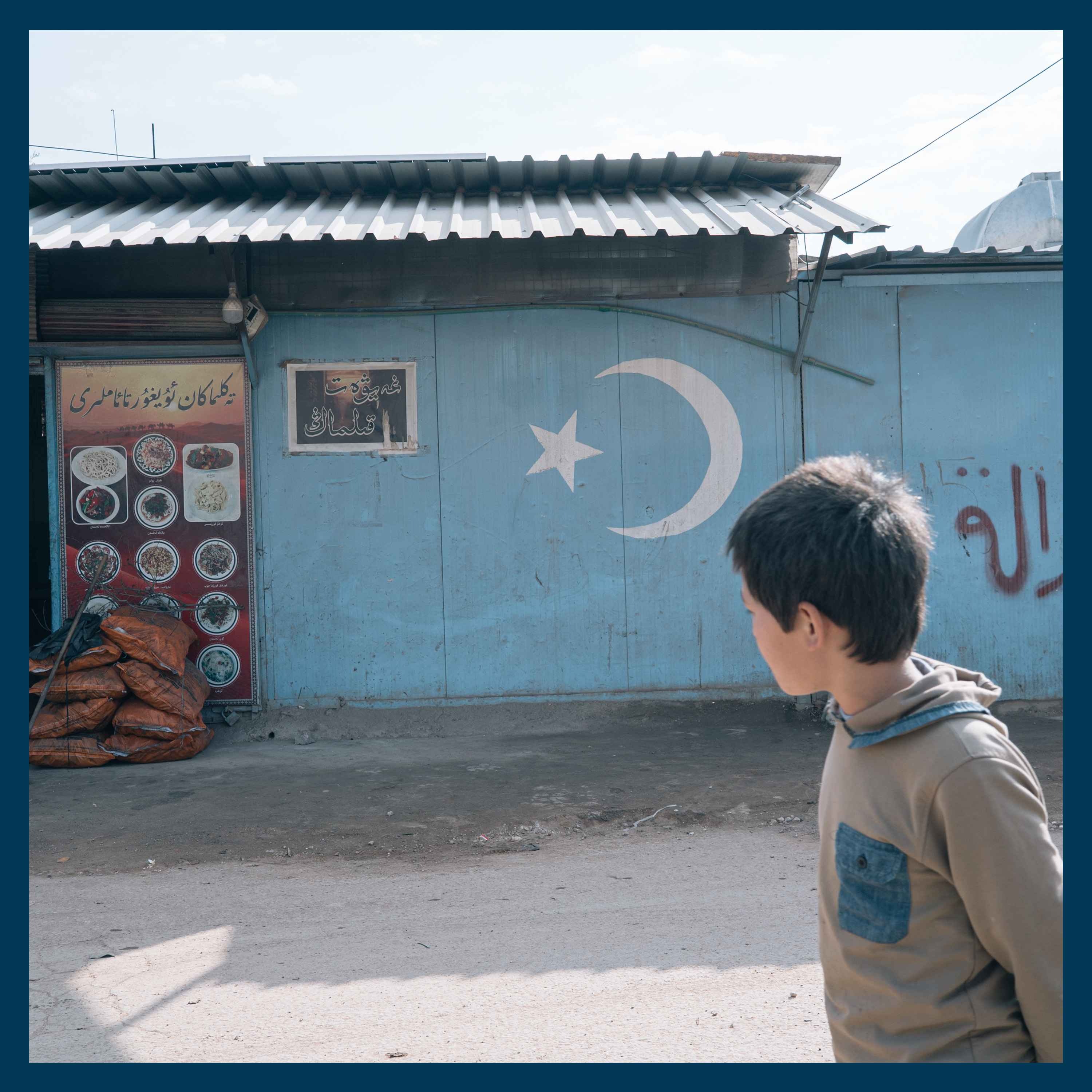
Over 20,000 Uighur refugees escaped repression in China by fleeing to Syria at the height of its brutal civil war. Originally from north western China, the Muslim minority fought fiercely against the Assad regime. But now that the war is over, they live in limbo, unable to return home or even contact loved ones while the Chinese state continues its campaign against their community. So will the new Syrian government honour their sacrifice? Or try to stay on good terms with the Chinese state? Our reporter has been to northern Syria to meet them. Guest: Anthony Loyd, special correspondent, The Times Host: Luke Jones Producer: Robyn Simon and Harry Stott We want to hear from you - email: [email protected] Read more: They fought for Syria’s freedom. Will they fight for their own? (https://www.thetimes.com/world/middle-east/article/uighur-fighters-syria-xinjiang-china-cfv5733d8) Further listening: SAS in Syria: the untold murder probe (https://pod.fo/e/6c8ea9) Clips: The New York Times,
More and more of our tech is connected to the internet. Maybe you're wearing a fitness tracker right now, or you've got a smart doorbell, speaker or lamp at home. So what happens when those devices get hacked? And is there anything you can do to protect them? You might remember that in October, supermarkets across Europe were hit by a major cyber hack that caused fridge and freezer systems to heat up. Some stores say that their fridge temperatures rose as high as 50C (122F). BBC tech reporter Shiona McCallum explains how older, internet-connected refrigeration tech with weak protections and remote management can be exploited, and why the wider risk extends to other connected systems in areas like banking, agriculture and utilities. Plus cybersecurity educator Joan Nwafor shares tips on how to keep your smart devices safe and secure from cyber hacks. Instagram: @bbcwhatintheworld Email: [email protected] WhatsApp: +44 330 12 33 22 6 Presenter: Hannah Gelbart Producers: William Le
GTA 6 — among the most-anticipated video games ever — is finally out. Reviews have been overwhelmingly positive, with fans and critics alike praising the life-like graphics, the catchy soundtrack and the inclusion of Lucia, the game’s first-ever female protagonist since the franchise went 3-D. Tom Richardson, our gaming reporter, shares his experience playing the game and tells us about its minor bugs and glitches. We also hear from GTA fans around the world and from DJ Lag, a South African producer whose music can be heard on AfroBank FM in the game. Instagram: @bbcwhatintheworld Email: [email protected] WhatsApp: +44 330 12 33 22 6 Presenter: Hannah Gelbart Producers: Mollie Perella, William Lee Adams, Rita Behadini Editor: Verity Wilde
The Voyager 1 space probe reached the milestone of travelling one light day away from Earth this week. That’s the furthest any manmade object has ever travelled. It’s one of two spacecrafts NASA launched in 1977 hoping to explore the outer reaches of our solar system. Just in case aliens intercept either of the space probes, NASA placed identical gold-plated records on each of them carrying a message from planet Earth. The NASA team chose dozens of sounds, songs and pictures to represent our planet. BBC journalist Kaine Pieri explains what’s on the records and how NASA’s team decided what to put on them. We also hear from Ann Druyan, creative director of the golden record project, and Jon Lomberg, its design director. Instagram: @bbcwhatintheworld Email: [email protected] WhatsApp: +44 330 12 33 22 6 Presenter: Hannah Gelbart Producers: William Lee Adams and Benita Barden Editor: Verity Wilde
Businesses that attract visitors should help reduce the disruption experienced by neighbors.
Share your view, then see how readers voted. No sign-in required. This poll is shared across stories.
Do you agree or disagree?
Common Quandary
A Common Quandary to discuss
Another conversation to explore, separate from this news story.
The buffet is unlimited while you are inside. Can one sandwich leave in your pocket?
An expensive hotel brunch advertises unlimited food but forbids takeout. You are full, yet quietly assembling a sandwich for later would cost the hotel almost nothing. Several trays will likely be discarded after service.
Does preventing waste justify ignoring the boundary of a bargain?