Listen through the publisher, then discuss the episode here or arrange an in-person Roundtable. Your city determines where to meet.
Roundtables are designed for groups of four, with a shared subject and room for everyone to speak. Come for discussion, with no dating expectation.
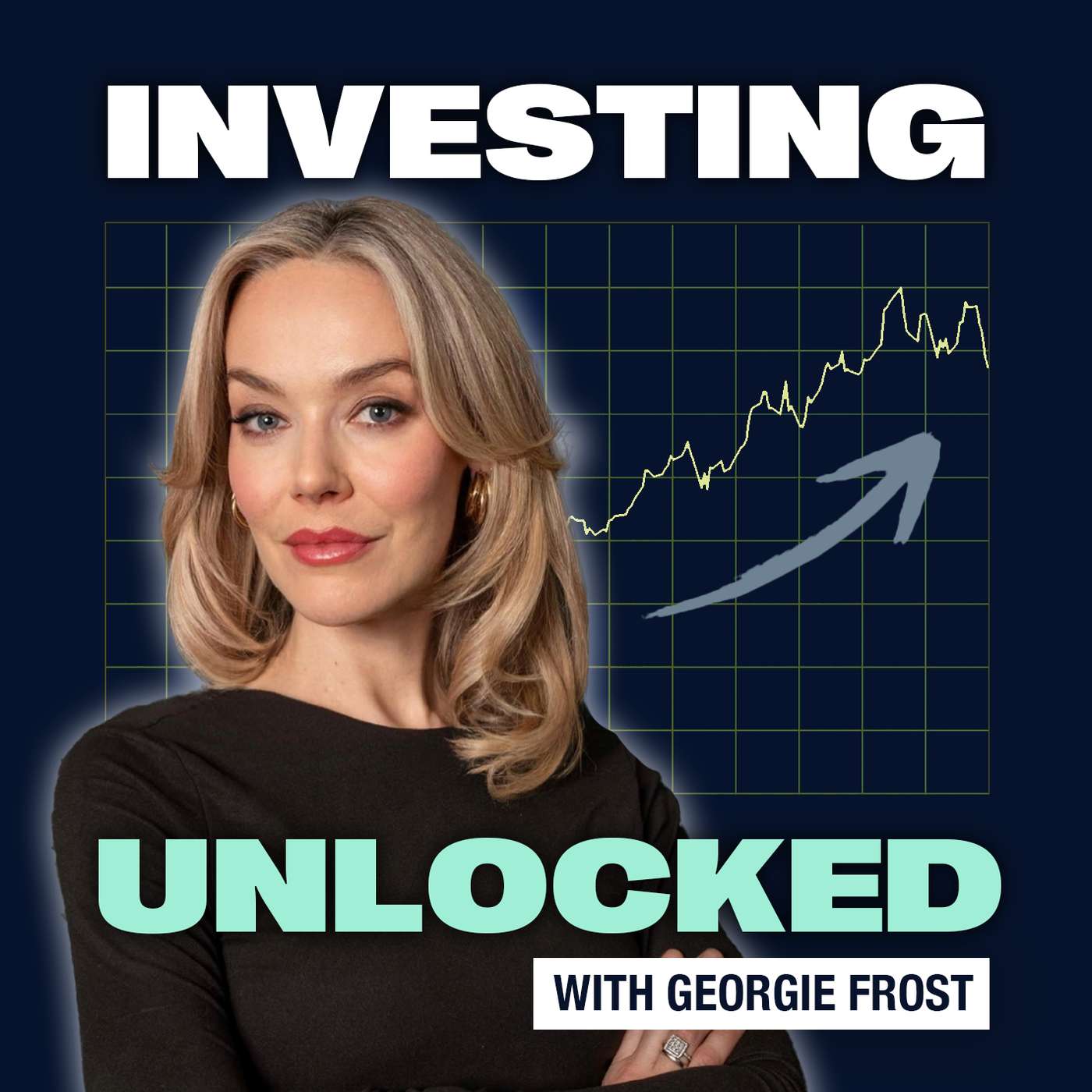
Are IPOs an opportunity to get in early on the next big success story, or are investors in danger of paying too much for the latest market hype? Georgie Frost and guest host Maike Currie (PensionBee (https://bit.ly/3N5bIen)) are joined by Stacey Parsons, Managing Director at RetailBook, to explore the IPO (initial public offering) boom and what it means for everyday investors. From the eye-watering valuations of US tech giants and major listings like Airtel Money to the changing landscape of the London Stock Exchange, they explore why companies go public, how initial public offerings actually work, and whether everyday investors are finally getting a fairer slice of the action. So, how can you invest in an IPO without getting burned? And does investing in companies you know and use help build a stronger investment culture in Britain? Plus, practical advice on how to research an IPO, read a prospectus and assess company valuation. This podcast is for information and education only, not personal financial advice. Capital is at risk when investing. When investing, your capital is at risk. To hear more from us Instagram: https://www.instagram.com/investing.unlocked/ Email us at [email protected] Georgie Frost TikTok: https://www.tiktok.com/@georgiefrostmoney Maike Currie Instagram: https://www.instagram.com/maikecurrie/ LinkedIn: linkedin.com/in/maike-currie-7aa2b311 (https://www.linkedin.com/in/maike-currie-7aa2b311/) Stacey Parsons LinkedIn: https://uk.linkedin.com/in/stacey-parsons-72210248
Episode information is provided by the publisher. Listening takes place on the publisher’s service.
We live in extraordinarily turbulent times. A lot of businesses haven’t made it, or won’t make it. Yet a lot of businesses have also innovated during this time. They’ve refocused their energy where it matters: on the customer. And they’ve come out even stronger. Uploaded 06-06-19 How can the average investor prosper and yet still protect themself? How do we navigate the financial landscape today to create long-term wealth? While you may get many different answers to these questions, one thing remains the same – you must understand the economic environment you are investing in and leverage it to your advantage. In this episode of the Tony Robbins Podcast, you will hear from Ashwin Vasan as he discusses how he built one of the most successful hedge funds during an economic winter. Ashwin is the Chief Investment Officer of macro hedge fund Trend Capital and a renowned economist with over 25 years of investment experience. He’ll share his expertise about the current global trends that may
Sam Klar of GMO explains the investment case for American reindustrialization and why owning the S&P 500 may leave investors with less exposure to it than they expect. The opportunity extends beyond building factories to the businesses that supply, power, connect and maintain them. Sam joins Justin Carbonneau and Jack Forehand to explore why national security, corporate supply-chain decisions and public policy could support a long-term revival of U.S. industry. He discusses China's manufacturing rise, what COVID revealed about the risks of offshoring, and why he sees reshoring as a trend that reaches beyond any single administration. Turning that trend into investment returns requires more than identifying companies with the right story. Sam explains how he combines business quality and valuation, using examples including Martin Marietta, Clean Harbors and MYR Group. We also discuss automation, inflation, AI's competition for investor attention, and the growing gap between a technology
Berkshire Hathaway, legendary investor Warren Buffett’s holding company, just made a nearly $600M bet on the housing market, all while real estate sentiment (https://www.biggerpockets.com/blog/pulse-q3-2026) hits its lowest levels in over a decade. What do Berkshire and Buffett know about the real estate market that most Americans are completely missing? Between September 17th and October 2nd, Berkshire Hathaway invested nearly $600M in one building company—Lennar. Even with Lennar’s quarterly revenue down 9% as it experiences one of its weakest quarters in over a decade, Berkshire sees what nobody else does: housing will recover, and whoever can build and own it will profit. Berkshire is known for its long-term, conservative, and bottom-line-based investing strategy. So, if the best investors on earth are putting their money into real estate and projecting a long-term recovery on the horizon, should rental property (https://www.biggerpockets.com/guides/how-to-buy-rental-property) inve
Joris Delanoue, CEO of Fairmint and General Director and Board Member of the Canton Foundation, joined me to discuss the launch of Fairmint’s on-chain transfer agent services for public companies, enabling issuers to move their official shareholder records onto blockchain infrastructure while preserving shareholder rights and issuer control. We also explored the tokenization of Canton Strategic Holdings shares on the Canton Network for trading through TSV and the broader implications of bringing publicly traded equities on-chain. ⭐️ Trade crypto perps with a free $25 bonus on Kalshi. ️ Learn Crypto with Expert Commentary - http://MyCryptoCourse.com iTrustCapital Representative: [email protected] Follow on social media: ️ X(Twitter) - https://x.com/thinkingcrypto ️ Facebook - https://www.facebook.com/thinkingcrypto/ ️ LinkedIn - http://linkedin.com/company/thinking-crypto ️ Instagram - https://www.instagram.com/thinkingcrypto/ ️ TikTok - https://www.tiktok.com/@thinkingcrypto5
IT'S TIME TO FOCUS AND INVEST IN YOURSELF | Jim Rohn Motivation The greatest investment you can ever make is in yourself. In this powerful Jim Rohn motivational video, you’ll discover why success, happiness, and fulfillment all begin with the decision to focus on personal growth. Uploaded 08-10-25 Jim Rohn teaches that when you improve you, everything around you improves — your income, your confidence, your opportunities, and your life. It’s not about chasing results; it’s about becoming the kind of person who naturally attracts success. The moment you start focusing on learning, discipline, and self-improvement, your world begins to change. In this video, you’ll learn: Why self-investment is the foundation of all success. How to eliminate distractions and focus on your growth. The habits that create consistent progress over time. Why developing yourself pays the greatest lifelong dividends. How to build confidence, clarity, and control through daily action. Key Topics ● ● Self-Investm
The deadline finally makes the work impossible to ignore. Until then, the commitment keeps waiting. What could an earlier start give you that last-minute pressure cannot? In this episode of The Level Up Podcast, Paul Alex breaks down how to give important work real attention before urgency becomes the only reason to act. Completing good work under pressure does not show what the delay cost you. Paul asks listeners to notice when consequences are deciding the moment their own goals become important, especially where no one else is enforcing a deadline. Start with a small piece that requires actual thought and produces something you can examine. An early attempt may expose a missing answer or an underestimated task while time remains to respond. Preparation should lead into the work, rather than fill the whole session around it. In this episode, you’ll learn: • Why relying on pressure can leave personal goals without a real beginning. • How an early attempt reveals questions while you ca
Gold has reached record-breaking prices this year, but is it a safe investment in uncertain economic times, or a costly mistake? In this episode of Investing Unlocked, Georgie Frost and guest host Russ Mould are joined by Louise Street of the World Gold Council to examine what’s really behind the surge in gold prices and why central banks and investors keep buying it. They discuss whether gold can properly hedge against inflation, why wealthy Gen Zers in particular are buying it, and what gold's high cost says about trust in governments and financial markets. Does gold deserve a place in your portfolio? And how can you get exposure, from physical bullion to ETFs and mining stocks? Please remember: this podcast is for information and educational purposes only and does not constitute financial advice. Capital is at risk. When investing, your capital is at risk. To hear more from us: Instagram: https://www.instagram.com/investing.unlocked/ Send us your guest and topic suggestions at edito
Is quality investing dead? After years of underperformance, quality investing is out of favour as AI stocks dominate markets. But are investors overlooking the value of businesses built to last? Georgie Frost and guest host Maike Currie (PensionBee (https://bit.ly/3N5bIen)) are joined by Nick Train, co-founder and Chairman of Lindsell Train. He has managed the Finsbury Growth & Income Trust for 25 years and is renowned for sticking with his choices even when markets go against him. They explore what quality investing actually means, whether AI threatens established businesses or creates new opportunities, and what Burberry, Diageo and RELX reveal about finding lasting value. Nick also explains why patience can be an investor’s greatest asset. Plus practical guidance on how to find a good stock, what price signals to look for and when to buy or hold. Please remember: this podcast is for information and educational purposes only and does not constitute financial advice. Capital is at ris
How much control does a Chancellor really have over Britain's economy? And when governments keep changing the rules, how are we supposed to plan for our financial futures? Georgie Frost is joined by Bloomberg's Joe Mayes, author of Can You Run the Economy?, and Brian Byrnes, Director of Personal Finance at Moneybox, to look beyond the Autumn Budget 2026 headlines. From the power of financial markets and the difficult choices facing politicians to the impact of changing pension and ISA rules, they explore what Britain's economic challenges mean for our money. Why do government borrowing costs matter to us? Does constant tinkering undermine confidence in saving and investing? And what would it take to get Britain investing and growing again? Plus, practical guidance on balancing cash and investments, navigating pension changes and keeping long-term financial plans on track. This podcast is for information and education only, not personal financial advice. Capital is at risk when investin
Access to effective legal representation should not depend mainly on personal wealth.
Share your view, then see how readers voted. No sign-in required. This poll is shared across stories.
Do you agree or disagree?
Common Quandary
A Common Quandary to discuss
Another conversation to explore, separate from this news story.
A pricey AI tutor can turn B students into A students. Should schools let them use it?
An effective AI tutor adapts to each student and dramatically improves performance, but its subscription is expensive. A public school cannot provide it to everyone and worries that allowing its use will deepen existing inequality.
Should access be limited when a beneficial tool cannot yet be shared fairly?