English-language podcasts

The Business of Fashion Podcast

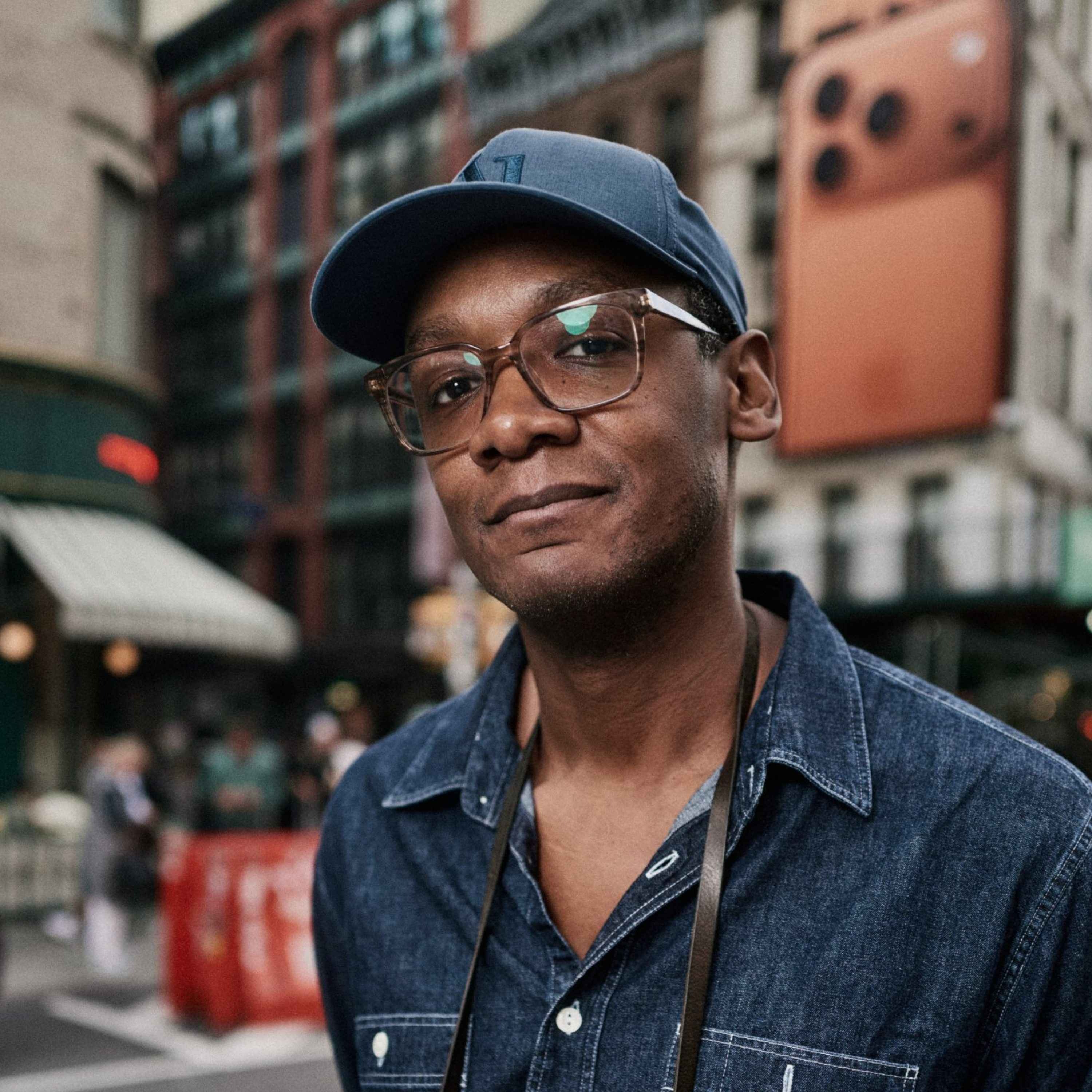
Simbarashe Cha on 10,000 Hours of Street Style Photography
62 min

Listen through the publisher, then discuss the episode here or arrange an in-person Roundtable. Your city determines where to meet.

Roundtables are designed for groups of four, with a shared subject and room for everyone to speak. Come for discussion, with no dating expectation.

Every season, as the fashion world travels from New York to London, Milan and Paris, Simbarashe Cha is outside the shows, photographing what people are actually wearing on the street for The New York Times. His work also takes him far beyond the Western fashion capitals, from Tokyo to Dakar. It wasn’t until later in life that Cha realised this was the work he wanted. He spent his twenties trying to make it in music, worked for years in a bank and didn’t buy his first camera until he was 32. Getting from there to here took a documentary about the legendary street style photographer Bill Cunningham, years of practice and a few happy accidents. Even now, he says, it hasn’t quite sunk in. Cha joins Amed to talk about why practice makes permanent, the blind spot he had to admit to himself and why the style he looks for is meant to feel within reach. Key Insights: Cha’s writing matters as much as his photography to his career. His blog began as a writing exercise, and the camera was a way to find material: “let me just find cool things to photograph that I can then write about that people might be interested to read.” Practice only helps if you also change what isn’t working. Cha drew on Malcolm Gladwell’s 10,000 hours, Bill Simmons’s writing on athletes “putting in reps” and a Wells Fargo colleague’s correction: “practice makes permanent.” He committed to shooting “every single day regardless of the weather, regardless of how I feel.” He also changed how he approached strangers, because “in the beginning, more people said no than yes.” The Times hired Cha for his eye before it knew about his fashion work. He photographed the 2020 protests in New York the same way he photographed people on the street. “I always wanted to capture photos that made a viewer want to be in the space,” he says. A year later, an editor learned he had a whole decade’s worth of fashion photography and assigned him Christian Siriano’s show. Cha’s freedom at the Times depends on his editors’ trust. His Style Outside city stories mean about two weeks embedded in a place to “learn the speed of the city,” he says. “They kind of just trust me to … photograph and write and find people.” Additional Resources: Simbarashe Cha | BoF 500 | The People Shaping the Global Fashion Industry (https://www.businessoffashion.com/people/simbarashe-cha/) In Memory of Bill Cunningham, 1929–2016 | BoF (https://www.businessoffashion.com/articles/news-analysis/in-memory-of-bill-cunningham-1929-2016/) Where Does the Business of Street Style Go From Here? | BoF (https://www.businessoffashion.com/articles/fashion-week/where-does-the-business-of-street-style-go-from-here/) Hosted on Acast.

Episode information is provided by the publisher. Listening takes place on the publisher’s service.

Listen at the source ↗

Featured places to meet in Palo Alto, CA

Explore these places and arrange a conversation through ThinkMatch.

City guide for Palo Alto, CA

More from The Business of Fashion Podcast

The Business of Fashion Podcast

What Did 2026 Reveal About the Beauty Industry?

35 min

Beauty remains more resilient than luxury fashion, but the latest earnings reveal an increasingly uneven industry. L'Oréal continues to outperform, Estée Lauder's recovery is being driven by the niche fragrance category, and Korean beauty brands are challenging established players. Meanwhile, consumers are resisting price increases on affordable products while continuing to splurge on premium beauty. This week on The Debrief, Priya Rao, executive editor at the Business of Beauty, joins Sheena Butler-Young to discuss the industry's winners and losers, changing consumer priorities and where brands should place their bets in 2027. Key Insights: While Estée Lauder's recovery is largely driven by luxury fragrance and Coty struggles to find a coherent positioning, L'Oréal is performing well across affordable skincare, professional haircare and prestige beauty. “When you think about that portfolio, it's not weighted in any one direction. It's not necessarily blowing by the winds of a single c

Discuss this episode

The Business of Fashion Podcast

Terrence O’Connor on Why Cultural Relevance Can’t Be Manufactured

53 min

Terrence O’Connor has forged an unconventional path as a creative director and strategist, operating at the intersection of music, fashion and digital media. Raised in a traditional environment in Massachusetts, he built his career in Los Angeles by leveraging social platforms like TikTok and Instagram to help shape the digital presence of his peers. O’Connor’s approach has since led to roles defining the visual and strategic output for major artists, including Charli XCX and Troye Sivan, building cohesive worlds that span album rollouts, live performances and digital engagement. Beyond his work with artists, O’Connor is known for his weekly “cultural digest” videos. What began as an organic exercise in observing the ebbs and flows of online culture has established him as a commentator on the mechanics of the zeitgeist. This week on The BoF Podcast, O’Connor joins Imran Amed to talk about his transition from the East Coast to Los Angeles, the underlying principles of successful creativ

Discuss this episode

The Business of Fashion Podcast

Is Fashion Sleeping on Twitch and Discord?

27 min

Before Jarod John Leonard became a menswear label stocked at Harvey Nichols, its founders brought together fans of Japanese label Number (N)ine on messaging platform Discord. The group grew from 20 people to several thousand, giving the emerging brand an audience that had been there from the start, weighing in on everything from its first boots to fabric choices. On live-streaming platform Twitch, creators like Kai Cenat are bringing viewers along on shopping trips, sharing how their tastes are evolving and even launching fashion labels of their own. This week on The Debrief, senior correspondent Sheena Butler-Young speaks with BoF correspondent Lei Takanashi about how these platforms build trust and turn attention into fashion influence. They discuss how candid conversations and spontaneous moments help make these spaces so influential, and why brands risk losing that appeal when they try to commercialise it. Key Insights: Unlike more public-facing social platforms, communities like D

Discuss this episode

Community Poll

Communities losing a major industry deserve transition support before jobs disappear.

Share your view, then see how readers voted. No sign-in required. This poll is shared across stories.

Do you agree or disagree?

Choose one answer

Common Quandary

A Common Quandary to discuss

Another conversation to explore, separate from this news story.

Someone reserves the best gym machine with a towel. When may you move it?

At a crowded gym, a towel has occupied the most popular machine for fifteen minutes while its owner chats across the room. Gym rules prohibit reserving equipment, but everyone occasionally steps away between sets.

How long may convenience masquerade as continued use?

Explore this quandary