English-language podcasts

Life Matters

Sisters carrying the caring load and cities paying artists a living wage

56 min

Listen through the publisher, then discuss the episode here or arrange an in-person Roundtable. Your city determines where to meet.

Roundtables are designed for groups of four, with a shared subject and room for everyone to speak. Come for discussion, with no dating expectation.

Sister, a viral skit from Saturday Night Live, has women everywhere wincing in recognition: it's so often daughters, not sons, who end up as the default carer for ageing parents. In Australia, women make up 70 per cent of primary carers. Phyllis Foundis and researcher Michelle O'Shea unpack why the load still falls so unevenly, and what that looks like in real households. Last week, 40 creatives across Sydney were granted $25,000 each — no strings attached — in a council program aimed at keeping the arts alive. Ireland already made its own basic income for artists permanent this year. Sydney-based artist Raquel Caballero and researcher Sam Whiting explore what these opportunities mean for the artists cashing in, and what it would take to scale up. We're just one month out from Christmas Eve, and the pressure is building. It's not just presents anymore: matching pyjamas, $200 advent calendars, and Black Friday sales that have somehow expanded into an entire month. Consumer behaviour expert Paul Harrison reveals the advertising tricks designed to keep the trolley full all season long.

Episode information is provided by the publisher. Listening takes place on the publisher’s service.

Listen at the source ↗

Featured places to meet in Palo Alto, CA

Explore these places and arrange a conversation through ThinkMatch.

City guide for Palo Alto, CA

More from Life Matters

Life Matters

Rethinking how we measure housing inequality and remembering Molly Meldrum

56 min

Housing inequality is often captured as a moment-in-time snapshot: who owns, who rents, who is building wealth and who is experiencing housing insecurity. But new research from Adelaide University suggests the way we've been measuring housing inequality misses the nuance. Researcher Emma Baker and first home buyer Maggie Collins explore why it might be time to shift our perspective. Molly Meldrum, the former host of Countdown, has died at the age of 83. He leaves behind a legacy as one of Australia's most influential figures in the entertainment industry — as a critic, producer, and presenter. Life Matters listeners and music news reporter Courtney Fry share their memories of Molly, and the music he introduced to generations of Australians. Australia's most famous southern elephant seal, who returns twice a year to the same Tasmanian beach, now has a formal management plan. Marine and Antarctic ecologist Sophia Volzke explains what's in the plan and whether the humans who share Neil's

Discuss this episode

Life Matters

Understanding hoarding beyond the viral videos and group camping dynamics

54 min

Reality TV and social media have turned hoarding into voyeuristic spectacle, but behind the clutter is a widely misunderstood illness affecting an estimated 715,000 Australians. Erain, who has experienced hoarding behaviours for a large part of her life, joins clinical psychologist Jessica Grisham to explore what's really going on underneath. Everyone wants their mates to get along with their significant other. But Life Matters listener Cassie is getting mixed signals about whether their new girlfriend is ready to embrace the friendship camping tradition. Aunties Monica Dux and James Findlay are on the case.

Discuss this episode

Life Matters

The real benefits of imaginary friends and letting children roam free

56 min

Around 65 per cent of young children have had an imaginary companion by the time they turn seven, and while the friendships might be make-believe, the benefits to children's development can be very real. So why do some kids have them, and others don't? And in the age of AI companions, do we even need imaginary friends anymore? Professor Evan Kidd at Australian National University, has researched imaginary friends and helps us unpack this phenomenon. When it comes to tweens and teens, there's a familiar narrative loop that's evolved. We want kids off screens. We want them to go outside. But when we do see them in public spaces, being kids, which sometimes means a little bit rowdy and feral, someone complains. So is it about building better spaces for them to hang out in, or is it about all of us collectively adjusting our attitudes towards kids in public? Airbnb hosts have became notorious for setting some pretty onerous ones. It led the platform to restrict what hosts can and can't ask

Discuss this episode

Community Poll

Temporary policies should require fresh approval before becoming permanent.

Share your view, then see how readers voted. No sign-in required. This poll is shared across stories.

Do you agree or disagree?

Choose one answer

Common Quandary

A Common Quandary to discuss

Another conversation to explore, separate from this news story.

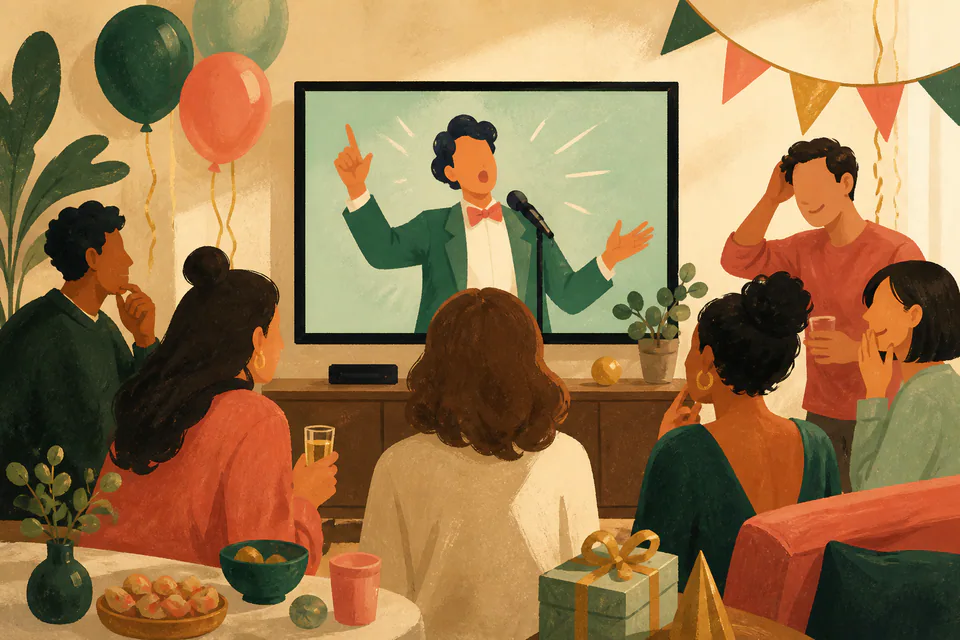
You make a hilarious deepfake of a friend for their birthday. Must you ask first?

For a private birthday party, someone creates a convincing video of a mutual friend delivering an absurd speech. Everyone, including the subject, will immediately understand that it is fake.

Does obvious fiction eliminate the need for consent?

Explore this quandary