Listen through the publisher, then discuss the episode here or arrange an in-person Roundtable. Your city determines where to meet.
Roundtables are designed for groups of four, with a shared subject and room for everyone to speak. Come for discussion, with no dating expectation.
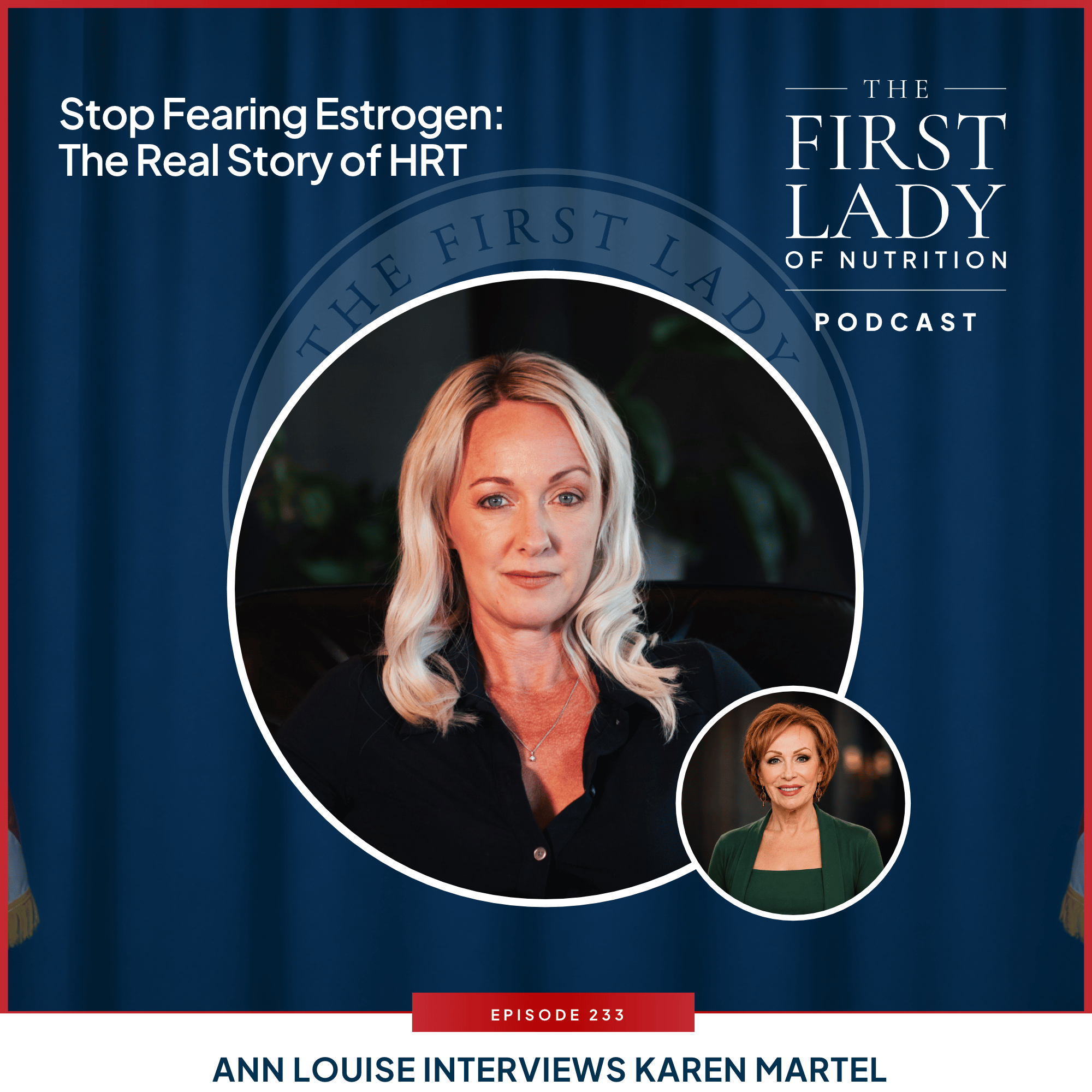
Listen Online: About this episode: The First Lady of Nutrition sits down with certified hormone specialist and transformational nutrition coach Karen Martel, CEO of Midlife Solutions, to cut through the confusion around hormone replacement therapy. Ann Louise has long written about the hormonal shifts of perimenopause and menopause—including in her New York Times bestseller Before the Change. In this conversation she invites Karen to share the latest thinking on estrogen, progesterone, testosterone, and the evolving picture of HRT more than two decades after the Women’s Health Initiative raised alarms. They revisit why that landmark study was halted and what the data actually showed once researchers looked more closely (including the key role of synthetic progestin versus estrogen itself). The discussion covers practical differences between bioidentical hormones and older synthetic options, why delivery method matters (especially transdermal versus oral estrogen), what FSH levels can tell you, and how testosterone, cortisol, pregnenolone, and DHEA fit into the picture. Karen also explains her clinic’s approach to estradiol versus Biest, low-dose vaginal estrogen for dryness, who needs extra caution, and why the right plan is highly individual. The result is a clear, up-to-date conversation for any woman navigating perimenopause or menopause who wants to understand the real benefits, risks, and options available today. Find Karen at karenmartel.com (http://karenmartel.com/) and midlifesolutions.org (http://midlifesolutions.org/). The post Stop Fearing Estrogen: The Real Story of HRT (https://annlouise.com/stop-fearing-estrogen-the-real-story-of-hrt/) first appeared on Ann Louise Gittleman, PhD, CNS (https://annlouise.com/).
Episode information is provided by the publisher. Listening takes place on the publisher’s service.
MAPS Bulk: https://mapsbulk.com It's $187 normally and $74.80 on sale. A MAPS Bulk purchase gets 100 giveaway entries, the most of any product. Next giveaways at 4pm PST on IG Live: Mon Nov 23: a Mind Pump merch pack, a 1 year Vita Bella membership and Olipop (5 winners, 12 pack each). Tue Nov 24: Paleo Valley Bone Broth Protein and Beef Sticks. Dr. Tyna Moore, a naturopathic doctor and chiropractor, is back to talk about GLP-1s, hormones and peptides. She explains why she takes a low-dose approach, what researchers are looking at beyond weight loss (inflammation, addiction and more), and the risks of taking too much. They also cover hormone therapy for midlife women and men, thyroid basics, the gray market, and how to protect your muscle, bones and gut on a GLP-1. SPONSORS Joymode: https://tryjoymode.com/mindpump Vita Bella / MP Hormones: https://mphormones.com New customer deals at the link. GUEST LINKS Dr. Tyna Moore on Instagram: https://www.instagram.com/drtyna YouTube: https://ww
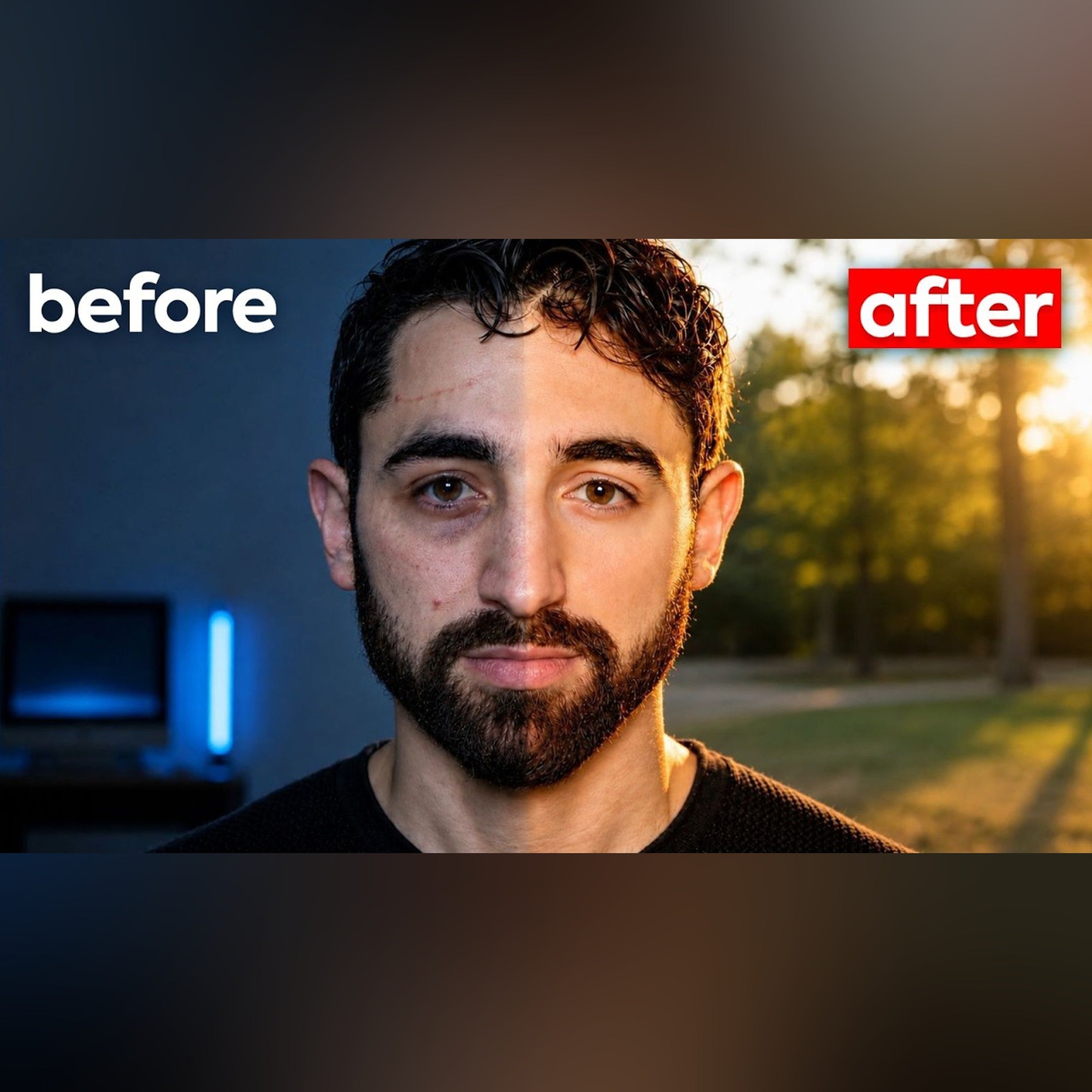
For extra nuances and all the references, please see the newsletter: https://staycuriousmetabolism.substack.com/p/how-i-hacked-my-girlfriends-brainwith?r=40ekz2&utm_campaign=post&utm_medium=web&triedRedirect=true (https://staycuriousmetabolism.substack.com/p/how-i-hacked-my-girlfriends-brainwith?r=40ekz2&triedRedirect=true) Can light influence attraction, hormones, and even reproductive biology? In this video, we explore surprising research on light exposure, testosterone, estrogen, fertility signals, and behavioral changes observed in both animal models and human studies. From hormone cascades triggered through the skin to seasonal changes in reproductive biology, this is a fascinating look at how deeply light may shape human physiology. Along the way, I also test whether increasing my own sunlight exposure changes my testosterone levels and reveal how my girlfriend hacked my brain! For more nuance, mechanisms, protocols, and limitations behind these findings, check out the full deep
Today, Mel is taking 58 years of hard-earned life lessons and is packing them into under an hour, to save you some of the time, frustration, and worry it took her to learn them the hard way. In this episode, Mel is fielding real questions from listeners around the world. From making friends and bouncing back from rejection to feeling stuck in life and wondering if it's all going to work out, Mel is sharing the advice she wishes she'd known sooner. And she's not holding back. You'll hear Mel get personal about her own setbacks, and what she's learned about starting over, going after what you want, and trusting yourself when life doesn't go according to plan. You'll learn: -How to stop worrying about the future when nothing feels certain -How to make big life decisions, including whether or not to have kids -How to make new friends as an adult -What to do when you get rejected from your dream job -What to do when a friend ghosts you -How to stop procrastinating and finally follow through
Text me what you thought of the show (https://www.buzzsprout.com/1959372/fan_mail/new) Can working night shifts affect your fertility, ovulation or IVF success? After speaking with numerous women trying to fall pregnant while working shifts, including those undergoing expensive IVF treatment, I wanted to explore what the research actually tells us. In this episode of A Healthy Shift, we discuss how night shifts, disrupted sleep and circadian misalignment may affect reproductive health. We cover: Why the fertile window is so short. Shift work, reproductive hormones and menstrual irregularities. What research says about night shifts, fertility and IVF outcomes. The roles of sleep, stress, nutrition, weight and exercise. Practical steps for women trying to conceive while working shifts. Research links shift work with menstrual irregularities, but evidence that night shifts directly cause infertility or reduce IVF success remains uncertain. If you're trying to get pregnant while working ni
Low energy after 40 is a struggle many women talk about, often feeling dismissed when labs look "normal" yet fatigue and fog persist. This episode explores why energy can drop in midlife, the role Ken Swartz sees for oxidative stress, and the steps he says have helped. Full show notes, key takeaways, and transcript: https://www.natalietysdal.com/post/low-energy-after-40 Ken Swartz is the founder of C60 Power, with a long career running research and science labs. Ken shares his views on cellular health, energy, and oxidative stress, as well as his own experience using C60 and what he has seen in others. What you'll learn: - How Ken describes oxidative stress as "your body rusting," and how he links it to low energy, aches, and brain fog after 40 - Why chemicals, radiation, and fast-paced lifestyles add stress on the body in midlife - The antioxidant basics including CoQ10 and glutathione - Intermittent fasting - Realistic expectations for how long changes take - Why more testing matters
Get the 200+ Page Optimal Living Daily Workbook (PDF) - Free. Want to turn today's episode into an actionable plan? Episode 4233: Kate Galliett explains three reasons we make health, fitness and life harder than they need to be: ignoring how the body works as a connected system, trusting only extreme intensity, and leaking the energy that fuels motivation and discipline. She makes the case that appropriate effort, not maximum effort, is the only sustainable path to lasting results. Read along with the original article(s) here: https://fitforreallife.substack.com/p/why-you-make-everything-harder-than Quotes to ponder: "The better way is to give appropriate effort and get appropriate results. This is the only sustainable way." "If you try and live at the extremes, you will constantly ping-pong back and forth from one extreme to the other." "Just imagine - you might not actually lack discipline after all, you just might be leaking energy that feeds your ability to be disciplined." We spen
Youth sport should prioritize lasting participation over early selection of elite performers.
Share your view, then see how readers voted. No sign-in required. This poll is shared across stories.
Do you agree or disagree?
Common Quandary
A Common Quandary to discuss
Another conversation to explore, separate from this news story.
Someone you love asks, “Do you think I’ll be okay?” What if you do not?
A relative with a poor prognosis asks whether you think they will recover. They seem to need reassurance, but you believe the odds are very low and do not want to spend the remaining time pretending.
Can preserving hope justify saying more than you believe?