English-language podcasts

Jim Rohn Motivation Daily

Stop Making Decisions Before You Start Thinking | Jim Rohn Motivation

42 min

Listen through the publisher, then discuss the episode here or arrange an in-person Roundtable. Your city determines where to meet.

Roundtables are designed for groups of four, with a shared subject and room for everyone to speak. Come for discussion, with no dating expectation.

You think you decided. You didn't decide. The decision was made before the thinking started. The thinking was just the part you remember — built afterward, in service of a conclusion that had already been reached by something quieter and faster than your conscious mind. Uploaded 13-05-26 The nervous system — the same threat-response system that evolved to handle predators in the brush — is still running. And it's still applying the same toolkit it always has: scan for threat, reach conclusion, construct the reasoning that justifies the conclusion. In a physical emergency, that's the right system. In a career decision, a financial decision, a hard conversation, a long-term relationship — it's the wrong system, excellent at the wrong job. And when the wrong job is the one it's being applied to, excellence at it produces consistently wrong answers. Dressed up as deliberation. Validated by reasoning that came after the fact. This seminar breaks down the 4 shapes a reactive decision wears in your real life, the 4 signals that tell you the nervous system has taken over, and the single interruption that changes every important decision you'll make from here on out. CHAPTERS: 0:00 The Threat System Still Running Inside You 3:33 How the Nervous System Reaches Its Conclusions First 5:33 Reactions Wearing the Costume of Decisions 8:24 The Four Shapes 13:14 The Quiet Cost That Builds Up Over a Career 18:19 4 Signals the Nervous System Is in Charge 22:57 The Pause That Breaks the Chain 26:52 The One Question to Ask in the Pause 29:24 Use the Brain for the Decisions That Matter 34:04 Make the Choice to Be There THE 4 SHAPES OF A REACTIVE DECISION: ▸ The argument that escalated faster than the situation warranted — small disagreement, minor friction, a comment that landed wrong, and within minutes the conversation has moved somewhere it didn't need to go ▸ The opportunity passed on because "something felt off" — by every reasonable measure a good fit, but a feeling said no, and the reasoning got constructed afterward to support it ▸ The retreat dressed up as wisdom — the project quietly shelved with explanations about timing and priorities, the conversation that keeps not happening, the move that gets indefinitely deferred ▸ The reactive financial decision — holding too tightly, spending too freely, the impulsive purchase that produced immediate relief from feeling out of control THE 4 SIGNALS THE NERVOUS SYSTEM IS RUNNING: ▸ Body signals — tension somewhere, elevated heart rate, an urgency in the chest that doesn't match the situation ▸ Texture of thinking — pressure to resolve NOW, can't sit with not-yet-knowing, demands closure ▸ Pattern of conclusions — consistently oriented toward retreat, avoidance, the familiar option ▸ Response to challenge — concedes the specific point, then immediately produces a new argument for the same conclusion THE ONE INTERRUPTION: The pause. A few seconds sometimes. A few minutes when more is needed. The point isn't to think more carefully during it — the point is to break the chain. Give the slower brain a chance to come online before the reflex carries through to action. And the one question to ask in that pause: "What am I trying to avoid right now?" The answer is almost always different from what your conscious mind thinks the situation is about. That gap — between what the situation actually is and what the nervous system is treating it as — is where every reactive decision lives. Stop making decisions before you start thinking. The work is real. It won't finish. But it's the only work that actually changes the outcome. — Inspired by the teachings of Jim Rohn. #JimRohn #Motivation #Mindset #DecisionMaking #SelfDevelopment

Episode information is provided by the publisher. Listening takes place on the publisher’s service.

Listen at the source ↗

Featured places to meet in Palo Alto, CA

Explore these places and arrange a conversation through ThinkMatch.

City guide for Palo Alto, CA

More from Jim Rohn Motivation Daily

Jim Rohn Motivation Daily

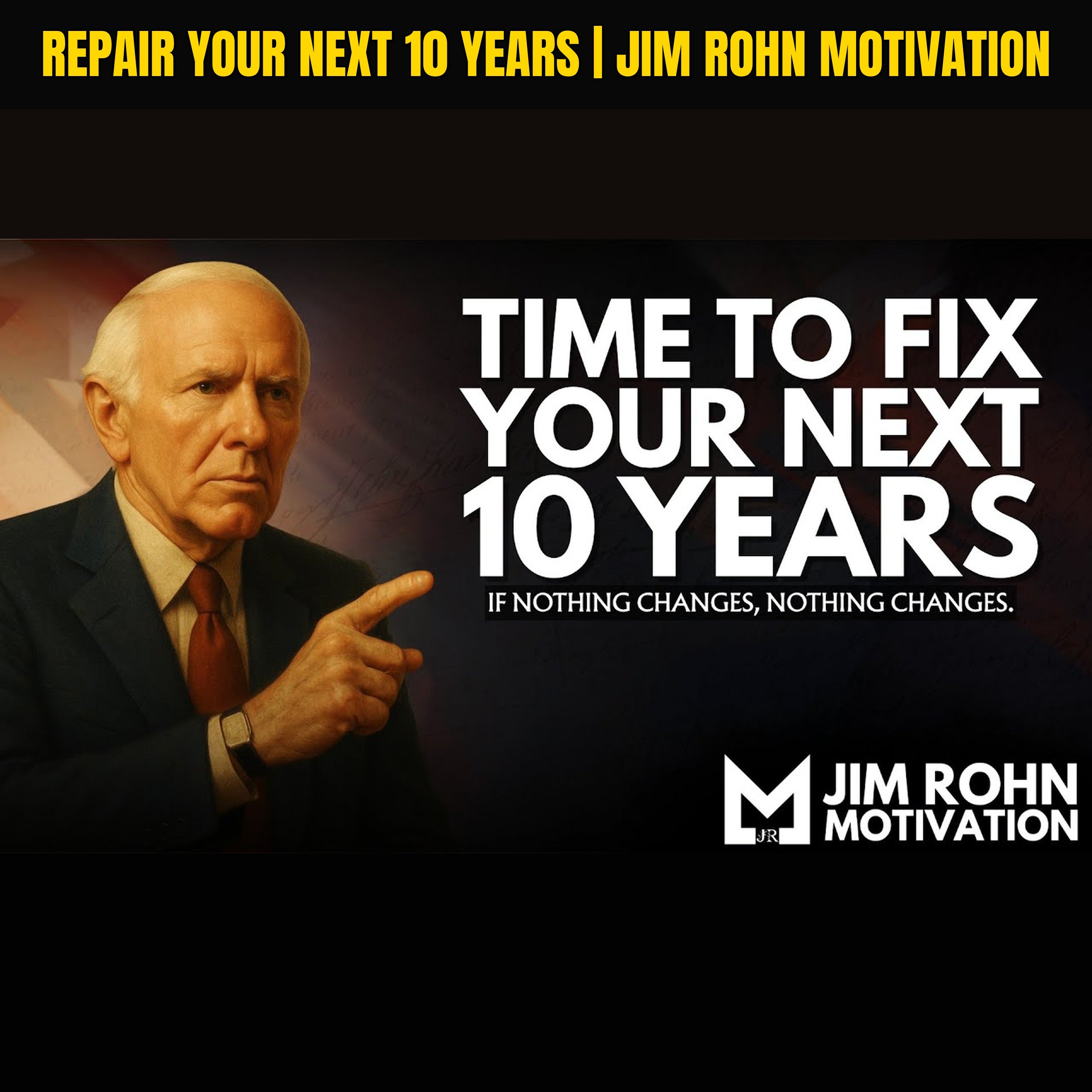
Repair Your Next 10 Years | Jim Rohn Motivation

47 min

#JimRohnMotivation #JimRohn #JimRohnSpeech In this Jim Rohn Motivation video, learn why the next ten years of your life won't change by accident—they'll change by design. Packed with actionable wisdom, this speech challenges you to raise your standards, build structure, and take full ownership of your time, habits, and future. Key Topics From This Motivational Video: The importance of owning your past to create your future Why clarity, structure, and repetition are key to transformation How to break free from excuses and average standards Using pain, truth, and pressure to fuel lasting growth Designing a life aligned with discipline, not emotion This Jim Rohn motivational video offers a masterclass in long-term transformation. It's not about hype—it's about systems, vision, and consistency. You’ll learn how to eliminate distractions, install new standards, and become someone who executes daily, regardless of motivation. Your next 10 years are not a mystery—they're a reflection of today

Discuss this episode

Jim Rohn Motivation Daily

Waking Up at 4:00 AM Every Day Will Change Your Life | Jim Rohn Motivation

48 min

# Waking Up at 4:00 AM Every Day Will Change Your Life | Jim Rohn Motivation The first hours of your day can set the direction for everything that follows. Uploaded 01-09-26 In this powerful motivational video inspired by Jim Rohn, you’ll discover why waking up at 4:00 AM can become a powerful discipline for taking control of your time, strengthening your focus, and creating more space for personal growth. Getting up early is not magic by itself—the real benefit comes from what you choose to do with those quiet hours. Jim Rohn teaches that success is built through daily disciplines. When you wake up before the distractions begin, plan your priorities, study, work on your goals, and invest in yourself, you start building a stronger relationship with your time and your commitments. Waking up at 4:00 AM is not about proving that you can sleep less. It is about becoming more intentional with your day while still getting enough quality sleep for your needs. If you're ready to take control o

Discuss this episode

Jim Rohn Motivation Daily

4 Disguises Fear Uses to Pass for Common Sense | Jim Rohn Motivation

37 min

You think you're hearing wisdom. You're hearing fear that spent a lifetime learning to sound like wisdom. Uploaded 11-05-26 When you were a kid afraid of the water, fear was honest about being fear. Somewhere along the way it got promoted — started speaking in complete sentences, making cases, passing for the smart move. This seminar breaks down the 4 disguises fear puts on so it can pass for common sense — and the practice that lets you catch each one in the act. CHAPTERS: 0:33 When You Were a Kid, Fear Was Honest 5:27 Disguise #1 — The Timing Argument 6:28 Disguise #2 — The Inadequacy Argument 7:40 Disguise #3 — The Consequence Argument 8:52 Disguise #4 — The Responsibility Argument 10:20 The Invisible Cost of Listening to Fear 14:39 The Slow Drift Into Spectator Life 16:27 How to Catch Fear in the Act (4 Tests) 21:54 The Practice of Deciding on Purpose 24:09 Name the Fear Before It Names the Decision THE 4 DISGUISES ▸ TIMING — "Not the right moment. Need a little more prep first." W

Discuss this episode

Community Poll

Preventing medical errors requires changing systems as well as holding individuals accountable.

Share your view, then see how readers voted. No sign-in required. This poll is shared across stories.

Do you agree or disagree?

Choose one answer

Common Quandary

A Common Quandary to discuss

Another conversation to explore, separate from this news story.

A pill can erase your most painful memory without changing anything else. Do you take it?

A safe new treatment can remove the emotional pain attached to one chosen memory while leaving the factual memory intact. Losing the pain might bring enormous relief, but the experience shaped your relationships, choices, and sense of who you are.

Are painful memories injuries to heal or parts of ourselves to keep?

Explore this quandary