Susan Wyndham on the acclaimed author who disappeared for 40 years
15 min
Listen through the publisher, then discuss the episode here or arrange an in-person Roundtable. Your city determines where to meet.
Roundtables are designed for groups of four, with a shared subject and room for everyone to speak. Come for discussion, with no dating expectation.
In 1966, Australian novelist Elizabeth Harrower was on the brink of literary fame. Her fourth novel, The Watch Tower, was hailed as one of the year's best Australian books, alongside a novel by her friend Patrick White. White went on to win the Nobel Prize for Literature, but Harrower stopped writing altogether. For the next four decades, she disappeared from the literary world. Now, a new biography aims to unravel the mystery of one of Australia's most elusive writers. Guest: Susan Wyndham, author of Elizabeth Harrower: The Woman in the Watch Tower winner of the Mark and Evette Moran Nib Literary Award.
Episode information is provided by the publisher. Listening takes place on the publisher’s service.
Today, Mel is taking 58 years of hard-earned life lessons and is packing them into under an hour, to save you some of the time, frustration, and worry it took her to learn them the hard way. In this episode, Mel is fielding real questions from listeners around the world. From making friends and bouncing back from rejection to feeling stuck in life and wondering if it's all going to work out, Mel is sharing the advice she wishes she'd known sooner. And she's not holding back. You'll hear Mel get personal about her own setbacks, and what she's learned about starting over, going after what you want, and trusting yourself when life doesn't go according to plan. You'll learn: -How to stop worrying about the future when nothing feels certain -How to make big life decisions, including whether or not to have kids -How to make new friends as an adult -What to do when you get rejected from your dream job -What to do when a friend ghosts you -How to stop procrastinating and finally follow through
Join Shaun Attwood LIVE with Fritz Springmeier, author and researcher known for his controversial investigations into MKUltra, mind control, the Illuminati, secret societies, and alleged covert intelligence operations. Fritz is the author of Bloodlines of the Illuminati and co-author of The Illuminati Formula Used to Create an Undetectable Total Mind Controlled person. His decades of research have explored alleged psychological programming, hidden power structures, and the influence of secrecy within governments and intelligence agencies. Tonight, Shaun and Fritz dive into the history of MKUltra, psychological warfare, government secrecy, and the escalating Iran conflict. They’ll explore propaganda, geopolitical tensions, international power struggles, and Fritz’s theories about how powerful institutions may influence world events. What is documented history, what remains hidden, and which claims deserve closer examination? Join us for an intriguing conversation examining both historic
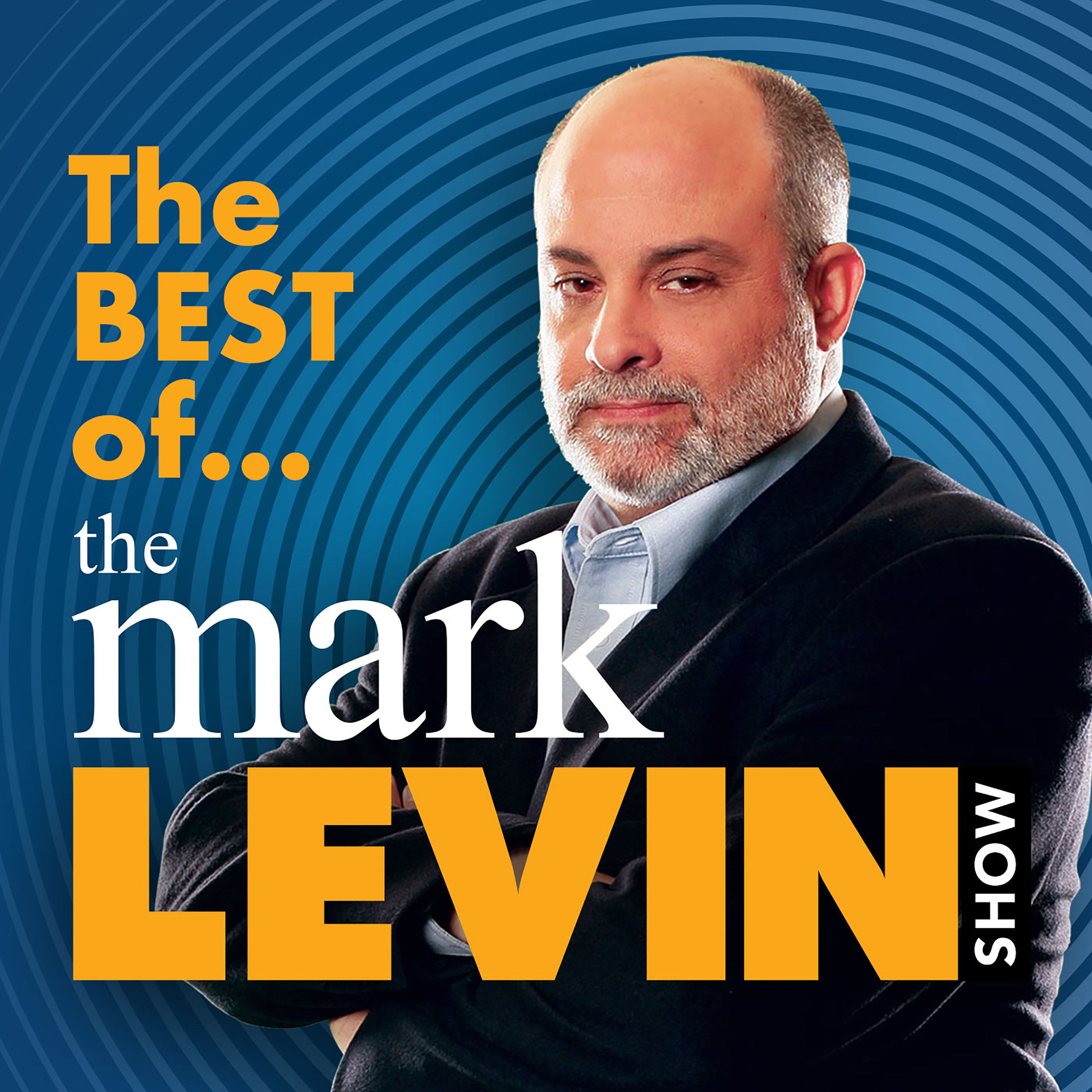
This week on the Mark Levin Show, 2028 Republican Presidential candidates must directly address the urgent threats to the country - Marxism and Islamism. These candidates should deliver bold, courageous speeches that clearly explain what is happening in the country, identify those responsible, and directly challenge these threats rather than leaving such warnings to a small number of media voices. Also, it is difficult to believe so many major outages affecting entities such as the NSA, FAA, airline systems, Microsoft, and Apple services could be merely coincidental. The timing and scale of the incidents are troubling and remain inadequately explained. President Trump had proposed a major modernization and restructuring of air traffic control in 2017 that Congress failed to enact. Had those reforms been adopted, many current FAA failures might have been avoided. Later, does Senator John Kennedy know anything about originalism? Originalism is not pure textualism. The meaning and intent
The ransom note was discovered inside the Ramsey home, written on paper investigators traced to a household notepad. Nearly thirty years later, John Ramsey is pressing police to test more evidence. How can investigators reconcile what happened inside that house with what new forensic technology might finally reveal? Tony Brueski brings Producer Todd and Lisa into the conversation about JonBenét Ramsey’s still-unsolved 1996 murder. The ransom note demanded $118,000, a figure close to John’s prior bonus. Investigators found what appeared to be the beginning of another note in the same pad. Patsy Ramsey called police that morning; John later discovered his daughter’s body in a basement room. These details remain consequential, but they do not identify a killer. John says several items initially returned from labs were not tested and wants additional DNA analysis of the note and other objects. Boulder Police dispute the idea they are ignoring viable evidence. At a November 2026 briefing, o
On 4th March 2023, UN member states agreed a historic treaty that had been over fifteen years in the making. The High Seas Treaty is the first ever treaty to protect the world’s oceans outside national boundaries. The aim is to meet the 30 by 30 biodiversity target, protecting 30% of the world’s oceans by the year 2030. Also known as the open sea or international waters, the high seas begin at the limit of countries’ exclusive economic zones. That means up to 370km, or 200 nautical miles, from the coastline. They account for 64% of the world’s oceans, and have been referred to as the last true wilderness, given how much mystery still lies within. Why is protecting the oceans so important? What measures are expected to come from the treaty? In under 3 minutes, we answer your questions! To listen to the last episodes, you can click here: How to make the most out of a rental property? (https://originals.bababam.com/do-you-really-know/202303090400-how-make-most-out-rental-property) What is
Screen time in schools, kids and AI: why Australian students just posted their worst ever reading and maths results. The federal Education Minister says screens are part of the problem. Sweden led the world putting tablets in classrooms and is now pulling them back out. NSW will cap kindy kids at 15 minutes of screen time a day from next year. So were the "hippie" Steiner schools ahead of their time all along? Karl sits down with Andrew Hill, CEO of Steiner Education Australia, which represents 53 schools that keep screens out of early childhood classrooms. Andrew explains why some Silicon Valley tech executives sent their own kids to a screen-free Steiner school, who has profited from a laptop for every kid ("the terrible thing about handwriting is that it's free"), and why he believes Bluey's creator modelled the show's school on a Steiner school in Queensland. Karl also puts the tough questions: Will kids without screens be left behind? Is it all woo-woo? What about bullying, fees a
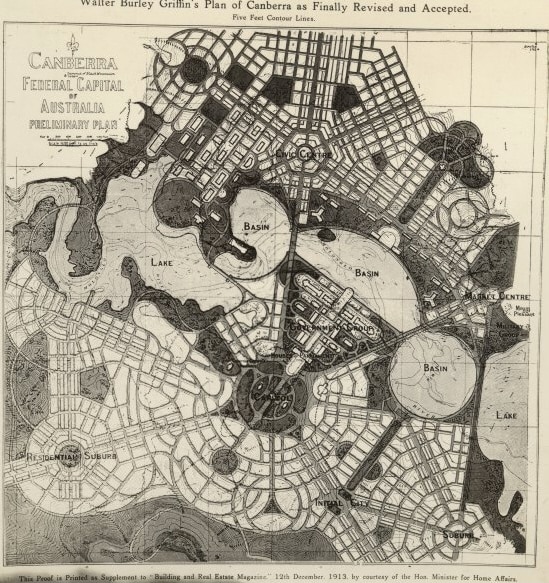
This Tuesday 24 November is the 150th anniversary of the birth of Walter Burley Griffin, the American architect who, in partnership with his wife and close collaborator Marion Mahony Griffin, won Australia’s Federal Capital Design Competition. The Griffins "radical" vision for Canberra was inspired by great thinkers at the turn of the 20th century, but the advent of The Great War was the beginning of the end of the Walter Burley Griffin plan. This year's Marion Mahony Griffin lecture, titled “The magic of two Americans (https://www.library.gov.au/whats-on/events/2026-marion-mahony-griffin-lecture-magic-two-americans)” is being given by Professor David Headon at the National Library of Australia on Tuesday November 24 at 6pm. It will also be lifestreamed on the National Library of Australia’s YouTube (https://www.youtube.com/@NationalLibraryofAustralia/featured) channel. Guest: Professor David Headon of the ANU Australian Studies Institute. David has also been Cultural Advisor at the Na
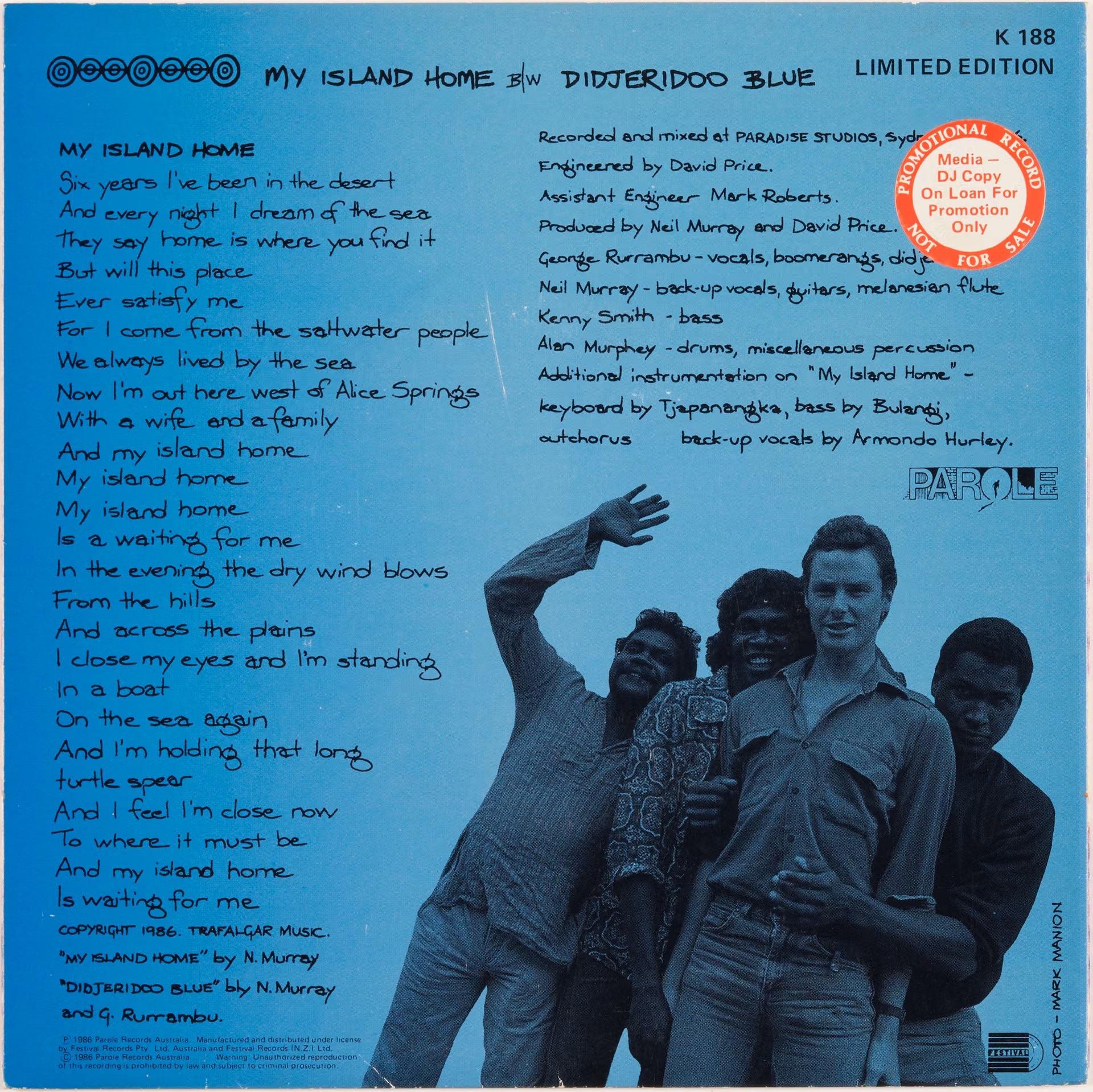
My Island Home came to Neil Murray on a bus, when he was thinking about Galiwin’ku, the island home of his Warumpi Band bandmate George Burarrwanga, and his own home country in western Victoria. This month, it was among the first 10 songs selected for the inaugural National Songbook (https://www.nfsa.gov.au/stories/deep-dives/national-songbook?gad_campaignid=24434697280&gad_source=1&gbraid=0AAAAAoyuqE8IloqWPu7EV-y2rDtcfF5WC&hsa_acc=4074694733&hsa_ad=830541886523&hsa_cam=24434697280&hsa_grp=202695137678&hsa_kw=nfsa+songbook&hsa_mt=p&hsa_net=adwords&hsa_src=g&hsa_tgt=kwd-2511061033177&hsa_ver=3), an annual collection “to honour songs that profoundly shape Australia's culture, identity and collective memory”. Neil speaks with Julian about the My Island Home story, Christine Anu's 1995 cover, and the songs he thinks should be included in the Songbook in the future. Neil will be playing (https://www.neilmurray.com.au/pages/itin.html) at The Presynct in Nambour on November 26, The Royal in N
“A memorable and endearing experience” of “surprising depth” that “will steal your heart”, and a work of “artistry” depicting “the well-earned satisfaction of an authentic human bond”. Among near-universal rave reviews, that’s what the New York Times and The Guardian respectively said this week about an epic and singular global cultural phenomenon: the release - after 13 years - of a new edition of Grand Theft Auto: the ultra violent, sexually-explicit computer game once described as “the gravest assault upon children …since polio". Guest: David Kushner, author of Jacked: The unauthorized behind-the-scenes story of Grand Theft Auto.
Predictable working hours are more important than maximum scheduling flexibility.
Share your view, then see how readers voted. No sign-in required. This poll is shared across stories.
Do you agree or disagree?
Common Quandary
A Common Quandary to discuss
Another conversation to explore, separate from this news story.
Software says a student cheated with AI. Is that enough to fail the paper?
A teacher suspects several essays were written with AI. Detection software marks one student's work as highly likely to be generated, but the software is known to make mistakes and the student denies using it.
How should responsibility be assigned when evidence is powerful but unreliable?