Talking About Modern Sleep Habits in English | Casual Vocabulary for Discussing Your Best Nightly Rest Patterns
33 min
Listen through the publisher, then discuss the episode here or arrange an in-person Roundtable. Your city determines where to meet.
Roundtables are designed for groups of four, with a shared subject and room for everyone to speak. Come for discussion, with no dating expectation.
Learn how to talk about your sleep habits in English, from staying up late to waking up feeling refreshed. Join Sarah and Mike for a slow, easy conversation about sleep scores, noisy nights, and scrolling in bed. Practise telling a friend how you slept and what helps you wind down. Ever feel tired after a rough night but struggle to explain it in English? You'll practise describing yourself as a light sleeper or a night owl, talking about lying awake, explaining why you couldn't fall back asleep, and offering a friendly suggestion with “Have you tried”. This episode is perfect for B1 English learners who want to build everyday vocabulary and speak more confidently about bedtime habits, interrupted sleep, and tired mornings. Tip: Make three sentences about last night using lie awake, fall back asleep and sleep through. Vocabulary in this episode • light sleeper: someone who wakes up easily • night owl: someone who likes staying up late • early bird: someone who likes getting up early • insomnia: repeated trouble sleeping • sleep-deprived: very tired from too little sleep • lie awake: stay in bed without sleeping • fall back asleep: sleep again after waking up • sleep through: keep sleeping without waking up • out like a light: quickly and deeply asleep • sleep like a log: sleep deeply without moving In this episode, you can practise: • Talking About Sleep Habits • Describing A Rough Night • Light Sleepers And Night Owls • Winding Down Before Bed • Falling Back Asleep • Using Sleep Like A Log • English listening practice • English speaking practice • B1 English vocabulary Everyday English Academy helps English learners build listening, speaking, vocabulary, and confidence through slow, easy everyday conversations with Sarah and Mike, including familiar moments like sharing how you slept. Get comfortable and learn along with Sarah and Mike as they chat about quiet evenings and noisy nights. Keep practising along by making three sentences about last night using “lie awake”, “fall back asleep”, and “sleep through”. #SleepHabits #BedtimeVocabulary #NightOwls #EnglishConversation #B1English #LearnEnglish #EnglishListening #EnglishPodcast #ESL #EverydayEnglishAcademy
Episode information is provided by the publisher. Listening takes place on the publisher’s service.
The people you know who have built quiet wealth — the ones with paid-off houses, real savings, money that produces more money while they sleep — almost none of them got there through a dramatic move. No lottery. No inheritance. No single brilliant investment. They got there through small habits, repeated every single day for ten or twenty or thirty years. Uploaded 10-07-26 Here is the truth: the habits are not flashy. They are so simple that most ambitious people overlook them entirely, looking for something bigger and more impressive. The bigger thing rarely shows up. The small daily habits, run for decades, are what actually produce the wealth. Two people earning the same income, with the same outside conditions, end up in radically different financial places based almost entirely on what they did every single day with the money that passed through their hands. Income is not the variable that determines wealth. Daily money habits are. This seminar walks through 10 of those habits. No
Imagine a friend telling you about something that has been bothering them. As you listen, you realize that if you were in their situation, with their experiences and circumstances, you might feel exactly the same way. Instead of telling them not to worry or trying to make them feel better immediately, you simply say: “You have every reason to feel the way you do.” Hello everyone, and welcome to Daily English. Today's expression is “have every reason to.” When we say someone has every reason to do or feel something, we mean that there are very good reasons for their feelings, beliefs, or actions. Given the circumstances, their response is completely understandable. Let's look at a few examples. Imagine a friend who has finally accomplished something after years of effort, setbacks, and moments of self-doubt. Yet they seem reluctant to celebrate their achievement. You could remind them: “You have every reason to be proud of yourself.” Or imagine someone who has been disappointed several
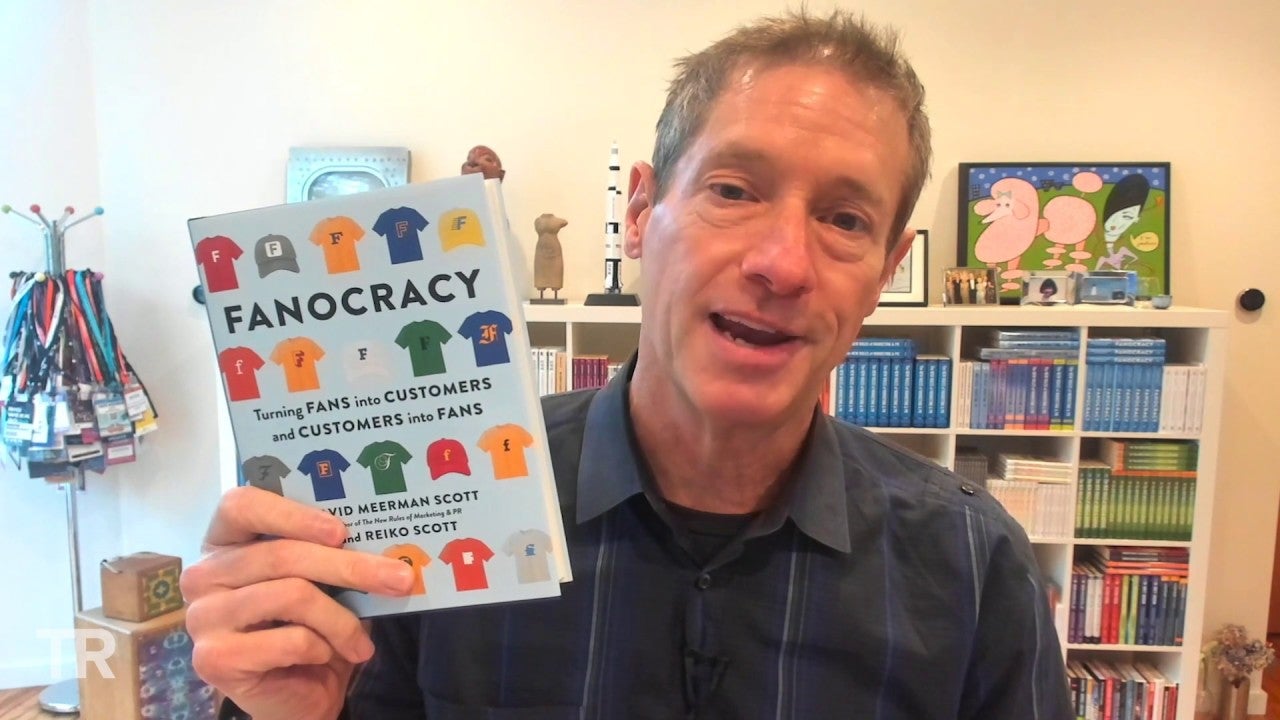
Marketing strategist, visionary and best-selling author David Meerman Scott shares three things you can be doing right now to improve your marketing and communications to create raving fan customers. Uploaded 24-04-20 For his recent book Fanocracy (https://www.fanocracy.com), (https://www.fanocracy.com),/) David researched an essential question for all business owners: Why do we become fans of something? Ultimately, humans are hard-wired to want to be part of a tribe. We want to find people who are like us. When we’re part of our tribe we feel safe and comfortable. When we’re not part of our tribe, we feel uncomfortable. Music creates these tribes. Tony Robbins events create these tribes. Especially in times of stress, business owners can leverage this need for belonging to create raving fan customers. (You can read about raving fan customers at https://www.tonyrobbins.com/career-business/create-raving-fan-customers and watch this video for more). But to do it, you’ll need to shift the
A.I. for Recognizing Gaslighting: Learning to Trust Your Own Perception Again, a practical, beginner-friendly look at how artificial intelligence can help you trust your own perception of reality again. Recognizing Gaslighting? Press play on Episode 433 of A.I. for Beginners and learn exactly how artificial intelligence, especially ChatGPT, alongside a journaling app, can help you trust your own perception of reality again. WHAT YOU WILL LEARN IN THIS EPISODE - Why recognizing gaslighting is so hard to handle alone, and what is actually going on underneath it - A specific way to use a journaling app to work through it, step by step - An example prompt you can copy word for word: "Help me write down exactly what was said and how it made me feel, without anyone's spin on it" - A second practical technique, with another ready-to-use prompt: "Can you help me understand what gaslighting actually means and what some common patterns look like" WHO THIS EPISODE IS FOR - Anyone currently workin
Charlie Kirk’s assassination will dominate the headlines—but before the truth is even clear, the disinformation machine is already spinning. This video exposes how suppression, radicalization, and division are weaponized—not by ideology, but by systems designed to keep you outraged, divided, and distracted. Uploaded 11-09-25 We’ll reveal: • Why suppression is the biggest red flag in history—and why it always signals weakness, not strength. • How highly suggestible people are radicalized—not by one side or the other, but through media outrage loops, algorithmic echo chambers, and deliberate manipulation. • The illusion of “left vs. right”—a distraction designed to pit neighbors against each other while corruption, corporate power, and elites escape untouched. • The common ground we all share: freedom, safety, stability, fairness—and what none of us want: corruption, endless wars for profit, elites with different rules, surveillance states, and justice systems that bend for the powerful
In Niger, married men aged 25 and over are going back to school, not to learn maths or English, but about maternal health, family planning and women’s rights. In some villages, they meet twice a month in groups led by facilitators from local NGOs, then share what they learn with other men. The aim is to make family health a shared responsibility, rather than a burden borne by women alone. Known as “husbands’ schools”, these groups have spread across Niger and inspired similar initiatives elsewhere in West Africa. Why were these schools set up? So why focus on men? So, how do these husbands’ schools work in practice? And has it made a difference? In under 3 minutes, we answer your questions! To listen to the latest episodes, click here: What is a man child? (https://originals.bababam.com/do-you-really-know/202611080359-what-man-child) What is kinkeeping, the invisible workload often done by women? (https://originals.bababam.com/do-you-really-know/202602160359-what-kinkeeping-invisible-w
Improve your English conversation skills by comparing city living and small village life with Sarah and Mike. Join us for a slow, easy English podcast where we discuss the differences between a busy city and a quiet small village. In this episode, we break down phrases like must be crying and a sad sandwich while exploring the realities of adapting to city living. By following our natural dialogue, you will practice English vocabulary related to urban environments and learn how to express your own preferences for where you live. This episode is perfect for B1 English learners who want to improve their fluency while mastering common phrases used in daily conversation. We focus on clear, steady pacing to help you practice English listening and gain a better grasp of natural phrasing when talking about your lifestyle choices. We also touch on the role of nightlife in our personal experiences. Keep practising by telling us in the comments if you prefer the pace of a big city or the calm of
Improve your English conversation skills by learning how to describe your ideal weekend getaway and travel packing essentials. Join Sarah and Mike for a slow, easy English podcast where we discuss the logistics of planning trips. In this episode, we follow a conversation about going to the market and preparing for a journey. By listening to our natural dialogue, you will practice English vocabulary related to travel planning and managing a budget for your next vacation. This episode is perfect for B1 English learners who want to improve their fluency while mastering common phrases used when discussing trip details. We focus on clear, steady pacing to help you practice English listening and gain a better grasp of natural phrasing for your own adventures. Keep practising by telling us in the comments where you would go for a weekend getaway and what you always pack.
Improve your English conversation skills by learning how to discuss your morning commute habits. You will gain confidence in your daily speaking and transportation vocabulary. Join Sarah and Mike for a slow, easy English podcast where we break down the language used for daily travel. In this episode, we explore the subway life, explaining how to use the past continuous tense to describe interruptions during your trip. By following our natural dialogue, you will practice English grammar in a real-world context and learn how to share your own experiences. This episode is perfect for B1 English learners who want to improve their fluency while mastering essential transportation vocabulary. We focus on clear, steady pacing to help you practice English listening and gain a better grasp of natural phrasing for your daily routine. Keep practising by telling us in the comments how you usually get to work or school.
Environmental marketing claims should require independent verification.
Share your view, then see how readers voted. No sign-in required. This poll is shared across stories.
Do you agree or disagree?
Common Quandary
A Common Quandary to discuss
Another conversation to explore, separate from this news story.
You are not sick—you just cannot face work today. Do you call in sick?
Your employer offers sick leave but no personal days. You are not physically ill, yet you feel exhausted and know a day away would help. Saying you are sick is the only way to take paid time off without explanation.
Do unjust workplace rules change the duty to be truthful?