Teaching | Where Do You Need to Be Saved? (From the Archive)
36 min
Listen through the publisher, then discuss the episode here or arrange an in-person Roundtable. Your city determines where to meet.
Roundtables are designed for groups of four, with a shared subject and room for everyone to speak. Come for discussion, with no dating expectation.
Why should the Christmas story— and the Savior at the center of it—matter to us today? In this teaching, John Mark reveals what the Christmas story tells us about who Jesus is as Savior, who we are as people in need of saving, and what we actually need to be saved from. He also unpacks three prevailing ideologies that make the Christmas story so hard for modern people to believe. This teaching was first delivered at Bridgetown Church in Portland, Oregon, in the winter of 2017. Special thanks for this episode goes to: Bruce from Memphis, Tennessee; John from Washington D.C.; Sarah from Vancouver, British Columbia; Nick from Winchester, Virginia; Laura from Delray Beach, Florida. Thank you all very much. Mentioned in this teaching: Genesis 1:1–2 Isaiah 7:14 Isaiah 40:1–2 Matthew 1 and 2 Matthew 1:18–25 Aleksandr Solzhenitsyn
Episode information is provided by the publisher. Listening takes place on the publisher’s service.
Why do we put off doing good even when we know what to do? In Episode 29 of Become New’s Seven Deadly Sins series, John Ortberg explores sloth, how it differs from healthy rest, and why fear can make “not yet” feel easier than taking action. From Augustine’s Confessions and John Greenleaf Whittier’s “Maud Muller” to Jesus’ teaching in Matthew 25, John looks at what happens when we keep postponing the good we could do. Then Baxter, John’s old dog, offers a picture of perseverance: rest when you need to, then take one more step. New episodes every weekday. One day at a time. TEXT us at 51504 EMAIL US at [email protected] GET A TEXT REMINDER FOR NEW VIDEOS: text NEW to 51504 DOWNLOAD FREE STUDY GUIDES: BecomeNew.com/study-guides Music Credits: Welcome to the World by Sarah Watson License# MB01XUUTGU633PL 0:00 Why sloth deserves a closer look 1:25 The Homer Simpson version of sloth 2:26 Rest is good, and Augustine says “not yet” 3:33 How sloth helps us dodge the call to love 4:21 The f
“What is a NAR song?” After I mentioned NAR worship music in a recent episode, that was the question I kept seeing in the comments. So I invited Holly Pivec, coauthor of Counterfeit Kingdom, to help answer it. Holly explains what the New Apostolic Reformation teaches about modern-day apostles and prophets, and we look at how those beliefs can show up in worship lyrics. We discuss songs like “I Speak Jesus” and Bethel Music’s “Champion,” why phrases like “bringing heaven to earth” can mean different things to different people, and whether it matters who wrote a song if the lyrics sound biblical. We also talk through three ways churches can approach this question, what worship leaders can ask before putting a song on the Sunday set list, and how pastors can care for people who have experienced spiritual abuse in NAR churches. ----------------------------------------------------------------- This video is sponsored by: SEVEN WEEKS COFFEE Taste the Coffee that is Saving Lives. Go to http:/
Tenth on the list of Jesus’ 12 disciples is a fella with so many names he could be easily confused as multiple people. Judas Thaddaeus, Lebbaeus, Jude, or Judas son of James. Why so many different names for one man? Maybe quite simply so he wasn’t confused with the other Judas. Many nicknames were given to this Judas so we would know he was different than the Judas who betrayed Jesus. This Judas was faithful and loyal. In fact, the nickname Thaddaeus implies he was a gentle soul with a tender, childlike heart. So, we’ll call him Thaddaeus. There are 2 things a childlike heart does – they ask questions, and they believe. A child is so inquisitive, asking questions about literally everything. But they will also believe everything. They don’t need proof, they don’t even need to understand – if you answer them, they will believe. And isn’t it beautiful that this disciple named for his tender, childlike heart is only recorded in scripture speaking one thing – a question. On the final night
Christianity is oppressive. Truth is subjective. A good God wouldn’t allow evil. Sound familiar? Todd Friel, Justin Peters, and Jim Osman tackle five arguments people use to reject Christianity and equip you to respond with biblical confidence. Segment 1 When questioning your beliefs is actually a GOOD thing. Was Christianity invented to control people? How to turn a skeptic’s argument back on them. Segment 2 Do Christians need to defend the Crusades? “That’s your truth, not mine.” How would you respond? The historical lie about the Bible your kids may be hearing. Segment 3 Does the existence of evil disprove God? Is God responsible for your suffering? What the cross reveals about your darkest moments. Segment 4 Are we really born sinful? The danger of downplaying an offensive Gospel. Does Christianity actually oppress women? ___ Thanks for listening! As part of our Multiply 2027 year-end campaign, every gift made through December 31, 2026, will be matched dollar-for-dollar, up to $750
P. S. Band Together - Learn more about discipleship bands here (https://discipleshipbands.com/). Please fill out the Discipleship Bands interest form here (https://seedbed.typeform.com/to/xrac4SAe). - - - - - - - - - - - - - - - - - - - J.D. Walt teaches that by the end of Romans 15, Paul is committed to strengthening the church Jesus is building. Paul worked to mend the net of the church in Rome, which was strained by false teaching, spiritual warfare, poverty, and interpersonal conflict, and he planned to go to Jerusalem with an offering, then visit Rome and use it as a mission base for a trip to Spain. JD says the church rises and falls on the deep bonds among believers, and that relationships are the mission. He recalls a conversation between George Whitefield and John Poole, in which Wesley's practice of joining awakened souls in classes preserved the fruits of his labor while Whitefield's people were a rope of sand, and he urges listeners to join a band or become a rope of sand.
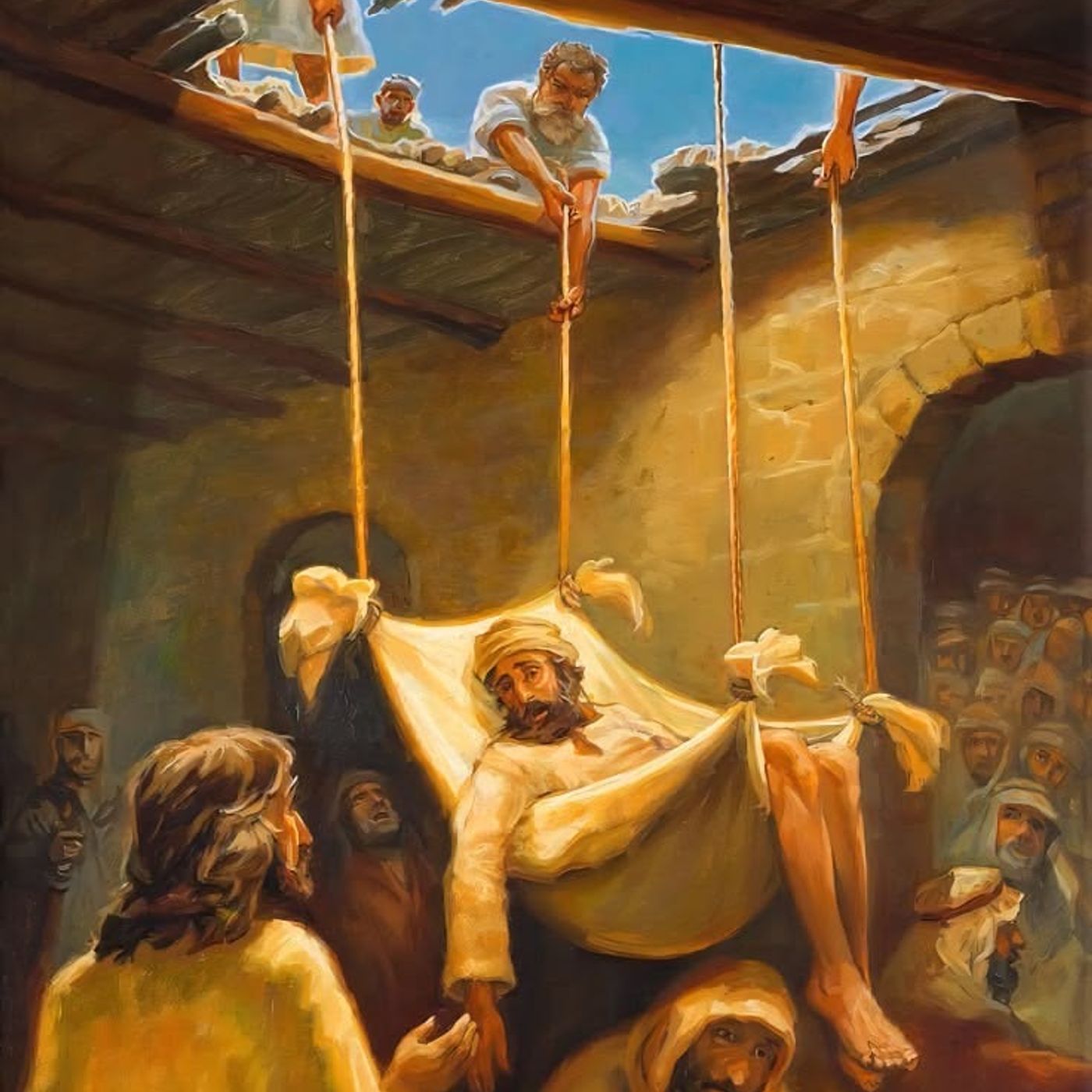
This story reveals the importance of having people who do more than offer sympathy—they help us move toward what is good, even when circumstances make progress difficult. It also challenges us to consider the kind of friend we are. Sometimes, the support someone needs is not another piece of advice but someone willing to help carry them. Are we helping people grow, encouraging them through difficult seasons, and pointing them toward Christ? Every contribution counts. Thank you for being part of our journey!
If life feels full and time feels short, what would it take to make room for stillness and silence? In this conversation, John Mark and hip-hop artist Lecrae offer personal insight on the spiritual and pragmatic sides of the yearslong process of building a practice of solitude in a culture that’s constantly pushing against it. This episode is from the Into the Quiet Experience in Atlanta, Georgia, in Fall 2026. Special thanks for this episode goes to: Sarah from Vancouver, British Columbia; Pam from Parker, Colorado; Josh from Tomball, Texas; Cynthia from Leesburg, Virginia; Karen from Garwin, Iowa. Thank you all very much. Mentioned in this conversation: Into the Silent Land: A Guide to the Christian Practice of Contemplation by Martin Laird Practicing the Way A.W. Tozer Dallas Willard Ronald Rohlheiser Seraphim of Sarov Abba Moses
What if the smallest pockets of free time in your life offer just enough space for silence and solitude? In this conversation, John Mark and Bible teacher Priscilla Shirer discuss practicing God’s presence, discerning God’s voice, and meditating on Scripture, specifically among the constant interruptions of family life. This episode is from the Into the Quiet Experience in Dallas, Texas, in Fall 2026. Special thanks for this episode goes to:Callie from Dallas, Texas Kathleen from Gilbert, Arizona; Andrew from Swannanoa, North Carolina; Iris from Sokndal, Norway; Patrick from Statham, Georgia. Thank you all very much. Mentioned in this conversation: Practicing the Presence of God by Brother Lawrence Domestic Monastery: Creating Spiritual Life at Home by Father Ronald Rohlheiser Experiencing God: Knowing and Doing the Will of God Tyranny of the Urgent by Charles Hummel The Epic of Eden: A Christian Entry Into the Old Testament by Sandra L. Richter The Pursuit of God by A.W. Tozer Searchi
What if Jesus is waiting for you in the life you already have? In this conversation, John Mark and Tish Harrison Warren—an author and Anglican priest—explore how we can repurpose ordinary aspects of our everyday lives into “incarnational, improvisational” spiritual practices that transform our hearts and minds, rather than waiting for the interruptions to end. This episode is from the Into the Quiet Experience in Austin, Texas, in Fall 2026. Special thanks for this episode goes to: Lydia from Nashville, Tennessee; Laura from Aurora, Colorado; Ryan from Fort Lauderdale, Florida; Michael from Georgetown, Texas; David from Cazenovia, New York. Thank you all very much. Mentioned in this conversation: Liturgy of the Ordinary: Sacred Practices in Everyday Life by Tish Harrison Warren What Grows in Weary Lands: On Christian Resilience by Tish Harrison Warren Invitation to a Journey by Robert Mulholland Scott Cairns
Researchers should publish important limitations alongside the main findings.
Share your view, then see how readers voted. No sign-in required. This poll is shared across stories.
Do you agree or disagree?
Common Quandary
A Common Quandary to discuss
Another conversation to explore, separate from this news story.
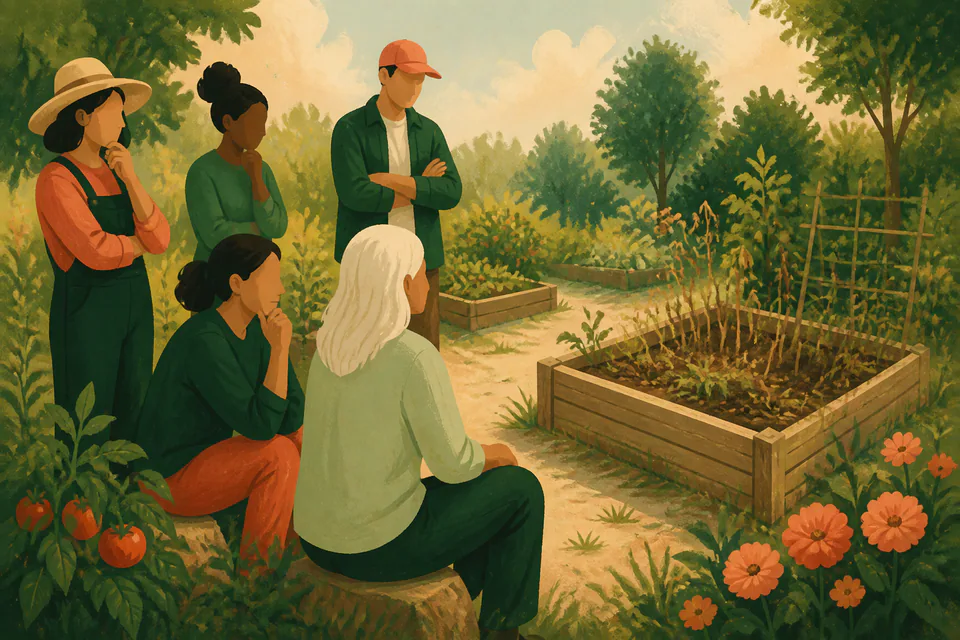
The best garden plot has been abandoned for months. Who gets to take it?
Garden plots have a three-year waiting list. One member's plot has gone untended for months and messages go unanswered, but other gardeners know they recently faced serious health problems.
How long should a shared resource remain reserved out of compassion?