Listen through the publisher, then discuss the episode here or arrange an in-person Roundtable. Your city determines where to meet.
Roundtables are designed for groups of four, with a shared subject and room for everyone to speak. Come for discussion, with no dating expectation.
The award-winning English writer, Tessa Hadley, speaks to Take Four Books about her new work of non-fiction, Alone With A Book, and, together with presenter James Crawford, they explore its connections to three other texts. Alone With A Book is a collection of essays written by Tessa as she reflects on a lifetime spent in reading and writing. For her three influences Tessa chose: the children's book, Tom’s Midnight Garden by Philippa Pearce from 1958; The Latehomecomer by Mavis Gallant, which is a collection of short stories put together by Tessa herself and published by Pushkin Press in 2025; and finally the coming-of-age classic Jane Eyre by Charlotte Bronte, from 1847. Producer: Dominic Howell Editor: Gillian Wheelan This is a BBC Audio Scotland production.
Episode information is provided by the publisher. Listening takes place on the publisher’s service.
V. E. Schwab is on the show today. She has written 27 books and is one of the top fantasy writers in the world. Right before we started recording, we were walking through a garden and saw a small bell. We started joking about it, and I noticed her jokes about it were magical, wondrous, fantastical, and a little spooky. I thought, "Ah, I see how your brain works." This was interesting; I wanted to learn more. So I asked her, "How do you take that imagination and turn it into incredible stories on the page? Why do you take outlining so seriously? Why do you start with setting when you write? And how do you take characters from your imagination and make them real on the page?" If you want to learn to write fantasy well, you will love this conversation with V. E. Schwab. About the host Hey! I’m David Perell and I’m a writer, teacher, and podcaster. Follow me YouTube: https://www.youtube.com/@DavidPerellChannel Spotify: https://open.spotify.com/show/2DjMSboniFAeGA8v9NpoPv X: https://x.com/d
Alan Cumming talks to us about taking on the role of Professor Henry Higgins in a new stage production of Lerner & Loewe's musical My Fair Lady at Pitlochry Festival Theatre and about his big plans for the theatre in 2027. American heiress and collector Peggy Guggenheim was one of the most influential figures in 20th century art, and a new exhibition at the Royal Academy in London tells the story of how her Mayfair gallery, opened in the late 1930s scandalised the conservative London establishment. Guggenheim's private life was equally as colourful as the work she collected - by the likes of Eileen Agar, Salvador Dalí, Barbara Hepworth and Vasily Kandinsky. We discuss her influence and legacy with art critic Florence Hallett and with her granddaughter Karole P. B. Vail, Director of the Peggy Guggenheim Collection in Venice . Composer Jay Capperauld speaks to us about the premiere of Silent Teachers, his new work honouring people who donate their bodies to medical research and commissio
Michael Symon discovers he might actually be a food snob, Carla Hall says one stuffing tastes like the box it came in, and Clinton Kelly tries to give everyone a fair chance. It's a Thanksgiving stuffing blind taste test with very little restraint and a surprise at the reveal. Then Michael shares a late-night kitchen invention: a stuffing-inspired sausage melt with Swiss cheese, mustard, and mayo on buttery toasted bread. Clinton's ready to open a bar just to serve it. Along the way, the three debate guests who arrive too early or won't leave, whether to tell a stranger there's something in their teeth, and Clinton's deeply unfortunate encounter with a talkative chef. Tell us in the comments: What's your must-have Thanksgiving stuffing, and what do you make with the leftovers? Special Thanks to Our Sponsors: Visit butcherbox.com/chewed (https://butcherbox.com/chewed) to get $20 off across your first two boxes, plus new subscribers get their choice of filet mignon, New York strip, or ri
What happens when E.T. finally shows up and asks to speak to someone in charge? Renowned astrophysicist, bestselling author, and master cosmic storyteller Neil deGrasse Tyson joins us for a lively exploration of one of humanity's oldest and most irresistible questions: are we alone in the universe? "Ever since childhood," writes Neil deGrasse Tyson, "I've wanted to be abducted by Aliens." His new book, Take Me to Your Leader: Perspectives on Your First Alien Encounter, is the culmination of a lifetime of obsession, speculation, and the amassing of scientific data about the possibility of aliens visiting Earth. Fusing science, history, pop culture, and a healthy dose of cosmic humor, Tyson takes us on a whirlwind tour of our culture's fascination with life beyond Earth, from flying saucer lore and alien abductions to UFO culture, UAP sightings, and our enduring fantasies about visitors from other worlds. What does science tell us about the possibility of intelligent extraterrestrial lif
Benjamin Kemper is a writer and editor based in Madrid. Formerly a senior editor at Saveur, he specializes in the foodways of Spain and the Caucasus and is the coauthor of Georgia: The Cookbook (https://www.amazon.com/Georgia-Cookbook-Meriko-Gubeladze/dp/1958417890?th=1), a lush culinary journey through the country of Georgia told through essays, cultural commentary, and showstopping recipes from noted chef Meriko Gubeladze. Ben is not Georgian, but he fell in love with the country, visiting it over 25 times to make this book, and today on the show, we go deep on the research and experiences that made it possible. Also on the show Matt has a great conversation with AJ Ayers, author of the terrific new book, Creative Money (https://www.penguinrandomhouse.com/books/808718/creative-money-by-aj-ayers/). We talk about how to balance your restaurant budget, and take a close look at why we spend the way we spend. AJ and Matt have a shared love for Palm Springs and they go over some of their f
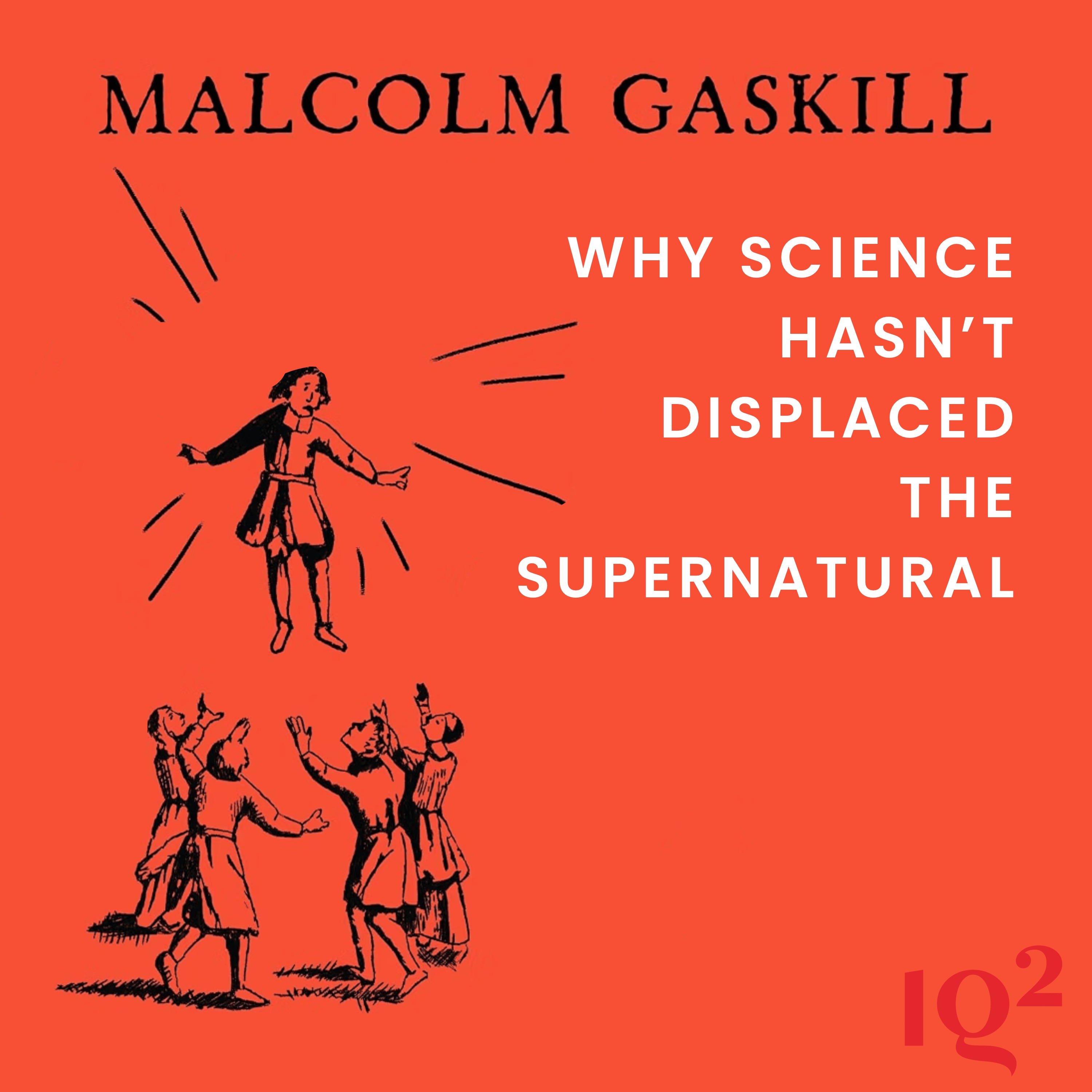
How do we make sense of the unseen? For centuries, the supernatural has offered ways to understand misfortune, find comfort and live with uncertainty. But its history is not simply a story of superstition giving way to reason. Why did people seek evidence in witchcraft trials? Can science and supernatural belief exist alongside one another? And what might today’s encounters with frontier technologies reveal to us about the persistence of the uncanny? In this episode, Margherita Volpato speaks with Malcolm Gaskill about his new book, Worlds of Fear and Wonder: Living with the Supernatural, Past and Present. Together, they explore the emotions behind supernatural beliefs that have shaped culture. They discuss Puritans searching for signs from God, the persistence of enchantment in the modern world and the uneasy relationship between technology and the uncanny. Malcolm Gaskill is Emeritus Professor of Early Modern History at the University of East Anglia and the author of seven books, inc
Best-selling author Joanne Harris speaks to Take Four Books about her new novel, Sleepers in the Snow, and, together with presenter James Crawford, explores its connections to three other works. Sleepers in the Snow follows a recently divorced man who moves to a remote cottage on a lonely moor, overshadowed by a vast electricity pylon. As the isolation of his new surroundings begins to take hold, strange and unsettling events blur the boundaries between memory, reality and the supernatural. For her three influences, Joanne chose Susanna Clarke's Piranesi (2020), Eugene Ionesco's The Chairs (1952), and Shirley Jackson's The Haunting of Hill House (1959). Producer: Rachael O’Neill Editor: Gillian Wheelan This was a BBC Audio Scotland production.
Youth sport should prioritize lasting participation over early selection of elite performers.
Share your view, then see how readers voted. No sign-in required. This poll is shared across stories.
Do you agree or disagree?
Common Quandary
A Common Quandary to discuss
Another conversation to explore, separate from this news story.
You wear an expensive outfit once and return it spotless. Clever or dishonest?
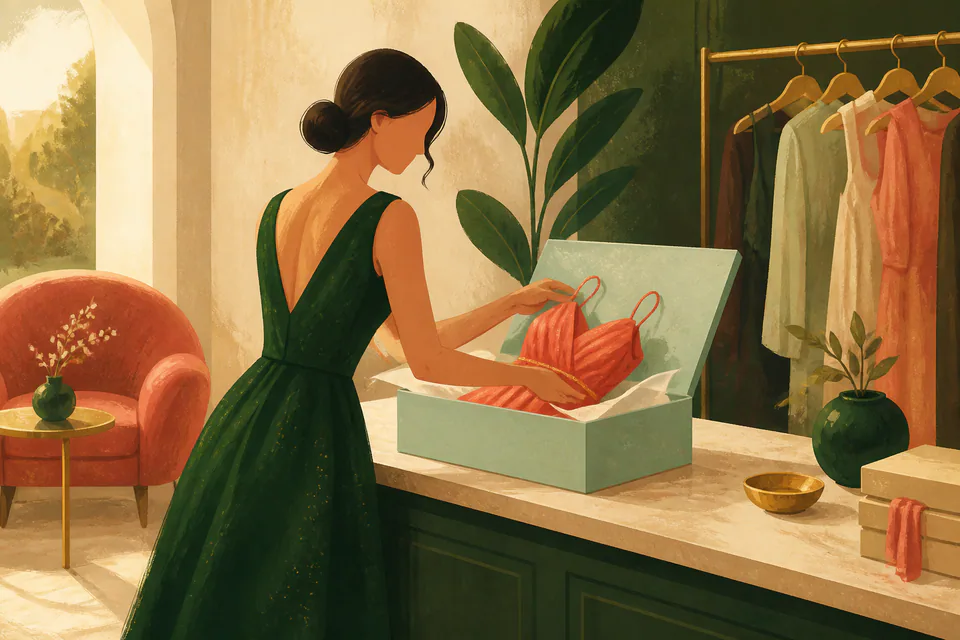
You buy an expensive outfit for a single event, keep it spotless, and return it the next day. The store's generous policy allows returns without asking whether an item was worn.
Does exploiting a policy differ from breaking a rule?