The 3 Things Successful People Do for Their Mental Health
19 min
Listen through the publisher, then discuss the episode here or arrange an in-person Roundtable. Your city determines where to meet.
Roundtables are designed for groups of four, with a shared subject and room for everyone to speak. Come for discussion, with no dating expectation.
How to Build Great Mental Health: 3 Things People Who Overcome Fear and Anxiety Do DifferentlyYou learn one more idea about your anxiety. You feel a little better for a few minutes. Then the fear asks for the next idea, and nothing in your life has changed.In this episode of the Restored Minds Podcast with Matt Codde, Matt walks through the three things he sees in people who actually get better, and what the opposite looks like so you can tell where you really are. He draws on thousands of conversations, and on the moment in his own life when managing a fear loop stopped being an acceptable outcome.Success in recovery is not accidental. It follows a path, and most people stay where they are because one part of that path is out of balance.Check our New App: restoredminds.com/startCheck our New App: restoredminds.com/startCheck our New App: restoredminds.com/start What You’ll Learn in This Episode Own your role in the pattern without taking blame for what was never yours Spot the difference between trying and committing Remove the back-up option that pulls you out of the process Stop mistaking information for progress Recognize the habits that keep fear going: avoiding, ruminating, suppressing emotion, analyzing, and seeking reassurance Find out which of the three is out of balance for you Resources to Help You Heal: Download now: https://www.restoredminds.com/start Buy now: https://a.co/d/1WEvonT Apply Now: https://www.restoredminds.com/tbc Apple Podcasts: https://apple.co/3NJI2zD Spotify: https://spoti.fi/46AiT30 Ask a Question for a future episode: Download the Book – From Stuck to Unstuck Instagram: https://www.instagram.com/mattcodde.restoredminds/ Facebook: https://www.facebook.com/mattcodde.restoredminds/ LinkedIn: linkedin.com/company/restoredminds/ TikTok: https://www.tiktok.com/@mattcodde.restoredminds If this episode helped you, share it on Instagram Stories and tag us!⏱️ Timestamps00:00 Why success in recovery is not accidental00:59 Thing 1: Take full responsibility05:22 Thing 2: Commit to an outcome11:35 Thing 3: Focus on implementation, not information14:58 Which camp are you in?16:13 Closing thoughts⚠️This content is for educational purposes only and is not medical advice. Consult a licensed professional for personalized support.
Episode information is provided by the publisher. Listening takes place on the publisher’s service.
Today, Mel is doing something she's never done before on The Mel Robbins Podcast. She's bringing members of her team into the studio for live coaching with world-renowned communications expert Vinh Giang. Vinh is known for teaching millions of people online how to stop sounding insecure, speak more clearly, and get people to listen when you talk. And when you hear him coaching today, it will be like he’s coaching you. One person freezes when they're put on the spot. Another can't stop interrupting people. Someone else has great ideas but stays quiet because they're afraid of being judged. Does any of that sound familiar? And Vinh isn't just giving advice. He's coaching real people through practical exercises, right there in the studio, so you can hear the difference and start making those same changes in your own life. As Mel says, put yourself in their shoes. As Vinh works with each person, you'll recognize things you struggle with, too. You'll learn: -What to do when your mind goes b
Happy Sunday! Welcome to Heal Squad’s The Sunday Set Up. Life lessons to help you start the week. How much of success comes down to simply showing up? This week, we talk keeping an open mind, taking chances, and recognizing the doors that open along the way. From Olympic athletes appearing on national television alongside Mercedes Moné to performers who keep showing up week after week hoping for their big break, we explore why success isn't always about talent or luck. Sometimes it's about making connections, putting in the effort, and being willing to try without knowing what we'll get in return. We talk knowing when to stop investing time in people who aren't willing to help themselves, and why even experiences that don't work out can teach us something valuable. The takeaway: don't wait for the perfect moment or expect someone else to make things happen. Be willing to take a chance, walk through the doors that open, and remember that half of life is just showing up. Plus, a little b
A kiss can be wonderful. It can create an instant connection, spark romance, or make you feel closer to someone. But a kiss can also have the opposite effect — and sometimes ruin everything. So what makes kissing so powerful, and why can one kiss make such a difference? There's some fascinating science behind it. https://www.scientificamerican.com/article/why-we-kiss/ We spend an enormous amount of time worrying about what's going to change. What's next? What's coming? How do we prepare? But what if we're paying attention to the wrong things? Some of the most important forces shaping our lives never change, and understanding them may be far more valuable than trying to predict the future — something humans are notoriously bad at. Morgan Housel, partner at The Collaborative Fund and author of Same as Ever: A Guide to What Never Changes (https://amzn.to/3SwWn6u) (https://amzn.to/3SwWn6u)), joins me to explain why the things that stay the same may be the most important things to understan
If you're training hard but feeling wiped, eating a restricted diet for your gut, or just never hungry after a tough workout, you might not be getting the protein you need. This episode breaks down how much you really need and how to get it without upsetting your gut. YOU'LL TAKEAWAY: Macronutrients and calories 101, and how restrictive diets throw off your balance How your body digests protein, and why it matters before workouts The many roles of protein, from enzymes and iron storage to post-workout appetite How much protein you need, plus 3 easy low FODMAP ways to boost it — RESOURCES & LINKS MENTIONED: ⤵️ Want high touch coaching support for IBS & fuelling performance? Apply for coaching. (http://gutfitnutrition.com/apply) Free Training: How to Control IBS So You Can Fuel Your Training Without a Lifelong Low FODMAP Diet (https://gutfitnutrition.com/heal-ibs-training-live) Supporting your immune system when you're sick (Ep. 70) (https://open.spotify.com/episode/5bCto0jWLcbC5hQW4hrH6
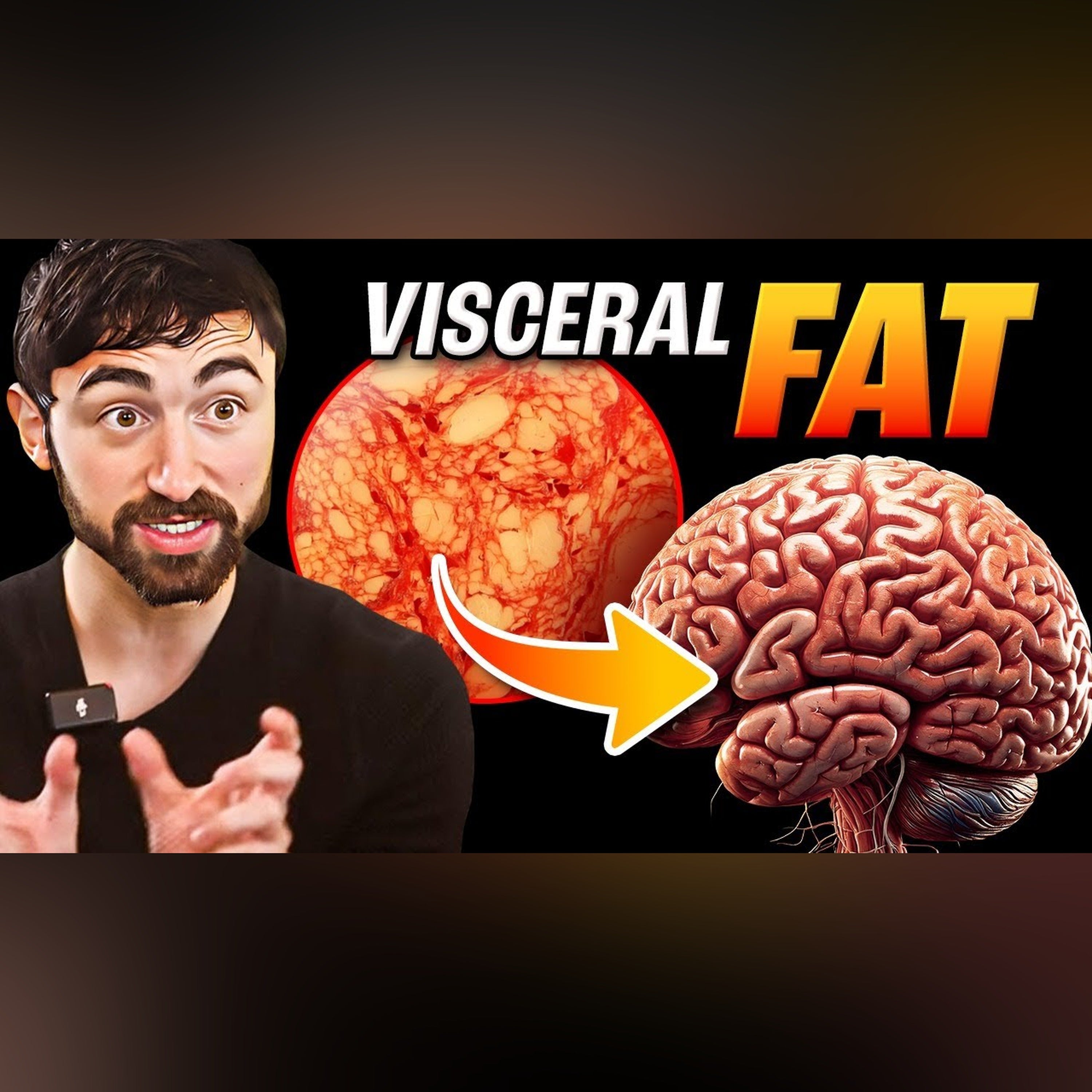
For all references and even deeper nuances, check out the StayCurious Metabolism letter: https://staycuriousmetabolism.substack.com/p/can-visceral-fat-cause-depression?r=40ekz2 Chapter *Call our service line at 815-STAY-CUR (815-782-9287) *Learn more about the data, here: https://staycuriousmetabolism.substack.com/p/life-or-death-in-the-fine-print-the?r=40ekz2 Visceral Fat Randomized Controlled Trial Video: https://youtu.be/lDeegZ1wtAI Description: Most people think of fat as extra weight—something cosmetic or something to “burn off.” But new science is showing something far more profound: visceral fat is an endocrine organ that sends biochemical messages across the entire body, including directly into the brain. And those messages can change mood, increase stress sensitivity, and even promote depression. In this video, we break down a brand-new study revealing how visceral fat releases tiny molecular packages called extracellular vesicles. Inside those vesicles is a specific microRNA—
Keto Consult #12, This week Jennifer and I talk about my experience at the Metabolic Health Center 2019. I was able to hear some really interesting lectures about Keto for Cancer and Keto for Mental Health. The talk about Keto for Cancer and Keto for Mental Health has come such a long way in the past 2 years and continues to evolve. We also discuss the Effects of Marijuana on the Brain and Hyperbaric Oxygen Chambers and the benefits of Hyperbaric Oxygen Therapy. Finally we get an update from Jennifer and discuss her personal Keto Journey. Thanks for tuning into my channel. To learn more about Keto and Cancer, read my blog here: https://bozmd.com/m-d-anderson-on-the-keto-diet-and-cancer/ BOOK-LINK - ANYWAY YOU CAN. AUDIBLE: https://adbl.co/2SLLfS1 PAPERBACK= (Affilate link) https://amzn.to/2Cq1IVC The two most common questions I get ... 1) "Doc, what BLOOD METER do you recommend?" ANSWER: FORACARE: http://bit.ly/2QKGmKG For years my diabetics told me this system was great. I tried sever
AI and Anxiety: Why Asking a Chatbot for Reassurance Keeps the Fear Loop GoingYou ask the question from inside the fear. The answer comes back shaped by that fear. You feel better for a few minutes, and then the loop asks again.In this episode of the Restored Minds Podcast with Matt Codde, Matt looks at how people use AI to settle fear and anxiety, where it can genuinely help, and why information alone has never been the thing that changes a life.Check our New App: restoredminds.com/startCheck our New App: restoredminds.com/startCheck our New App: restoredminds.com/start What You’ll Learn in This Episode Why the answer you get reflects the state you asked from How a quick reassurance becomes a compulsion that feeds the loop Why feeling better for a few minutes is not the same as getting better What it means to move from understanding an idea to embodying it Why the information lane feels safe and keeps you stuck Where AI, books and videos fit once you know the work is yours Resources t
In this episode of the Restored Minds Podcast with Matt Codde, we look at what sits underneath most fear and anxiety: what you are actually attached to. Not your thoughts. Not your symptoms. The foundation underneath them. Matt breaks down the difference between a fear-based attachment and a love-based attachment, and why so many people spend years managing anxiety and intrusive thoughts without ever touching the source. If you have worked hard to be good, to think your way out, or to build a life where nothing gets triggered, this episode shows why that effort keeps you in the same place. Check our New App: restoredminds.com/startCheck our New App: restoredminds.com/startCheck our New App: restoredminds.com/start What You’ll Learn in This Episode Spot the fear underneath your need to be good Recognize when you are masking pain instead of releasing it See why understanding an idea is not the same as living it Tell which state you are living from by how life actually feels Understand wh
You can get the job, the money, the relationship, and still feel the same underneath. In this episode, Matt Codde, LCSW, explains why.He walks through where suffering really comes from, why chasing peace in the outside world keeps fear and anxiety running, and why healing starts with turning inward and looking at what has been running you from underneath, your own state of consciousness.If you recognize the chase in this episode, start with the free recovery guide below. What You’ll Learn in This Episode Understand where most suffering actually comes from See why asking "why do I want this?" gets uncomfortable fast Learn how the chase for peace keeps fear and anxiety running Notice why distraction and positive thinking are counterproductive Recognize why "I don't have time for this" is worth examining Discover why peace can only be found withinCheck our New App: restoredminds.com/start Resources to Help You Heal: Download now: https://www.restoredminds.com/start Buy now: https://a.co/d
Communities should usually repair existing infrastructure before building replacements.
Share your view, then see how readers voted. No sign-in required. This poll is shared across stories.
Do you agree or disagree?
Common Quandary
A Common Quandary to discuss
Another conversation to explore, separate from this news story.
Your family connection could get your child into their dream school. Do you use it?
A university argues that considering family ties builds loyalty and encourages donations that fund scholarships. Critics say the preference preserves inherited advantage and takes places from stronger applicants.
Can benefits to the whole institution justify an unequal admissions advantage?