Listen through the publisher, then discuss the episode here or arrange an in-person Roundtable. Your city determines where to meet.
Roundtables are designed for groups of four, with a shared subject and room for everyone to speak. Come for discussion, with no dating expectation.
Height is a loaded topic – especially during adolescence – because we live in a height-ist society. It helps to know the real science behind the hormone that fuels growth. In this episode, we detail where growth hormone is produced in the body, how it tells bones to lengthen, and how it impacts other organs, too. We also get into why and when a doctor might prescribe growth hormone as a treatment. Make sense of this complicated topic, where the emotional stakes are high. Show Notes: To submit listener questions email [email protected] Produced by Peoples Media (https://www.peoplesmedianetwork.com/)
Episode information is provided by the publisher. Listening takes place on the publisher’s service.
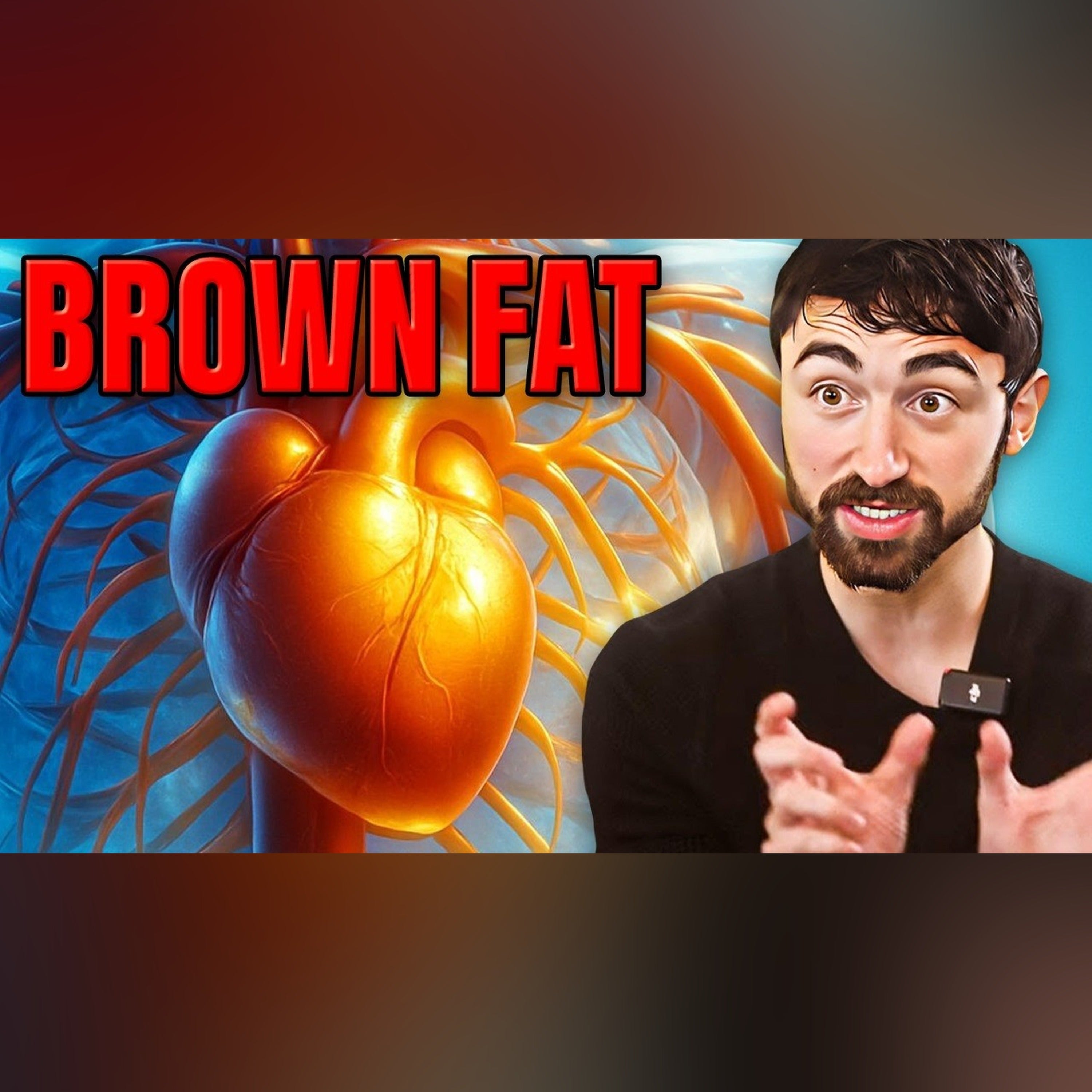
For all references and a written breakdown, see the associated StayCurious Metabolism Newsletter: https://staycuriousmetabolism.substack.com/p/the-fat-derived-hormone-that-could?r=40ekz2 Exciting new research in 2025 suggests that a fat-derived hormone called 12,13-diHOME may help to reverse age-related decline in cardiac function and slowing heart aging. The best part? You can boost it naturally — not with drugs or supplements, but with a simple lifestyle intervention that’s accessible today. In this video, we break down the latest metabolic health and longevity science on how this lipid hormone made by brown fat cells declines with age, how that hormonal drop contributes to cardiovascular aging, and what evidence-based lifestyle interventions can increase 12,13-diHOME to more youthful levels. If you care about heart health, reversing aging, and boosting metabolic resilience, this is essential science you should know. CHAPTER *Call our service line at 815-STAY-CUR (815-782-9287) or vi
Fear has a way of quietly taking control of your life. It convinces you to stay where you are, avoid difficult conversations, delay decisions, tolerate situations you know aren’t good for you, and settle for a life that is far smaller than the one you are capable of living. In this episode of The Strong Life Project, we explore how fear impacts your thinking, your relationships, your career, your leadership, and ultimately your ability to live a meaningful life. Fear doesn’t always look like panic. Sometimes it looks like procrastination, overthinking, making excuses, people pleasing, avoiding conflict, or constantly waiting for the perfect moment. The problem is that every time you allow fear to make a decision for you, you reinforce the belief that you are incapable of handling what comes next. Over time, this creates a pattern of avoidance that undermines confidence, resilience, emotional strength, and personal growth. Learning to manage fear doesn’t mean becoming fearless. It means
For research and entertainment purposes only. ALL MY LINKS IN ONE PLACE Every week about 25,000 questions come through my AI chat app. It strips out anything personal and groups what people keep asking. This Q&A covers 27 of the most common ones from the last seven days. Mitochondria led the pack this week with over 3,000 asks. We get into running SS-31 before MOTS-c, mixing them in one syringe, fasting, and whether NAD+ injections still add anything on top of 5-Amino-1MQ and NMN. Then growth hormone. How milligrams convert to IUs. HGH versus tesamorelin versus CJC-1295 and ipamorelin. Why a good IGF-1 number on tesamorelin doesn’t tell the whole story. Binding proteins hold onto IGF-1, so less of it reaches your tissues. Plus the cancer question that comes up constantly. I also cover storage, which a lot of people won’t ask about publicly. How long mixed peptides last, fridge versus freezer, and whether bac water really goes bad at 30 days. We finish with healing peptides and GLP-1s.
A kiss can be wonderful. It can create an instant connection, spark romance, or make you feel closer to someone. But a kiss can also have the opposite effect — and sometimes ruin everything. So what makes kissing so powerful, and why can one kiss make such a difference? There's some fascinating science behind it. https://www.scientificamerican.com/article/why-we-kiss/ We spend an enormous amount of time worrying about what's going to change. What's next? What's coming? How do we prepare? But what if we're paying attention to the wrong things? Some of the most important forces shaping our lives never change, and understanding them may be far more valuable than trying to predict the future — something humans are notoriously bad at. Morgan Housel, partner at The Collaborative Fund and author of Same as Ever: A Guide to What Never Changes (https://amzn.to/3SwWn6u) (https://amzn.to/3SwWn6u)), joins me to explain why the things that stay the same may be the most important things to understan
A hypnosis session for anyone facing a high stakes interview or exam. Release the pressure, quieten the nerves and go in feeling calm, clear and ready. In this session: Why high stakes moments make the mind race and the body tense Letting go of the fear of getting it wrong Calming your nerves so you can think clearly under pressure Trusting what you already know and can do Walking in with steady focus and quiet confidence FREE STUFF AND DISCOUNTS: Get $25 to Spend at The Hypnotist Store Find the Hypnosis Session You Need No more scrolling through hundreds of podcast episodes. What's Your Hypnotic Type? About 4 minutes. Take the test (https://adamcox.co.uk/suitability-test/) Work With Adam Directly Trusted by CEOs, celebrities, and royalty worldwide. Connect With Adam All links (https://adamcox.co.uk/links/) | [email protected] | @adamcoxofficial (https://www.instagram.com/adamcoxofficial/) Tags: high stakes interview, exam anxiety, interview nerves, exam stress, performance pressure,
Is your body weight stable, but you're still not eating enough to properly fuel your training, recovery, and overall health? Introducing Why Stable Weight Doesn't Always Mean You're Eating Enough from Jeff Hoehn of the Mind Muscle Connection Podcast (https://www.buzzsprout.com/1508401). Just because your weight isn't changing doesn't necessarily mean you're adequately fueled. In this episode, Jeff breaks down why maintaining a stable body weight doesn't always mean you're meeting your body's energy needs, especially if you're training hard, staying lean, or spending long periods dieting. You'll learn: Why stable body weight doesn't automatically mean adequate energy availability Who is most at risk of underfueling, even when their weight isn't changing How high training output, staying too lean, and chronic dieting can contribute to low energy availability The potential signs of underfueling, including changes in performance, recovery, hormones, and menstrual health Why spending too lo
Envy has a negative vibe — it’s generally considered an emotion to suppress or feel ashamed by. But many cultures have a positive spin on envy. With the help of social scientist Dr. Stacy Kim, we explore the two sides of the envy coin: how it can fuel toxic comparison on the one hand, and inspire purpose by revealing what we truly want on the other. This understanding helps parents manage their own envy when comparing themselves to other parents… or their children to other people’s kids! Show Notes: Envy (https://www.hachettebookgroup.com/titles/stacy-s-kim-ph-d/envy/9781538776735/?lens=balance)by Stacy Kim To submit listener questions email [email protected] Produced by Peoples Media (https://www.peoplesmedianetwork.com/)
Is social media truly driving the teen mental health crisis? Because if it is, we should be taking one set of steps to protect kids. But if it’s not, we’re spending a ton of energy barking up the wrong tree. Dr. Candice Odgers has been researching teen mental health and tech use for decades. Her data strongly suggests that social media is only one culprit – the other major drivers include family mental health, economic pressures, teen lifestyle, and achievement culture. On the TED stage and elsewhere she’s argued that this is why banning social media is not the answer. Join us for an eye-opening conversation that separates fear from facts. Show Notes: To submit listener questions email [email protected] Produced by Peoples Media (https://www.peoplesmedianetwork.com/)
Keeping food affordable should not require producers to work for an unsustainable income.
Share your view, then see how readers voted. No sign-in required. This poll is shared across stories.
Do you agree or disagree?
Common Quandary
A Common Quandary to discuss
Another conversation to explore, separate from this news story.
The stadium can ban violent fans by scanning every face at the gate. Would you walk in?
A stadium can use facial recognition to identify people banned for violence and shorten security lines. Every visitor would be scanned, error rates are not zero, and the resulting biometric data could become useful to police or advertisers.
How much privacy may a crowd be asked to trade for collective safety?