The Beginning of Democratic-Led, Divided Government in Texas
60 min
Listen through the publisher, then discuss the episode here or arrange an in-person Roundtable. Your city determines where to meet.
Roundtables are designed for groups of four, with a shared subject and room for everyone to speak. Come for discussion, with no dating expectation.
With election day behind us, James Henson & Joshua Blank discuss the beginning of Democratic-led, divided government in Texas; including the early signaling from both parties and the rapid efforts to consolidate power around the Texas Capitol.
Episode information is provided by the publisher. Listening takes place on the publisher’s service.
November 21, 2026 On November 22, 1963, President John F. Kennedy and First Lady Jacqueline Kennedy were visiting Texas, They hoped to heal a rift in the Democratic Party, as the white supremacists who made up the base of the party’s southern wing loathed the Kennedy administration for its support for Black rights, That base was furious about the administration’s backing of James Meredith, the first Black American to enroll at the University of Mississippi, By going to Dallas, Kennedy hoped to mend some fences in the state Democratic Party, The President's motorcade began with high spirits, Lady Bird Johnson thought, when she heard three shots, that it “must be firecrackers or some sort of celebration,” The Secret Service, knowing what had happened, rushed the motorcade to a hospital, When Vice President Johnson and Lady Bird were told that the President was dead, officials rushed LBJ away, In the confusion - in addition to the murder, it wasn't clear how extensive the plot was against
Democratic strategist James Carville joins Peter for a classic dose of Ragin’ Cajun candor. He weighs in on whether Democrats can keep the winning streak alive in Southern states like Texas, South Carolina, and Mississippi; names the 2028 hopefuls who actually have the juice, particularly with Black voters; and considers whether A.O.C. and Jon Ossoff are talented enough to take back the White House.
One of the best Christian films that Glenn Beck has ever seen was written by… Ben Shapiro? Glenn speaks with Ben about his new film, “Confession,” starring Rob Lowe and James Franco, a gritty drama about a prisoner in Stalin’s USSR. They discuss why Ben wanted to tell this story, why it feels very different from your standard Christian film, and what it may signal about Hollywood, which is snubbing it. Glenn also gets Ben’s thoughts on why antisemitism has become so popular on both the left and right, as well as what it truly means to be a man. Plus, Ben gives his rapid-fire takes on this week’s biggest news stories: the release of GTA VI, the outages, Jensen Huang and Nvidia, Robert Pattinson’s casting as James Bond, the midterms, the next leaders of the Republican and Democratic parties, data centers in space, how Joe Rogan became a right-wing icon, and whether woke is coming back. Glenn’s Sponsors: PreBorn: This Christmas, you can sponsor an ultrasound and help save a baby’s life fo
A wave of major technology outages is raising troubling questions about America's cybersecurity, aging infrastructure, and readiness for a new era of artificial intelligence. Are these isolated technical failures, or warning signs of a much larger national security problem? John Solomon and Amanda Head welcome Ohio Congressman and former Army Ranger Warren Davidson, who discusses recent disruptions involving the FAA, Microsoft, and other critical systems. Davidson calls for greater transparency from government agencies and technology companies, questions whether America's infrastructure is adequately protected against emerging cyber threats, and examines how artificial intelligence could be used both to strengthen defenses and exploit vulnerabilities. The conversation also turns to immigration and national security, with Davidson raising concerns about individuals who entered the country illegally, potential gaps in government screening systems, and the surveillance powers used to moni
Countries are leaving the UN's annual climate summit without reaching an agreement after the European Union and others rejected the final deal. As Candice Cole reports, the biggest sticking points were around fossil fuels. Washington's governor has called the video of two people being arrested by ICE at an airport in Seattle "chilling." Heidi Petracek reports on the cancellation of a federal government program that helped community groups sponsor and support refugees coming to Canada. David Murdock on the election of the new Liberal leader in Nova Scotia. Melissa Ridgen reports on warnings from the trucking industry that bridge and overpass strikes in Western Canada are only going to get worse. Heather Yourex-West takes us through the new Airbnb rules and what they mean for hosts and guests. Plus, Felicia Parrillo introduces us to three Montreal students who won an international NASA competition.
Screen time in schools, kids and AI: why Australian students just posted their worst ever reading and maths results. The federal Education Minister says screens are part of the problem. Sweden led the world putting tablets in classrooms and is now pulling them back out. NSW will cap kindy kids at 15 minutes of screen time a day from next year. So were the "hippie" Steiner schools ahead of their time all along? Karl sits down with Andrew Hill, CEO of Steiner Education Australia, which represents 53 schools that keep screens out of early childhood classrooms. Andrew explains why some Silicon Valley tech executives sent their own kids to a screen-free Steiner school, who has profited from a laptop for every kid ("the terrible thing about handwriting is that it's free"), and why he believes Bluey's creator modelled the show's school on a Steiner school in Queensland. Karl also puts the tough questions: Will kids without screens be left behind? Is it all woo-woo? What about bullying, fees a
Public projects should publish comparisons of promised and actual outcomes.
Share your view, then see how readers voted. No sign-in required. This poll is shared across stories.
Do you agree or disagree?
Common Quandary
A Common Quandary to discuss
Another conversation to explore, separate from this news story.
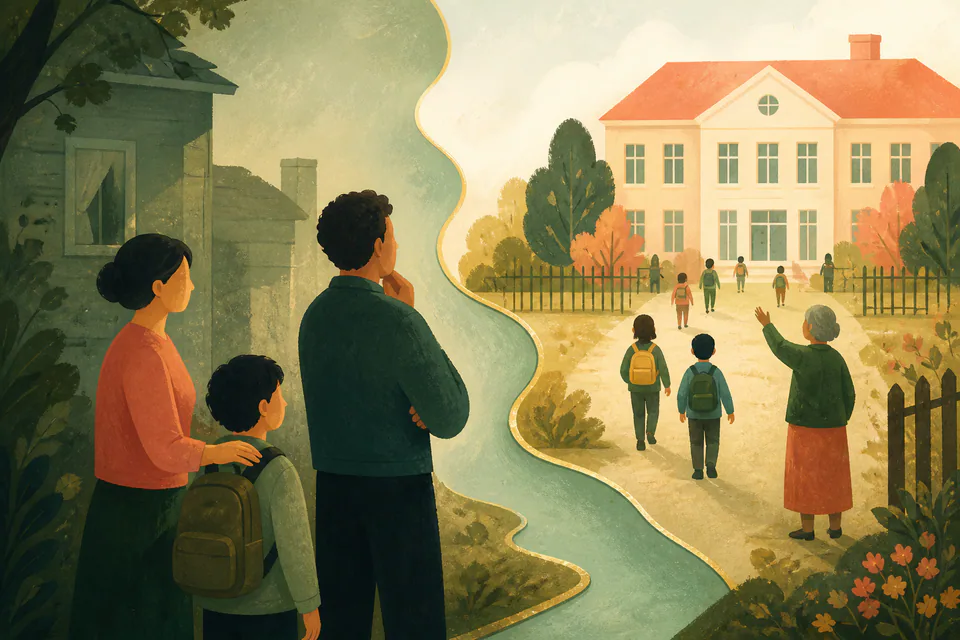
A better public school is one borrowed address away. Would you use it?
Your child is struggling at the assigned school. A grandparent lives inside the boundary of a much stronger public school and offers to let you use their address. The desired school has limited places and verifies residency unevenly.
Can a parent's duty justify taking an opportunity allocated by an unfair boundary?