Listen through the publisher, then discuss the episode here or arrange an in-person Roundtable. Your city determines where to meet.
Roundtables are designed for groups of four, with a shared subject and room for everyone to speak. Come for discussion, with no dating expectation.
The decision to start a family is now becoming a question of economics. As many Americans struggle to buy a home, save for retirement, and repay student loans, adding childcare as a line item in the household budget is creating financial stress. In fact, in most states, childcare for two kids costs families more (https://19thnews.org/2025/06/child-care-costs-rising-home-costs/) than their mortgage or rent. In this episode, we speak to Luona Lin, a research associate at Pew Research Center, to hear the latest data on how parents are navigating the blurred boundaries between work and family life. We also interview Brigid Schulte, director of the Better Life Lab at New America, who discusses the sociological and economic factors that contribute to parents being overwhelmed.
Episode information is provided by the publisher. Listening takes place on the publisher’s service.
Alex Murdaugh's murder conviction is gone because the Supreme Court found his court clerk, Becky Hill, put her fingers on the scales of justice. Nick Reiner can't bring back the lawyer he wants because the woman running his trust is holding the money until a court decides whether he can inherit from the parents he's accused of killing. Eric Faddis, a defense attorney and former prosecutor, takes on both in this full episode. For Alex, that means the no-blood lab result on his T-shirt, the lead state investigator's grand jury testimony that wasn't true, and why Hill was never charged over the jury. For Nick, it's whether about $558,000 that came due before his parents died is already his, what a private lawyer can do that a public defender can't, and why his heroin history could hurt an insanity defense. Both men are presumed innocent. Alex goes back on trial in April. Listen Anywhere You Get Podcasts: https://pod.link/1655749292 Want to comment and watch this podcast as a video? Instag
Runaway government spending, rising costs, and a new wave of legal battles over constitutional rights. With Democrats preparing to take control of Congress and several state governments, Republicans are confronting a very different political landscape. John Solomon and Amanda Head welcome Montana Senator-elect Kurt Alme, who says Washington must get serious about reining in spending, lowering inflation, and making everyday life affordable again. Already preparing for his arrival in the Senate, Alme discusses his priorities for protecting Montana's way of life, keeping taxes low, creating good-paying jobs, and working across party lines when possible. He also addresses the challenges Republicans face in the minority, the remaining lame-duck session, and concerns about efforts to expand the Supreme Court and eliminate the filibuster. Then, Southeastern Legal Foundation President Kimberly Hermann joins the show with a warning about potential policy reversals in states where Democrats have
**SOCIAL SECURITY BEFORE AGE 62? YES! YOU COULD QUALIFY AT 43, 53, 60, OR EVEN YOUNGER!** Think you have to wait until age 62 to start receiving Social Security benefits? **Think again!** Millions of Americans know about Social Security retirement benefits, but many don't realize that certain people can receive monthly Social Security payments years, or even decades, before reaching retirement age. Need help with Medicare? Contact our friends at Chapter Medicare for FREE HELP!! 352-841-0632 **Could YOU qualify for Social Security benefits earlier than you think?** In today's video, **Dr. Ed Weir, a former Social Security Administration District Manager**, explains the often-overlooked Social Security rules that allow certain individuals to qualify for benefits in their 40s, 50s, and even younger. You may be surprised by who's eligible, which benefits are available, and what circumstances could allow you to start receiving payments. **IN THIS VIDEO, WE'LL ANSWER:** Can you really start
In this video, Disability Attorney Walter Hnot of the Disability Resolution Law Firm goes over Sweetie's uplifting story, and the three surgeries that she underwent. Sweetie is the fluffy monkey monster snuggle cuddle puff dog of Disability Lawyer Walter Hnot. Please watch the journey of Sweetie, as it may one day save your dog's life. America’s Most Viewed Social Security Disability Attorney Like the content? Review us here: https://g.page/r/CcwyektC7nCPEAg/review . If the link does not work, Google: Disability Resolution, P.A. Welcome to the largest Social Security Disability Tutorial Video Library On Earth. PRIVATE ONE HOUR SESSION PHONE CALL THIS IS HOW YOU CAN GIVE BACK TO HELP GROW THE CAUSE: Option 1: Leave 5 |==================5 STAR REVIEWS==================| Google (Search Disability Resolution Orlando, FL)- https://www.google.com/search?authuse... (https://www.google.com/search?authuse...=) AVVO (Search Walter Hnot) - https://www.avvo.com/attorneys/32817-... BBB (Search Disa
On Friday’s Mark Levin Show, Alabama residents are speaking out over plans to expand the Auburn Islamic Center and build a mosque. Residents argued their opposition was not political or based on religious hatred, but on concerns about an ideology which threatens American society. These local governments are treating mosques the same as other houses of worship under zoning rules, but officials should use regulatory and ordinance processes to scrutinize such projects. This Auburn Islamic Center is about a foreign power attempting to extend its influence deeper into America. Local zoning boards should put a stop to this. Meanwhile, Texas Governor-elect Gina Hinojosa, despite campaigning as a centrist focused on the American Dream, is pursuing policies that favor migrants and H-1B visa holders over American citizens by expanding migrant hiring in schools and state jobs. These policies will lower wages, reduce job opportunities for citizens, increase housing costs, and weaken public infrast
Until a little under two weeks ago, Silicon Valley Bank was the sixteenth largest bank in the United States, the favoured choice of tech startups due to the tailored services it provided. But by 10th March 2023, American authorities were taking control of SVB following its collapse. It had assets of over $200bn, making for the second biggest bank failure in US history. There were a number of factors behind the collapse, and it’s causing concern as it’s common for one bank collapse to be followed by another, due to what’s called financial contagion. Indeed, just a few days later it was the turn of New York-based Signature Bank to collapse. And over in Europe, Switzerland’s second largest bank Crédit Suisse had to take out a $54bn to stay afloat, before then being bought out by the country’s largest bank UBS, in a bid to halt the crisis. Why did Silicon Valley Bank collapse? How do stock market crashes happen? In under 3 minutes, we answer your questions! To listen to the last episodes,
Meet Gary. He's a California sea lion who ended up at the world's largest marine mammal hospital after being exposed to harmful marine algae. Gary needs care and nourishment before he can make his way back home to the ocean. In Sausalito, California, the "After the Fact" team visited The Marine Mammal Center to see how they care for animals like Gary that are affected by harmful algal blooms (or "red tides"). Experts at the center share how marine mammals such as seals and sea lions can give advance warnings about the health of the environment. Because the health of the ocean, wildlife, and humans are all interconnected, when marine mammals become sick due to ecosystem changes, that has ripple effects for humans too.
New competition formats should improve the experience for players as well as audiences.
Share your view, then see how readers voted. No sign-in required. This poll is shared across stories.
Do you agree or disagree?
Common Quandary
A Common Quandary to discuss
Another conversation to explore, separate from this news story.
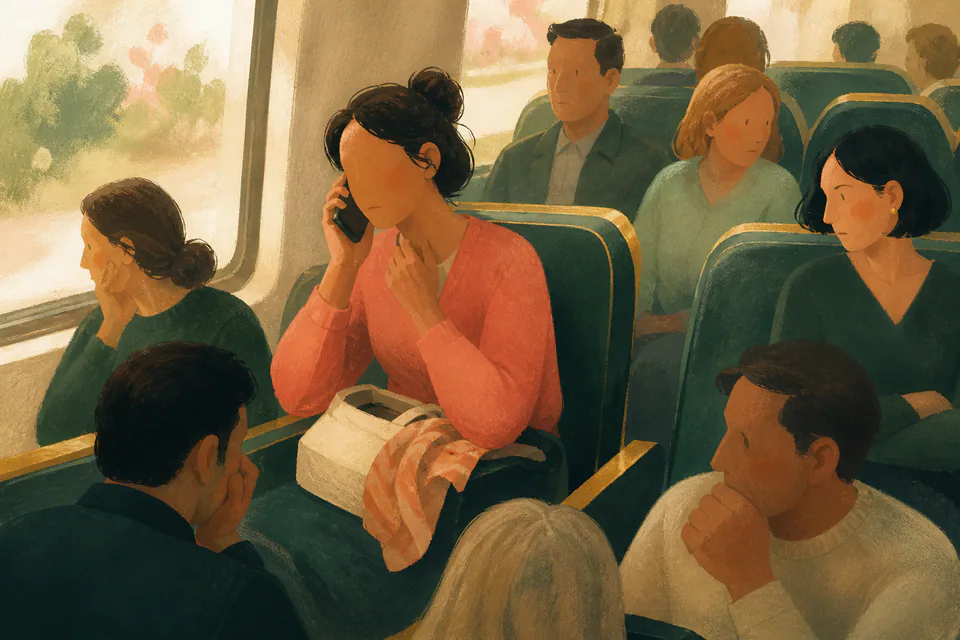
A stranger takes an emotional call in the quiet car. Do you shush them?
On a crowded train's designated quiet car, a passenger answers a call and begins discussing an apparent family emergency. They are speaking softly but continuously, and everyone nearby is listening despite trying not to.
Do public rules make room for private emergencies?